

 English
 Français
 Español
 Português
 عربى





Feature: •Welded frame, stable structure with precise craftsmanship; •Single section, compatible with 19" standard equipments ; •Tempered glass front door with over 180 turning degree ; •Removable sid...
See DetailsDouble Section Wall Mount Cabinets for Reliable Network Infrastructure
Content
- 1 Product Overview: A Professional Double Section Wall Mount Cabinet
- 2 Core Structural Advantages
- 3 Technical Specification Summary
- 4 Available Sizes and Selection Flexibility
- 5 Advantages Over Conventional Wall Cabinets
- 6 Manufacturing Strength Behind the Cabinet
- 7 Material and Surface Treatment Quality
- 8 Door Design and Access Efficiency
- 9 Cable Management Advantages
- 10 Thermal Management and Equipment Protection
- 11 Load Capacity and Wall Mount Safety
- 12 Applications in Telecommunications and Optical Networks
- 13 Applications in Railway Transit and Public Infrastructure
- 14 Installation Planning Recommendations
- 15 Customization and Accessory Options
- 16 Quality Control and Long-Term Reliability
- 17 How to Choose the Right Model
- 18 Value for Integrators, Operators, and End Users
- 19 Q&A Section
- 19.1 Q1: What is the main advantage of a double section wall mount cabinet?
- 19.2 Q2: What types of equipment can be installed in the WMDBG cabinet?
- 19.3 Q3: How much weight can the cabinet support?
- 19.4 Q4: What material is used for the cabinet?
- 19.5 Q5: Why is the surface treatment important?
- 19.6 Q6: Is the cabinet suitable for optical fiber networks?
- 19.7 Q7: What cabinet depth should be selected?
- 19.8 Q8: Can the cabinet be customized?
- 19.9 Q9: What environments are appropriate for this cabinet?
- 19.10 Q10: How does this cabinet compare with low-cost single-section models?
- 20 Conclusion
- 21 References
- 22 Product: WMDBG (Double section Wall Cabinet)
Modern communication networks depend on stable, compact, well-organized, and serviceable enclosure systems. As Ethernet, optical communication, 5G access, FTTH modernization, railway transit networks, and enterprise IT rooms continue to expand, the demand for secure wall-mounted cabinet solutions has become increasingly important. The WMDBG double section wall mount cabinet is designed for these environments, offering a practical balance of strength, accessibility, structured cabling, ventilation, and equipment protection.
Unlike basic single-section wall cabinets, the WMDBG double section wall mount cabinet provides two functional sections that improve installation flexibility and maintenance efficiency. The front section is suitable for standard 19-inch equipment such as switches, routers, patch panels, fiber distribution modules, and small power distribution devices. The rear swing section improves access to cabling, wall-side mounting, and maintenance points. This structure is especially valuable in compact communication spaces where floor-standing cabinets may not be practical.
The product is manufactured with SPCC quality cold-rolled steel and a welded frame structure, giving it the stability required for professional telecom and data network applications. With a static loading capacity of 60 kg, IP20 protection, removable side panels, cable entry plates, fan cutouts, and a tempered glass front door, it is designed to meet the needs of network installers, system integrators, telecom operators, enterprises, railway communication systems, and optical infrastructure projects.
Wanma Technology Co., Ltd., established in 1997, has accumulated extensive experience in communication cabinets, communication electronic equipment, and passive optical components. Its product capabilities cover Ethernet networks, optical communication networks, central equipment rooms, national high-speed railways, urban rail transit systems, and customized communication infrastructure. The WMDBG cabinet reflects this background: it is not simply a sheet-metal box, but a carefully engineered enclosure intended to support long-term network reliability.
WMDBG (Double section Wall Cabinet)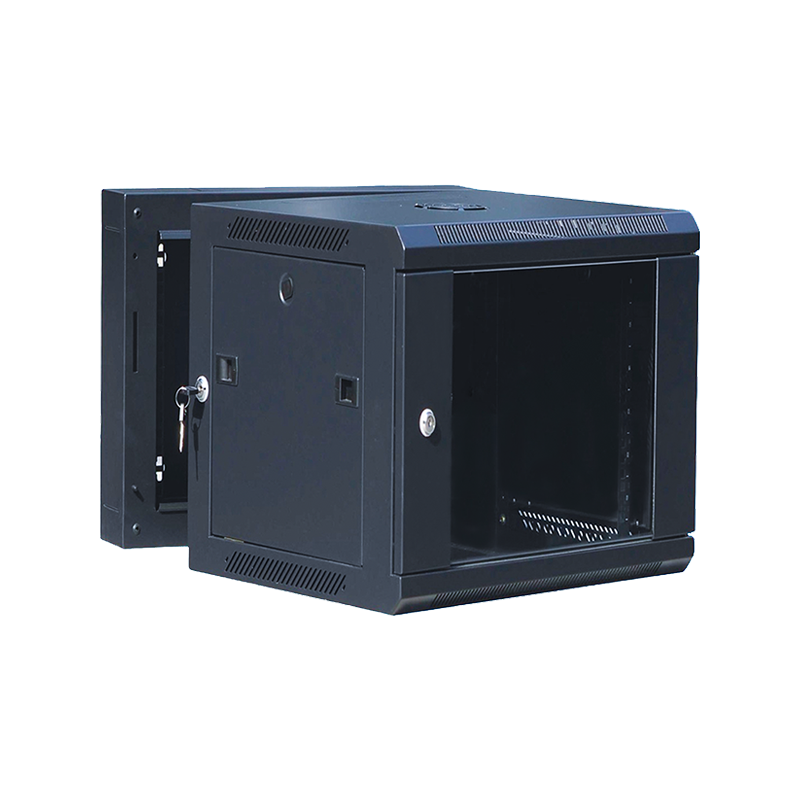
Product Overview: A Professional Double Section Wall Mount Cabinet
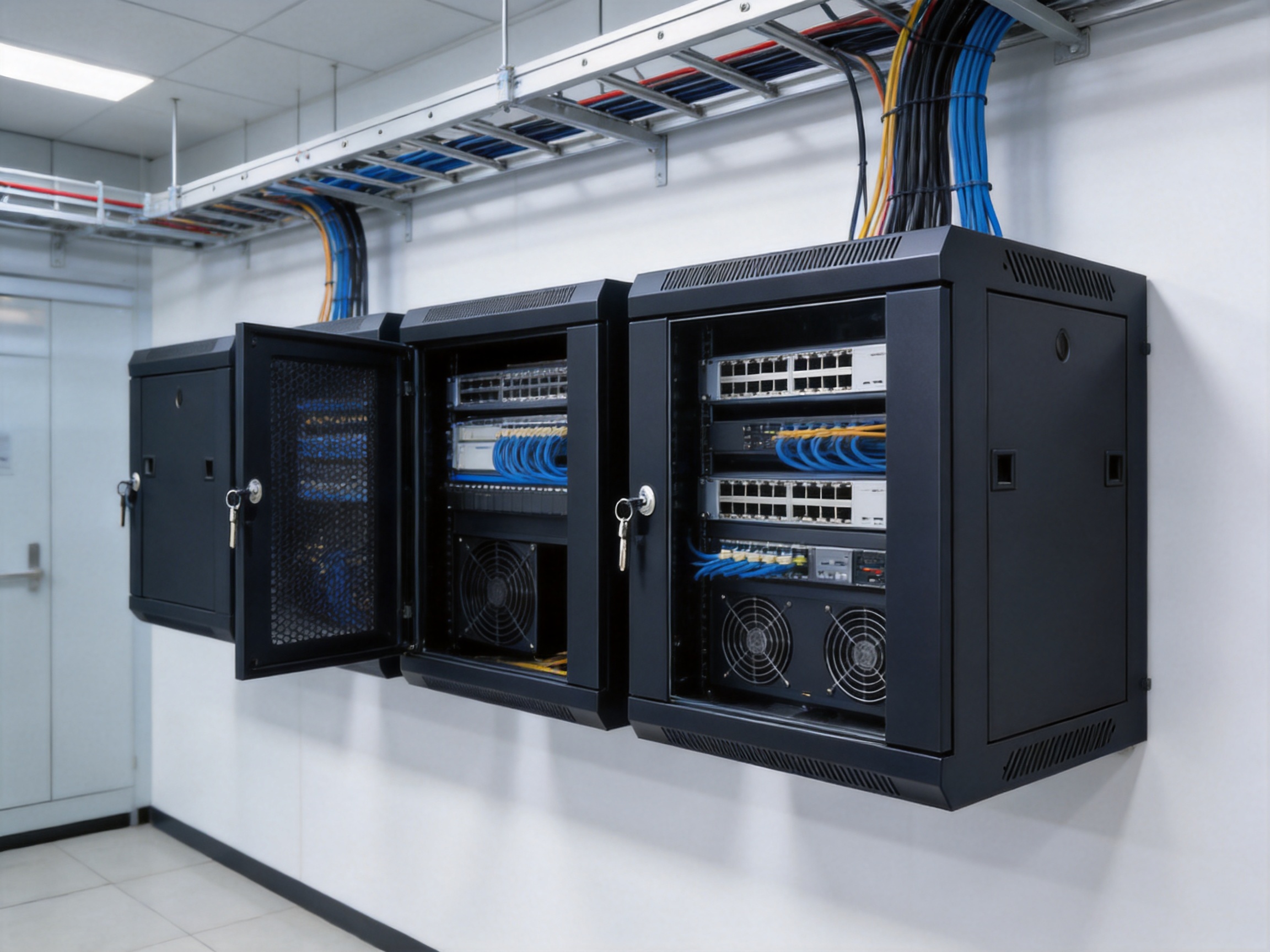
The WMDBG double section wall mount cabinet belongs to the cabinets and racks product category and is developed for mounting 19-inch standard equipment in wall-based network environments. Its double section structure is one of its most important design characteristics. The cabinet body is separated into a front equipment section and a rear swing section, allowing technicians to access the back of installed devices and cable routing areas without removing the entire cabinet from the wall.
This design is highly useful in telecom closets, building communication rooms, enterprise network corners, optical fiber access points, and transportation communication nodes. In many installations, space is limited and equipment must be placed high on a wall to save floor area. However, wall mounting can create challenges when technicians need to reach rear ports, cable ties, grounding points, or rear-mounted accessories. The WMDBG double section design solves this problem by allowing the rear section to swing open by more than 90 degrees.
The front door uses tempered glass and opens more than 180 degrees. This wide opening angle makes equipment installation and routine inspection easier. The tempered glass allows visual checking of installed equipment indicators without opening the cabinet. Optional door types, including steel front door, vented glass border door, and meshed border door, further improve adaptability to different environmental and cooling needs.
The cabinet complies with important dimensional standards, including ANSI/EIA RS-310-D, IEC297-2, DIN41497 Part 1, DIN41494 Part 7, and GB/T3047.2-92. These standards are important because they help ensure compatibility with common 19-inch rack-mounted equipment. For project contractors and equipment suppliers, standard compliance reduces installation uncertainty and improves integration efficiency.
Available model options include capacities from 4U to 27U with 600 mm width and depth options of 450 mm or 600 mm. This range allows users to choose compact sizes for small office networks or larger capacities for more demanding communication distribution points. The product family includes models such as WMDBG-6404, WMDBG-6406, WMDBG-6409, WMDBG-6412, WMDBG-6415, WMDBG-6418, WMDBG-6422, WMDBG-6427, and corresponding 600 mm depth models such as WMDBG-6604 through WMDBG-6627.
Core Structural Advantages
The first advantage of the WMDBG double section wall mount cabinet is its welded frame. A welded frame provides rigidity, stable geometry, and better long-term durability than loosely assembled lightweight structures. In network environments, cabinet deformation can affect door alignment, equipment mounting, cable routing, and accessory installation. A stable welded frame helps maintain cabinet integrity during installation, service, and daily operation.
The second advantage is the double section swing design. Compared with a single-section wall cabinet, a double section model offers superior access to rear cabling and wall-side connections. This helps reduce maintenance time, lowers the risk of damaging cables, and supports better cable organization. For systems with fiber patching, Ethernet cabling, and power distribution, the ability to separate functional areas is a clear benefit.
The third advantage is the use of removable side panels. The side panels can be removed to assist installation, equipment wiring, and maintenance. Optional locks can be added to the side panels to improve security. In competitive products, side panels may be fixed, thin, or difficult to reinstall. The removable design of the WMDBG cabinet improves usability for installers working in narrow or crowded sites.
The fourth advantage is the cable entry design. Cable entry points are provided on both the top cover and bottom panel, with knock-out plates. This allows cables to enter from different building routing directions. In real projects, cables may come from ceiling trays, floor conduits, wall penetrations, or nearby cable ducts. A cabinet with flexible top and bottom cable access reduces the need for field modification and helps preserve the cabinet’s finish and structural quality.
The fifth advantage is the L-shaped mounting profile. The mounting profiles are adjustable on the mounting rail, allowing convenient alignment of 19-inch equipment. This is important because different equipment types may have different depths, connector locations, and cable clearance needs. Adjustable profiles allow the installer to create a workable internal layout rather than being forced into one fixed arrangement.
The sixth advantage is the ventilation readiness. The top cover includes a fan cutout for easy fan installation. This supports active cooling in environments where switches, routers, or other electronic devices generate heat. Optional vented or meshed doors can also improve passive ventilation. Many low-cost wall cabinets do not offer sufficient airflow options, which may shorten equipment life or increase network failure risk.
Technical Specification Summary
The following table summarizes key technical characteristics of the WMDBG double section wall mount cabinet and explains their practical value in network applications.
| Feature | Specification | Practical Benefit |
|---|---|---|
| Structure | Double section wall mount design with welded frame | Improves strength, access, and maintenance efficiency |
| Equipment Compatibility | 19-inch standard equipment | Supports switches, routers, patch panels, and fiber modules |
| Front Door | Tempered glass door, more than 180-degree opening | Allows visual inspection and convenient equipment access |
| Rear Section | Swing back, more than 90-degree opening | Provides access to rear cabling and wall-side maintenance |
| Side Panels | Removable, lock optional | Simplifies installation and supports added security |
| Cable Entry | Top cover and bottom panel with knock-out plates | Supports flexible cable routing from multiple directions |
| Material | SPCC quality cold-rolled steel | Provides strength, formability, and professional finish |
| Thickness | Mounting profile 1.5 mm; other steel parts 1.2 mm | Balances durability, load support, and manageable weight |
| Static Loading | 60 kg | Suitable for medium network and telecom equipment loads |
| Protection Degree | IP20 | Protects against finger contact and larger solid objects in indoor environments |
| Surface Finish | Degreasing, pickling, phosphating, powder coating | Improves corrosion resistance, adhesion, and appearance |
| Standards | ANSI/EIA RS-310-D, IEC297-2, DIN41497, DIN41494, GB/T3047.2-92 | Ensures dimensional compatibility and professional integration |
Available Sizes and Selection Flexibility
A major strength of the WMDBG product family is its size range. The cabinet is available in multiple U heights and two main depth options. The 600 × 450 mm series is appropriate for patch panels, smaller switches, light network devices, and compact fiber distribution applications. The 600 × 600 mm series provides greater internal depth for deeper switches, routers, power accessories, and improved cable bending space.
Capacity options include 4U, 6U, 9U, 12U, 15U, 18U, 22U, and 27U. This range enables users to select the cabinet according to actual installed equipment rather than overpaying for oversized enclosures or struggling with undersized ones. A 4U or 6U cabinet may be sufficient for a small branch office or monitoring node, while 12U to 18U units are useful for enterprise access distribution. Larger 22U or 27U models can support denser communication points where multiple switches, patch panels, fiber trays, and accessories must be mounted together.
For future-ready network planning, installers should reserve additional rack space. A common recommendation is to leave 20 to 30 percent unused capacity for future equipment expansion. For example, if current equipment requires 9U, selecting a 12U or 15U cabinet may reduce future replacement cost. In telecom and enterprise networks, upgrades are common as bandwidth, user count, and service requirements increase.
The depth selection is equally important. A cabinet with insufficient depth can force excessive cable bending, obstruct airflow, or prevent the front door from closing properly. For shallow patching equipment, 450 mm depth may be efficient and space-saving. For active devices with rear power cords, SFP modules, copper uplinks, and cable loops, 600 mm depth is often more practical. The WMDBG range gives users this important choice.
Advantages Over Conventional Wall Cabinets
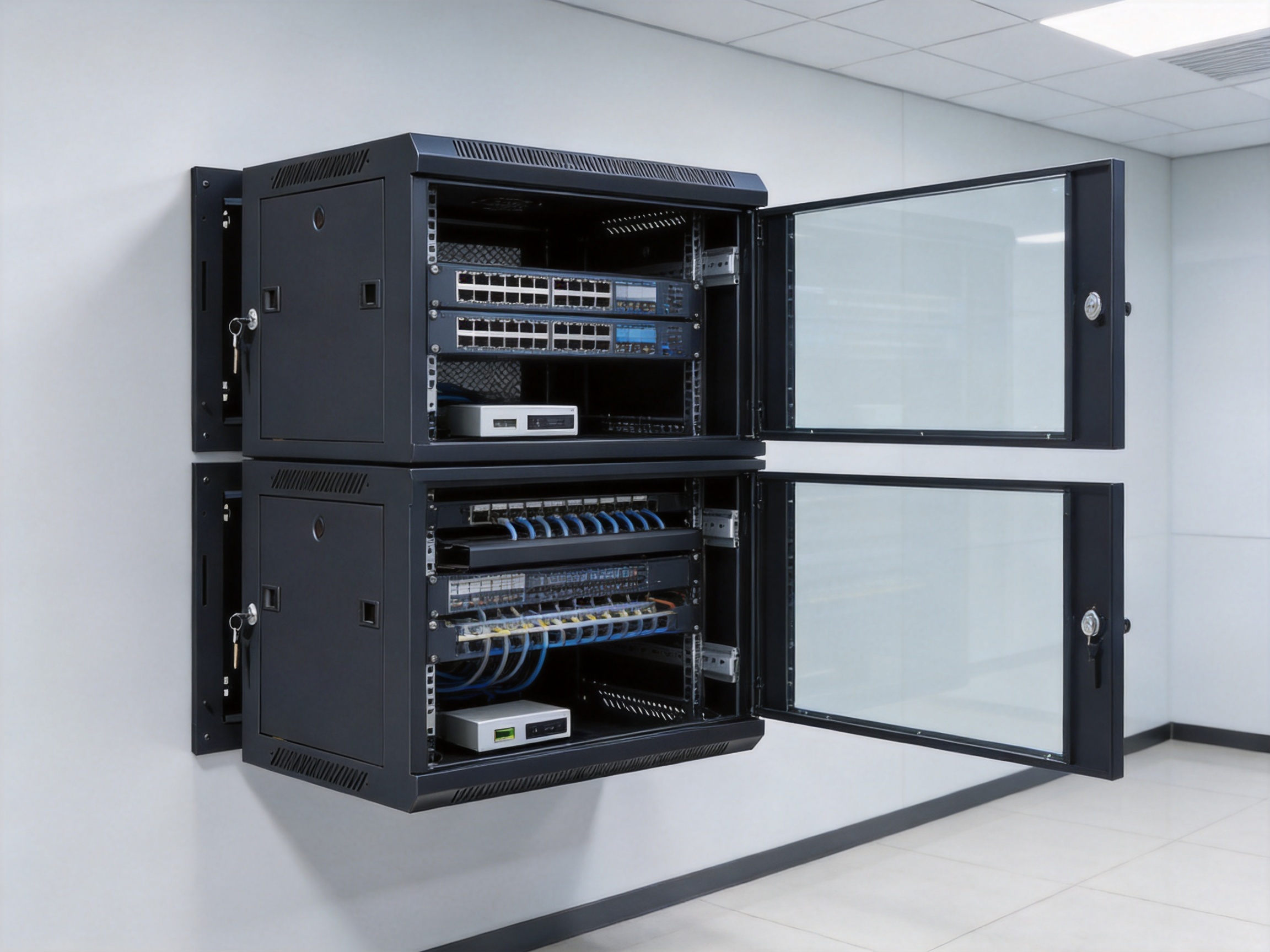
Compared with conventional single-section wall cabinets, the WMDBG double section cabinet provides a much higher level of serviceability. In a single-section wall cabinet, access to rear cabling can be difficult once the cabinet is fixed to the wall. Technicians may need to remove equipment, loosen cable bundles, or work in uncomfortable positions. The double section swing back design reduces these problems by opening the rear portion of the cabinet for easier access.
Another competitive advantage is its structural strength. Low-cost wall cabinets may rely heavily on bolted sheet-metal panels that can loosen over time. The welded frame of the WMDBG cabinet helps maintain structural stability. This is especially important for wall-mounted installations because the cabinet must safely carry equipment weight while being fixed to a vertical surface.
The product also offers better installation flexibility than many basic competitors. Top and bottom knock-out cable entry plates allow routing flexibility. Adjustable L-shaped mounting profiles improve internal layout options. Optional accessories such as locks for side panels, fixed shelves, castors for special configurations, ornament strips for glass sides, front door alternatives, and brush cable entries allow users to adapt the cabinet to different project requirements.
In terms of appearance and professional finish, the powder-coated surface provides a clean and durable exterior suitable for telecom rooms, office buildings, institutional environments, and transport infrastructure. Available standard colors include RAL 9004 and RAL 7035, with other colors possible depending on project requirements. A professional finish is not only aesthetic; it also supports corrosion resistance and easier cleaning.
Ventilation is another area where the product compares favorably. The cabinet includes a fan cutout on the top cover, making fan installation straightforward. Optional door styles can also enhance airflow. Competitor products that lack proper ventilation readiness may require on-site modification, which can damage coating, weaken the cabinet, or create inconsistent results.
The cabinet’s standards compliance further improves competitiveness. Standardized dimensions reduce compatibility concerns when different brands of 19-inch network equipment are installed. This is important for distributors, contractors, and system integrators who must combine equipment from multiple suppliers in one project.
Manufacturing Strength Behind the Cabinet
The performance of a cabinet depends not only on its design but also on the quality of its manufacturing process. Wanma Technology Co., Ltd. has been involved in communication infrastructure since 1997 and has developed expertise in communication cabinets, communication electronic equipment, and passive optical components. This background gives the company a strong understanding of how cabinets are actually used in telecom, optical network, Ethernet, railway transit, and central equipment room environments.
The manufacturing process begins with material selection. SPCC cold-rolled steel is used for the main cabinet structure. Cold-rolled steel provides good dimensional accuracy, surface quality, and mechanical performance. For a wall mount cabinet, this material is suitable because it can be formed accurately while still providing the strength needed for load-bearing components.
Precision sheet-metal processing is essential for cabinet production. Cutting, punching, bending, and forming processes must be controlled so that panels align properly, doors open smoothly, mounting profiles fit accurately, and cable entry plates remain clean and functional. Poor processing accuracy can lead to uneven gaps, unstable mounting, difficult assembly, or misalignment with 19-inch equipment. The WMDBG cabinet’s precise craftsmanship is reflected in its stable welded frame and standardized mounting structure.
Welding quality is another important process. A welded frame must be strong but also controlled to avoid distortion. Excessive heat or poor welding sequence can deform the cabinet frame, creating problems with door alignment or equipment mounting. Skilled manufacturing practice ensures the cabinet remains square, stable, and ready for assembly.
Surface treatment is a major part of long-term quality. The WMDBG cabinet uses degreasing, pickling, phosphating, and powder coating. Degreasing removes oil and contaminants from the steel surface. Pickling helps remove rust or oxide layers. Phosphating creates a conversion layer that improves coating adhesion and corrosion resistance. Powder coating then provides the final protective and decorative finish. This process is more reliable than simple painting because powder coating offers good thickness, hardness, and uniform surface coverage.
Component assembly also affects the customer’s experience. The mounting profiles, side panels, locks, doors, cable entry plates, and accessories must be assembled or supplied in a way that supports easy installation. The inclusion of M6 B-head screws, M6 square nuts, and an Allen wrench reflects attention to practical installation needs. Proper component matching helps reduce installation delays at the project site.
The company’s experience in customized communication infrastructure is also important. Many network projects require variations in color, accessories, door type, cable entry design, or internal layout. A manufacturer with customization capability can support OEM and ODM requirements, making the cabinet suitable for distributors, project contractors, telecom operators, and integrated solution providers.
Material and Surface Treatment Quality
SPCC cold-rolled steel is widely used in high-quality cabinet production because it offers a smooth surface and consistent thickness. In the WMDBG cabinet, the main panels are made from 1.2 mm SPCC cold-rolled steel, while the mounting profiles use 1.5 mm material. This design places thicker material where equipment weight is directly supported while keeping the overall cabinet weight manageable for wall mounting.
The mounting profiles are especially important because they carry installed 19-inch devices. If profiles are too thin or poorly formed, they may bend, twist, or fail to hold cage nuts and screws securely. The 1.5 mm mounting profile thickness supports better mechanical reliability and improves confidence during repeated installation and maintenance cycles.
The powder-coated finish helps protect the cabinet in indoor telecom and network environments. Although the cabinet has an IP20 rating and is intended for indoor use, equipment rooms can still experience dust, humidity variation, and frequent human contact. A strong powder-coated finish helps resist scratches, improves cleaning, and maintains a professional appearance over years of service.
The surface process also supports stable adhesion. Without proper pretreatment, powder coating may peel, blister, or corrode at edges. The combination of degreasing, pickling, and phosphating improves the bond between steel and coating. This is a meaningful advantage over low-cost products that may use simplified surface treatment.
Door Design and Access Efficiency
The front door of the WMDBG cabinet is made of 5 mm tempered glass. Tempered glass provides improved strength compared with ordinary glass and is suitable for cabinet doors that require visibility and safety. The glass door allows technicians and network administrators to inspect indicator lights, device status, and cable labels without opening the cabinet. This can reduce unnecessary access and improve operational security.
The front door opens more than 180 degrees, which is valuable during installation and maintenance. A door with limited opening angle can obstruct technicians, especially when the cabinet is mounted in a narrow room. The wide opening angle provides a more comfortable working area and reduces the risk of accidentally damaging the door or installed equipment.
Different door options support different project environments. A steel front door may be selected where visibility is less important and physical protection is preferred. A tempered glass door with vented border or meshed border may be used where airflow must be improved. This flexibility gives the cabinet an advantage over products with only one fixed door style.
The side panels are removable, making internal work easier from multiple directions. In real installations, technicians often need side access to guide cables, adjust profiles, or secure equipment. Removable side panels reduce installation difficulty and can help shorten project completion time.
Optional locks on side panels add a security layer. In shared building spaces, transportation nodes, schools, offices, and public facilities, preventing unauthorized access to network equipment is important. Lockable access points help protect communication continuity and reduce the risk of tampering.
Cable Management Advantages
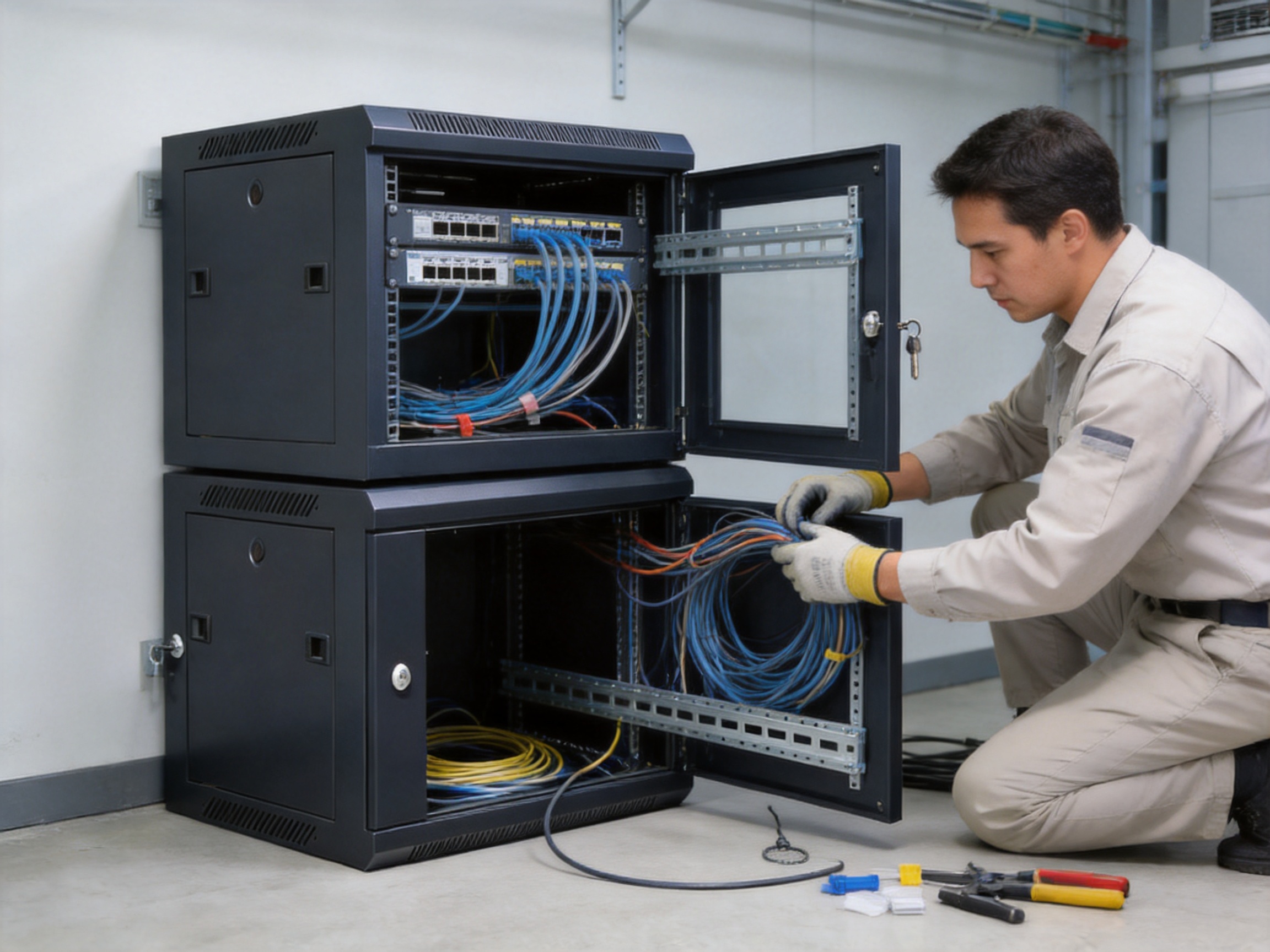
Cable management is one of the strongest reasons to choose a double section wall mount cabinet. In communication infrastructure, poor cable routing can cause signal problems, airflow restrictions, maintenance delays, and accidental disconnections. The WMDBG cabinet is designed to support cleaner cable organization through top and bottom cable entry, rear access, and separated internal space.
The rear swing section creates a dedicated access zone where cables can be routed, tied, labeled, and adjusted. This is helpful for copper Ethernet cabling, fiber optic patch cords, grounding cables, and power cords. By separating active equipment space from cable management space, the cabinet supports better organization and easier troubleshooting.
For fiber optic systems, cable bending radius is particularly important. Fiber patch cords and distribution cables can suffer performance loss or damage if bent too sharply. The cabinet’s depth options and rear access help installers maintain proper routing. Choosing a 600 mm depth cabinet may be beneficial for fiber-heavy installations or active devices with rear cable connections.
The knock-out cable entry plates reduce field modification. Installers can remove selected openings while keeping unused areas closed. Optional brush cable entry can further improve cable protection and dust management. This helps maintain a cleaner internal environment and reduces cable abrasion at entry points.
In structured cabling systems, neat cable management also improves documentation and service quality. When patch panels, switches, and fiber modules are arranged logically, technicians can identify circuits faster and reduce downtime. The WMDBG cabinet supports this professional approach through its accessible and adaptable structure.
Thermal Management and Equipment Protection
Electronic equipment generates heat, and wall mount cabinets can become thermal bottlenecks if ventilation is not considered. The WMDBG cabinet addresses this issue with a fan cutout on the top cover and optional ventilated door configurations. This allows users to choose passive or active cooling depending on equipment density and site conditions.
In low-density applications, natural airflow may be sufficient. Heat rises and can escape through ventilation paths if the cabinet is not overcrowded. In higher-density installations, fan units can be installed to actively remove warm air. The top fan cutout simplifies this upgrade, reducing the need for drilling or cutting during installation.
The double section design can also support better airflow organization. By separating cabling from active equipment space, airflow paths are less likely to be blocked by cable bundles. This improves cooling efficiency and reduces the risk of hot spots around switches, optical modules, and power supplies.
Thermal performance is not only about comfort; it directly affects equipment life. High operating temperatures can reduce electronic component reliability, increase failure rates, and cause network interruptions. A cabinet with practical ventilation options helps protect the installed equipment and improves long-term system stability.
Load Capacity and Wall Mount Safety
The WMDBG double section wall mount cabinet supports a static loading capacity of 60 kg. This is suitable for many medium-load network and communication applications, including switches, patch panels, fiber distribution components, small UPS accessories, power distribution units, and cable management accessories. However, correct installation is essential to achieve safe performance.
When selecting a wall mount cabinet, users should calculate the total weight of all installed equipment and accessories. It is recommended to add a safety margin of 25 to 50 percent for future expansion. For example, if current equipment weighs 35 kg, a 60 kg static loading cabinet may provide suitable room for expansion, provided the wall structure and mounting hardware are adequate.
The wall itself must be capable of supporting the cabinet and equipment. Solid concrete, brick, or reinforced structural walls are generally preferred. Lightweight partition walls may require reinforcement or may not be suitable for heavy wall-mounted network cabinets. Installation should use appropriate anchors and follow engineering recommendations.
Cabinet size also affects wall load distribution. Larger cabinets can hold more equipment, but they also place greater demands on the wall mounting points. Therefore, selecting the right capacity is not only about rack units; it also involves equipment weight, wall strength, access space, and maintenance needs.
Applications in Telecommunications and Optical Networks
The WMDBG double section wall mount cabinet is well suited for telecommunications access points and optical communication networks. Telecom systems often require reliable enclosure solutions for patching, switching, routing, and distribution equipment. Because wall space is often available where floor space is limited, wall-mounted cabinets provide an efficient deployment method.
In optical fiber networks, cabinets may house fiber patch panels, optical distribution frames, splice trays, media converters, and active Ethernet devices. The double section design helps separate delicate fiber cable management from active equipment, reducing accidental disturbance during maintenance.
For 5G FTTH modernization infrastructure, compact and organized distribution points are essential. As networks bring fiber closer to users, buildings, offices, and access nodes require reliable enclosures to manage connections. The WMDBG cabinet supports these needs with multiple U sizes, flexible cable entry, and professional mounting compatibility.
In Ethernet networks, the cabinet can support switches, patch panels, cable managers, and small power accessories. It is suitable for branch offices, schools, hotels, factories, monitoring rooms, and enterprise access closets. The tempered glass door allows quick device status checks without opening the cabinet, which is convenient for routine network monitoring.
Applications in Railway Transit and Public Infrastructure
Railway transit communication systems require dependable equipment enclosures because network reliability affects signaling support, passenger information systems, monitoring systems, communication links, and operational management. Wanma Technology Co., Ltd. has experience serving national high-speed railways and urban rail transit systems, and this background supports product development for demanding infrastructure environments.
Wall mount cabinets are useful in stations, service rooms, monitoring points, and distributed network nodes where compact installation is needed. The WMDBG cabinet’s steel construction, powder-coated surface, removable panels, and cable management flexibility make it suitable for indoor transit communication applications.
Public infrastructure projects often require durable products, consistent standards, and predictable installation. The WMDBG cabinet’s compliance with recognized rack standards supports integration with a wide range of communication equipment. Its optional accessories also allow project-specific adaptation, which is valuable in large infrastructure deployments where site conditions vary.
Installation Planning Recommendations
Before installation, technicians should review equipment dimensions, total weight, cable entry direction, ventilation needs, and maintenance access. Measuring the depth of active devices is especially important. Equipment depth should include rear connectors, power cords, fiber modules, and cable bend radius, not only the metal chassis length.
The selected cabinet should provide enough free space for cable routing. A minimum clearance of 20 to 40 mm may be suitable for some cable types, while fiber systems may require more careful bend radius planning. Overcrowding the cabinet can create airflow problems and make future maintenance difficult.
Door opening space must also be considered. The front door opens more than 180 degrees, and the rear swing section opens more than 90 degrees. The installation location should allow these movements without obstruction. If the cabinet is mounted in a corner or narrow corridor, users should verify that the swing direction and access clearance are acceptable.
Ventilation planning should match equipment heat output. If active switches or power devices will operate continuously, optional fans or ventilated door styles may be required. The top fan cutout enables convenient cooling upgrades.
Grounding and cable protection should also be included in project planning. Communication cabinets often need grounding to reduce electrical risk and support equipment protection. Cable entry openings should be managed to prevent sharp-edge damage, dust entry, and disorganized routing.
Customization and Accessory Options
The WMDBG cabinet supports various optional accessories that improve adaptability. Removable side panels can be equipped with locks. Fixed shelves can support non-rack-mounted devices such as modems, small converters, or compact power units. Different front door styles allow users to balance visibility, security, and ventilation.
Brush cable entry accessories can improve cable protection and help reduce dust entry. Ornament strips for the glass side can enhance appearance in office or commercial environments. Castors may be installed on the bottom for special configurations, although wall-mounted operation should always follow structural safety requirements.
Color customization is another advantage. Standard options include RAL 9004 and RAL 7035, while other colors may be available for project-specific needs. In corporate, infrastructure, and OEM projects, color matching can be important for branding, environmental consistency, or specification compliance.
Wanma Technology Co., Ltd. provides OEM and ODM capabilities for communication infrastructure. This supports customers who require custom cabinet dimensions, accessory combinations, surface colors, door styles, or specialized cable entry designs. The ability to provide integrated solutions is a major strength when compared with suppliers limited to standard catalog products only.
Quality Control and Long-Term Reliability
Reliable cabinets require consistent quality control from raw material to final packaging. Important inspection points include material thickness, dimensional accuracy, welding quality, coating thickness, surface appearance, door operation, lock function, mounting profile alignment, accessory completeness, and packaging protection. For a wall mount network cabinet, small dimensional errors can create significant installation problems, so control must be systematic.
The WMDBG cabinet’s design reflects attention to practical field reliability. The welded frame provides a stable foundation. The tempered glass front door supports visibility and safety. The adjustable L-shaped mounting profiles support equipment installation. The removable side panels improve maintenance access. The cable entry plates provide flexible routing. The fan cutout supports cooling. Together, these features reduce operational friction and help maintain network uptime.
Long-term reliability also depends on the supplier’s industry experience. Wanma Technology Co., Ltd. has served communication markets for decades and exports to more than 20 countries and regions, including the United States, Australia, the United Kingdom, Italy, South Africa, and Ghana. This international reach indicates experience with varied project requirements, delivery expectations, and quality standards.
The company emphasizes reliable product quality, timely delivery, and long-term strategic partnerships. These strengths matter for distributors and project customers because cabinet supply must align with construction schedules, network deployment plans, and maintenance requirements. A strong manufacturer can reduce procurement risk and support repeat projects.
How to Choose the Right Model
Choosing the right WMDBG model starts with identifying the required rack capacity. List all devices to be installed, including patch panels, switches, routers, fiber trays, power units, cable managers, shelves, and blank panels. Add the U height of each item and reserve expansion space. If the total current need is close to the cabinet limit, select a larger model.
Next, evaluate equipment depth. A 600 × 450 mm cabinet may suit shallow devices and compact cabling. A 600 × 600 mm cabinet is preferable where devices are deeper or cable management requirements are more demanding. Choosing adequate depth helps prevent cable stress and improves airflow.
Third, calculate load. Add the weight of all installed components and include future expansion. Confirm that the total remains within the 60 kg static loading capacity and that the wall structure can support the cabinet safely. When in doubt, consult qualified installation professionals.
Fourth, consider thermal needs. For light passive equipment, standard ventilation may be enough. For active equipment, especially multiple switches or power devices, select ventilation accessories or fan options. Consider door type carefully if airflow is a priority.
Fifth, review security needs. If the cabinet will be installed in a shared or accessible environment, choose lock options for side panels and ensure proper front door locking. Physical security helps protect both equipment and network continuity.
Finally, consider project appearance and customization. Select RAL 9004, RAL 7035, or other colors according to site requirements. Determine whether fixed shelves, brush entries, different doors, or other accessories are needed.
Value for Integrators, Operators, and End Users
For system integrators, the WMDBG cabinet offers easier installation and fewer site complications. Adjustable profiles, removable panels, and flexible cable entry reduce labor difficulty. Standards compatibility simplifies equipment matching. Optional accessories help meet different customer specifications without redesigning the entire solution.
For telecom operators, the cabinet provides reliable structure, service access, and cable organization. These factors reduce maintenance time and support stable network operation. The double section design is especially valuable where technicians must regularly inspect or adjust rear cabling.
For enterprise users, the cabinet provides a professional and secure location for network equipment. It helps protect devices from accidental contact, organizes cables, and supports cleaner IT room management. The tempered glass door allows quick status viewing while keeping equipment enclosed.
For distributors and OEM customers, the cabinet offers a product line with multiple sizes, customization potential, and broad application relevance. Wanma Technology Co., Ltd.’s manufacturing background and export experience support stable supply and cooperation.
Q&A Section
Q1: What is the main advantage of a double section wall mount cabinet?
The main advantage is improved rear access and cable management. The double section structure allows the rear part of the cabinet to swing open by more than 90 degrees, making it easier to install, inspect, and maintain rear cabling without removing equipment or the entire cabinet.
Q2: What types of equipment can be installed in the WMDBG cabinet?
The cabinet is compatible with 19-inch standard equipment, including switches, routers, patch panels, fiber distribution modules, cable managers, small power accessories, and shelves for non-rack-mounted devices.
Q3: How much weight can the cabinet support?
The WMDBG double section wall mount cabinet has a static loading capacity of 60 kg. Users should calculate the total installed equipment weight and include a safety margin for future expansion.
Q4: What material is used for the cabinet?
The cabinet is made from SPCC quality cold-rolled steel. The mounting profiles are 1.5 mm thick, while other main steel parts are 1.2 mm thick. The front door uses 5 mm tempered glass.
Q5: Why is the surface treatment important?
The cabinet surface is treated through degreasing, pickling, phosphating, and powder coating. This process improves coating adhesion, corrosion resistance, surface durability, and appearance, making the cabinet suitable for professional indoor network environments.
Q6: Is the cabinet suitable for optical fiber networks?
Yes. The cabinet is suitable for optical communication and FTTH-related applications. Its double section structure, cable entry options, and depth choices help support fiber routing and cable bend radius management.
Q7: What cabinet depth should be selected?
A 450 mm depth cabinet is suitable for shallow patch panels and compact devices. A 600 mm depth cabinet is better for deeper active equipment, rear power cords, fiber patching, and applications that need more cable management space.
Q8: Can the cabinet be customized?
Yes. Options include side panel locks, fixed shelves, different front door types, brush cable entries, ornament strips, color choices, and other project-specific configurations. OEM and ODM customization can support broader communication infrastructure requirements.
Q9: What environments are appropriate for this cabinet?
The cabinet is intended for indoor environments such as telecom rooms, enterprise network closets, optical distribution points, central equipment rooms, railway transit communication spaces, office buildings, and structured cabling systems.
Q10: How does this cabinet compare with low-cost single-section models?
It offers better access, stronger structure, improved cable management, ventilation readiness, removable side panels, adjustable mounting profiles, and broader customization options. These advantages reduce installation difficulty and improve long-term serviceability.
Conclusion
The WMDBG double section wall mount cabinet is a practical and professional enclosure solution for modern communication networks. Its welded frame, SPCC cold-rolled steel construction, 19-inch compatibility, swing rear section, tempered glass front door, removable side panels, flexible cable entry, fan cutout, and powder-coated finish make it suitable for telecom, Ethernet, optical fiber, enterprise IT, and rail transit communication applications.
Compared with conventional wall cabinets, it provides clear advantages in service access, cable organization, structural stability, ventilation adaptability, and customization flexibility. These qualities are especially important as networks become more complex and demand higher reliability from every part of the infrastructure.
Wanma Technology Co., Ltd. brings decades of manufacturing experience, communication infrastructure expertise, and international supply capability to the product. Its strengths in communication cabinets, electronic equipment, passive optical components, and customized integrated solutions help ensure that the WMDBG cabinet is not only well designed but also supported by mature manufacturing processes and practical industry understanding.
For projects requiring compact, reliable, and maintainable wall-mounted network infrastructure, the WMDBG double section wall mount cabinet offers a strong combination of engineering value, product flexibility, and long-term operational reliability.
References
ANSI/EIA RS-310-D, Cabinets, Racks, Panels, and Associated Equipment Standard.
IEC 60297 Series, Mechanical Structures for Electronic Equipment, Dimensions of Mechanical Structures of the 482.6 mm Series.
DIN 41494, Equipment Practices for Electronic Equipment; Mechanical Structures.
GB/T 3047.2-92, Series of Basic Dimensions of Panels, Rack and Cabinets.
Telecommunications Industry Association, Structured Cabling and Network Equipment Installation Guidelines.
International Electrotechnical Commission, Enclosure Protection and Equipment Mounting Practices.
Wanma Technology Co., Ltd., Product Technical Materials for Double Section Wall Mount Network Cabinets.
Product: WMDBG (Double section Wall Cabinet)
PREV:High Load Server Rack Cabinets for Reliable Data Center Infrastructure
NEXT:Turn-Over Intelligent Clothes and Shoes Machine for Closed-Loop Hospital Apparel Management
NEXT:Turn-Over Intelligent Clothes and Shoes Machine for Closed-Loop Hospital Apparel Management
Interested in cooperation or have questions?
Related products
-
-
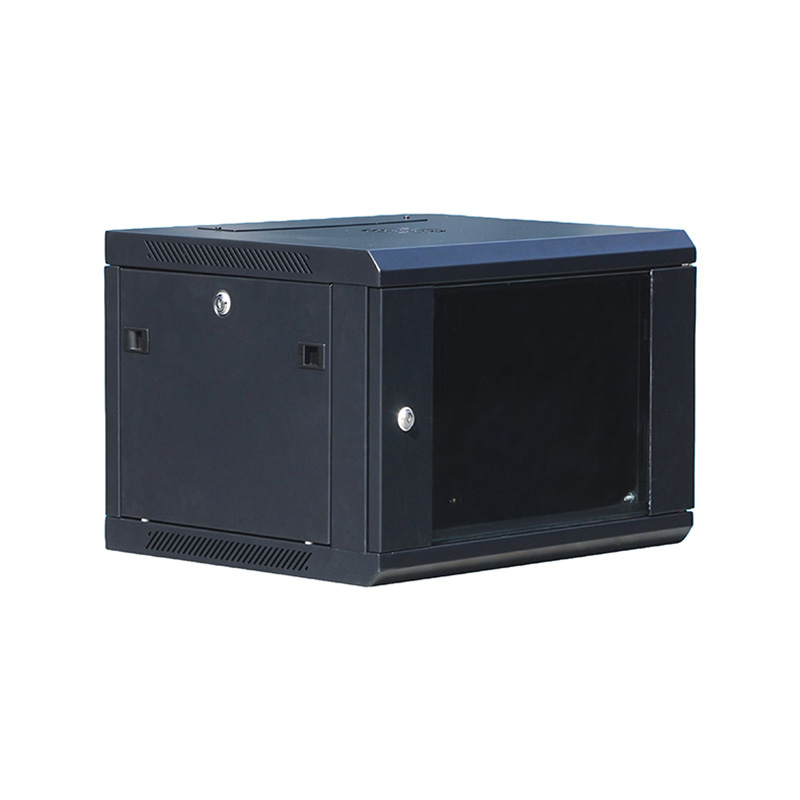
Feature:•Welded frame, stable structure with precise craftsmanship; •Double section, compatible with 19" standard equipments; •Tempered glass front door with over 180 turning degree; •Removable side p...
See Details -
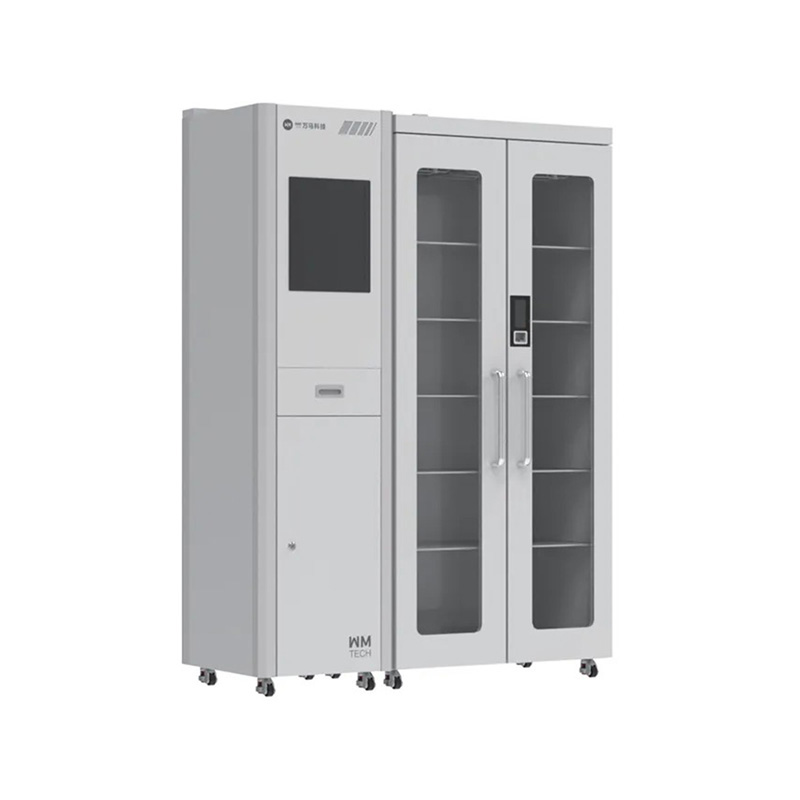
Product Definition:The Double Door Consumables Elocker is an intelligent storage solution for hospitals, laboratories, and medical institutions, integrating automated storage, identity verification, r...
See Details -
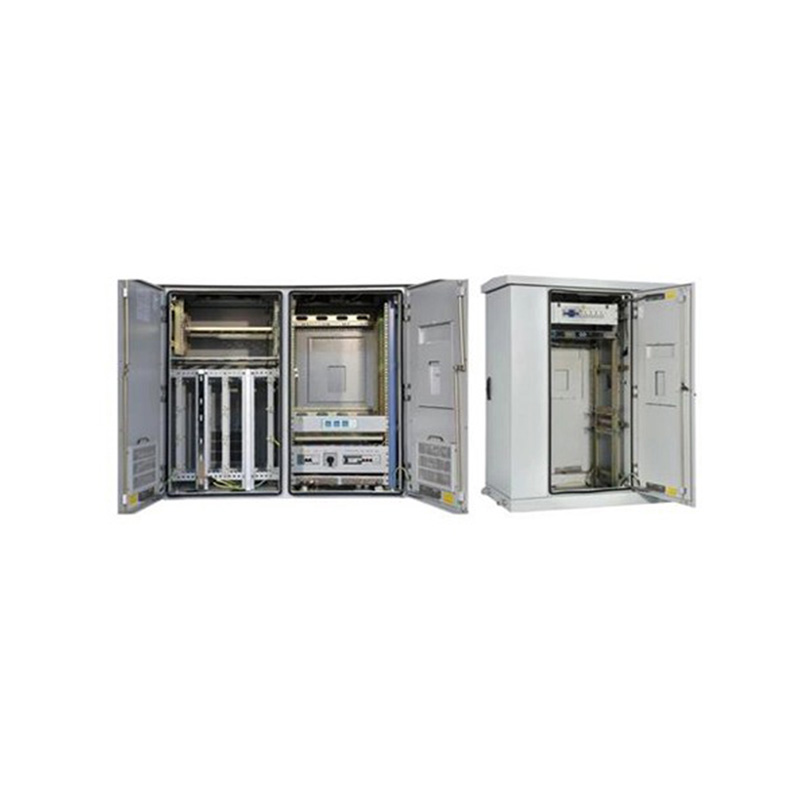
Application:It is used for the fixed network and broadband access, providing physical working environment and security system for the workstation in wired network. Features:•The cabinet is composed of...
See Details
Ready to Get started ? Contact Us Now !

Product.
Contact Details.
-
 +86 13958188250
-
 +86 13958188250
-
 [email protected]
-
 AUDIT Email:[email protected]
- Wanma Industrial Park Taihu Yuan Town Lin'an District Hangzhou City China.
QR Code

Copyright © Wanma Technology Co., Ltd. All Rights Reserved.
Privacy
Custom Ethernet Optical Network Railway Transit Equipments Suppliers
