

 English
 Français
 Español
 Português
 عربى





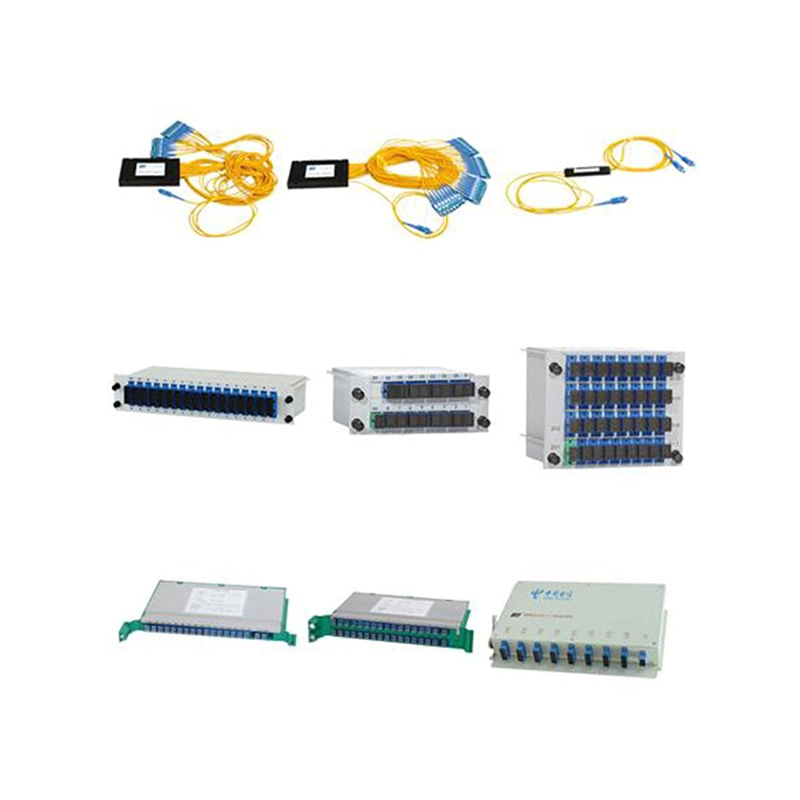


Application:It is suitable for the connection of Bow-type cables and is mainly used in optical fiber termination box, optical fiber distribution box, Household intelligent box, optical fiber socket-bo...
See DetailsFactory-Prepared Quick Connectors for Reliable Fiber Termination and Network Modernization
Content
- 1 1. The Role of Quick Connectors in Optical Networks
- 2 2. Main Product Applications
- 3 3. Factory-Ground Fiber End Face
- 4 4. Optical Performance Advantages Compared with Conventional Field Termination
- 5 5. Repeatable Installation and Rework Capability
- 6 6. Hot-Melt Installation Option
- 7 7. Limited Tooling and Field Efficiency
- 8 8. Manufacturing Strengths and Process Control
- 9 9. Advantages for Railway and Urban Transit Networks
- 10 10. Advantages for Ethernet and FTTH Modernization
- 11 11. Installation Quality and Recommended Work Practices
- 12 12. Quality, Delivery, and Partnership Value
- 13 13. Selection Considerations for Buyers
- 14 14. Q&A
- 14.1 Q1: What type of cable is the connector designed for?
- 14.2 Q2: Where can the connector be used?
- 14.3 Q3: What optical performance is specified?
- 14.4 Q4: Why is the factory-ground fiber end face important?
- 14.5 Q5: How many times can the connector be installed?
- 14.6 Q6: What tools are needed for installation?
- 14.7 Q7: What is the hot-melt type quick connector?
- 14.8 Q8: Can hot-melt equipment affect connector performance?
- 14.9 Q9: Is the connector suitable for optical distribution frame renovation?
- 14.10 Q10: How does it compare with a fully pre-terminated patch cord?
- 14.11 Q11: How does it compare with manual field polishing?
- 14.12 Q12: What should be checked after installation?
- 14.13 Q13: Is the product suitable for railway communication projects?
- 14.14 Q14: What company manufactures the product?
- 14.15 Q15: What makes the manufacturer suitable for integrated projects?
- 15 15. Conclusion
- 16 References
- 17 Product: Fiber Solution-Quick Connector
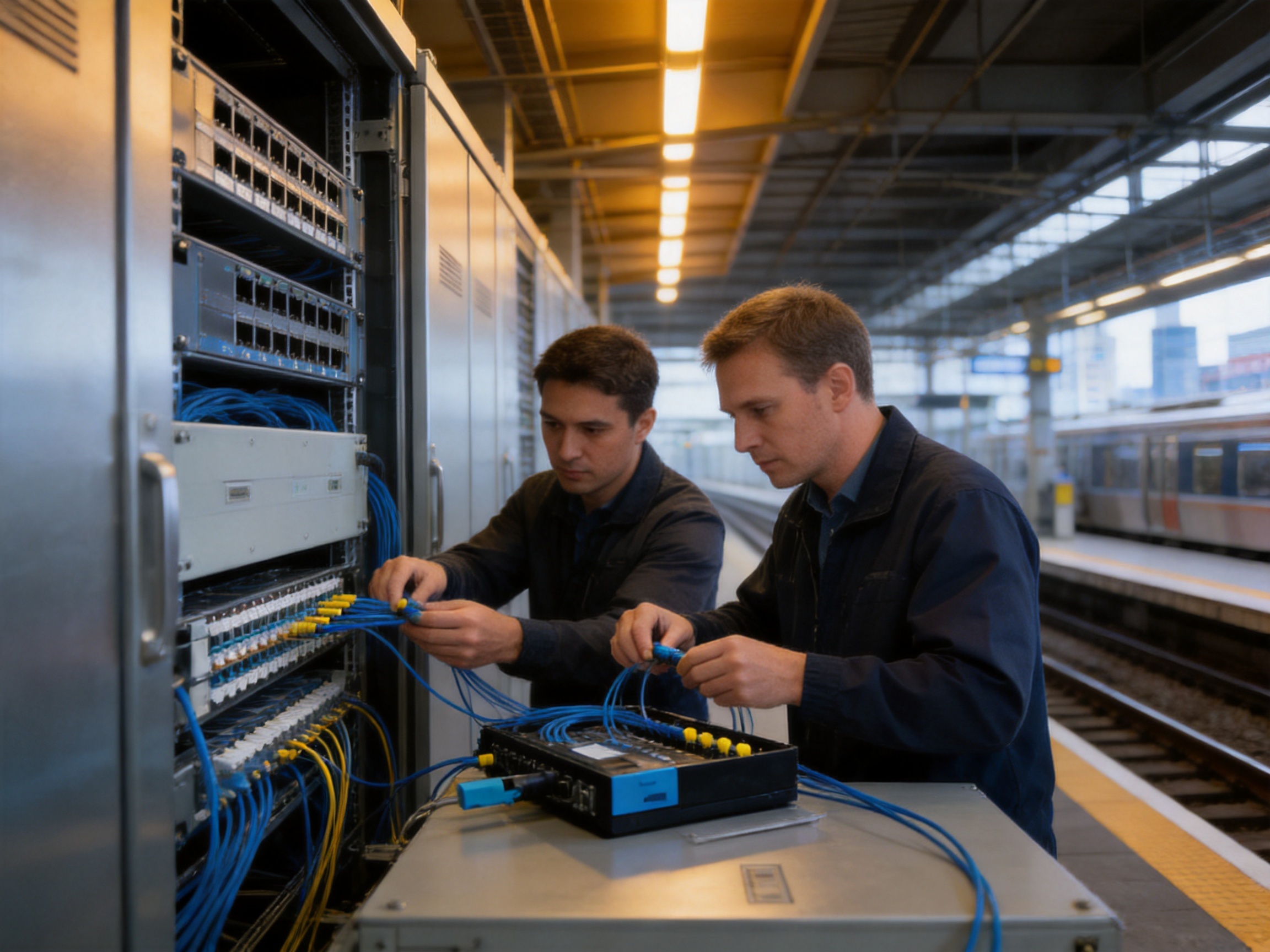
Modern telecommunications networks depend on the quality of every connection point. Even when optical fiber, cabinets, distribution boxes, and active equipment are carefully selected, a poorly prepared termination can create excessive insertion loss, unstable signal transmission, difficult maintenance, and unnecessary installation costs. For this reason, quick connectors have become important components in fiber-to-the-home networks, optical distribution systems, railway communication infrastructure, enterprise networks, and other applications where optical cables must be terminated efficiently and consistently.
The Fiber Solution-Quick Connector is designed for the connection of bow-type cables and for practical field installation. It is suitable for optical fiber termination boxes, optical fiber distribution boxes, household intelligent boxes, optical fiber socket boxes, and optical distribution frame renovation projects. It can also be used when installers need to establish the required patch cord length during the construction of a new optical distribution frame.
Its principal value comes from combining factory-prepared optical performance with flexible on-site installation. The fiber end face is ground in the factory, helping reduce the variation normally associated with manual field polishing. At the same time, the connector can be installed with limited tooling, making it suitable for projects where speed, repeatability, and manageable installation procedures are important.
Manufactured by Wanma Technology Co., Ltd., a company established in 1997 and focused on communication cabinets, communication electronic equipment, passive optical components, and integrated network solutions, the product reflects a broader manufacturing capability in communication infrastructure. The company’s products are used in Ethernet networks, optical communication networks, central equipment rooms, high-speed railways, and urban rail transit systems. This application background supports the development of components intended for practical network construction and long-term service.
1. The Role of Quick Connectors in Optical Networks
An optical connector creates a detachable connection between optical fibers and network equipment or between two sections of a fiber distribution system. In a conventional installation, the fiber may need to be stripped, cleaved, polished, aligned, and secured before the connection is ready for service. Each step introduces a potential source of variation. Differences in technician skill, environmental conditions, polishing quality, contamination, and mechanical handling can affect the final optical result.
A quick connector simplifies this process by integrating key termination functions into a compact connector assembly. The installer prepares the cable, positions the fiber, and completes the connection using the prescribed installation method. The objective is not merely to save time. A well-designed quick connector can also improve consistency, reduce the quantity of specialized equipment required at the worksite, and make repairs or expansion work easier to organize.
These advantages are especially relevant in distributed networks. A field team may need to connect hundreds or thousands of subscriber drops, distribution points, or equipment-room patch cords. Transporting polishing machines and maintaining a controlled workshop environment at every installation location is often impractical. A connector prepared partly in the factory can transfer a larger portion of the quality-sensitive process to a controlled manufacturing environment.
The Fiber Solution-Quick Connector is intended for this type of application. Its design is associated with bow-type cables, which are widely used in access networks and indoor fiber installations. The connector can support termination work in customer premises, distribution cabinets, optical boxes, and renovation projects where existing network layouts must be adapted without replacing the entire system.
2. Main Product Applications
2.1 Optical Fiber Termination Boxes
Optical fiber termination boxes provide a structured location for cable termination, fiber management, and connection to downstream equipment. In these boxes, installers often work under space constraints and must maintain appropriate bend control, routing, and labeling. A quick connector allows the termination process to be carried out directly at the installation point while helping reduce the need for extensive field polishing operations.
The connector is suitable for projects where the termination box must be completed quickly and returned to service with minimal disruption. Because the fiber end face is factory-ground, the installer can focus on cable preparation, alignment, locking, inspection, and final routing rather than performing the entire end-face preparation process on site.
2.2 Optical Fiber Distribution Boxes
Distribution boxes are frequently used in access networks, commercial buildings, residential developments, industrial sites, and public infrastructure. They may contain a combination of incoming feeder fibers, distribution fibers, splitters, adapters, and patching components. Installation speed and serviceability are important because the box may need to accommodate future subscribers or network expansions.
A quick connector can help contractors complete individual fiber terminations without waiting for a centralized workshop process. If a new connection is required during network expansion, the installer can prepare and terminate the appropriate cable at the distribution point. This approach can reduce scheduling delays and support a more flexible deployment workflow.
2.3 Household Intelligent Boxes and Fiber Socket Boxes
Residential fiber installations require compact components that can be installed in or near the customer premises. Household intelligent boxes and optical fiber socket boxes often combine telecommunications, data, and other low-voltage services in a limited enclosure. A connector used in this environment must support careful routing and practical installation without requiring a large amount of equipment.
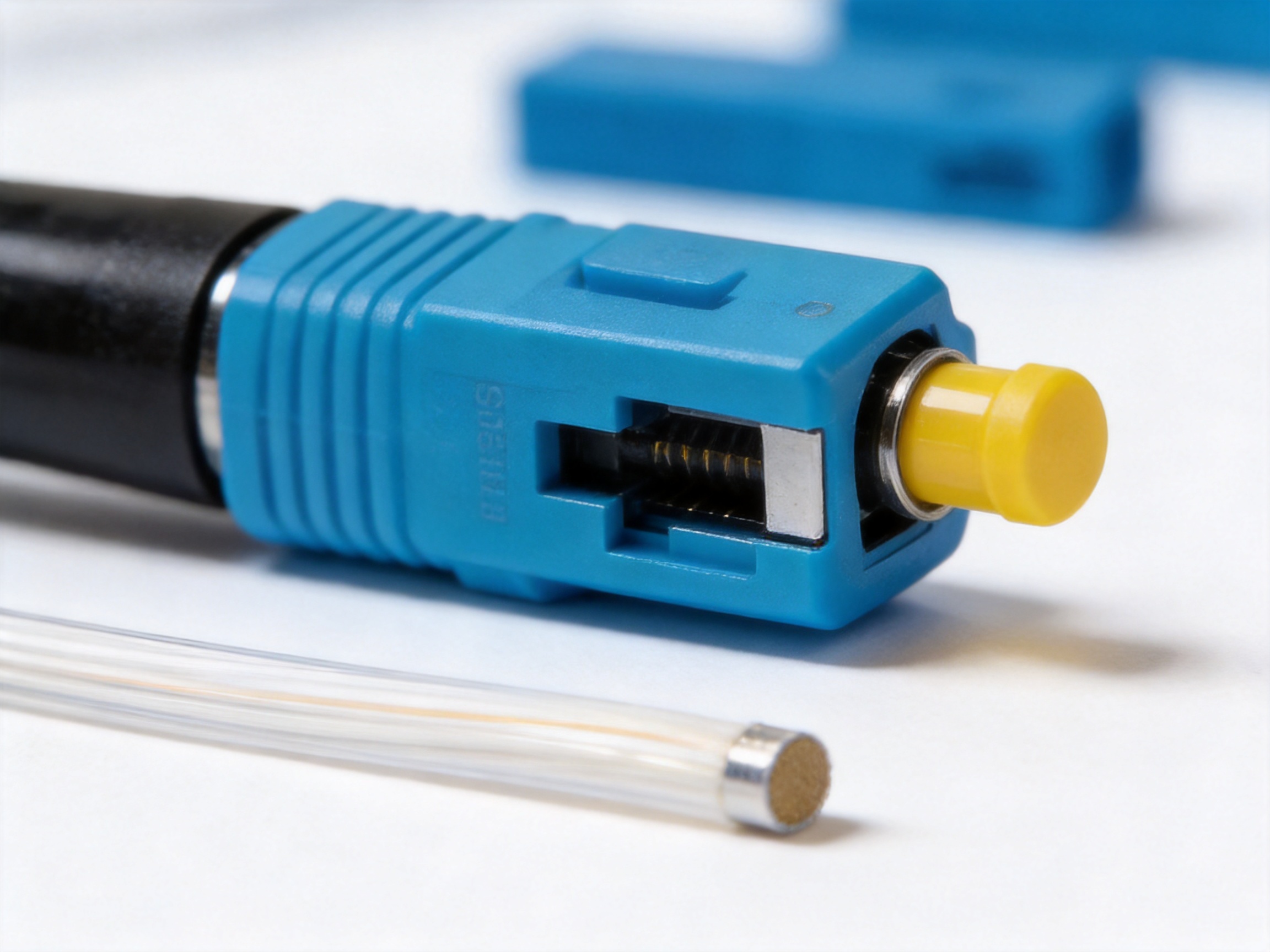
The Fiber Solution-Quick Connector is suitable for these applications because it requires only a small set of basic installation tools, including wire strippers and a cutting knife for the stated installation method. The reduced tooling requirement can be useful for technicians working inside residences, apartment corridors, office spaces, and other locations where workshop-style equipment would be inconvenient.
2.4 Optical Distribution Frame Renovation
Existing optical distribution frames may require renovation when network capacity is expanded, cable routes are changed, or legacy arrangements are reorganized. Renovation projects are often more demanding than new installations because technicians must work around existing connections and operational services. A connector that supports direct field termination can help limit the amount of disassembly and reduce the time required for individual modifications.
The product is also suitable for establishing patch cord lengths during the construction of a new optical distribution frame. Instead of relying only on premeasured assemblies, installers can prepare connections according to the actual arrangement of the frame. This flexibility can make cable management more orderly and help reduce excess fiber length.
3. Factory-Ground Fiber End Face
One of the principal product advantages is the factory grinding of the fiber end face. Optical performance depends heavily on the condition and geometry of the end face. Surface irregularities, contamination, angular errors, and poor polishing can create an air gap or misalignment between mating fibers. These conditions may increase insertion loss and reduce return-loss performance.
Factory preparation provides a more controlled environment than many temporary field locations. Manufacturing personnel can use established procedures and dedicated equipment to prepare the optical interface. The process can be organized around consistent inspection, handling, and packaging requirements. This does not eliminate the need for proper installation and cleaning, but it reduces the amount of precision preparation required from the field technician.
The specified insertion loss is less than 0.5 dB, with a typical value of 0.3 dB. The specified return loss is greater than 45 dB for UPC configurations. These figures are important because lower insertion loss helps preserve the optical power budget, while higher return loss helps reduce reflected optical energy that may affect transmitters, receivers, and sensitive network equipment.
Performance values should always be understood in relation to the full installation. Connector cleanliness, cable condition, fiber alignment, adapter quality, bend radius, and measurement methods all influence actual network results. Nevertheless, a factory-ground end face gives the connector a strong starting point and helps create a more repeatable connection than an inconsistent manual polishing process.
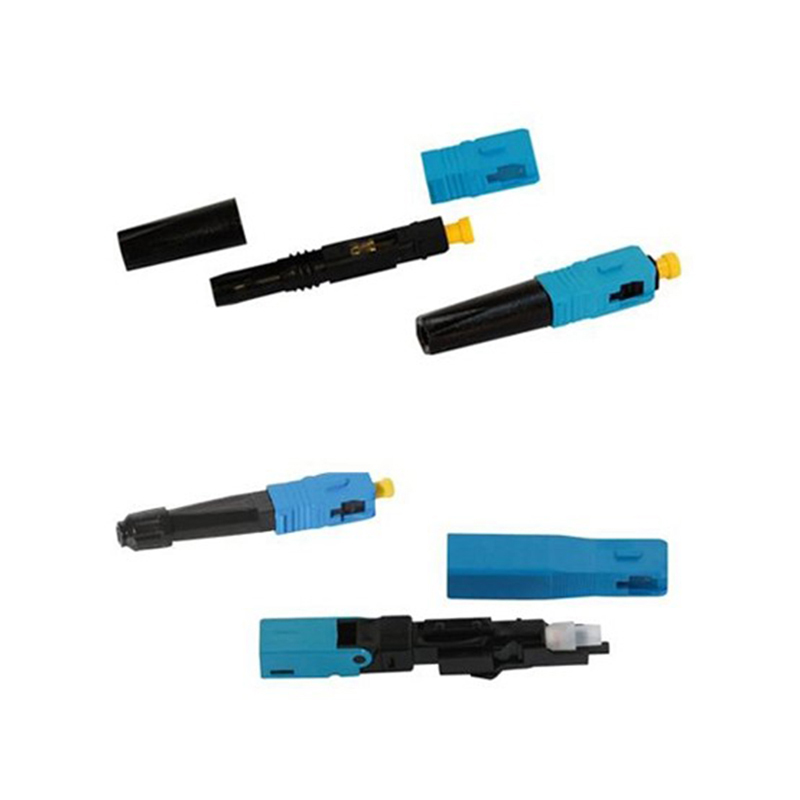
Fiber Solution-Quick Connector
4. Optical Performance Advantages Compared with Conventional Field Termination
Traditional field termination can be effective when performed by highly trained technicians with suitable equipment and adequate time. However, it may require polishing films, polishing fixtures, microscopes, inspection tools, curing equipment, and other accessories. The quality of the final connection can depend significantly on the experience of the installer and the condition of the tools.
The Fiber Solution-Quick Connector offers a different balance between factory preparation and field flexibility. By completing the fiber end-face grinding before shipment, the connector reduces the number of precision operations required during installation. The installer still needs to follow the correct preparation and locking procedure, but the most sensitive end-face preparation step is handled in the manufacturing environment.
This approach can provide several practical advantages:
• More consistent end-face preparation from one connector to the next.
• Lower dependence on field polishing skill.
• Reduced need to transport polishing equipment to every worksite.
• Faster response for repair, extension, and renovation projects.
• Easier organization of installation teams and tools.
• A clearer separation between factory quality control and field assembly work.
Compared with low-cost connectors that depend heavily on manual field preparation, the product can offer a more controlled installation experience. Compared with fully pre-terminated patch cords, it offers greater flexibility because the installer can establish the required cable or patch cord length at the actual installation site. This combination of factory-controlled optical preparation and field-adjustable deployment is particularly useful for projects with varying cable routes.
| Product characteristic | Practical value | Importance in network construction |
|---|---|---|
| Factory-ground fiber end face | Reduces dependence on field polishing | Supports more consistent optical preparation |
| Insertion loss below 0.5 dB | Helps preserve optical power budget | Useful in access, distribution, and equipment-room links |
| Typical insertion loss of 0.3 dB | Provides a favorable typical performance reference | Can help simplify link planning when combined with other specifications |
| Return loss above 45 dB for UPC | Limits reflected optical energy | Supports stable operation of optical transmission systems |
| Repeatable installation for more than three times | Supports rework and adjustment | Useful during installation, testing, and maintenance |
| Limited tooling requirement | Reduces field equipment burden | Improves mobility and installation efficiency |
| Compatibility with bow-type cables | Addresses common access-network cable construction | Suitable for FTTH and indoor distribution applications |
| Hot-melt installation option | Creates a stable on-site connection when properly performed | Useful for projects requiring reliable field termination |
5. Repeatable Installation and Rework Capability
The product can be installed repeatedly for more than three times while maintaining stable performance, according to the supplied product specifications. This feature is valuable because installation work does not always proceed perfectly on the first attempt. A technician may need to correct cable routing, adjust the termination position, replace a damaged section, or reopen a connection during testing.
Reusability can reduce material waste and support more practical troubleshooting. In a large project, a connector that cannot tolerate any reinstallation may lead to unnecessary replacement whenever a positioning error occurs. A connector designed for repeated installation gives the installer a greater margin for correction, provided that the prescribed method is followed and the connector remains free from contamination or physical damage.
Repeated installation should not be interpreted as permission to handle the optical interface carelessly. Each reinstallation should include inspection of the fiber end, confirmation of the cable position, verification of the locking mechanism, and cleaning where required. The connector should also be replaced if its mechanical components, fiber, or housing show damage. Proper handling is essential to preserve the intended optical performance.
5.1 Benefits During Initial Deployment
During a new deployment, cable routing may change as cabinets, boxes, and customer-side equipment are positioned. Installers can use the connector’s repeatable installation capability to correct small errors without immediately discarding the component. This can make work more efficient when actual site conditions differ from the original drawings.
5.2 Benefits During Testing
Network testing may reveal an unexpected loss or connection issue. A connector that can be carefully reinstalled allows the technician to check cable seating, alignment, and routing before replacing the entire assembly. This supports a more methodical troubleshooting process and can reduce the number of components consumed during commissioning.
5.3 Benefits During Maintenance
In operational networks, maintenance teams may need to move, reorganize, or replace sections of a fiber distribution arrangement. The ability to reinstall the connector more than once can be useful when the work involves temporary disconnection, route adjustment, or cabinet modernization. This is especially relevant in central equipment rooms, railway communication facilities, and other infrastructure where service interruptions must be carefully controlled.
6. Hot-Melt Installation Option
The hot-melt type quick connector is installed on site through a hot-melting process. When the appropriate equipment and procedures are used, this method can provide stable performance and reliability. Hot-melt installation is different from a simple mechanical termination because the process relies on controlled heating and bonding to secure the prepared fiber and connector components.
The main advantage of the hot-melt approach is that it can provide a firm and repeatable connection when the equipment is properly maintained and the procedure is correctly followed. It is suitable for technicians and contractors who require field installation flexibility but also want a connection method that is more controlled than an improvised mechanical assembly.
At the same time, the performance of a hot-melt quick connector depends on the stability of the equipment used to make it. Temperature control, heating time, fixture condition, material handling, and technician operation can all affect the result. Unstable equipment may create unnecessary losses or weaken the connection. For this reason, the installation process should include equipment inspection, temperature verification, routine maintenance, and operator training.
This dependence on equipment stability is not a weakness unique to one product. It is a general consideration for any installation method involving controlled heat or bonding. The important point is that the product’s performance can be supported by a disciplined installation system. Wanma Technology’s manufacturing experience in communication equipment and passive optical components provides a relevant foundation for defining product procedures and emphasizing the relationship between component quality and installation quality.
7. Limited Tooling and Field Efficiency
According to the product information, the installation process requires only a limited number of tools, principally wire strippers and a cutting knife for the stated quick-installation procedure. Reducing the tooling burden can simplify logistics for installation teams. Technicians can carry a more compact kit, move more easily between work areas, and begin work without setting up a complete polishing station.
Limited tooling can also be advantageous in locations where workspace is restricted. Residential units, narrow equipment rooms, overhead communication spaces, and crowded distribution cabinets may not provide sufficient room for large tools. A compact process can help technicians maintain better control of the work area and reduce the risk of damaging nearby cables or equipment.
Tool reduction may also lower training requirements for basic installation work. A technician still needs technical knowledge of fiber handling, stripping, cleaving, bend-radius control, connector inspection, and optical testing. However, removing unnecessary process steps can make training more focused and reduce the number of variables that must be mastered before a technician can work productively.
For contractors, the potential benefits extend to project management. Fewer tools can mean simplified transportation, reduced equipment maintenance, and easier preparation of mobile installation teams. These advantages become more noticeable in geographically distributed projects, including residential access networks, railway stations, urban rail corridors, and regional communication upgrades.
8. Manufacturing Strengths and Process Control
The performance of a quick connector begins before it reaches the installation site. Manufacturing quality affects the geometry of the connector, the condition of the fiber interface, the reliability of mechanical components, and the consistency of the finished product. A supplier with experience in passive optical components can coordinate these elements more effectively than a manufacturer focused only on basic plastic or mechanical assembly.
Wanma Technology Co., Ltd. was established in 1997 and specializes in communication cabinets, communication electronic equipment, and passive optical components. This product scope connects the quick connector with a wider understanding of network infrastructure. A connector is not an isolated part; it must fit into cabinets, boxes, distribution frames, fiber-management systems, and the operating practices of network installers.
8.1 Controlled Optical End-Face Preparation
Factory grinding of the fiber end face is an important manufacturing operation. The process must maintain suitable geometry, surface quality, cleanliness, and protection from contamination before shipment. Consistent preparation helps support the stated insertion-loss and return-loss targets. It also gives installers a connector that is ready for the next stage of field assembly rather than requiring complete end-face preparation at the worksite.
8.2 Component Coordination
A connector includes optical, mechanical, and protective elements that must work together. The cable must be held securely, the fiber must remain aligned, and the housing must withstand ordinary handling during installation and maintenance. Manufacturing coordination is necessary to ensure that these parts operate as one assembly. Experience with communication cabinets and electronic equipment can contribute to a more system-oriented approach to product design.
8.3 Process Repeatability
Repeatability is essential for products used in network projects. Contractors need predictable installation behavior across large quantities. A supplier must therefore maintain consistent procedures for assembly, inspection, packaging, and shipment. Stable processes make it easier for customers to plan installation labor and evaluate field results.
8.4 Support for Customized Solutions
Wanma Technology develops, manufactures, and markets its own branded products while also providing integrated solutions for customized products. This capability can be valuable when a project requires more than a standard connector. Network operators may need matching cabinets, distribution products, passive components, or installation arrangements. A manufacturer with broader product and solution capabilities can help coordinate these requirements instead of treating each component as an unrelated purchase.
8.5 Application-Oriented Development
The company’s products are used in Ethernet networks, optical communication networks, central equipment rooms, national high-speed railways, and urban rail transit systems. These environments impose different requirements for organization, serviceability, installation efficiency, and long-term maintenance. Exposure to these applications can encourage product development that considers how connectors are actually installed and maintained rather than focusing only on laboratory specifications.
9. Advantages for Railway and Urban Transit Networks
Railway and urban transit networks rely on communication systems for data transmission, monitoring, control, passenger information, security, and operational coordination. Fiber connections may be distributed across stations, equipment rooms, trackside facilities, control centers, and communication cabinets. Installation teams often work under strict scheduling requirements, and maintenance access may be limited once a system enters service.
A quick connector can support these projects by enabling practical termination and repair work in equipment rooms and distribution locations. The factory-prepared optical interface can help reduce dependence on field polishing, while the limited tooling requirement can improve mobility for technicians working across multiple facilities.
The connector’s compatibility with bow-type cables is also relevant to indoor and access-side deployments associated with station buildings, administrative areas, passenger facilities, and localized communication links. The product should always be selected according to the cable construction, connector type, optical interface, environmental conditions, and project specifications. However, its intended application range makes it a practical option for many fiber termination points within broader transportation communication infrastructure.
10. Advantages for Ethernet and FTTH Modernization
Ethernet and fiber-to-the-home modernization projects often combine new construction with existing infrastructure. Contractors may need to extend routes, replace obsolete components, connect new subscribers, or reorganize distribution boxes without rebuilding the entire network. This creates a demand for products that are fast to install but sufficiently reliable for long-term service.
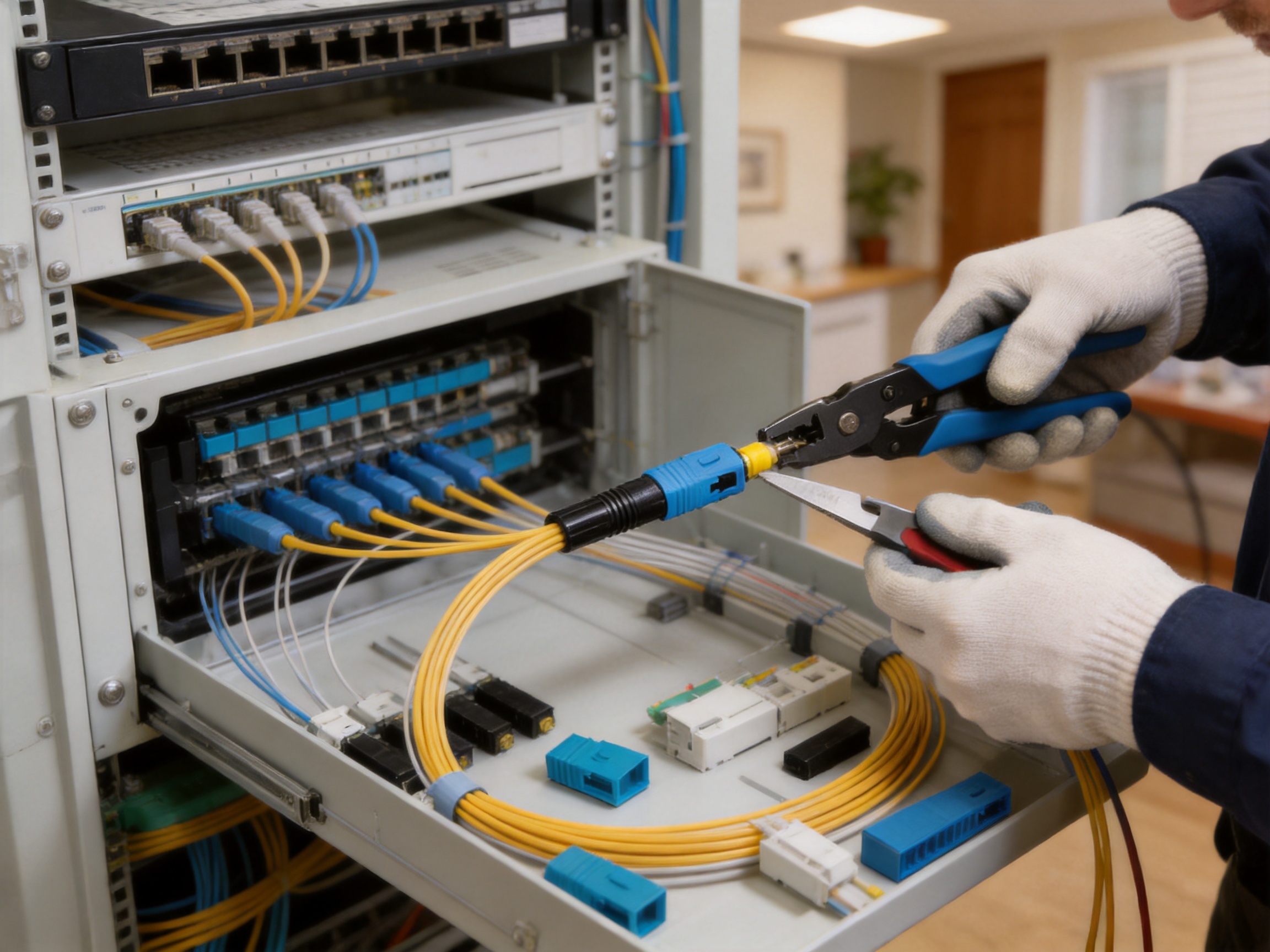
The Fiber Solution-Quick Connector can support this modernization process in several ways. Its field-installable design allows patch cord or cable lengths to be established according to actual conditions. Its factory-ground fiber end face helps make optical preparation more consistent. Its reinstallation capability provides flexibility when routes need adjustment. Its limited tooling requirement is useful for technicians moving between customer premises, cabinets, and equipment rooms.
These benefits can be especially valuable in dense residential areas. Installation teams may encounter different wall layouts, cabinet positions, cable routes, and indoor termination locations from one building to another. A connector that combines factory preparation with field adaptability can help teams avoid excessive preassembly and reduce the risk of ordering large quantities of custom-length assemblies that may not match actual site conditions.
11. Installation Quality and Recommended Work Practices
Although the connector is designed to simplify installation, professional work practices remain essential. The cable should be inspected before preparation, and the correct stripping and cutting sequence should be followed. The fiber must be protected from dust, oil, fingerprints, sharp bends, and accidental impact.
Installers should verify that the connector is the correct version for the intended cable and optical interface. The cable should be routed with an appropriate bend radius, and tensile forces should not be transferred to the optical fiber or connector body. After assembly, the connection should be visually inspected and tested using suitable optical measurement equipment.
Cleaning is particularly important. A factory-ground end face can still become contaminated during transportation, storage, or installation. Dust or residue on the interface may increase insertion loss and reduce return-loss performance. Cleaning procedures should be compatible with the connector and should be carried out using suitable fiber-cleaning materials.
For hot-melt installation, the heating equipment should be inspected before use. Temperature stability, heating time, fixture condition, and material compatibility should be confirmed. Operators should follow the approved procedure rather than relying on informal adjustments. Proper equipment stability helps avoid unnecessary losses caused by artificial errors.
11.1 Basic Installation Sequence
A typical installation workflow begins with confirming the cable type and connector model. The technician then measures and prepares the cable, removes the required jacket or coating, and handles the fiber carefully. The fiber is positioned in the connector according to the prescribed method, and the mechanical or hot-melt process is completed.
After the connector is assembled, the technician should check the physical security of the cable, confirm that the fiber is not under excessive tension, and inspect the optical interface. The connection should then be tested. If the result is outside the project requirement, the technician should review cleanliness, fiber preparation, alignment, cable routing, and equipment condition before replacing the connector.
12. Quality, Delivery, and Partnership Value
Component quality is only one part of a successful network project. Customers also need dependable delivery, technical communication, product consistency, and responsive support. Wanma Technology emphasizes reliable product quality, timely delivery, and long-term strategic partnerships with industry leaders. These priorities are relevant to contractors and network operators that must coordinate material arrival with construction schedules.
A supplier with a broad communication-product portfolio can also support more efficient procurement. Instead of sourcing every cabinet, passive component, and optical accessory from unrelated suppliers, customers may be able to coordinate multiple requirements through a company that understands complete network arrangements. This can simplify communication about compatibility, packaging, deployment, and project documentation.
The company’s sales network covers more than 20 countries and regions, including the United States, Australia, the United Kingdom, Italy, South Africa, and Ghana. International experience can help a manufacturer understand different project environments, procurement expectations, and installation practices. For global customers, supplier experience across multiple markets may also support clearer communication and more predictable order coordination.
Wanma Technology’s stated mission is to create satisfaction for customers, fulfillment for employees, and value for society. In product terms, this mission is reflected in an emphasis on practical network components, integrated solutions, reliable delivery, and long-term cooperation. The quick connector is one example of a product designed to address a specific field challenge while fitting within a larger communication-infrastructure portfolio.
13. Selection Considerations for Buyers
Before ordering a quick connector, buyers should confirm the cable construction, fiber type, connector interface, polishing style, installation method, and intended application. The product is designed for bow-type cables, so compatibility should be verified before deployment. Buyers should also confirm whether the project requires UPC performance and whether the available installation equipment is suitable for the hot-melt version.
Network planners should evaluate the connector as part of the complete optical link. The specified insertion loss and return loss are important, but the total link budget also includes cable attenuation, adapters, splitters, splices, and other connectors. A connector with favorable characteristics cannot compensate for poor cable routing or contamination elsewhere in the link.
Project teams should also consider installation volume and skill levels. For high-volume projects, factory-prepared connectors may reduce the training and equipment burden associated with field polishing. For projects with many different cable lengths, the field-installable format may provide greater flexibility than a large inventory of preassembled patch cords.
Finally, buyers should consider service and supply requirements. Large projects may benefit from discussing packaging, delivery schedules, documentation, installation guidance, and product matching with the manufacturer before placing an order. Clear preparation can reduce delays and help maintain consistent installation quality across multiple sites.
14. Q&A
Q1: What type of cable is the connector designed for?
The connector is designed for the connection of bow-type cables. Buyers should confirm the exact cable construction and connector configuration before ordering to ensure compatibility with the intended network application.
Q2: Where can the connector be used?
It is suitable for optical fiber termination boxes, optical fiber distribution boxes, household intelligent boxes, optical fiber socket boxes, optical distribution frame renovation, and the preparation of patch cord lengths in new optical distribution frames.
Q3: What optical performance is specified?
The stated insertion loss is less than 0.5 dB, with a typical value of 0.3 dB. The stated return loss is greater than 45 dB for UPC. Actual field performance depends on installation quality, cleanliness, cable condition, mating components, and test conditions.
Q4: Why is the factory-ground fiber end face important?
Factory grinding helps reduce the amount of precision end-face preparation required in the field. It can improve consistency by moving an important optical preparation step into a controlled manufacturing environment. Proper cleaning and installation are still required after the product reaches the worksite.
Q5: How many times can the connector be installed?
The product information states that it can be installed repeatedly for more than three times with stable performance. Reinstallation should be performed carefully, and any connector showing damage or contamination that cannot be removed should be replaced.
Q6: What tools are needed for installation?
The stated basic installation process requires few tools, including wire strippers and a cutting knife. The exact tool list may vary according to the connector version and project procedure. Hot-melt versions additionally require suitable and stable hot-melt equipment.
Q7: What is the hot-melt type quick connector?
It is a version installed on site through a hot-melting process. When the correct equipment, temperature control, materials, and procedures are used, it can provide stable performance and reliability.
Q8: Can hot-melt equipment affect connector performance?
Yes. The stability of the hot-melt equipment can affect the final result. Temperature variation, incorrect heating time, fixture problems, or improper operation may cause unnecessary optical loss or weaken the assembly. Equipment inspection and operator training are therefore important.
Q9: Is the connector suitable for optical distribution frame renovation?
Yes. It is intended for ODF renovation and can also be used to establish patch cord lengths when constructing a new optical distribution frame. Its field-installable format can help technicians adapt connections to actual cabinet conditions.
Q10: How does it compare with a fully pre-terminated patch cord?
A fully pre-terminated patch cord may provide convenience when standard lengths are known in advance. The quick connector provides more field flexibility because the technician can establish the required length at the installation location. The best choice depends on project volume, cable routes, installation conditions, and maintenance requirements.
Q11: How does it compare with manual field polishing?
Manual field polishing can be effective but requires suitable tools, controlled procedures, and trained personnel. This connector reduces the need for field polishing because the fiber end face is prepared in the factory. It therefore aims to improve installation efficiency and reduce process variation.
Q12: What should be checked after installation?
The technician should check cable security, bend radius, connector seating, optical-interface cleanliness, and the absence of excessive tensile force. The completed link should also be tested using suitable optical measurement equipment and documented according to the project requirements.
Q13: Is the product suitable for railway communication projects?
It can be used in suitable fiber termination applications within railway and urban transit communication infrastructure. The final selection must consider the project’s cable type, cabinet design, environmental requirements, optical specifications, and applicable installation standards.
Q14: What company manufactures the product?
The product is manufactured by Wanma Technology Co., Ltd., a company established in 1997 that specializes in communication cabinets, communication electronic equipment, passive optical components, and integrated communication solutions.
Q15: What makes the manufacturer suitable for integrated projects?
The company develops, manufactures, and markets its own products and also provides integrated solutions for customized products. Its products are used in Ethernet networks, optical communication networks, central equipment rooms, high-speed railways, and urban rail transit systems.
15. Conclusion
The Fiber Solution-Quick Connector is designed to address a practical challenge in modern optical network construction: how to combine reliable optical preparation with fast, flexible, and manageable field installation. Its factory-ground fiber end face, specified insertion loss below 0.5 dB, typical insertion loss of 0.3 dB, and return loss above 45 dB for UPC provide a strong performance foundation. Its ability to support repeated installation and its limited tooling requirement add practical value for deployment, testing, renovation, and maintenance.
The hot-melt version offers another installation option for projects requiring a stable field connection, provided that the hot-melt equipment is reliable and the process is carefully controlled. This emphasis on equipment stability highlights an important principle: connector performance depends not only on product design but also on installation discipline, cleanliness, cable preparation, and optical testing.
Compared with connectors that depend entirely on manual field polishing, the product can reduce process variation and equipment requirements. Compared with fixed-length pre-terminated assemblies, it can provide greater adaptability when patch cord or cable lengths must be determined at the worksite. These advantages make it suitable for optical termination boxes, distribution boxes, intelligent household boxes, fiber socket boxes, ODF renovation, FTTH modernization, Ethernet networks, and selected railway or urban transit applications.
Supported by Wanma Technology’s experience in communication cabinets, electronic equipment, passive optical components, and integrated network solutions, the connector forms part of a broader approach to network infrastructure manufacturing. For contractors, operators, and system integrators seeking a practical balance between optical performance, installation efficiency, and field flexibility, it represents a useful option for reliable fiber termination.
References
1. Product technical information for the Fiber Solution-Quick Connector, including application areas, optical performance, installation features, and hot-melt installation guidance.
2. General principles of fiber-optic connector design, end-face preparation, insertion loss, return loss, and optical link budgeting.
3. Industry practices for fiber-to-the-home deployment, optical distribution boxes, termination boxes, and optical distribution frame organization.
4. General installation and maintenance practices for passive optical components in Ethernet, access, railway, and urban transit communication networks.
5. Manufacturer information concerning Wanma Technology Co., Ltd., its company history, product portfolio, application markets, manufacturing capabilities, and integrated communication solutions.
Product: Fiber Solution-Quick Connector
PREV:No previous
article
NEXT:Indoor AC Metal-Clad Withdrawable Switchgear: Safe, Flexible, and Intelligent Medium-Voltage Power Distribution
NEXT:Indoor AC Metal-Clad Withdrawable Switchgear: Safe, Flexible, and Intelligent Medium-Voltage Power Distribution
Interested in cooperation or have questions?
Related products
-
-
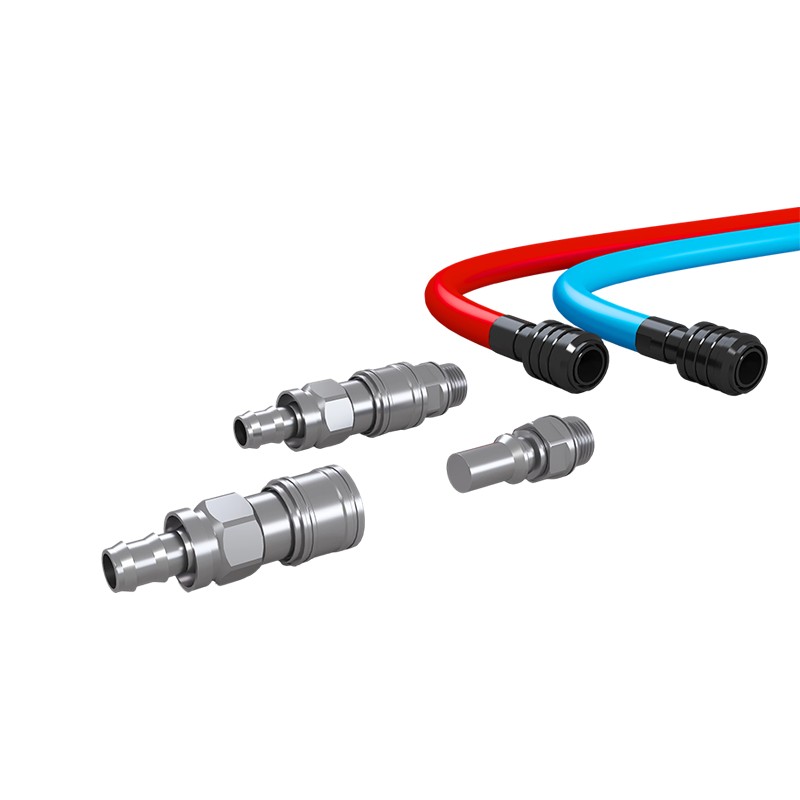
Product OverviewWM-UQD Liquid Cooling Quick Disconnect Coupling is a fluid connection component specifically designed for online maintenance of liquid cooling systems. Both the plug and socket are equ...
See Details -
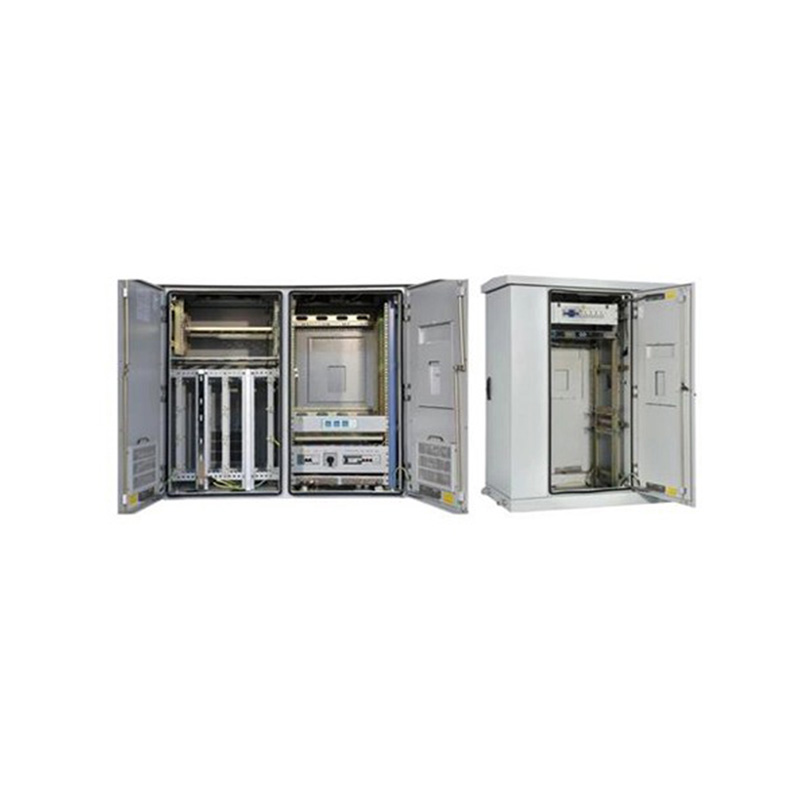
Application:It is used for the fixed network and broadband access, providing physical working environment and security system for the workstation in wired network. Features:•The cabinet is composed of...
See Details -
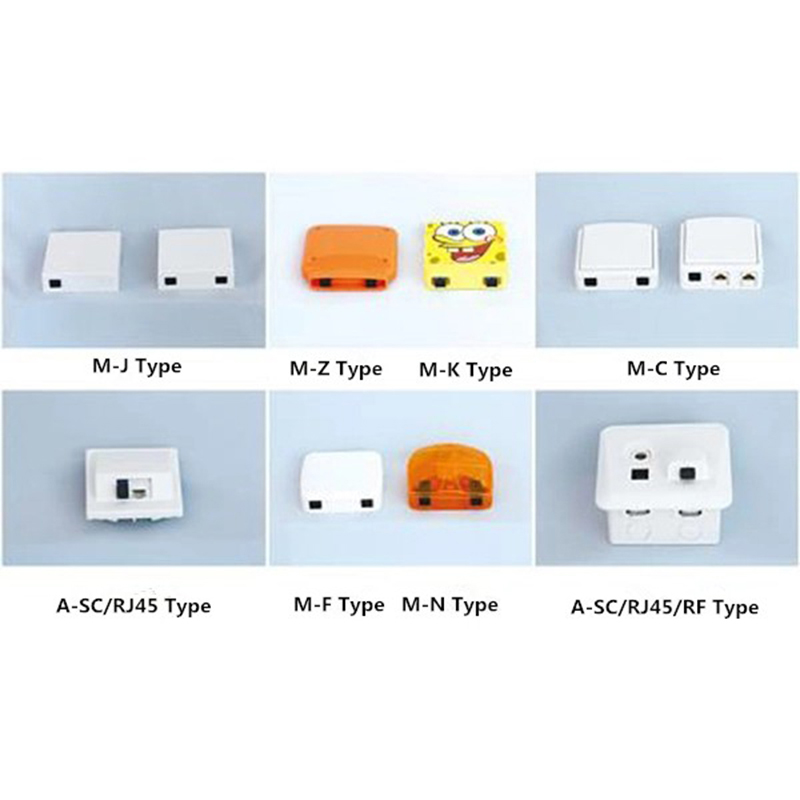
Application:It can be applied to FTTH, FTTO, FTTB applications and also has the functions of splicing, welding and installing connectors. Features:•Large variety; Full specification; Pleasing appearan...
See Details
Ready to Get started ? Contact Us Now !

Product.
Contact Details.
-
 +86 13958188250
-
 +86 13958188250
-
 [email protected]
-
 AUDIT Email:[email protected]
- Wanma Industrial Park Taihu Yuan Town Lin'an District Hangzhou City China.
QR Code

Copyright © Wanma Technology Co., Ltd. All Rights Reserved.
Privacy
Custom Ethernet Optical Network Railway Transit Equipments Suppliers
