

 English
 Français
 Español
 Português
 عربى






Application:It can be used directly in equipment room and other rugged environments without the need to use protective conduit to save space, lower cost, and improve the convenience of network mainten...
See DetailsArmored Soft Fiber Patch Cords for Reliable Network Connections in Demanding Environments
Content
- 1 1. The Role of Fiber Patch Cords in Modern Networks
- 2 2. Product Construction and Protection Concept
- 3 3. Advantages Over Ordinary Unarmored Patch Cords
- 4 4. Advantages Over Rigid Armored Cables and Separate Conduit Systems
- 5 5. Space Savings and Installation Efficiency
- 6 6. Safety and Maintenance Benefits
- 7 7. Application Areas
- 8 8. Manufacturing Strengths and Process Control
- 9 9. Customization and Integrated Solutions
- 10 10. Comparison of Common Protection Options
- 11 11. Installation Recommendations
- 12 12. Total Cost and Lifecycle Considerations
- 13 13. Reliability in Network Modernization Projects
- 14 14. Company Capabilities and Market Support
- 15 15. How to Select the Appropriate Armored Soft Patch Cord
- 16 16. Sustainability and Resource Efficiency
- 17 17. Quality, Delivery, and Partnership Value
- 18 18. Frequently Asked Questions
- 18.1 Q1: What is an armored soft fiber patch cord?
- 18.2 Q2: Can it be installed without separate protective conduit?
- 18.3 Q3: What hazards does the stainless steel spiral help address?
- 18.4 Q4: Is the product as flexible as an ordinary patch cord?
- 18.5 Q5: What operating temperature range is specified?
- 18.6 Q6: Where can armored soft patch cords be used?
- 18.7 Q7: How does the product compare with rigid armored cable?
- 18.8 Q8: Can customized versions be produced?
- 18.9 Q9: Does armor eliminate the need for careful installation?
- 18.10 Q10: What makes the supplier suitable for communication infrastructure projects?
- 19 Conclusion
- 20 References
- 21 Product: Fiber Solution-Armored Soft Patch Cords
Modern communication networks increasingly extend beyond controlled equipment rooms. Optical connections may be installed in railway transit systems, industrial facilities, telecommunications cabinets, data centers, field enclosures, and other locations where cables are exposed to movement, pressure, temperature changes, accidental handling, and rodent activity. In these environments, an ordinary fiber patch cord may not provide sufficient mechanical protection, while a conventional rigid armored cable may be unnecessarily difficult to route and maintain.
Armored soft fiber patch cords provide a practical solution between these two options. They combine the transmission performance and installation flexibility of a standard optical patch cord with the additional protection of a small-bore stainless steel spiral protective conduit. This construction helps safeguard the optical fiber against torsion, tensile stress, compression, accidental impact, and external interference while preserving the ability to bend, position, and manage the cord as conveniently as an ordinary cable.
The Fiber Solution-Armored Soft Patch Cords supplied by Wanma Technology Co., Ltd. are designed for direct use in equipment rooms and other rugged environments without requiring separate protective conduit. By integrating protection into the cord itself, the product can reduce installation space, simplify network maintenance, lower the need for auxiliary materials, and improve operational safety. Its specified operating temperature range from -40 degrees C to +70 degrees C also supports deployment in a broad variety of indoor and semi-exposed environments.
This article examines the product structure, operating advantages, manufacturing strengths, installation value, application suitability, quality considerations, and selection factors associated with armored soft fiber patch cords. It also explains why integrated armored patch cords can offer practical advantages over unprotected patch cords and less flexible rigid protection systems.
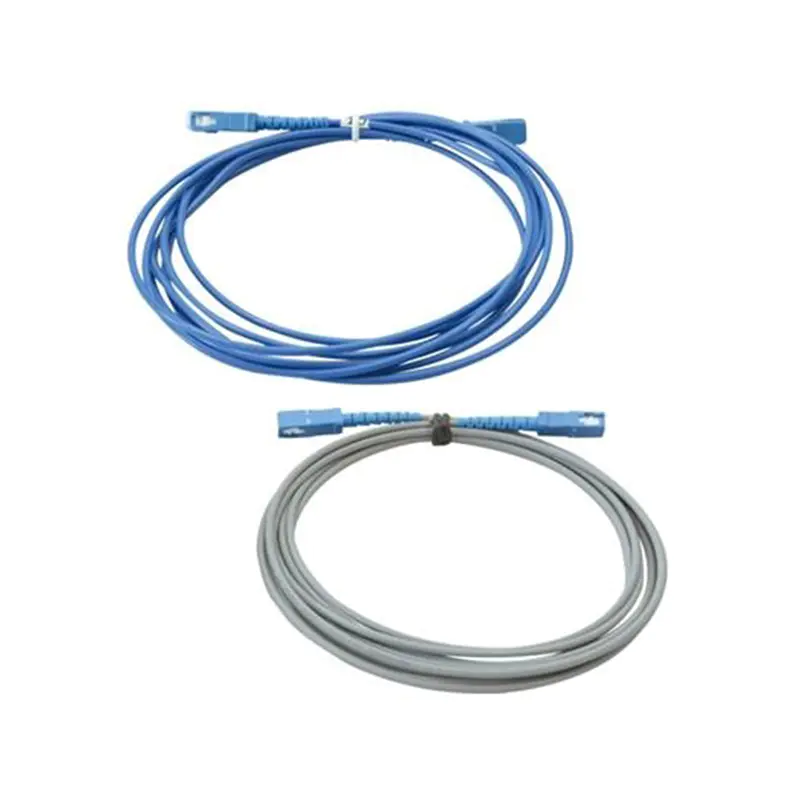
Fiber Solution-Armored Soft Patch Cords
1. The Role of Fiber Patch Cords in Modern Networks
Fiber patch cords are short optical cables used to connect equipment, distribution panels, adapters, optical modules, and other components within a communication system. They are essential to the final connection between active and passive network equipment. Although they are often shorter than backbone cables, their performance and reliability are important because a single damaged or poorly installed patch cord can interrupt a network link.
In a conventional equipment room, patch cords may be routed through cabinets, trays, racks, and cable management systems. These areas can still expose the cables to repeated bending, pulling, compression from cabinet doors, accidental stepping, and frequent handling by maintenance personnel. In railway transit and industrial applications, vibration and mechanical disturbance can create additional risks.
Optical fiber itself is highly capable but relatively sensitive to improper mechanical treatment. Excessive bending can increase optical attenuation or damage the fiber structure. Repeated twisting can place stress on the fiber and its protective layers. Pulling forces can affect the connection between the cable jacket, strength elements, and connectors. Compression can create local deformation that weakens the cable or affects transmission stability.
For this reason, network designers must consider more than optical specifications. A suitable patch cord should also be easy to install, resistant to routine mechanical hazards, compatible with available space, and convenient to replace or rearrange. Armored soft patch cords are intended to address these practical requirements in a single integrated product.
2. Product Construction and Protection Concept
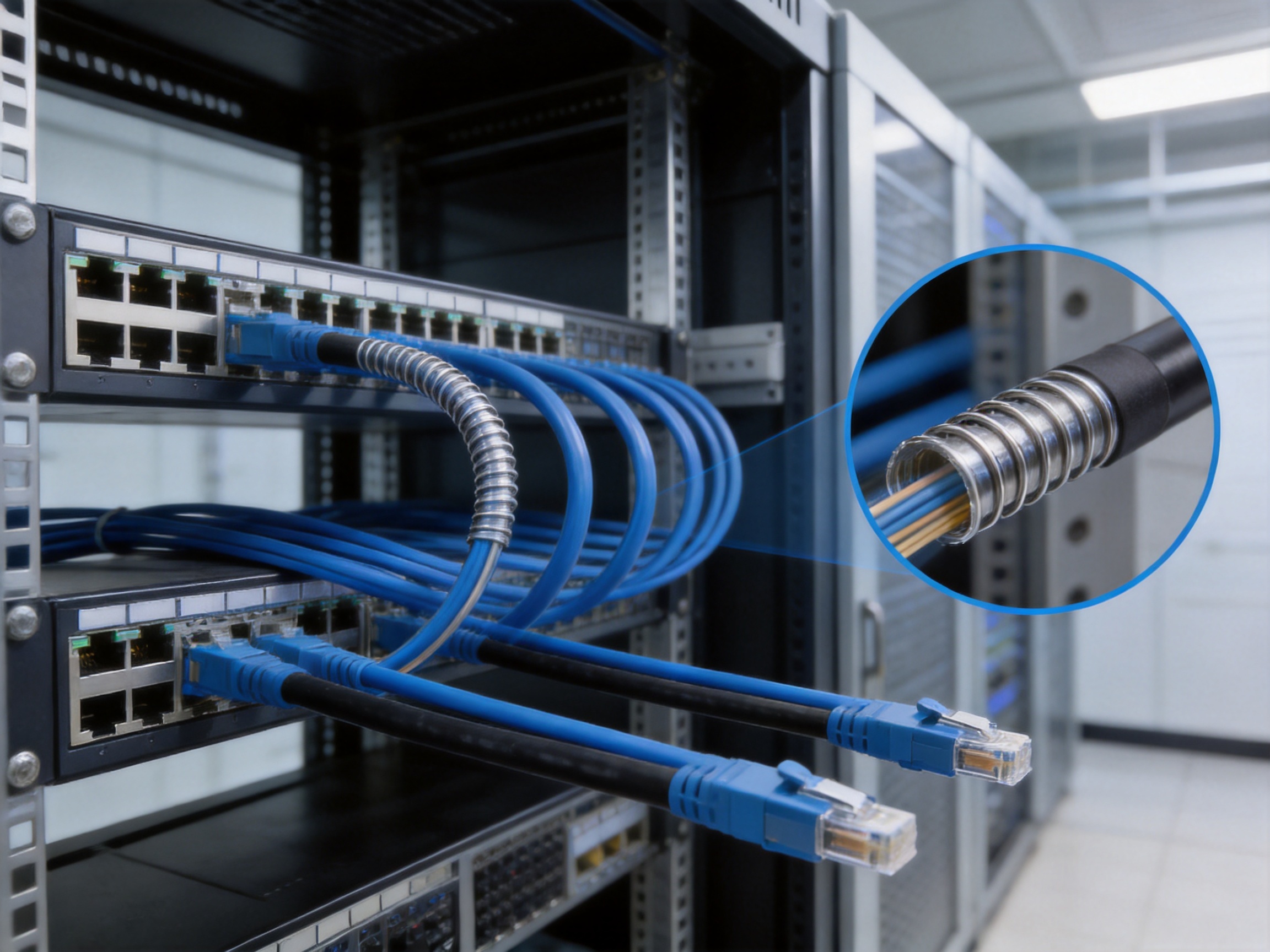
The principal protective feature of the product is a small-bore stainless steel spiral protective conduit. This conduit surrounds and protects the optical cable while maintaining a flexible form. Unlike a rigid metal tube, the spiral structure can follow changes in direction and accommodate practical routing requirements inside equipment rooms and cabinets.
The stainless steel construction provides a mechanical barrier between the optical cable and many common external hazards. It can help resist abrasion, localized impact, accidental contact with sharp edges, and pressure from routine handling. The spiral configuration also contributes to flexibility, allowing the cord to be arranged without the need for extensive conduit installation.
The term “soft patch cord” refers to the product’s practical handling characteristics. It is not intended to behave like a completely unprotected cable, nor like a stiff armored assembly. Instead, it seeks to provide a balanced combination of flexibility and protection. Installers can place the cord in a preferred route, adjust its position, and perform maintenance without dealing with the rigidity associated with heavy protective tubing.
The integrated design means that the protective function is supplied as part of the patch cord. Separate conduit, additional wrapping, or improvised protective measures may not be necessary in many installation conditions. This can reduce the number of components used in a connection and make the final installation cleaner and easier to inspect.
2.1 Torsion Protection
Torsion occurs when a cable is twisted around its longitudinal axis. It may be caused by incorrect handling, repeated repositioning, tight routing, or equipment movement. Excessive torsion can transfer stress to the fiber, buffer, strength members, and connector termination.
The spiral protective conduit helps prevent twisting forces from being concentrated directly on the optical cable. It creates a protective outer structure that can absorb or distribute part of the mechanical action. Proper installation remains important, but the additional armor provides a greater margin of protection than an ordinary unarmored patch cord.
2.2 Tensile and Compression Strength
Tensile stress occurs when a cord is pulled, while compression stress occurs when the cord is pressed, pinched, or loaded. Equipment-room maintenance can expose cables to both conditions. A patch cord may be pulled when a rack is moved, pressed by a cabinet panel, or placed near other components in a crowded installation.
The armored design adds mechanical reinforcement that helps the cord withstand these routine risks. It does not eliminate the need to follow suitable handling practices, connector guidelines, and bend-radius requirements. However, it can improve the overall resilience of the connection and reduce the likelihood that an ordinary handling event will cause immediate damage.
2.3 Rodent Resistance
Rodent damage remains a concern in warehouses, utility areas, transportation facilities, industrial buildings, and infrastructure spaces. Unprotected polymer jackets can be vulnerable to chewing, which may expose the optical elements or create an electrical and mechanical safety problem in hybrid installations.
The stainless steel spiral conduit acts as a physical barrier against many rodent-related threats. This feature is especially valuable where cable routes pass through less controlled spaces or where regular inspection is difficult. Rodent resistance can help reduce unplanned replacement work and protect network continuity.
2.4 Temperature Adaptability
The product is specified for operation from -40 degrees C to +70 degrees C. This range covers many indoor equipment rooms, unheated technical spaces, railway-related facilities, cabinets, and other environments that experience seasonal or operational temperature changes.
Temperature performance is important because material properties can change when conditions become very cold or hot. Jackets may become less flexible at low temperatures, while excessive heat can accelerate aging or affect dimensional stability. A product designed for a broad range can provide more dependable service across varied installation locations, provided that the complete system environment remains within the applicable requirements.
3. Advantages Over Ordinary Unarmored Patch Cords
Ordinary patch cords are often suitable for protected indoor applications where cables are neatly routed and rarely disturbed. They are generally lightweight and economical. However, their simpler construction may leave them more exposed to abrasion, crushing, twisting, pulling, and rodent damage.
The armored soft patch cord introduces a protective layer without requiring installers to add a separate conduit. This is its principal advantage over an unarmored alternative. The additional mechanical protection can reduce vulnerability during installation and service, particularly when the cord is located in a crowded cabinet, near metal edges, or in an area where personnel frequently access equipment.
Another advantage is the reduction of installation steps. With an unarmored cord, a project may need to specify cable guards, flexible conduit, protective sleeves, clips, or other accessories. These accessories can increase material costs and installation time. They may also create compatibility issues, occupy additional space, or make future maintenance more difficult.
Because the protective conduit is integrated, the installer can route the product as a single assembly. This can improve visual organization and make it easier to identify the complete connection. It can also simplify replacement because the protective function does not have to be removed and reinstalled separately.
Armored protection can be particularly valuable in network modernization projects. Existing cabinets often have limited spare capacity, and adding external conduit around every patch cord may not be practical. A soft armored cord can provide enhanced protection while preserving a comparatively compact routing profile.
4. Advantages Over Rigid Armored Cables and Separate Conduit Systems
Rigid armored cables and rigid protective tubes can offer strong mechanical protection, but they may be difficult to route in areas with limited space or frequent equipment access. Sharp changes in direction, dense rack layouts, and movable panels can make rigid systems inconvenient.
The soft spiral design provides a more adaptable alternative. It can be placed and used in a manner similar to an ordinary cable, allowing installers to make practical routing adjustments without specialized bending operations. This flexibility supports faster installation and can reduce the risk of creating excessive stress at connection points.
Separate conduit systems also require additional planning. The conduit must be selected for size, flexibility, compatibility, termination, and appearance. It may need separate fastening points and may make connector access more difficult. An integrated armored patch cord reduces these coordination requirements by combining the optical connection and protective structure in one finished product.
In maintenance situations, the difference can be significant. Technicians may need to move a patch cord temporarily to reach an optical module, inspect a panel, or replace equipment. A flexible armored cord can generally be repositioned more easily than a rigid protective assembly. This supports more convenient network maintenance and may reduce the time needed for service operations.
The product therefore occupies a useful position between ordinary flexible patch cords and heavy-duty rigid armored systems. It is intended for applications where additional protection is necessary but maximum rigidity would interfere with installation efficiency or operational convenience.
5. Space Savings and Installation Efficiency
Space is a major design concern in communication cabinets, equipment rooms, railway control systems, and data infrastructure. As networks expand, more optical modules, patch panels, power supplies, and monitoring devices must fit within existing locations. Cable protection that consumes excessive volume can reduce accessibility and create congestion.
The small-bore protective conduit helps maintain a compact profile. By integrating protection directly into the cord, the product can avoid the extra space associated with a separate outer conduit. This makes it easier to route multiple connections through limited cabinet spaces and may support cleaner separation between different cable groups.
Installation efficiency also improves because the technician handles one assembled product rather than coordinating a patch cord with an additional protective component. Fewer installation parts can reduce preparation time, simplify inventory management, and lower the possibility of missing or incorrectly sized accessories.
A well-organized installation is not only visually attractive. It can improve inspection, airflow management, access to equipment, and fault diagnosis. Technicians can trace a protected cord more easily when its cable path is orderly and when unnecessary external sleeves or improvised barriers are avoided.
The space-saving benefit may be especially useful in retrofit projects. Older communication rooms were not always designed for current fiber density. An integrated flexible armor system can add mechanical protection without requiring major cabinet reconstruction or extensive changes to existing cable management infrastructure.
6. Safety and Maintenance Benefits
Network maintenance involves repeated human interaction with cables and equipment. Technicians may disconnect and reconnect optical modules, replace panels, move cabinets, adjust cable routes, or work near other mechanical systems. Each activity presents an opportunity for accidental pulling, twisting, compression, or abrasion.
The armored soft patch cord provides an additional level of protection during these operations. Its outer stainless steel structure can help reduce the consequences of incidental contact and handling. This supports safer installation and maintenance because the optical connection is less dependent on perfect protection from the surrounding environment.
The product also helps reduce concern about disruption caused by external force. No cable can be considered immune to severe misuse, and correct routing remains necessary. Nevertheless, a more robust patch cord can improve network resilience when minor mechanical events occur.
Maintenance convenience is another important value. When a cable does not require separate conduit, technicians can inspect, reposition, and replace it with fewer steps. This can reduce the duration of service work and help minimize the time that equipment must remain accessible or partially disconnected.
In critical communication environments, maintenance efficiency directly supports availability. Railway transit networks, industrial communication systems, and central equipment rooms may have strict service windows. A product that simplifies handling can contribute to better maintenance planning and faster restoration when a connection needs attention.
7. Application Areas
7.1 Telecommunications Equipment Rooms
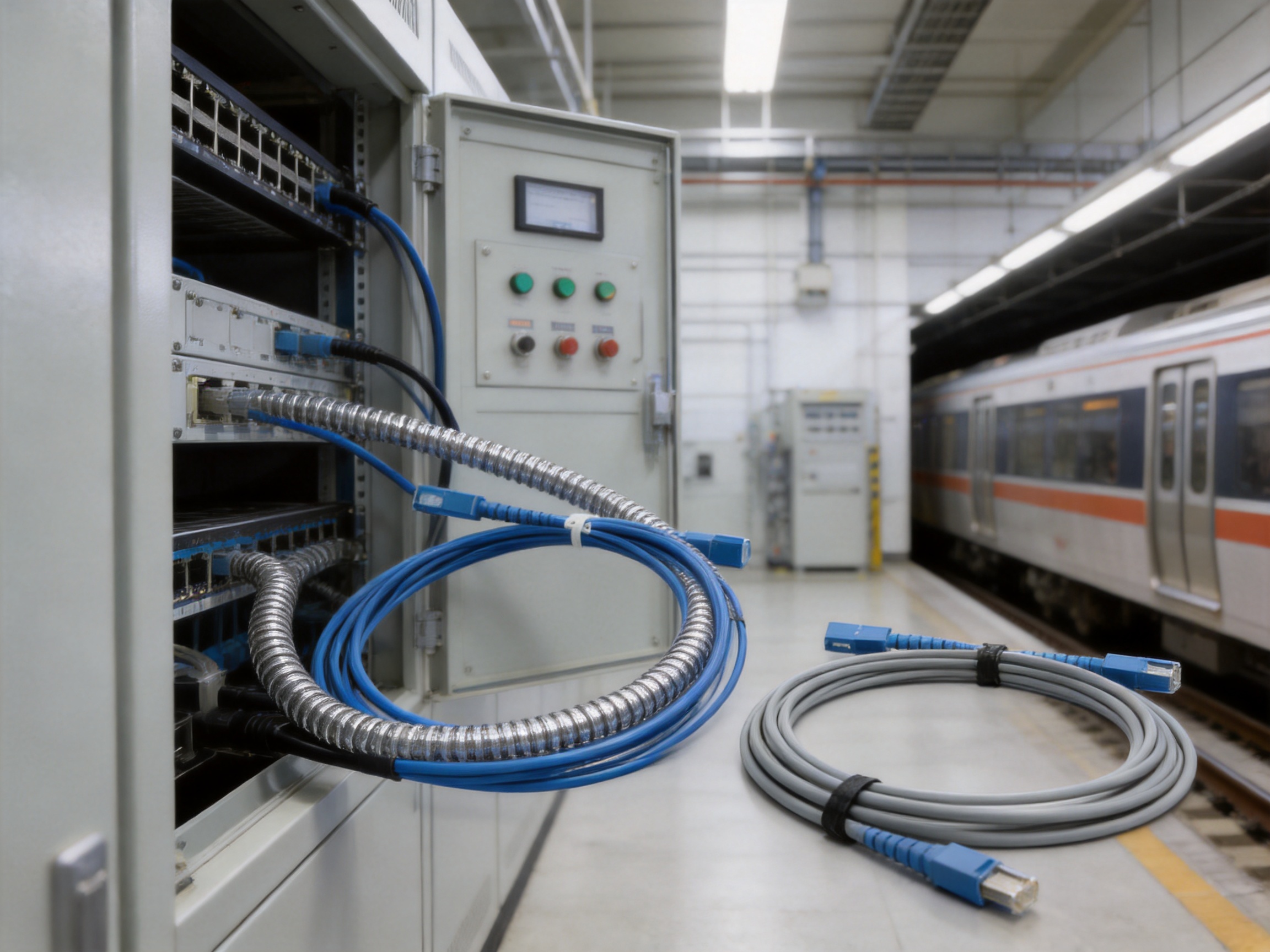
Telecommunications equipment rooms contain a high concentration of fiber distribution frames, switches, optical transport equipment, and patch panels. Cable density can be high, and maintenance work is often frequent. Armored soft patch cords can protect connections against accidental handling and improve routing organization within racks.
They are suitable for situations where ordinary patch cords may be vulnerable but where rigid conduit would take too much space. Their compact protective construction can support efficient use of cabinet capacity while maintaining access to connectors and equipment.
7.2 Ethernet Optical Networks
Ethernet optical networks depend on stable connections between switches, transmission devices, aggregation systems, and distribution panels. A damaged patch cord can cause packet loss, link interruption, or service degradation.
By providing mechanical protection at the connection level, armored soft patch cords can complement the reliability goals of Ethernet infrastructure. They are especially useful in equipment areas where cables are frequently rearranged or where network expansion has resulted in dense and complicated routing.
7.3 Railway and Urban Rail Transit Systems
Railway and urban rail transit facilities often combine communication, signaling support, surveillance, passenger information, control, and monitoring systems. Equipment may be installed in technical rooms, station facilities, trackside cabinets, and other locations where vibration, temperature variation, and limited access can affect cable performance.
The product’s resistance to torsion, tensile stress, compression, and rodent interference makes it appropriate for consideration in these demanding environments. The specified -40 degrees C to +70 degrees C operating range also supports deployment across a broad range of transit-related spaces, subject to project-specific environmental requirements.
7.4 Industrial Facilities
Industrial environments may contain machinery, moving equipment, metal structures, maintenance traffic, dust, and restricted cable routes. Even where the main fiber backbone is protected, short patch connections near cabinets and devices can remain exposed.
An armored soft patch cord provides a practical way to strengthen these vulnerable final connections. Its flexible structure can help technicians route cables around equipment while its metal protective layer adds resistance to common mechanical hazards.
7.5 Data Centers and Central Equipment Rooms
Data centers place strong emphasis on cable density, serviceability, airflow, documentation, and uptime. Patch cords may be connected and disconnected regularly as servers, switches, and optical systems are upgraded.
The product can be considered where patch cord protection and long-term handling durability are more important than minimizing initial material cost alone. Its integrated armor may help keep connections protected during frequent work while avoiding the clutter associated with separate conduit systems.
7.6 Field Cabinets and Infrastructure Networks
Field cabinets may be exposed to wider temperature changes, vibration, dust, limited working space, and occasional pest activity. The use of an armored soft patch cord can help address some of these conditions at the equipment interface.
Because the cord can be routed as a flexible assembly, it can suit cabinets where rigid protection would make access or installation unnecessarily difficult. Final suitability should always be confirmed against the project’s enclosure, humidity, chemical exposure, impact, and fire-safety requirements.
8. Manufacturing Strengths and Process Control
Product performance depends not only on the design concept but also on manufacturing consistency. A protective patch cord must combine optical reliability, mechanical strength, dimensional accuracy, connector quality, and stable assembly. Small variations in cable preparation or termination can affect installation performance even when the outer armor is robust.
Wanma Technology Co., Ltd. was established in 1997 and specializes in communication cabinets, communication electronic equipment, and passive optical components. Its long-term focus on communication infrastructure provides a foundation for developing products intended for network equipment rooms, optical communication systems, Ethernet networks, high-speed railway applications, and urban rail transit systems.
The company develops, manufactures, and markets products under its own product programs while also providing integrated solutions for customized requirements. This combination can support a more coordinated manufacturing process, from product design and material selection through assembly, inspection, packaging, and delivery.
8.1 Material Selection
Material selection is central to armored soft patch cord quality. The stainless steel protective conduit must provide a balance of flexibility, strength, corrosion resistance, and dimensional consistency. The optical cable jacket and internal components must remain compatible with the intended operating range and installation method.
Using appropriate materials helps ensure that the cord remains manageable during installation while preserving protective performance over time. Material consistency also supports stable production because the assembly process can be calibrated around predictable mechanical properties.
8.2 Spiral Conduit Forming
The forming of a small-bore stainless steel spiral conduit requires control of dimensions, pitch, surface quality, and flexibility. If the spiral is too tight or inconsistent, the cord may become unnecessarily stiff. If it is too loose or poorly formed, the protective effect may be reduced.
Controlled forming processes help maintain consistent performance from one production batch to another. Surface inspection is also important because burrs, sharp edges, or irregularities could affect the inner cable or create handling hazards. A well-controlled conduit should protect the fiber assembly without introducing avoidable points of stress.
8.3 Optical Cable Preparation
Before termination, the optical cable must be prepared carefully. Stripping, cutting, strength-member treatment, buffer handling, and jacket preparation all influence the quality of the finished patch cord. Inadequate preparation can lead to poor connector retention, excessive insertion loss, or mechanical weakness at the transition between the cable and connector.
Experienced production personnel and repeatable work instructions help reduce variation during these steps. Appropriate fixtures and inspection methods can further support consistent cable preparation across different product lengths and connector configurations.
8.4 Connector Termination
Connector termination is one of the most important stages in patch cord manufacturing. The fiber must be positioned accurately, polished correctly, and protected from contamination. Connector bodies, boots, strain-relief elements, and cable interfaces must be assembled in a manner that supports repeated field handling.
Clean working conditions and careful inspection are essential. Dust and contamination can affect optical performance, while poor polishing or misalignment can increase insertion loss and return loss. Mechanical inspection is also necessary to verify that the connector assembly remains secure when the cord is bent or moved during normal installation.
8.5 Integrated Armor Assembly
The protective conduit must be integrated with the optical cable without damaging the cable or restricting its practical flexibility. This requires control of routing, termination, transitions, and strain relief. The armor should remain securely associated with the cord while allowing the finished assembly to be placed and adjusted by the installer.
Integration quality can distinguish a properly engineered armored patch cord from an ordinary cable placed inside an improvised sleeve. A purpose-built assembly is designed to function as one product, with attention given to the relationship between the optical cable, protective spiral, connector area, and end transitions.
8.6 Inspection and Testing
Quality inspection may include visual checks, dimensional verification, connector end-face inspection, optical performance testing, mechanical evaluation, and packaging review. The exact test program depends on product specifications and customer requirements.
Optical testing helps verify that the finished patch cord provides the expected transmission characteristics. Mechanical checks help confirm that the armor and cable assembly withstand normal handling. Visual inspection can identify surface defects, assembly irregularities, contamination, or labeling problems before shipment.
A structured quality process supports dependable delivery and reduces the risk of field failures. It also enables manufacturers to identify recurring issues, improve production methods, and maintain stronger control over customized orders.
9. Customization and Integrated Solutions
Network projects often require different lengths, connector types, routing arrangements, labels, packaging formats, and documentation. A manufacturer with experience in communication equipment and passive optical components can be better positioned to coordinate these requirements.
Wanma Technology provides integrated solutions for customized products. This capability is valuable when a customer needs armored patch cords that match a specific cabinet design, equipment layout, project standard, or procurement schedule. Coordinated communication between design, manufacturing, and quality teams can reduce misunderstanding during order execution.
Customization should not be limited to appearance. It may include the mechanical structure, cable length, connector combination, identification system, production quantity, and inspection documentation. A clear technical specification is essential so that the final product meets the actual application rather than simply matching a general product category.
For large network projects, consistent repeatability is particularly important. Patch cords must be uniform enough to support efficient installation, documentation, and spare-parts management. A stable manufacturing system can help customers receive products with predictable dimensions and handling characteristics across multiple deliveries.

10. Comparison of Common Protection Options
The following table summarizes the practical differences among ordinary unarmored patch cords, patch cords installed with separate conduit, rigid armored cables, and soft armored patch cords.
| Option | Mechanical Protection | Flexibility | Installation Complexity | Space Efficiency | Typical Value |
|---|---|---|---|---|---|
| Ordinary unarmored patch cord | Basic protection from the cable jacket | High | Low | High | Suitable for controlled environments |
| Unarmored patch cord with separate sleeve or conduit | Depends on the external protection | Low to medium, depending on conduit type | Medium to high | Medium | Useful when protection is added after installation planning |
| Rigid armored cable | High mechanical protection | Low to medium | Medium | Medium to low | Suitable where strong fixed protection is the priority |
| Armored soft fiber patch cord | Enhanced protection against torsion, tension, compression, abrasion, and rodents | High to medium | Low to medium | High to medium | Suitable for rugged areas requiring protection and convenient routing |
The table demonstrates that the soft armored approach is designed to balance competing requirements. It does not seek to replace every other cable type. Instead, it provides an option for installations where a standard patch cord is too exposed and a rigid armored system is too restrictive.
11. Installation Recommendations
Although the product is designed for convenient handling, installation quality remains important. The cord should be routed without sharp bends, excessive pulling, twisting, or compression. Connectors should be supported appropriately, and the cable should not be used as a lifting handle for equipment.
Installers should plan the route before connecting the cord. A clear route reduces the chance of crossovers, tight loops, contact with sharp edges, and interference with cabinet doors or moving equipment. The integrated armor can improve protection, but it should not be forced into a radius or position that exceeds the product’s intended mechanical limits.
Connector end faces should be kept clean and protected until connection. Dust caps should be used when a connector is not in service. Cleaning and inspection procedures should follow the requirements of the optical equipment and the project’s maintenance standards.
The cord should be secured in a way that supports orderly routing without crushing the protective structure. Fasteners should not be tightened so aggressively that they deform the assembly. Where cables pass through cabinet openings, suitable edge protection and routing clearance should still be considered.
During maintenance, technicians should disconnect connectors by their approved gripping areas rather than pulling the cable. The cord should be moved gently, with attention to the connector transition and the route of the protective conduit. These practices help preserve both optical and mechanical performance.
12. Total Cost and Lifecycle Considerations
Initial purchase price is only one part of the cost of a network connection. The total lifecycle cost may also include installation labor, protective accessories, cabinet space, maintenance time, replacement materials, service interruptions, and inventory complexity.
An integrated armored patch cord can reduce the need for separate conduit and related installation work. The savings may be particularly visible in dense equipment rooms or retrofit applications, where adding protection after cables have already been installed can be time-consuming.
Improved mechanical resistance may also reduce the frequency of cable replacement caused by accidental handling, abrasion, or rodent damage. Fewer replacements can lower maintenance labor and help reduce the risk of unplanned network downtime.
Space savings have an indirect financial value as well. When more connections can be routed effectively within existing cabinets, organizations may delay cabinet expansion or reduce the need for additional cable-management hardware. Better organization can also shorten fault-finding activities and improve technician productivity.
The correct evaluation should consider the environmental risk and operational importance of the connection. In a quiet, protected office cabinet, an ordinary patch cord may remain the most economical choice. In a railway equipment room, industrial cabinet, or crowded telecommunications rack, the additional protection of an armored soft patch cord may provide stronger long-term value.
13. Reliability in Network Modernization Projects
Many network operators are modernizing their infrastructure to support higher bandwidth, expanded fiber access, Ethernet growth, and new communication services. Modernization frequently involves installing new optical equipment alongside existing systems, often within cabinets that were not designed for the increased cable density.
During this process, patch cords may be installed, rearranged, and tested repeatedly. The installation environment can become temporarily crowded, increasing the possibility of accidental mechanical stress. A more resistant patch cord can help protect new connections during construction and later maintenance.
The product is also relevant to 5G and FTTH network modernization infrastructure, where optical distribution, aggregation, and access systems require dependable physical connections. While patch cords are only one part of the complete network, their mechanical condition influences the reliability of the equipment interface.
For operators managing installations across multiple locations, product standardization can simplify procurement and maintenance. Selecting a consistent armored patch cord platform for suitable environments can make spare management, installation training, and documentation more straightforward.
14. Company Capabilities and Market Support
Wanma Technology Co., Ltd. has operated in the communication equipment field since 1997. Its product scope includes communication cabinets, communication electronic equipment, and passive optical components. These areas are closely related to the environments in which armored fiber patch cords are installed.
The company’s products are used in Ethernet networks, optical communication networks, central equipment rooms, national high-speed railway systems, and urban rail transit systems. Experience across these application categories can support a practical understanding of cable routing, cabinet organization, equipment compatibility, and infrastructure reliability.
The company develops, manufactures, and markets its own branded products and also provides integrated solutions for customized requirements. This combination enables it to serve both standard product demand and projects that require adjustments to design, production, packaging, or delivery arrangements.
Its sales network covers more than 20 countries and regions, including the United States, Australia, the United Kingdom, Italy, South Africa, and Ghana. International market experience can help support communication with customers who have different technical specifications, purchasing procedures, documentation practices, and delivery expectations.
The company emphasizes reliable product quality, timely delivery, and long-term strategic partnerships with industry leaders. These priorities are important for network infrastructure projects, where product availability and consistency can be as important as the technical characteristics of an individual cable.
15. How to Select the Appropriate Armored Soft Patch Cord
15.1 Confirm the Environment
The first step is to identify where the patch cord will be installed. Consider whether the area is a controlled equipment room, an industrial cabinet, a railway facility, a field enclosure, or a location exposed to rodents and mechanical disturbance.
The more demanding the environment, the more valuable integrated protection may become. Temperature, vibration, dust, humidity, chemical exposure, and access frequency should be included in the assessment.
15.2 Review Routing Space
Measure available cabinet space and determine how the cord will pass around panels, modules, trays, and doors. The soft armored structure is intended to support flexible placement, but the route should still provide adequate clearance and avoid sharp bending.
If the installation has very limited space, compare the diameter and flexibility of the selected product with the existing cable-management system. A compact design can provide protection without creating unnecessary congestion.
15.3 Specify Connector Requirements
Optical equipment may use different connector formats and polishing configurations. The required connector type, fiber type, end-face performance, length, and polarity should be confirmed before ordering.
Connector compatibility should be checked on both ends of the cord. Labeling and identification requirements should also be documented, especially in high-density installations where multiple cords may look similar.
15.4 Define Mechanical Expectations
Customers should identify whether rodent resistance, frequent repositioning, tensile exposure, compression risk, or vibration resistance is a primary concern. This information helps ensure that the selected construction matches the actual operating conditions.
Where the project has formal mechanical or environmental standards, the product should be evaluated against those standards before approval. The armored structure provides enhanced protection, but project-specific testing or certification may still be required.
15.5 Consider Quantity and Delivery
Large projects should establish a delivery schedule that matches construction and commissioning phases. Consistent batch production, clear labeling, and suitable packaging can help reduce installation errors and simplify site distribution.
A manufacturer with experience in communication equipment and international delivery can support project coordination, especially when multiple sites require similar products over an extended period.
16. Sustainability and Resource Efficiency
Resource efficiency in network construction includes reducing unnecessary accessories, minimizing installation waste, improving product service life, and avoiding premature replacement. An integrated armored patch cord can contribute to these goals by combining cable protection and optical connectivity in one assembly.
When separate protective conduits are not needed, fewer components may be purchased, transported, stored, and discarded. A more durable connection may also remain in service longer when exposed to routine mechanical hazards. Longer service life can reduce the material and labor associated with replacement.
Efficient cabinet use can provide another sustainability benefit. If existing equipment spaces can support modernization without immediate expansion, organizations may reduce the need for additional enclosures, structural work, and associated energy consumption.
Environmental responsibility also depends on correct product selection and disposal practices. Customers should follow applicable regulations for handling stainless steel, polymer materials, packaging, and retired communication components.
17. Quality, Delivery, and Partnership Value
Infrastructure customers typically require more than a technically suitable product. They also need dependable communication, predictable production, accurate documentation, and timely delivery. These factors influence project risk and the total experience of using a supplier.
Wanma Technology emphasizes reliable product quality and timely delivery. For network operators and system integrators, these priorities can support smoother installation planning. A delayed or inconsistent patch cord shipment can affect cabinet completion, testing, commissioning, and handover schedules.
Long-term strategic partnerships are also valuable when networks expand over time. A supplier familiar with a customer’s installation standards may be able to support repeat orders, customized configurations, replacement requirements, and future modernization work with greater efficiency.
The company’s focus on customer satisfaction, employee fulfillment, and social value reflects a broader approach to business development. For customers, the practical result should be responsive technical communication, dependable manufacturing, and a commitment to maintaining product and service quality.
18. Frequently Asked Questions
Q1: What is an armored soft fiber patch cord?
An armored soft fiber patch cord is an optical patch cable protected by a flexible small-bore stainless steel spiral conduit. It is designed to provide stronger mechanical protection than an ordinary unarmored patch cord while remaining easier to route than a rigid armored cable.
Q2: Can it be installed without separate protective conduit?
Yes. The product is designed for direct use in equipment rooms and other rugged environments without requiring an additional protective conduit in many applications. Project-specific conditions should still be reviewed to determine whether supplementary protection is necessary.
Q3: What hazards does the stainless steel spiral help address?
It helps protect against torsion, tensile stress, compression, abrasion, accidental external force, and rodent activity. It provides an additional mechanical barrier around the optical cable.
Q4: Is the product as flexible as an ordinary patch cord?
It is designed to be placed and used freely in a manner similar to an ordinary cable. Because it includes stainless steel armor, its handling characteristics may differ from those of a very light unarmored cord. Installers should still observe suitable routing and bend practices.
Q5: What operating temperature range is specified?
The stated operating temperature range is from -40 degrees C to +70 degrees C. Final application suitability should consider the complete cable assembly, connectors, equipment, enclosure, and local environmental conditions.
Q6: Where can armored soft patch cords be used?
They can be used in telecommunications equipment rooms, Ethernet optical networks, central equipment rooms, railway transit systems, urban rail facilities, industrial environments, data centers, field cabinets, and other locations requiring additional mechanical protection.
Q7: How does the product compare with rigid armored cable?
Rigid armored cable may provide strong fixed protection but can be more difficult to route and reposition. The soft armored patch cord emphasizes a balance between protection, flexibility, compactness, and maintenance convenience.
Q8: Can customized versions be produced?
Customized requirements may be supported depending on the project specification. Customers should provide details such as length, connector configuration, fiber requirements, labeling, packaging, quantity, and inspection documentation.
Q9: Does armor eliminate the need for careful installation?
No. Armor improves resistance to common mechanical hazards, but installers should still avoid excessive pulling, twisting, sharp bends, crushing, contamination, and improper connector handling.
Q10: What makes the supplier suitable for communication infrastructure projects?
Wanma Technology was established in 1997 and specializes in communication cabinets, communication electronic equipment, and passive optical components. Its products serve Ethernet, optical communication, equipment-room, high-speed railway, and urban rail transit applications. The company also provides customized integrated solutions and supports customers in more than 20 countries and regions.
Conclusion
Armored soft fiber patch cords are designed for the practical challenges that occur at the equipment connection level. They combine optical connectivity with a flexible stainless steel spiral protective conduit, helping reduce vulnerability to torsion, tensile stress, compression, abrasion, external force, and rodent activity.
Compared with ordinary unarmored patch cords, the product offers enhanced mechanical protection. Compared with rigid armored systems and separate conduit arrangements, it provides improved routing flexibility, reduced installation complexity, and more efficient use of space. These characteristics make it suitable for telecommunications rooms, Ethernet optical networks, railway transit equipment, industrial facilities, data centers, field cabinets, and network modernization projects.
The product’s value is supported by the manufacturing and industry experience of Wanma Technology Co., Ltd. Since its establishment in 1997, the company has focused on communication cabinets, electronic communication equipment, and passive optical components. Its experience across optical networks, Ethernet systems, high-speed railways, and urban rail transit helps align product development with real infrastructure requirements.
Through controlled material selection, spiral conduit forming, optical cable preparation, connector termination, integrated assembly, inspection, and delivery management, the company can support consistent product quality and customized project needs. For customers seeking a balanced combination of protection, flexibility, space efficiency, and maintenance convenience, Fiber Solution-Armored Soft Patch Cords provide a practical option for strengthening network connections in demanding environments.
References
1. International Electrotechnical Commission, optical fiber cable and passive optical component terminology and performance guidance.
2. Telecommunications Industry Association, generic cabling practices for telecommunications infrastructure and optical fiber systems.
3. International Organization for Standardization, quality management principles for manufacturing and customer-focused process control.
4. Fiber optic installation and maintenance handbooks covering connector cleanliness, bend management, routing, and optical link reliability.
5. Railway communication infrastructure engineering literature concerning equipment-room organization, environmental conditions, vibration, and maintenance access.
6. Data center cabling design references addressing high-density routing, serviceability, labeling, and lifecycle management.
Product: Fiber Solution-Armored Soft Patch Cords
PREV:Compact Fiber Optic Distribution Box for Flexible FTTH Network Deployment
NEXT:Intelligent Access Control Systems for Secure Medical Consumable Management
NEXT:Intelligent Access Control Systems for Secure Medical Consumable Management
Interested in cooperation or have questions?
Related products
-
-
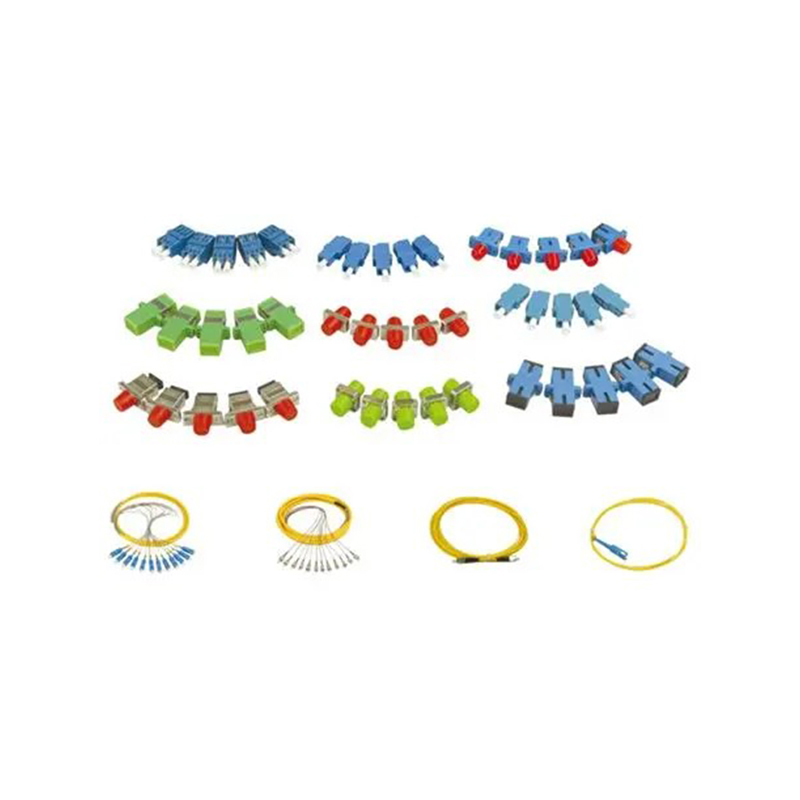
Application:The patch cord, pigtail and adapter are optical devices mainly used in OMDF, ODF, OCC and other optical distribution equipments. Features:•It adopts high-precision ceramic ferrule featurin...
See Details -
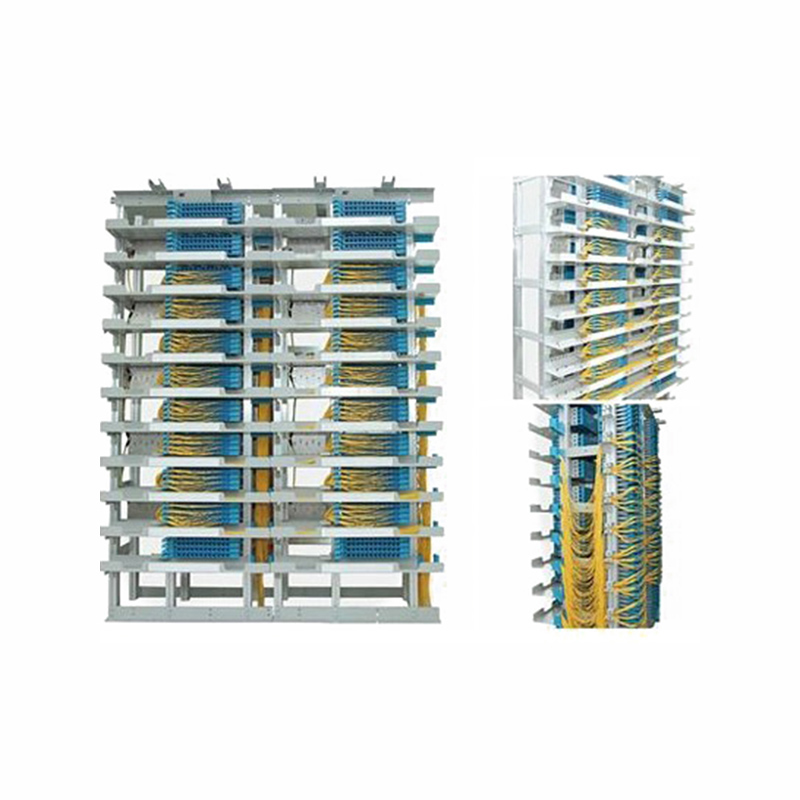
Application Used in independent fiber patching areas of newly built communication equipment rooms and central equipment rooms. After cable removal, the original main distribution frame is dismantled, ...
See Details -
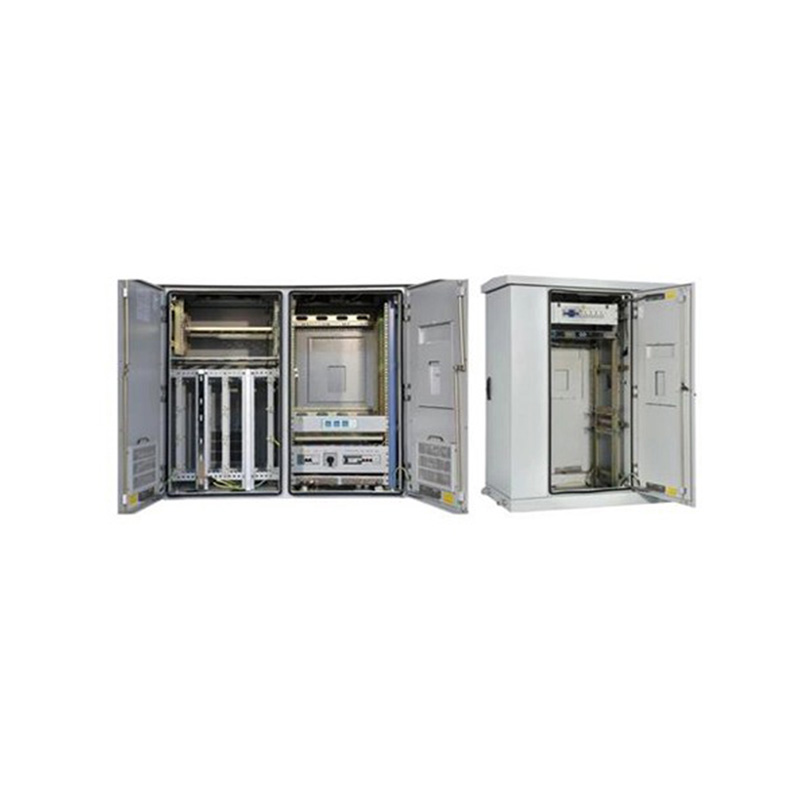
Application:It is used for the fixed network and broadband access, providing physical working environment and security system for the workstation in wired network. Features:•The cabinet is composed of...
See Details
Ready to Get started ? Contact Us Now !

Product.
Contact Details.
-
 +86 13958188250
-
 +86 13958188250
-
 [email protected]
-
 AUDIT Email:[email protected]
- Wanma Industrial Park Taihu Yuan Town Lin'an District Hangzhou City China.
QR Code

Copyright © Wanma Technology Co., Ltd. All Rights Reserved.
Privacy
Custom Ethernet Optical Network Railway Transit Equipments Suppliers
