

 English
 Français
 Español
 Português
 عربى




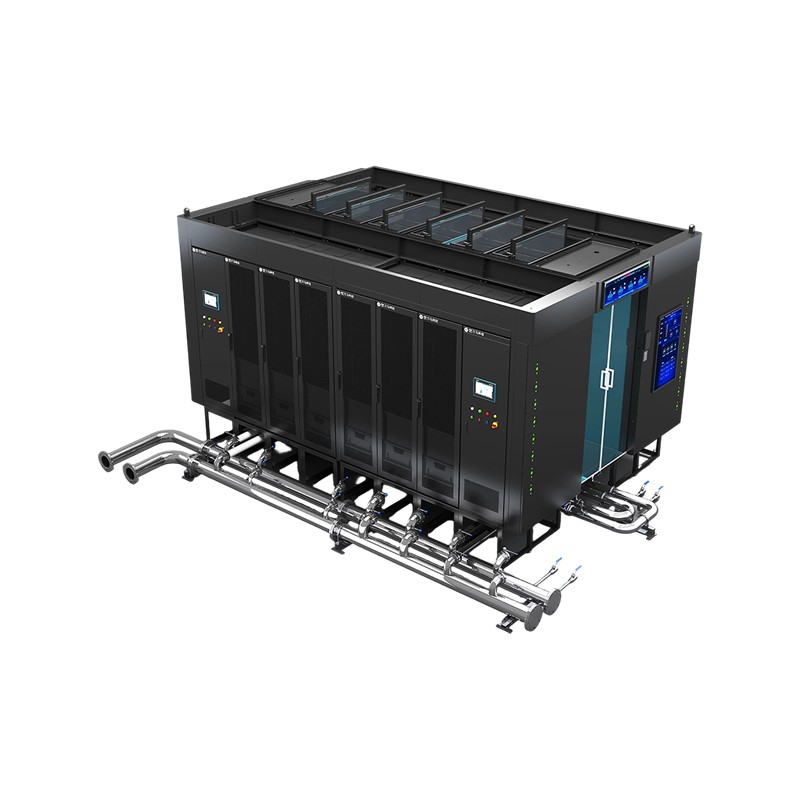
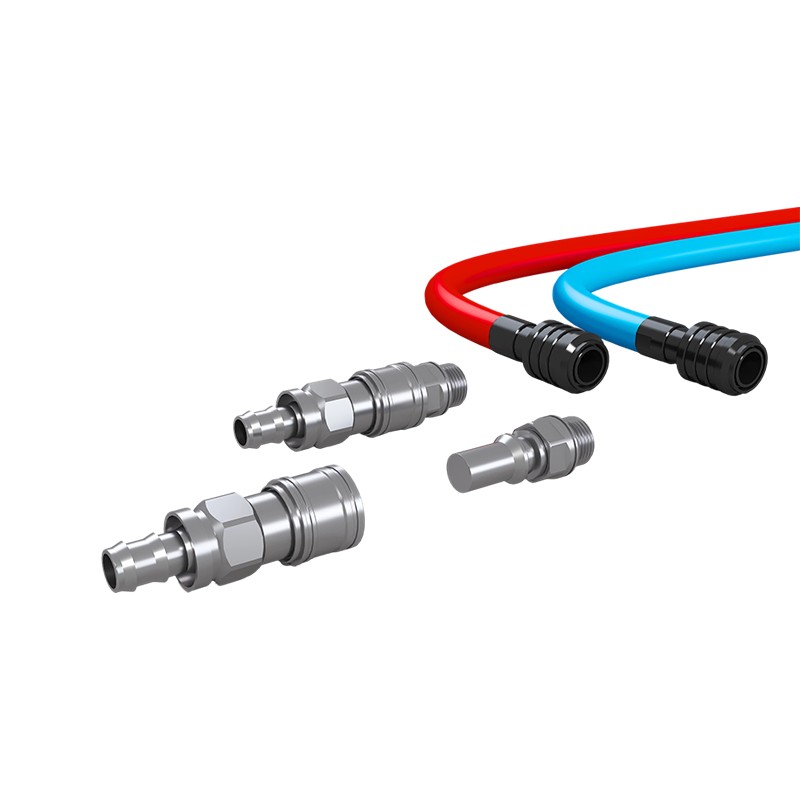

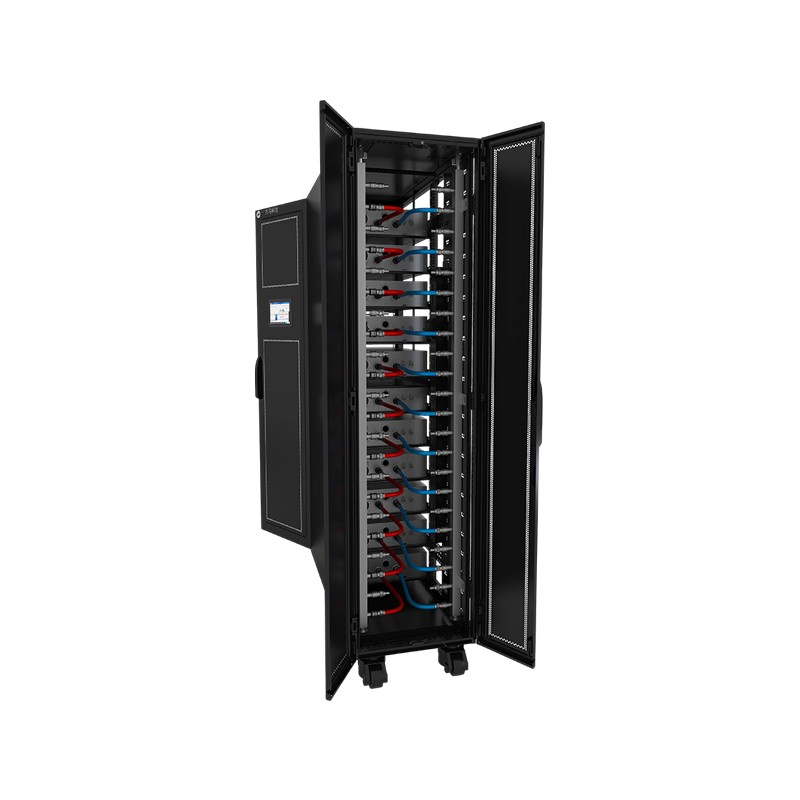
Product OverviewWM-LCR Liquid-Cooled Server Cabinet is a dedicated data center cabinet system that uses liquid as the cooling medium. Through circulating coolant, it efficiently transfers heat generat...
See DetailsLiquid-Cooled Containerized Data Centers for High-Density Computing and Network Modernization
Content
- 1 Understanding the Liquid-Cooled Containerized Data Center
- 2 Why Liquid Cooling Is Increasingly Important
- 3 Advantages of the Containerized Design
- 4 Energy Efficiency and Environmental Performance
- 5 Safety, Reliability, and Monitoring
- 6 Manufacturing Process and Engineering Strengths
- 7 Competitive Advantages of the Solution
- 8 Applications Across Multiple Industries
- 9 Typical Technical Parameters to Define
- 10 Deployment Process
- 11 Maintenance and Life-Cycle Management
- 12 Quality Management and Customer Support
- 13 How to Select the Right Supplier
- 14 Recommended Project Evaluation Checklist
- 15 Frequently Asked Questions
- 15.1 What is a liquid-cooled containerized data center?
- 15.2 What types of computing workloads are suitable for this solution?
- 15.3 Is liquid cooling always more efficient than air cooling?
- 15.4 Does a containerized data center require site preparation?
- 15.5 Can the system be expanded later?
- 15.6 How is liquid leakage controlled?
- 15.7 What role does monitoring play?
- 15.8 Can the data center support optical communication networks?
- 15.9 Why is a manufacturer’s communication infrastructure experience important?
- 15.10 What should be tested before delivery?
- 15.11 Is the solution suitable for railway transit applications?
- 15.12 What information should a customer provide for a quotation?
- 16 Conclusion
- 17 References
- 18 Product: Liquid-Cooled Containerized Data Center
Data center operators are under increasing pressure to deliver more computing power in less space, while controlling energy consumption, construction time, operating cost, and environmental impact. Artificial intelligence, cloud services, edge applications, industrial automation, 5G networks, railway communications, and data-intensive enterprise systems all require infrastructure capable of supporting high-density equipment. Traditional air-cooled facilities remain suitable for many applications, but they can become less efficient and more difficult to scale as rack densities and ambient conditions increase.
A liquid-cooled containerized data center provides an alternative approach. It combines the mobility and modularity of a prefabricated containerized facility with the heat-transfer performance of liquid cooling technology. Instead of relying only on room air and conventional computer-room air-conditioning systems, the solution uses liquid to remove heat from high-performance servers and other critical equipment. The result is a compact, rapidly deployable infrastructure platform designed for demanding computing environments.
Wanma Technology Co., Ltd. is a China-based manufacturer and integrated solution provider with experience in communication cabinets, communication electronic equipment, passive optical components, Ethernet networks, optical communication networks, central equipment rooms, railway systems, and urban rail transit applications. Established in 1997, the company has developed a broad understanding of the physical infrastructure required to support reliable communications and network operations. This background is valuable when developing modular data center solutions that must combine power, cooling, cabinets, monitoring, security, and connectivity in a coordinated system.
The liquid-cooled containerized data center described in this article is intended for high-performance computing, cloud computing, large-scale data center expansion, edge computing, and other situations where rapid deployment and high-density operation are important. Its design can help organizations shorten construction cycles, use available space more efficiently, improve thermal management, and build a flexible foundation for future network modernization.
Understanding the Liquid-Cooled Containerized Data Center
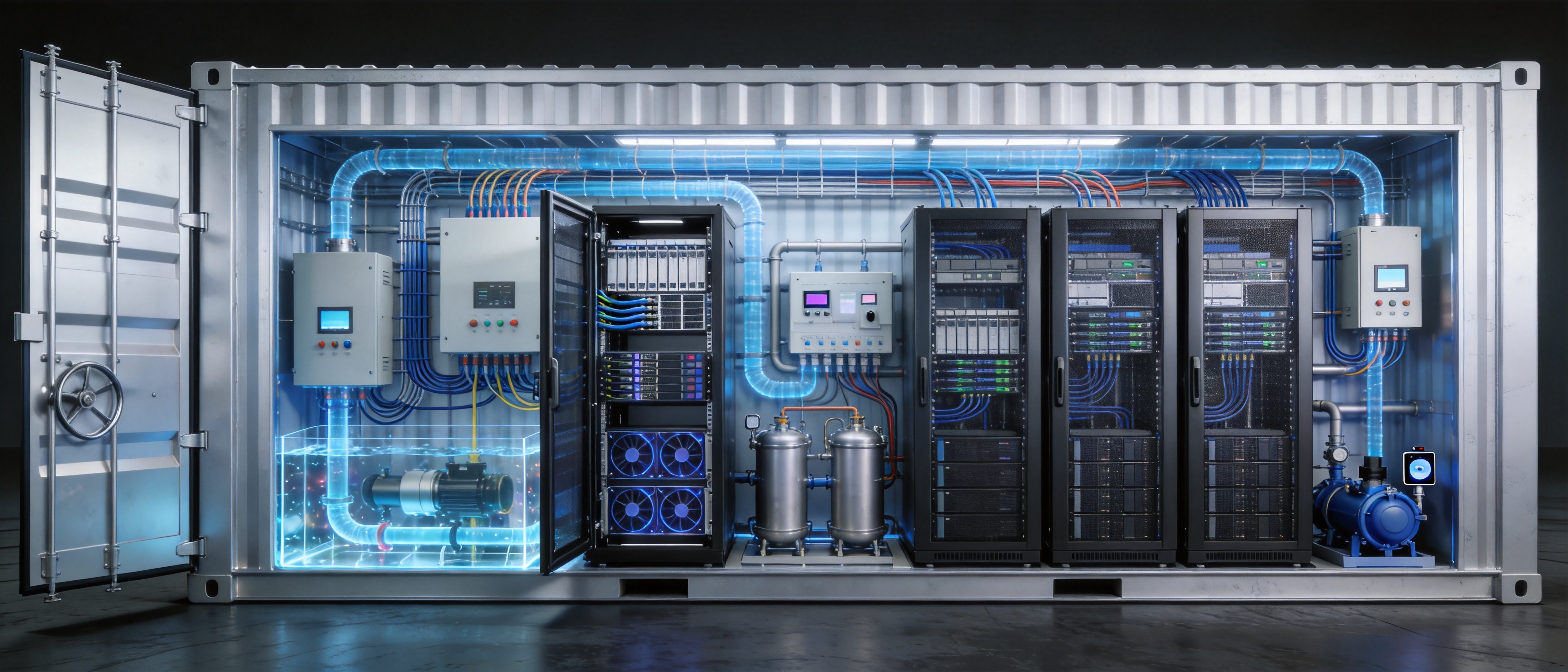
A liquid-cooled containerized data center is an integrated modular data center housed within a prefabricated container or container-like enclosure. The enclosure can accommodate computing equipment, racks, cooling systems, power distribution components, monitoring devices, fire protection equipment, security systems, and associated network infrastructure. These components are planned as one coordinated system rather than as unrelated equipment installed independently at a construction site.
The defining feature is the use of liquid cooling technology. In an air-cooled data center, fans move air across heat-producing components, and cooling units reduce the temperature of the air circulating through the equipment room. In a liquid-cooled design, a coolant is used to transfer heat away from servers or other high-density devices. Depending on the final architecture, liquid may be delivered directly to heat-producing components, circulated through cooling plates, or used in a dedicated heat-exchange loop serving the equipment enclosure.
Liquid is generally more effective than air at transporting heat because it has a greater heat capacity and can remove substantial thermal energy through a relatively compact circulation system. This makes liquid cooling especially suitable for high-performance processors, graphics processing units, artificial intelligence accelerators, scientific computing platforms, and other equipment that produces concentrated heat loads.
The containerized format adds a second layer of value. A conventional data center may require civil construction, building modifications, long equipment-room preparation, and extensive coordination among multiple contractors. A modular containerized solution can be assembled, tested, transported, positioned, connected, and commissioned using a more controlled process. This helps users deploy computing capacity in locations where a permanent data center building would be too slow, too expensive, or impractical.
Core System Architecture
A complete liquid-cooled containerized data center can include several integrated subsystems:
1. Structural enclosure: The container provides a durable and manageable installation space for IT and infrastructure equipment.
2. IT equipment area: Server racks, storage systems, network switches, optical communication equipment, and other computing hardware are installed according to the required density and configuration.
3. Liquid cooling loop: Pumps, heat exchangers, manifolds, distribution units, sensors, piping, and coolant management devices transfer heat away from the IT equipment.
4. Power distribution: Incoming power, distribution boards, uninterruptible power supplies, power distribution units, grounding systems, and protection devices support stable equipment operation.
5. Environmental management: Temperature, humidity, liquid pressure, flow rate, leakage, smoke, and other operating conditions are monitored continuously.
6. Security and protection: Access control, surveillance interfaces, alarm systems, fire detection, and emergency shutdown functions help safeguard equipment and data.
7. Communication and management: Network interfaces and centralized monitoring tools allow operators to view alarms, performance conditions, and operating status.
The precise configuration can be adapted to the customer’s computing load, rack density, environmental conditions, power availability, deployment site, and expansion plan.
Why Liquid Cooling Is Increasingly Important
Modern processors are becoming more powerful, but increased performance often results in higher heat density. A rack that previously consumed a moderate amount of power may now support advanced accelerators and processors with substantially greater thermal design requirements. When heat is concentrated in a small footprint, conventional airflow management may require larger cooling units, more fans, more floor space, and higher energy consumption.
Liquid cooling addresses this challenge by bringing the heat-transfer medium closer to the source of heat. The cooling path can be designed around the specific equipment configuration, reducing the distance that heat must travel before it is removed. This approach supports more predictable thermal management and can help prevent localized hot spots.
Liquid cooling also reduces the dependency on large volumes of room air. Air-moving equipment consumes electricity, occupies space, and can create noise and vibration. When a portion of the cooling task is transferred to a liquid loop, the overall thermal architecture can be made more compact. In suitable applications, this may improve the ratio between computing power and facility energy consumption.
Another advantage is the potential for better temperature consistency. An air-cooled facility can experience differences between the front and rear of racks, between upper and lower rack positions, or between hot and cold aisles. A properly engineered liquid-cooling system can deliver cooling more directly to the high-load components, helping maintain stable operating conditions.
Support for High-Density Computing
High-performance computing, artificial intelligence, machine learning, simulation, data analytics, rendering, and advanced industrial applications often require dense computing clusters. These systems may generate more heat than a traditional low-density office or enterprise server room can comfortably manage. A liquid-cooled containerized data center is designed for such conditions.
High-density capability can provide several practical benefits. More computing resources can be installed within a smaller footprint. The operator may be able to place computing capacity closer to users or data sources. Expansion can be planned by adding modules rather than constructing a full new building. In remote or temporary locations, the modular format can make advanced computing available without waiting for a permanent facility.
For cloud and edge operators, this flexibility can support distributed infrastructure strategies. Large centralized facilities can handle major workloads, while containerized edge modules can provide localized processing, lower latency, and improved service continuity. For railway and urban transit applications, edge computing equipment can be positioned near communication hubs, control centers, stations, or trackside systems, subject to site requirements and applicable safety standards.
Advantages of the Containerized Design
Rapid Deployment
Construction time is one of the most important factors in data center planning. A conventional facility may require architectural design, foundations, building services, equipment-room preparation, cable routing, cooling installation, testing, and multiple rounds of site coordination. The containerized approach moves a significant portion of this work into a controlled manufacturing environment.
Equipment can be assembled, wired, inspected, and tested before shipment. Once the prepared module reaches the site, the customer may primarily need to complete foundation work, positioning, external power connection, network connection, drainage or heat-rejection connection, and final commissioning. The exact scope depends on the project, but the overall process can be shorter and more predictable than building an equivalent facility from the ground up.
Rapid deployment is particularly valuable when computing demand is growing faster than building capacity. It can also benefit emergency communications, temporary projects, remote industrial sites, new network nodes, seasonal workloads, and phased infrastructure programs.
Flexible Expansion
A containerized data center can be deployed as a single module or as part of a larger modular campus. Additional modules may be added as demand increases, provided that the site has adequate space, power, connectivity, and cooling infrastructure. This allows the customer to align capital investment with actual growth rather than paying for a large unused facility at the beginning of a project.
Modular expansion can also support different computing functions. One module may be configured for general-purpose servers, another for high-performance accelerators, and another for storage, network aggregation, or disaster recovery. Separating workloads can simplify maintenance and allow each module to be optimized for its particular equipment profile.
Space Efficiency
The compact structure helps organizations use constrained land and building areas more effectively. It may be installed in industrial parks, network operation sites, energy facilities, transportation facilities, enterprise campuses, or remote locations where constructing a large building is not suitable.
Space efficiency does not mean that every project can be placed anywhere. Proper site assessment remains essential. The design must consider transportation access, lifting requirements, foundation strength, environmental exposure, fire separation, maintenance clearance, utility connections, and local regulations. However, the modular enclosure can reduce the amount of permanent construction required for a given level of computing capacity.
Factory-Controlled Integration
One of the strongest benefits of a containerized solution is the ability to conduct integration work before delivery. Factory assembly allows engineering teams to verify the relationship between cabinets, piping, power distribution, monitoring devices, and protection systems under controlled conditions.
This can reduce the number of unknowns at the installation site. It also supports consistent workmanship, standardized inspection procedures, documented test results, and repeatable production for multiple modules. Factory-controlled integration is especially useful when the same design must be deployed across several locations.
Energy Efficiency and Environmental Performance
Cooling is a major contributor to data center operating costs. The total energy used by a facility includes IT equipment, cooling equipment, power conversion, lighting, monitoring, security, and auxiliary systems. While the computing load is often the largest component, cooling efficiency can have a meaningful effect on total energy consumption.
Liquid cooling can improve thermal transfer and reduce the need for excessive airflow. Depending on the design and operating environment, this may decrease fan power, reduce the size of air-conditioning equipment, and improve overall cooling efficiency. It may also allow a higher proportion of the facility’s available power to be directed toward useful computing rather than heat removal.
Environmental performance depends on the complete system, not only on the cooling medium. Efficient pumps, well-designed heat exchangers, insulation, variable-speed control, accurate sensors, appropriate operating temperatures, and effective heat rejection all contribute to the result. Therefore, the engineering process must evaluate the entire thermal chain from the processor to the final heat-rejection point.
A modular facility can also reduce material waste associated with repeated on-site construction. Components are cut, assembled, and tested in a production environment where material handling can be managed more systematically. If a module is relocated or repurposed, the enclosure and some infrastructure components may continue to provide value rather than becoming part of a permanently fixed building.
Operational Cost Considerations
Customers should evaluate energy performance across the expected operating profile rather than relying only on peak conditions. A well-designed liquid-cooling system should operate efficiently during normal, partial-load, and high-load conditions. Controls can adjust pump speed, fan speed, heat-rejection capacity, and other parameters in response to real-time demand.
Maintenance cost is another important consideration. Liquid systems require inspection of pumps, connections, seals, filters, coolant quality, sensors, and leak detection devices. The system should therefore be designed for accessibility and serviceability. Clear maintenance procedures and spare-parts planning help ensure that energy benefits are not offset by avoidable downtime or servicing difficulties.
Safety, Reliability, and Monitoring
A data center is expected to operate continuously, often supporting business-critical or public-service applications. Reliability must therefore be addressed at the mechanical, electrical, structural, environmental, and software levels.
Liquid cooling introduces specific safety requirements. The cooling loop should use appropriate materials, compatible coolant, secure connections, pressure control, and reliable circulation components. Leak detection should be installed in locations where liquid could affect electrical or IT equipment. Alarms should be configured to identify abnormal pressure, flow, temperature, or liquid presence before a minor issue becomes a major incident.
Protection systems can include high-temperature alarms, low-flow alarms, pump failure alerts, automatic isolation functions, emergency shutdown procedures, smoke detection, fire alarms, overcurrent protection, surge protection, grounding, and access control. The exact combination depends on the customer’s requirements and the applicable regulations.
Monitoring is most effective when it is centralized and actionable. Operators should be able to see current conditions, receive alarms, review historical trends, and identify relationships between IT load and cooling performance. A sudden increase in temperature, a gradual reduction in flow, or repeated power fluctuations may indicate a developing problem. Early detection gives maintenance personnel more time to respond.
Thermal Reliability
Stable thermal conditions contribute to stable server performance. Excessive temperature can reduce component life, trigger protective throttling, increase failure risk, and interrupt workload execution. Liquid cooling can help maintain consistent conditions by removing heat directly from high-load components.
However, thermal reliability depends on proper sizing and control. The system must account for the total heat load, diversity of workloads, expected future expansion, coolant characteristics, external temperature, heat-rejection method, and required redundancy. Engineering calculations and commissioning tests should confirm that the cooling system performs as intended under representative operating conditions.
Power and Cooling Coordination
Power and cooling cannot be designed separately. Higher IT power creates higher heat output, which increases the required cooling capacity. The electrical system must support pumps, controls, heat-rejection equipment, monitoring devices, and the IT load itself. If an uninterruptible power supply is included, its capacity and runtime must be coordinated with the required continuity strategy.
A balanced system may include redundant power paths, standby pumps, modular power distribution, bypass arrangements, and independent monitoring. The appropriate level of redundancy depends on application criticality, budget, service-level objectives, and the consequences of downtime.
Manufacturing Process and Engineering Strengths
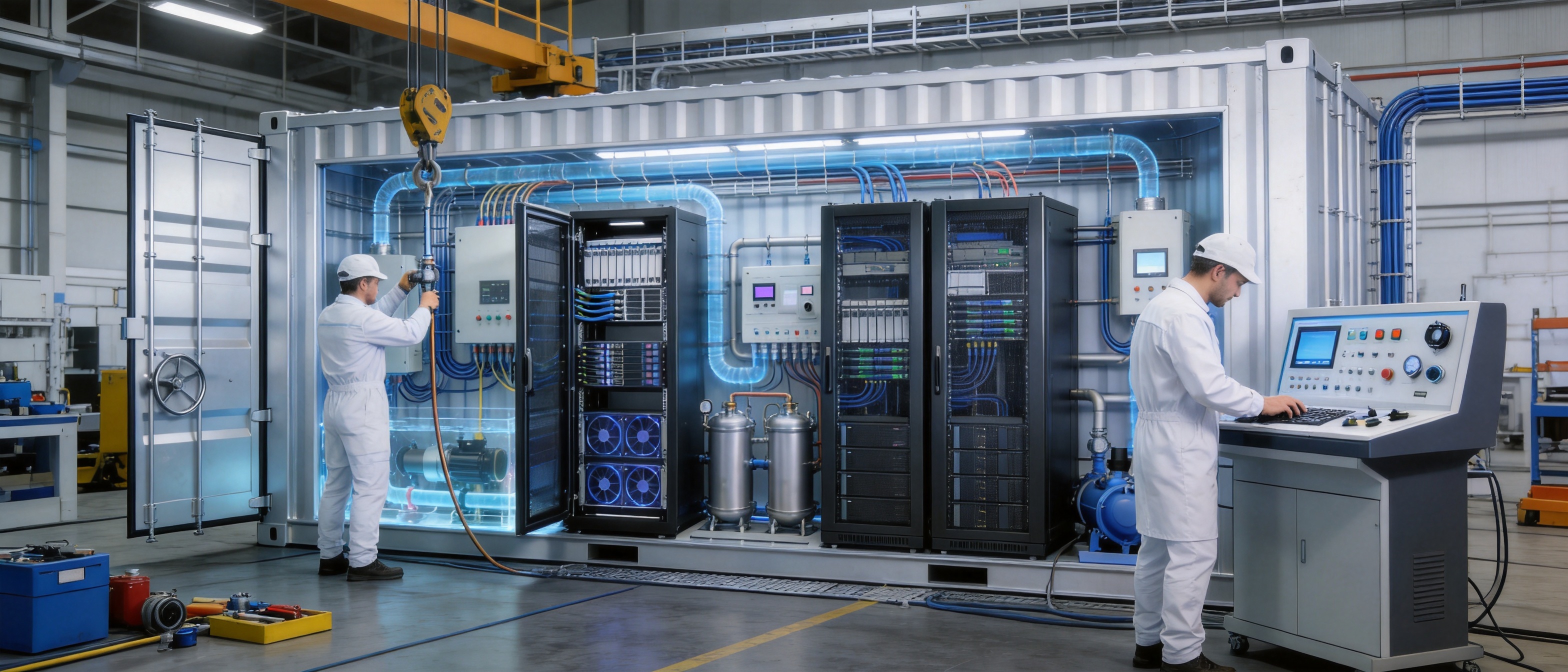
The performance of a liquid-cooled containerized data center depends heavily on how well its subsystems are engineered and manufactured together. A container is not simply an empty box filled with servers. It is a coordinated infrastructure product that must support mechanical strength, thermal management, electrical safety, network connectivity, environmental protection, and maintainability.
Requirement Analysis and Modular Engineering
The manufacturing process begins with a review of the customer’s requirements. Important inputs include target IT load, rack quantity, rack density, server dimensions, power architecture, cooling method, desired redundancy, deployment location, ambient conditions, network requirements, security expectations, maintenance strategy, and expansion plan.
These requirements are converted into a modular engineering design. The design should define the layout of racks, cooling equipment, power equipment, cable pathways, service clearances, doors, access panels, monitoring points, and emergency systems. Three-dimensional coordination can help identify conflicts between piping, electrical trays, structural members, and maintenance areas before production begins.
Modular engineering is especially important when the product must be customized. A standardized platform provides efficiency and repeatability, while configurable interfaces allow the solution to adapt to different customer requirements. This combination can reduce design time without forcing every customer into the same configuration.
Container and Enclosure Fabrication
The enclosure must protect internal equipment from the surrounding environment and withstand transportation, lifting, installation, and long-term operation. Manufacturing considerations may include structural frame strength, corrosion protection, thermal insulation, weather sealing, access doors, service openings, cable entries, ventilation or heat-rejection interfaces, and internal equipment supports.
Surface preparation and protective coatings are important for installations exposed to humidity, dust, salt, industrial pollutants, or changing temperatures. The selected materials and coating system should reflect the deployment environment. Doors and access points should be designed to preserve security and environmental protection while allowing technicians to perform maintenance safely.
Internal layout affects both performance and serviceability. Components should be positioned so that operators can inspect filters, pumps, valves, electrical panels, network equipment, and monitoring devices without unnecessary disassembly. Cable routing should be organized and separated from liquid lines where appropriate. Clear labeling supports faster troubleshooting and safer maintenance.
Cabinet and Communication Infrastructure Integration
Wanma Technology’s experience in communication cabinets and communication electronic equipment provides a relevant foundation for integrating physical network infrastructure into modular data center systems. Cabinets must support equipment weight, maintain appropriate airflow or liquid-cooling interfaces, provide organized cable management, and allow efficient installation and removal of equipment.
For data centers supporting Ethernet and optical communication networks, network connectivity may include copper cabling, fiber-optic distribution, patching systems, optical components, switches, transport equipment, and structured cable pathways. Careful planning helps protect fiber bend radius, reduce cable congestion, and simplify future changes.
In railway transit and urban rail applications, communication infrastructure may need to connect central equipment rooms, stations, control systems, operational networks, surveillance systems, and field devices. A modular data center can serve as a controlled node within that wider architecture, provided that the final configuration complies with the relevant transport, electrical, fire, and cybersecurity requirements.
Liquid Cooling Assembly
The liquid-cooling assembly requires precise integration. Piping, manifolds, pumps, heat exchangers, valves, sensors, and distribution units should be selected for compatibility and sized according to the heat load. Connections must be assembled using consistent procedures, and accessible service points should be provided for inspection and maintenance.
Quality control may include visual inspection, dimensional verification, pressure testing, flow testing, sensor calibration, leak testing, and functional checks of alarms and control logic. The objective is to verify not only that liquid can circulate, but also that the system responds correctly to abnormal conditions.
The choice of coolant and materials should be considered carefully. Different systems may require different liquid properties, including thermal capacity, electrical conductivity, viscosity, freezing point, corrosion behavior, and compatibility with seals and piping. The final system should include appropriate documentation for coolant handling, filling, draining, filtration, and replacement.
Electrical Assembly and Protection
Electrical integration includes incoming power interfaces, distribution panels, protective devices, grounding, power monitoring, uninterruptible power supplies where required, rack-level distribution, and connections to cooling equipment. Panels should be labeled clearly, and wiring should be routed to support inspection and maintenance.
Factory assembly allows electrical connections to be checked before the module leaves the production site. Verification may include insulation testing, continuity testing, grounding checks, protection-device inspection, phase identification, control-circuit checks, and simulated alarm testing. Proper documentation gives the customer a record of the completed inspection process.
Monitoring and Control Integration
A reliable modular data center requires more than individual sensors. Monitoring devices should be connected to a control and management framework that converts measurements into useful information. Typical parameters may include rack temperature, coolant supply and return temperature, pressure, flow, pump status, leak detection, power consumption, humidity, smoke, door status, and equipment alarms.
Control logic can be configured to adjust cooling capacity according to load, identify abnormal operating conditions, and initiate protective actions. Operators may receive local alarms through a display panel and remote notifications through a network management system. A clear hierarchy of alarms helps distinguish urgent safety events from routine maintenance reminders.
Competitive Advantages of the Solution
Customers comparing liquid-cooled containerized data centers should evaluate more than nominal cooling capacity. The most valuable differences often arise from integration quality, manufacturing consistency, customization capability, network infrastructure knowledge, and long-term service support.
Integrated Delivery Rather Than Disconnected Equipment
A major advantage of an integrated solution is that cooling, cabinets, power distribution, monitoring, protection, and network infrastructure are considered together. This reduces the risk that one subsystem will be undersized, incompatible, or difficult to maintain. It also gives the customer a clearer responsibility structure during installation and service.
When several unrelated suppliers provide individual components, the customer may need to coordinate design interfaces, warranties, testing, delivery schedules, and troubleshooting. An integrated manufacturer can simplify this process by managing a larger portion of the system as a unified product.
Modularity Compared with Conventional Construction
Compared with a permanent building, the containerized approach can reduce deployment time and support phased investment. It offers a practical option for organizations that need capacity quickly or expect requirements to change. Modular construction can also support repeatable deployment across several sites.
Liquid Cooling Compared with Air-Only Cooling
Compared with air-only systems, liquid cooling can provide better heat-transfer performance for high-density equipment and may reduce the space and energy required for air movement. It is particularly valuable where processors or accelerators generate concentrated heat that is difficult to manage through conventional airflow alone.
Liquid cooling is not automatically superior for every application. Lower-density installations may be adequately served by air cooling, and liquid systems require specialized maintenance and leak-management procedures. The competitive benefit appears when the customer’s heat density, energy objectives, space limitations, or deployment requirements justify the technology.
Communication Infrastructure Expertise
Wanma Technology’s established product focus includes communication cabinets, communication electronic equipment, passive optical components, Ethernet networks, optical communication networks, central equipment rooms, high-speed railway systems, and urban rail transit systems. This experience distinguishes the company from manufacturers focused only on mechanical containers or only on cooling equipment.
Data centers increasingly operate as part of a larger communications ecosystem. A containerized facility may need to connect to optical backbones, Ethernet aggregation networks, remote operation centers, railway communications, enterprise networks, cloud platforms, and edge nodes. Knowledge of cabinets, optical components, and structured communication infrastructure can improve the practicality of the final deployment.
Customization and Integrated Solutions
Different customers have different rack dimensions, power standards, climate conditions, security requirements, cooling preferences, and expansion plans. A configurable platform allows the manufacturer to adapt the solution without restarting the entire design process from zero.
Wanma Technology develops and manufactures its own branded products while also providing integrated solutions for customized products. This combination supports projects that require both standardized components and application-specific engineering. Customization may involve cabinet arrangement, optical distribution, power architecture, monitoring interfaces, cooling capacity, enclosure treatment, or deployment configuration.
Applications Across Multiple Industries
High-Performance Computing
Scientific research, engineering simulation, advanced modeling, financial analysis, and technical computing can generate heavy processor loads. A liquid-cooled containerized data center can provide a dedicated environment for dense computing clusters and can be deployed near laboratories, industrial campuses, or research facilities.
Artificial Intelligence and Accelerated Computing
Artificial intelligence training and inference workloads may rely on graphics processors or specialized accelerators that generate substantial heat. Liquid cooling can help support the thermal requirements of these systems while allowing a compact and scalable deployment model. As workloads expand, additional modules may be added according to available power and site capacity.
Cloud Computing
Cloud providers require infrastructure that can be deployed consistently and expanded in stages. Containerized modules can supplement a central data center, support regional capacity, or provide dedicated resources for particular customers. Factory assembly can also help standardize quality across multiple locations.
Edge Computing
Edge computing places processing resources closer to data sources and end users. This can reduce latency and limit the amount of raw data that must be transmitted to a remote central facility. Containerized data centers are suitable for edge applications because they can be installed in compact spaces and adapted to different locations.
Railway and Urban Rail Transit
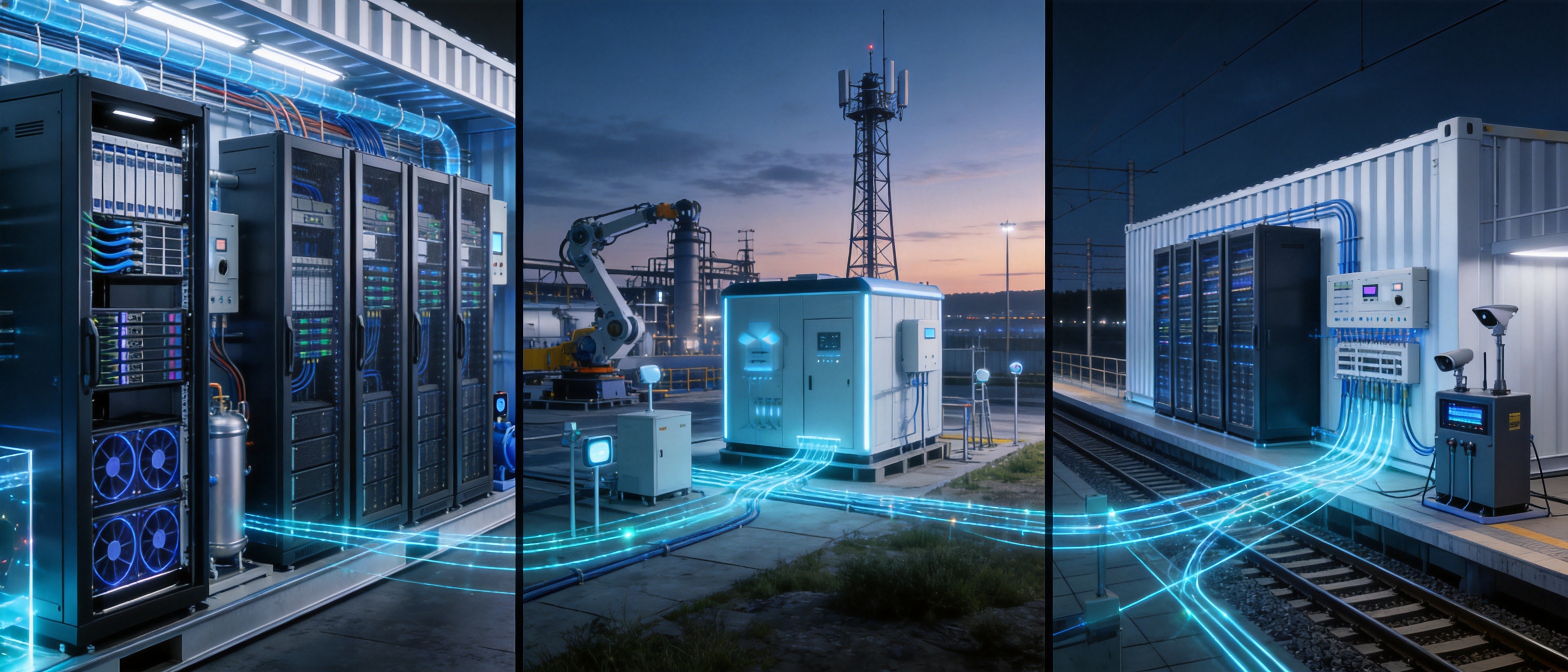
Railway and urban rail systems depend on reliable communications and centralized or distributed equipment rooms. Ethernet and optical networks connect operational, signaling-support, surveillance, passenger-information, maintenance, and administrative systems. A modular data center can provide a controlled environment for network and computing equipment at a central facility or selected edge locations.
Transportation deployments may impose strict requirements related to vibration, dust, temperature, electromagnetic compatibility, fire safety, access control, and continuity of service. The final design must therefore be engineered for the specific railway or transit environment and validated according to the customer’s technical specifications.
Industrial and Remote Sites
Manufacturing plants, energy facilities, mining operations, logistics centers, and remote infrastructure sites increasingly use local computing for automation, monitoring, analytics, and operational control. A containerized system can be delivered to these sites with a high level of pre-integration, reducing the need for extensive local construction resources.
Typical Technical Parameters to Define
Because each project is customized, customers should establish a clear technical specification before production. The following table summarizes key parameters that commonly influence the design.
| Parameter | Design Consideration | Customer Benefit |
|---|---|---|
| IT load | Total current and planned computing power, including peak demand | Ensures adequate power and cooling capacity |
| Rack density | Power and heat generated by each rack or equipment group | Supports correct liquid-cooling distribution |
| Cooling architecture | Direct liquid cooling, heat-exchange loop, distribution unit, or combined design | Matches the cooling method to the equipment profile |
| Power architecture | Input voltage, distribution, UPS requirements, redundancy, and protection | Improves availability and electrical safety |
| Enclosure conditions | Indoor or outdoor use, temperature, humidity, dust, corrosion, and weather exposure | Protects equipment in the intended environment |
| Monitoring | Temperature, flow, pressure, leakage, power, smoke, access, and alarm interfaces | Enables early detection and centralized management |
| Network connectivity | Fiber-optic, Ethernet, patching, switching, and external connection requirements | Supports reliable communications and future expansion |
| Expansion plan | Additional racks, modules, power capacity, and network growth | Reduces the cost and disruption of future upgrades |
| Maintenance strategy | Access routes, spare parts, service intervals, and remote support | Helps maintain availability over the product life cycle |
Deployment Process
A successful deployment begins with a site and workload assessment. Engineers should review the expected computing load, available power, external network connections, foundation conditions, transport route, lifting equipment, ambient environment, drainage, heat rejection, fire separation, and security arrangements.
The next stage is system design. This includes selecting the container dimensions, rack arrangement, cooling method, power architecture, monitoring functions, network interfaces, and protection systems. At this stage, the customer should also define performance targets, redundancy expectations, commissioning requirements, and acceptance criteria.
During manufacturing, the enclosure and internal systems are fabricated and assembled. Cabinets, cooling equipment, electrical panels, sensors, communication components, and management systems are installed according to the approved design. Production records and inspection documents should be maintained throughout the process.
Factory testing may include mechanical inspection, electrical verification, liquid pressure testing, flow testing, leak detection checks, alarm simulation, control-system testing, network connectivity checks, and integrated operating tests. Factory testing does not eliminate the need for site commissioning, but it can reduce the number of problems discovered after delivery.
At the site, the module is positioned and connected to external utilities. Technicians complete power termination, network connection, cooling connection, grounding, environmental checks, and system start-up. Site acceptance testing should confirm that the system operates correctly under the actual conditions of the deployment location.
Training is also important. Operators should understand normal readings, alarm priorities, emergency procedures, coolant handling, filter or component replacement, remote monitoring, and escalation contacts. A well-documented handover improves the customer’s ability to operate the facility confidently.
Maintenance and Life-Cycle Management
Preventive maintenance helps preserve cooling efficiency and equipment reliability. The maintenance schedule should include inspection of pumps, valves, piping, seals, heat exchangers, filters, sensors, electrical connections, batteries, fans, access doors, and protective coatings.
Liquid quality should be monitored according to the selected cooling architecture. Contamination, corrosion, biological growth, unsuitable additives, or incorrect fluid properties can reduce performance and damage components. Maintenance personnel should use the coolant specified by the system designer and follow documented filling, draining, and disposal procedures.
Monitoring data can support condition-based maintenance. For example, a gradual increase in pump power, a change in pressure differential, a reduction in flow, or a rise in return temperature may indicate a developing issue. Trend analysis can help identify problems before they cause a shutdown.
Electrical maintenance should include inspection of distribution panels, protective devices, UPS systems, grounding, cable connections, and power quality. Network maintenance should cover fiber-optic connections, patching, transceivers, switches, management links, and labeling. Physical security systems should be tested regularly to ensure that access events and alarms are recorded correctly.
Modular design can simplify life-cycle management because an individual module may be serviced, upgraded, or replaced without rebuilding the entire data center. This is particularly useful for distributed installations where each site must remain operational while adjacent modules are upgraded.
Quality Management and Customer Support
Manufacturing quality is a combination of materials, process control, engineering discipline, inspection, documentation, and personnel capability. A reliable supplier should be able to explain how design changes are controlled, how components are traced, how testing is recorded, and how nonconforming items are handled.
Wanma Technology has operated since 1997 and has built experience in communication infrastructure products and customized integrated solutions. Its business covers product development, manufacturing, marketing, and international sales. The company’s products are used in multiple network and transportation-related environments, and its sales network extends across more than 20 countries and regions.
International project support requires more than shipping equipment. Customers may need technical documentation, packaging suitable for long-distance transport, installation guidance, spare-parts planning, remote troubleshooting, and communication across different time zones. A supplier with experience serving overseas markets can help reduce coordination challenges during project execution.
Long-term partnership is also valuable for infrastructure products. Data centers and communication systems may be expanded or modified over many years. Consistent product documentation, responsive technical support, and the ability to provide compatible components can reduce the cost and risk of future changes.
How to Select the Right Supplier
Customers should evaluate a supplier according to the complete project requirement rather than focusing only on the initial equipment price. Important questions include whether the supplier can engineer the cooling system, integrate communication equipment, provide factory testing, support customization, document the design, and provide service after delivery.
The supplier should demonstrate a clear understanding of the customer’s workload. A cooling system sized only for current average power may become inadequate when accelerated computing equipment is added. The design should consider future expansion, peak load, redundancy, environmental conditions, and maintenance access.
Manufacturing capability is equally important. A supplier that produces cabinets, communication equipment, optical components, or related infrastructure may have stronger control over physical integration than a trading company that only resells unrelated components. Customers should review production facilities, inspection procedures, quality records, engineering resources, and previous application experience where appropriate.
Customization should be managed systematically. Every modification should be reflected in drawings, bills of materials, test plans, operating manuals, and acceptance documents. Informal changes made late in the project can create incompatibility or service problems, so disciplined design-change control is essential.
Finally, the supplier should offer a realistic commissioning and support plan. The customer should know who will supervise installation, how alarms will be tested, what spare parts are recommended, how operators will be trained, and how technical issues will be escalated.
Recommended Project Evaluation Checklist
Before placing an order, the customer can use the following checklist:
1. Define the current and projected IT load.
2. Identify the highest-density racks and the equipment requiring liquid cooling.
3. Confirm the available electrical capacity and required redundancy.
4. Establish the target deployment date and site-readiness schedule.
5. Review transportation, lifting, foundation, and installation requirements.
6. Determine ambient temperature, humidity, dust, corrosion, and weather conditions.
7. Specify optical and Ethernet network interfaces.
8. Define monitoring, alarm, access-control, fire-protection, and emergency-shutdown requirements.
9. Confirm maintenance clearances and service procedures.
10. Establish factory acceptance and site acceptance test requirements.
11. Review documentation, training, warranty, spare parts, and technical support.
12. Plan for future modules, additional racks, and power or network expansion.
Frequently Asked Questions
What is a liquid-cooled containerized data center?
It is a modular data center installed in a prefabricated container or similar enclosure and equipped with liquid-cooling technology. The system can integrate servers, cabinets, power distribution, cooling equipment, monitoring, security, fire protection, and network infrastructure.
What types of computing workloads are suitable for this solution?
The solution is particularly suitable for high-performance computing, artificial intelligence, cloud computing, data analytics, large-scale server clusters, edge computing, industrial processing, and other applications with high equipment density or demanding thermal conditions.
Is liquid cooling always more efficient than air cooling?
Not in every situation. Liquid cooling is most valuable when heat density, space limitations, processor performance, or energy objectives make air-only cooling difficult or inefficient. Lower-density applications may continue to use air cooling effectively. A technical assessment should determine the most appropriate architecture.
Does a containerized data center require site preparation?
Yes. The site normally requires a suitable foundation, access for transportation and lifting, electrical service, network connections, grounding, security, drainage or heat-rejection arrangements, and adequate maintenance clearance. The preparation scope depends on the project design and local conditions.
Can the system be expanded later?
Yes, modular expansion is one of the principal benefits. Additional racks or modules may be added when sufficient land, power, network capacity, and cooling infrastructure are available. Expansion should be considered during the initial site and utility design.
How is liquid leakage controlled?
The system should use compatible materials, secure connections, pressure management, leak detection, alarms, and appropriate isolation procedures. Sensors can identify liquid in vulnerable areas, while monitoring systems can report abnormal pressure, flow, or temperature conditions.
What role does monitoring play?
Monitoring provides visibility into temperature, coolant flow, pressure, leakage, power, smoke, humidity, access status, and equipment alarms. It allows operators to identify abnormal conditions early, review trends, and coordinate preventive maintenance.
Can the data center support optical communication networks?
Yes. The configuration can include fiber-optic distribution, optical components, Ethernet switching, patching, structured cable management, and external network interfaces. The final arrangement should be designed according to the customer’s transmission capacity, topology, and equipment requirements.
Why is a manufacturer’s communication infrastructure experience important?
A data center is connected to a larger network environment. Experience with communication cabinets, optical components, Ethernet systems, central equipment rooms, and transportation networks can improve the integration of physical connectivity, cable management, and equipment access.
What should be tested before delivery?
Testing may include enclosure inspection, electrical continuity and insulation checks, grounding verification, cooling pressure and flow testing, leak detection, sensor calibration, alarm simulation, control-system testing, network connectivity, and integrated functional operation. The exact test plan should be agreed upon before production.
Is the solution suitable for railway transit applications?
It may be suitable for selected railway and urban rail applications involving communications, data processing, and equipment-room infrastructure. However, the final design must address the specific environmental, electromagnetic, fire, vibration, security, and operational requirements defined by the transportation project.
What information should a customer provide for a quotation?
The customer should provide the expected IT load, rack quantity and density, equipment list, power requirements, cooling preference, deployment location, environmental conditions, network interfaces, redundancy expectations, delivery schedule, and expansion plan. More complete information enables a more accurate technical and commercial proposal.
Conclusion
The liquid-cooled containerized data center combines two important infrastructure strategies: efficient thermal management and modular deployment. Liquid cooling helps address the heat generated by high-density computing, while the containerized format supports rapid installation, flexible expansion, space efficiency, and factory-controlled integration.
Compared with conventional air-only or permanently constructed data center approaches, this solution can provide distinct advantages when computing loads are dense, deployment schedules are demanding, or the customer needs a scalable infrastructure platform. Its value is greatest when the cooling system, power architecture, cabinets, network connectivity, monitoring, protection, and maintenance strategy are designed as one coordinated solution.
Wanma Technology Co., Ltd. brings a long operating history and experience in communication cabinets, communication electronic equipment, passive optical components, Ethernet networks, optical communication networks, high-speed railway systems, urban rail transit, and central equipment rooms. These capabilities provide a useful foundation for projects in which data center infrastructure must work reliably as part of a broader telecommunications or transportation network.
Through modular engineering, controlled manufacturing, integrated testing, customized configuration, and international project support, the company can help customers develop data center infrastructure aligned with high-performance computing, cloud services, edge applications, network modernization, and intelligent transportation requirements. The final result should be selected and engineered according to the customer’s workload, site conditions, performance objectives, regulatory environment, and long-term expansion plan.
References
1. ASHRAE Technical Committee 9.9, Thermal Guidelines for Data Processing Environments.
2. The Green Grid, Data Center Infrastructure Efficiency and Energy Performance Guidance.
3. International Organization for Standardization, ISO 9001: Quality Management Systems.
4. International Electrotechnical Commission, Standards and Guidance for Low-Voltage Electrical Installations and Data Processing Equipment.
5. Telecommunications Industry Association, Telecommunications Infrastructure Standards for Data Centers.
6. International Organization for Standardization and International Electrotechnical Commission, ISO/IEC 22237, Information Technology — Data Centre Facilities and Infrastructures.
7. Uptime Institute, Data Center Design, Availability, and Operational Resilience Principles.
8. Open Compute Project, Advanced Cooling and Data Center Hardware Infrastructure Practices.
9. Wanma Technology Co., Ltd., Product and Corporate Information Materials.
10. General engineering principles for liquid cooling systems, modular data center design, structured cabling, and equipment-room integration.
Product: Liquid-Cooled Containerized Data Center
PREV:Intelligent Access Control Systems for Secure Medical Consumable Management
NEXT:WMSBG Single Section Wall Mount Cabinet: Compact, Durable, and Efficient Network Infrastructure
NEXT:WMSBG Single Section Wall Mount Cabinet: Compact, Durable, and Efficient Network Infrastructure
Interested in cooperation or have questions?
Related products
-
-
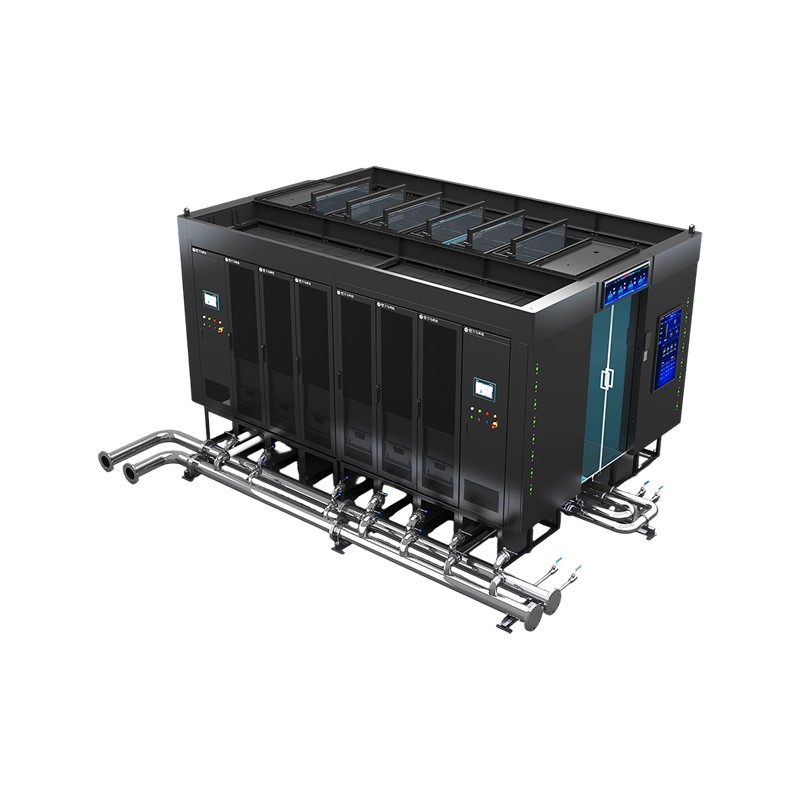
Product OverviewWM-HCM Air-Liquid Hybrid Micro-Module is an integrated data center solution designed for ultra-high-density computing applications. It adopts a dual-row, back-to-back layout and integr...
See Details -
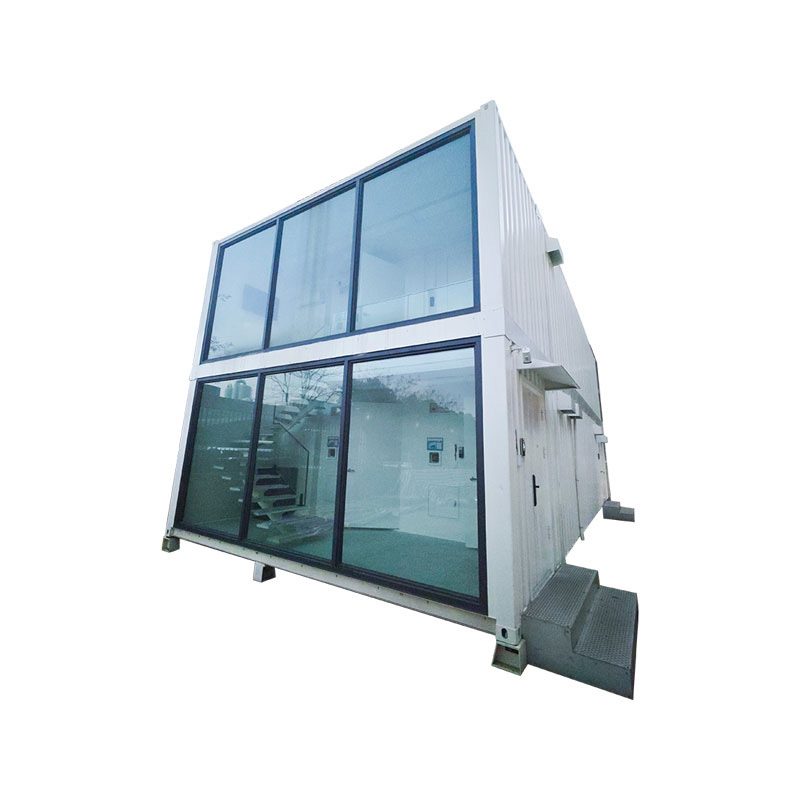
40-inch Containerized Data Center (CDC-40) is a high-capacity, high-density modular data center solution based on a standard 40-inch Containerized Data Center (CDC-40) ISO shipping container. It provi...
See Details -
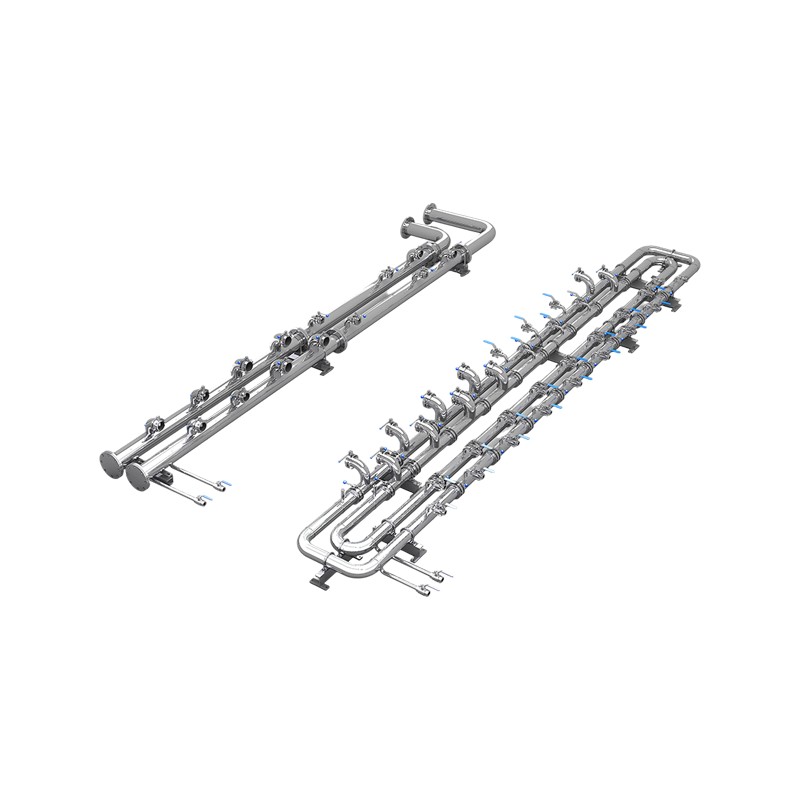
Product OverviewWM-SCL Secondary-Side Prefabricated Piping is a standardized coolant distribution system that connects the CDU to liquid-cooled server cabinets. The piping is prefabricated and quality...
See Details
Ready to Get started ? Contact Us Now !

Product.
Contact Details.
-
 +86 13958188250
-
 +86 13958188250
-
 [email protected]
-
 AUDIT Email:[email protected]
- Wanma Industrial Park Taihu Yuan Town Lin'an District Hangzhou City China.
QR Code

Copyright © Wanma Technology Co., Ltd. All Rights Reserved.
Privacy
Custom Ethernet Optical Network Railway Transit Equipments Suppliers
