

 English
 Français
 Español
 Português
 عربى





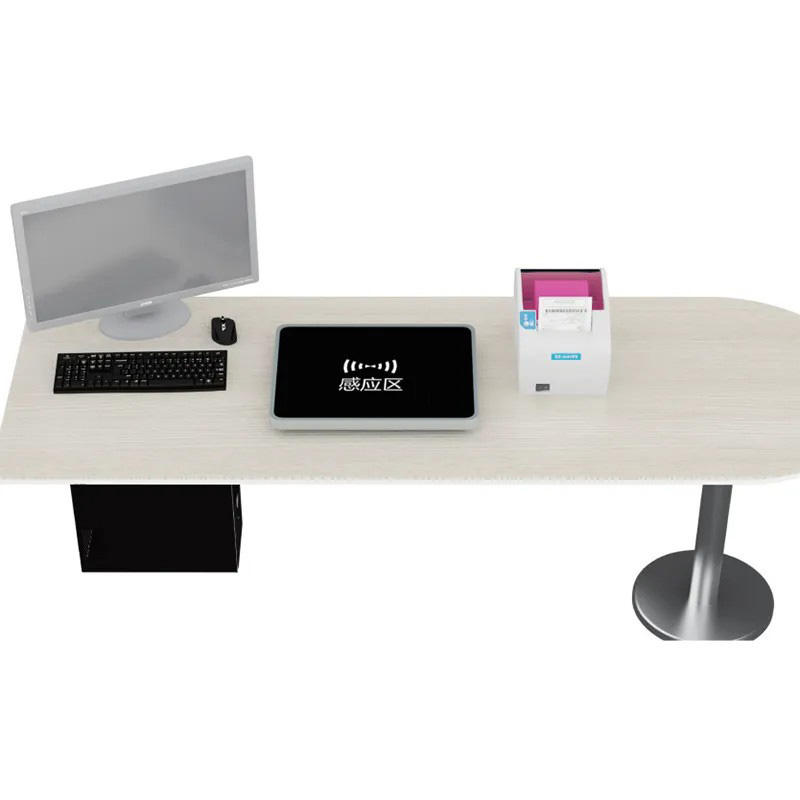
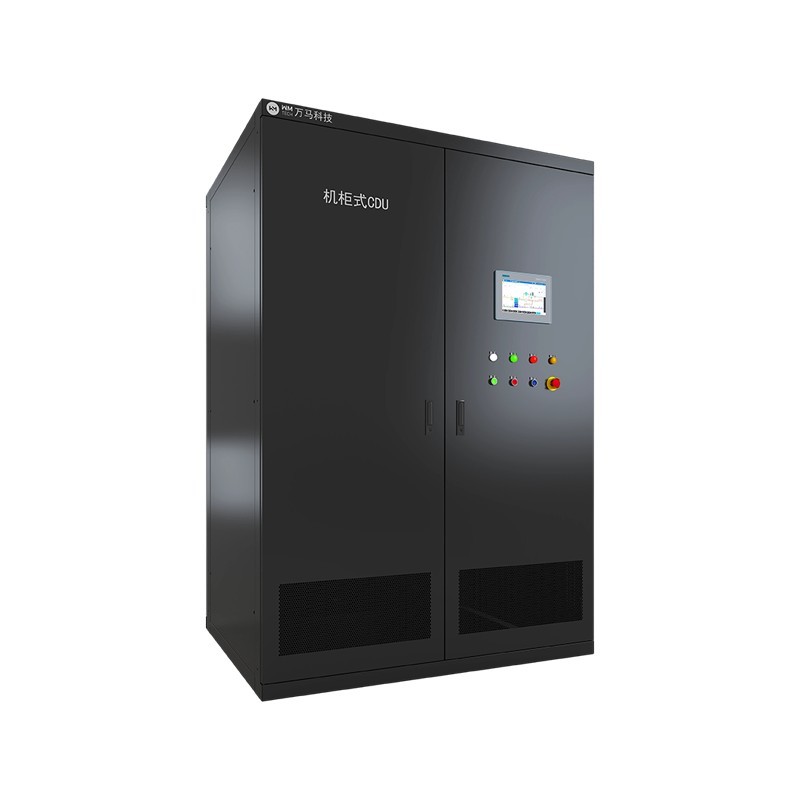
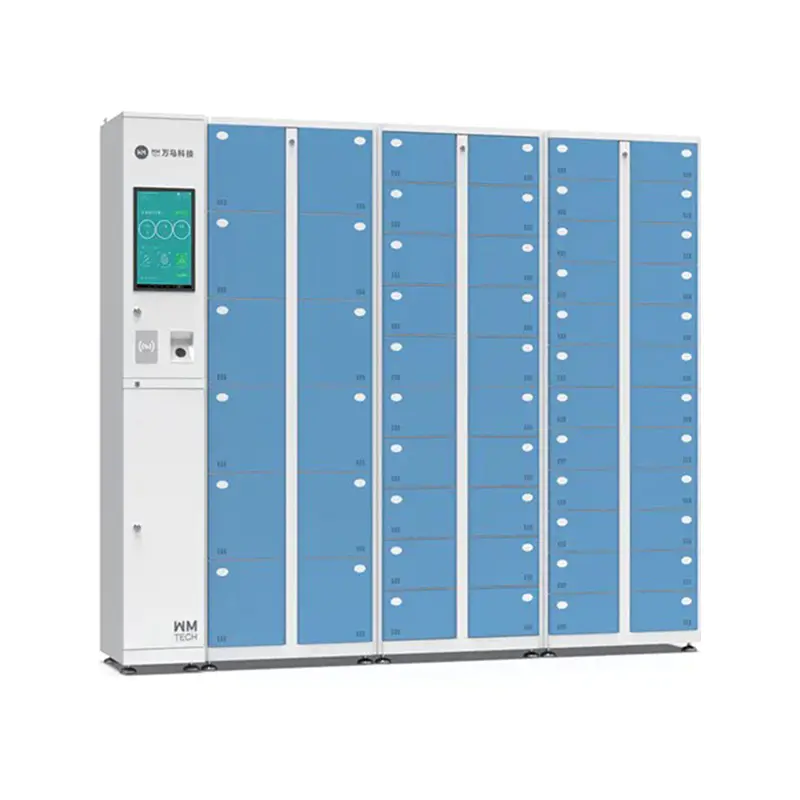
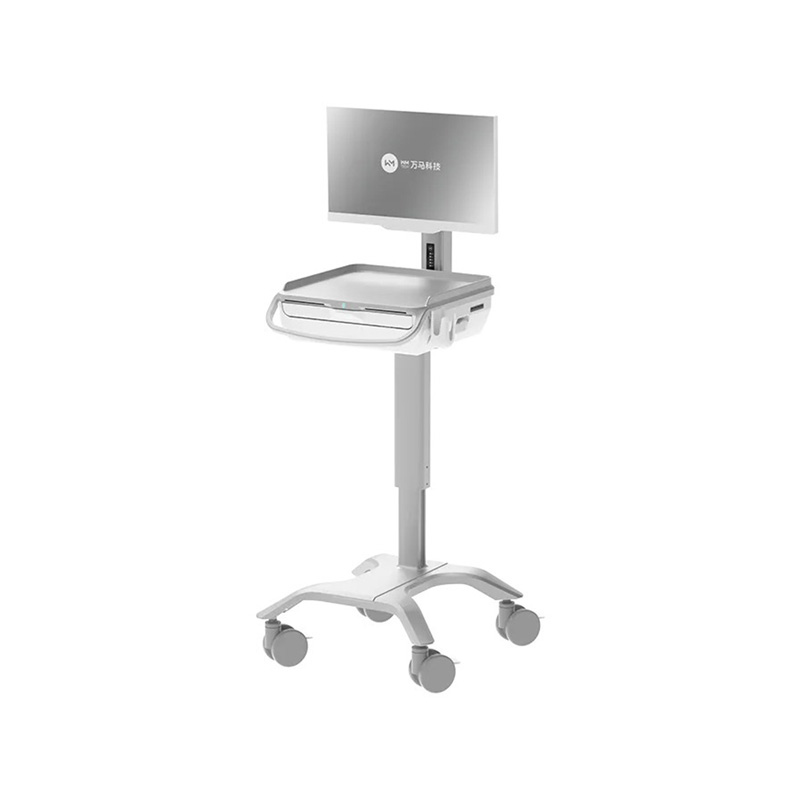

Product DefinitionThe Wanma Sorting and Packaging Station is an industrial-grade core workstation within the intelligent medical fabric management system, specifically designed for laundry plants and ...
See DetailsIntelligent Sorting and Packaging Stations for Traceable Medical Fabric Management
Content
- 1 The Operational Challenge in Medical Fabric Processing
- 2 Product Definition and Core Function
- 3 High-Efficiency RFID Sorting Performance
- 4 Integrated Smart Packaging and Traceability
- 5 Designed for Medical Laundry and Washing Centers
- 6 Ergonomic Industrial Design
- 7 Flexible Networking and Resilient Data Handling
- 8 Microservices Architecture and OPEN API Integration
- 9 Manufacturing Strengths Behind the Product
- 10 Competitive Advantages in Practical Deployment
- 11 Typical Workflow Using the Station
- 12 Implementation Considerations
- 13 Maintenance and Operational Management
- 14 Business Value for Laundry Plants and Medical Centers
- 15 Extension to Other Textile-Intensive Industries
- 16 Why Manufacturer Capability Matters
- 17 Recommended Evaluation Criteria for Buyers
- 18 Frequently Asked Questions
- 18.1 What is the primary purpose of the Sorting and Packaging Station?
- 18.2 How many fabric items can the station identify simultaneously?
- 18.3 What technology does the station use for identification?
- 18.4 What is the stated identification accuracy?
- 18.5 Can the station initialize RFID tags?
- 18.6 How does the station improve traceability?
- 18.7 Can it work if the network connection is temporarily interrupted?
- 18.8 What network options are available?
- 18.9 Can it integrate with existing laundry software?
- 18.10 Is the station suitable for hospitals themselves?
- 18.11 Can the product be used outside medical textiles?
- 18.12 What hardware is included in the workstation?
- 18.13 What should customers prepare before deployment?
- 18.14 How does the manufacturer support customized requirements?
- 19 Conclusion
- 20 References
- 21 Product: Sorting and Packaging Station

Medical fabrics move through a demanding operational cycle. Surgical gowns, patient garments, bed linens, towels, protective textiles, and other reusable items must be collected, washed, inspected, sorted, packaged, distributed, returned, and processed again. Each stage affects hygiene, labor efficiency, inventory accuracy, and patient-care support. When fabric management depends on manual counting, handwritten records, or disconnected systems, laundry plants and medical washing centers can experience misplaced items, delayed deliveries, incomplete packages, and limited visibility into operational performance.
The Sorting and Packaging Station is designed to address these challenges by bringing identification, sorting, tag initialization, data binding, label printing, and packaging management into one industrial-grade workstation. It functions as a core operating node in an intelligent medical fabric management system, connecting washing operations with outbound preparation and distribution. By combining RFID identification, a large touchscreen interface, data synchronization, and system integration capabilities, the station supports a more consistent and traceable approach to fabric-intensive operations.
For hospital-affiliated laundry plants and regional medical washing centers, the value of this type of equipment extends beyond faster sorting. It helps establish a digital chain of custody for individual fabric items or managed fabric groups. It also provides a standardized operating platform that can reduce repetitive manual work, improve sorting accuracy, support packaging consistency, and make information available to management systems used by laundry, hospital, and logistics departments.
The Operational Challenge in Medical Fabric Processing
Medical fabric processing is more complex than ordinary textile sorting. Items may have different clinical uses, sizes, departments, handling requirements, packaging specifications, and distribution destinations. A single washing center may process garments and linens from multiple hospitals, departments, wards, operating rooms, and service units. The volume can be substantial, while the acceptable tolerance for sorting errors is low.
Traditional workflows often require operators to visually identify items, count them, group them according to destination, and prepare handwritten or manually printed labels. This process can be affected by fatigue, inconsistent judgment, fabric folding, poor lighting, high throughput, and interruptions. If identification is performed at different points by different employees, information can also become fragmented. The result may be a mismatch between the physical package and the digital record.
Medical washing centers additionally need to coordinate multiple process stages. Fabric items must be associated with a customer, hospital, department, package, order, or delivery route. A sorting station that only displays an item code does not solve the entire problem. The workstation must help operators convert identification data into practical operational actions, such as bundling, label printing, outbound confirmation, and status updates.
The Sorting and Packaging Station addresses this requirement by combining hardware and software functions in one location. It is not simply an RFID reader or a packaging table. It is intended to serve as a smart node within a broader management platform, helping transform physical textile handling into a measurable and connected process.
Product Definition and Core Function
The Sorting and Packaging Station is an industrial-grade core workstation for intelligent medical fabric management. It is designed for laundry plants, hospital-affiliated washing facilities, regional medical washing centers, and other operations that process reusable fabrics at scale.
The workstation integrates high-performance RFID technology with a 21-inch industrial touchscreen. During operation, the system can identify more than ten fabric items simultaneously, apply RFID-based algorithms to support accurate classification, initialize tags, bind data, print labels, and assist with packaging. These functions are organized around the practical workflow of sorting and outbound preparation.
Each identified fabric item can be associated with a unique identifier. Depending on the configuration of the management system, the identifier may be connected with information such as item type, customer, hospital, department, package, processing status, or delivery destination. This creates a digital relationship between the physical textile and the records used by the laundry plant or medical institution.
The station is also intended to operate as part of a closed-loop management system. Information generated during sorting and packaging can be synchronized with other system components, supporting visibility from post-washing handling through distribution. When deployed with appropriate software and operational procedures, the station helps reduce the information gaps that commonly occur between the laundry floor, storage area, dispatch zone, and receiving department.
High-Efficiency RFID Sorting Performance
One of the principal advantages of the station is its ability to identify multiple fabric items in a batch. It is capable of rapidly identifying more than ten items simultaneously, helping operators process grouped fabrics without scanning every item individually in a slow, one-by-one sequence.
The station uses independently developed RFID algorithms to support second-level batch identification and precise categorization. The stated identification accuracy is at least 99 percent under applicable operating conditions. In a high-volume laundry environment, this performance can have a direct effect on throughput. Faster recognition allows operators to spend more time on practical actions such as inspection, bundling, packaging, and exception handling rather than repetitive manual data entry.
Batch RFID identification is particularly valuable for fabrics that are difficult to distinguish visually. Similar-looking bed linens, patient garments, or standardized surgical textiles may be produced in large quantities. Visual sorting alone can require substantial employee experience and concentration. RFID adds an electronic identification layer that can support more reliable categorization and make the workflow less dependent on visual recognition.
The system can also help reduce the risk of data omissions. When a physical item or group is recognized electronically, the operator can receive a system-based indication of its identity and intended category. This makes it easier to identify unexpected items, missing items, or items that do not match the current packaging task.
Advantages Over Manual and Conventional Sorting Methods
Compared with purely manual sorting, RFID-enabled batch identification offers greater speed and more consistent information capture. Manual processes may require employees to read labels, count fabrics, interpret order sheets, and enter information separately. Each additional manual step introduces the possibility of fatigue-related errors or inconsistent records.
Compared with basic single-item barcode scanning, batch RFID processing can improve operational efficiency when many textile items must be handled together. Barcodes generally require an optical line of sight and a deliberate scan position. RFID identification can be more suitable for bundled or grouped fabrics, provided the tags and installation environment are properly configured.
Compared with standalone RFID readers, the Sorting and Packaging Station provides a broader operational package. Its value comes from the combination of identification, touchscreen interaction, tag initialization, data binding, label printing, packaging support, and platform integration. Operators do not need to move between separate devices for every stage of the task.
| Operational Requirement | Manual Sorting | Single-Item Scanning | Sorting and Packaging Station |
|---|---|---|---|
| Batch item recognition | Dependent on visual counting | Usually requires repeated individual scans | Supports simultaneous identification of more than ten items |
| Data consistency | Dependent on handwritten or manual entry | Improved, but still dependent on operator scanning discipline | Combines identification with digital binding and system records |
| Packaging preparation | Often handled separately | May require separate software or equipment | Integrated with tag initialization, label printing, and packaging workflows |
| Traceability | Limited when records are fragmented | Available if connected to a management system | Designed for end-to-end traceability from sorting to distribution |
| Network flexibility | Often dependent on local paperwork | Varies by device | Supports wired and WiFi networking, offline synchronization, and automatic data recovery |
| System integration | Low without additional digitization | Depends on software architecture | Supports microservices architecture and OPEN API integration |
The table illustrates that the station is positioned as a process workstation rather than a single-purpose reader. Its competitive advantage is therefore based on workflow integration as much as on RFID speed.
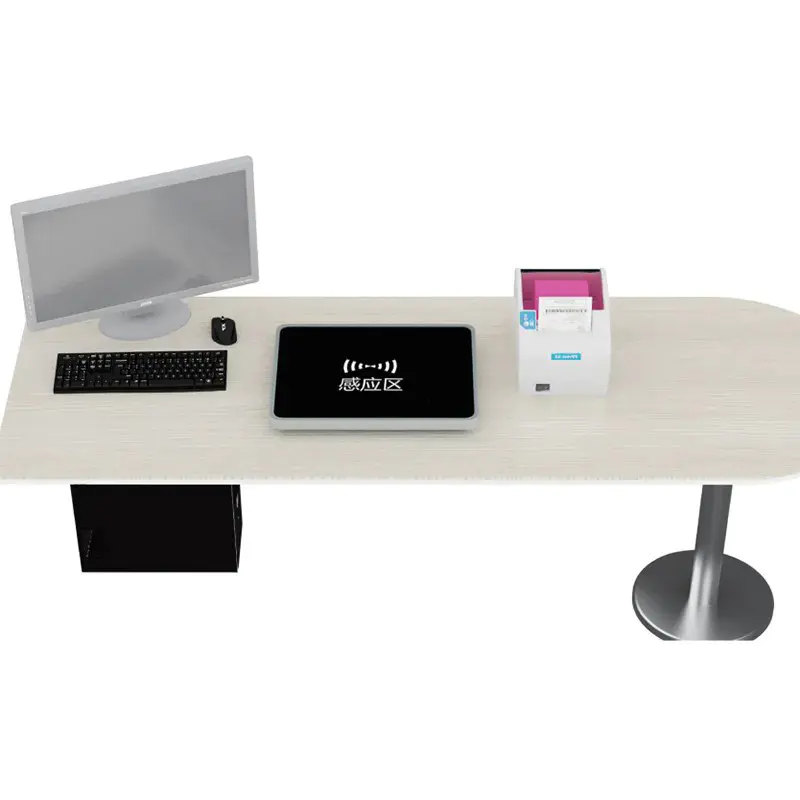
Sorting and Packaging Station
Integrated Smart Packaging and Traceability
Sorting is only one part of the outbound process. After items are categorized, they must be assigned to the appropriate package, labeled, and prepared for delivery. If these steps are conducted independently, the relationship between the fabric, the package, and the destination can become difficult to verify.
The Sorting and Packaging Station integrates tag initialization, data binding, and label printing. Tag initialization establishes or prepares the electronic identity of a fabric item or managed textile unit. Data binding links the identifier with the relevant information in the management platform. Label printing provides a physical reference that can be placed on a package, bundle, cart, or other logistics unit.
This combination helps create a connection between electronic records and physical packages. An operator can identify a group of fabrics, associate the group with a destination or order, print the corresponding label, and complete the packaging action within a controlled workflow. The process can help reduce the risk of a package leaving the facility without complete information.
Traceability is especially important in medical fabric management because the receiving institution may need to confirm what was sent, where it was sent, when it was processed, and whether the expected package was completed. A connected record can also assist supervisors in investigating exceptions. If a package is reported incomplete or incorrectly delivered, managers can review the relevant transaction data instead of relying only on verbal explanations or paper records.
Supporting a Closed-Loop Fabric Management Process
A closed-loop management process does not mean that every operational decision is automated. Rather, it means that the physical movement of fabrics is connected with corresponding data throughout the relevant stages. The Sorting and Packaging Station supports this objective by providing a digital checkpoint between washing and distribution.
At the sorting stage, the system can record item identification and classification. During packaging, it can bind selected items to a package or delivery task. At the outbound stage, the resulting record can support dispatch confirmation. When integrated with upstream and downstream systems, these events can become part of a broader lifecycle record.
This approach can help laundry plants measure performance more accurately. Managers may be able to analyze throughput, exception frequency, package completion, processing times, and destination-based workloads, depending on the configuration of the connected platform. More reliable data can support better staffing decisions, workflow optimization, and customer communication.
Designed for Medical Laundry and Washing Centers
The station is primarily intended for fabric sorting, packaging, and outbound operations in hospital-affiliated laundry plants and regional medical washing centers. These environments typically require reliable operation over extended periods, clear user interaction, and compatibility with established washing and logistics processes.
Medical laundry operations often include a mixture of high-volume standardized items and specialized fabrics. Surgical gowns may need to be grouped according to a particular hospital or operating unit. Patient garments may be distributed according to ward requirements. Bed linens may be packed by facility, department, or delivery schedule. The station can support these categorization and bundling tasks by associating identified items with configured rules and destinations.
The product can also be used for pre-distribution management. This includes preparing packages before loading, confirming package contents, printing identification labels, and ensuring that the outbound records correspond with the physical fabrics. By placing these actions on one workstation, the facility can create a more consistent handoff between processing and delivery.
Although medical fabrics are the primary application, the underlying functions are applicable to other fabric-intensive industries. Large logistical support centers, hotel linen operations, uniform processing services, and centralized textile management facilities may also benefit from RFID-based sorting, packaging, and traceability.
Ergonomic Industrial Design
Technology can improve a process only when operators can use it comfortably and consistently. The station is equipped with a 21-inch industrial-grade touchscreen that provides a large interface for displaying identification results, task information, prompts, and operational status.
A large touchscreen can be helpful in environments where operators work quickly and need to view multiple records at once. It can also make application controls more accessible than a small display. When the user interface is properly configured, operators can confirm a task, respond to an exception, review package information, and complete an operation without excessive navigation.
The station includes 4G RAM and 16G ROM to support the operation of its application environment. These hardware resources are intended for stable long-term use in a high-intensity industrial setting. The product is designed according to ergonomic principles to help reduce operator fatigue and improve the consistency of repetitive work.
Ergonomics is not limited to screen size. It includes the position of the workstation, the arrangement of the working area, the visibility of prompts, the number of required actions, and the way the equipment supports the operator’s natural movement. In a sorting and packaging environment, these details can influence both output and error rates.
Reliability in Continuous-Use Environments
Industrial laundry facilities may operate for long working periods and process large volumes of fabric. Equipment used in these facilities must therefore be designed for repeated operation rather than occasional office use. The station’s industrial-grade positioning reflects the need for durability, stable computing performance, and practical usability in a production environment.
Reliable operation also depends on the quality of the complete deployment. RFID tags must be correctly installed and maintained. Reader placement must be appropriate for the working area. Network coverage must be planned. Software rules must reflect actual customer and hospital requirements. Operators must be trained to handle exceptions. The station provides the core equipment, while the final performance depends on correct system engineering and operating discipline.
Flexible Networking and Resilient Data Handling
The Sorting and Packaging Station supports wired and WiFi networking. This dual-mode capability gives facilities more flexibility when planning equipment placement and network architecture. A wired connection may be preferred in fixed production areas where stable connectivity is readily available. WiFi can be useful where workstation locations change, where cabling is difficult, or where the facility needs more flexible deployment.
The station also supports offline synchronization and automatic data recovery. These functions are important in industrial environments because network interruptions can occur even when the local equipment is functioning correctly. If a short interruption prevents the operator from completing work, the result may be a queue of unprocessed items and a disruption to outbound schedules.
Offline capability allows the station to retain applicable operational information during a temporary loss of connectivity. When the network connection is restored, synchronization can help recover and transmit the relevant data. Automatic data recovery further supports continuity by reducing the risk that a communication interruption will lead to permanent record loss.
Offline operation should be implemented with clearly defined rules. Facilities need to determine which functions remain available without a live connection, how duplicate records are prevented, and how exceptions are reviewed after synchronization. With appropriate configuration, the feature can improve resilience while preserving data consistency.
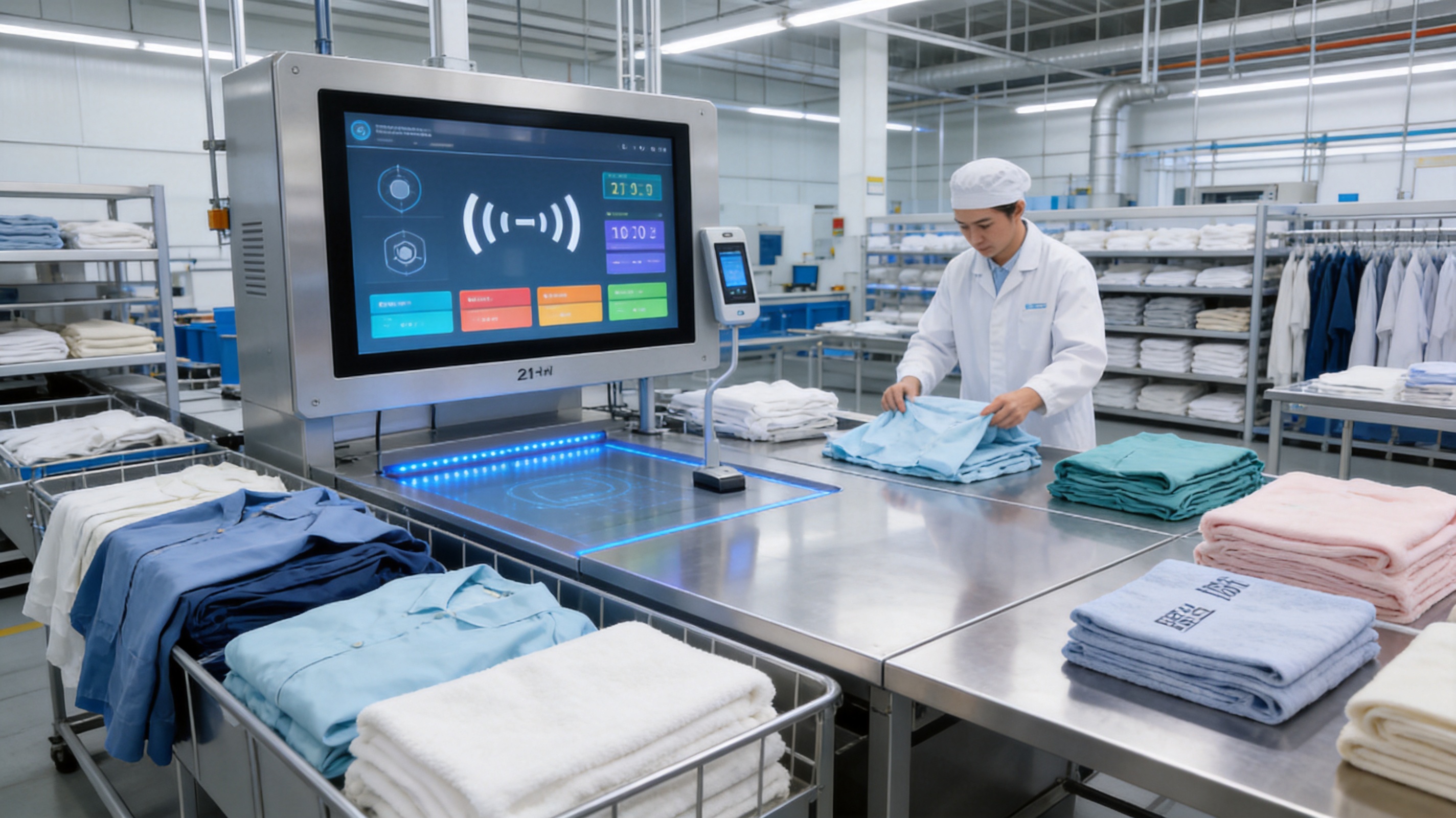
Microservices Architecture and OPEN API Integration
Medical fabric management rarely exists in isolation. A laundry plant may use a manufacturing execution system, a hospital may operate a hospital information system, and a logistics provider may use a transportation or warehouse platform. If these systems cannot exchange information, staff may need to re-enter data manually, reducing the benefits of automation.
The station is built on a microservices architecture and supports OPEN API integration. This design approach can help separate different software functions, making it easier to connect the station with other applications and to expand system capabilities over time. The exact integration scope depends on the customer’s software environment, data standards, and project requirements.
Potential integration scenarios include receiving sorting tasks from a laundry MES, sending package completion information to a central platform, synchronizing hospital delivery requirements, and exchanging dispatch information with logistics software. Integration can help establish a coordinated data flow across the washing center and its customers.
OPEN API support is also valuable for customized projects. Medical washing centers may have different package structures, labeling rules, customer codes, delivery schedules, and exception workflows. A flexible interface can make it easier to adapt the station to these conditions without replacing the entire information system.
Cross-Scenario Data Coordination
Cross-scenario coordination is important when several hospitals or departments share one washing center. The same type of fabric may need to be managed differently depending on its customer, destination, or service agreement. A connected system can apply the appropriate rules while maintaining a unified operational platform.
For example, a laundry plant may receive fabric from multiple facilities and sort the clean items according to different delivery orders. The station can support the process by identifying items, associating them with the relevant customer or task, and preparing labels for the correct destination. This reduces the need for isolated spreadsheets or manually reconciled lists.
When the data model is well designed, the station can also support centralized reporting. Managers may review operational activity across different lines, shifts, customers, or locations. Such visibility can help identify bottlenecks and improve service-level management.
Manufacturing Strengths Behind the Product
The product is developed and manufactured by Wanma Technology Co., Ltd., a company established in 1997. The company specializes in communication cabinets, communication electronic equipment, and passive optical components. Its experience spans Ethernet networks, optical communication networks, central equipment rooms, national high-speed railway applications, and urban rail transit systems.
This background is relevant to the Sorting and Packaging Station because industrial communication products require attention to stable operation, structured assembly, system compatibility, and long-term service. Although medical fabric management is a distinct application, the underlying manufacturing capabilities associated with communication equipment can support the development of reliable smart workstations.
The company develops, manufactures, and markets products under its own brand while also providing integrated solutions for customized products. This combination is useful for customers whose requirements do not fit a simple standard-device purchase. A washing center may need adjustments to software interfaces, labeling methods, networking, physical layout, or data exchange. A manufacturer with both product development and integration experience is better positioned to coordinate these requirements.
Product Development and Industrialization
Successful industrial equipment requires more than a list of electronic components. Product development must consider the relationship between hardware, software, user workflows, communication, installation, and maintenance. The Sorting and Packaging Station reflects this integrated approach by bringing RFID identification, touchscreen control, memory resources, network access, synchronization, and API connectivity into one product concept.
Industrialization also requires repeatable production. A repeatable process helps ensure that units manufactured for different customers maintain consistent functional characteristics. It supports more predictable deployment, training, replacement, and maintenance. For customers operating multiple stations or multiple facilities, product consistency can simplify standardization.
The company’s experience in communication equipment provides a foundation for managing structured manufacturing processes and equipment quality. Its product portfolio and application history demonstrate familiarity with infrastructure-oriented markets where reliability and delivery performance are important purchasing considerations.
Quality, Delivery, and Partnership Capability
Wanma Technology emphasizes reliable product quality, timely delivery, and long-term strategic partnerships. These strengths are particularly relevant to medical laundry projects because the equipment becomes part of a daily operating process. A delayed installation or an unavailable replacement can affect sorting capacity and delivery schedules.
Long-term partnership capability also matters when a customer expands from one workstation to a larger digital management system. The initial project may begin with sorting and packaging, then extend to additional process nodes, software interfaces, or facilities. A manufacturer that can support product supply and customized integration can help maintain continuity as the system develops.
The company has a sales network covering more than 20 countries and regions, including the United States, Australia, the United Kingdom, Italy, South Africa, and Ghana. International experience can support customers that require cross-border communication, export coordination, and awareness of different operating environments. Specific implementation requirements, certifications, and local compliance matters should be confirmed for each project.
Competitive Advantages in Practical Deployment
The station’s advantage over competing approaches can be understood through several operational dimensions: processing speed, functional integration, traceability, network resilience, user experience, and deployment flexibility.
1. More Complete Workflow Coverage
Many devices address only one part of the fabric process. A reader identifies tags, a printer creates labels, and a separate software terminal manages orders. The Sorting and Packaging Station combines these functions into a unified workstation. This can reduce equipment fragmentation and help operators follow one consistent workflow.
2. Batch Processing for Higher Throughput
The ability to identify more than ten fabric items simultaneously supports higher-volume operation. While actual throughput depends on item types, tag performance, operator movement, and workflow design, batch processing can reduce the time associated with individual scanning and manual recording.
3. Traceability from Sorting to Distribution
Tag initialization and data binding allow the system to connect a physical fabric item with a digital record. Label printing extends that connection to the package or delivery unit. Together, these capabilities provide a foundation for traceability that is more comprehensive than an isolated sorting record.
4. Resilience During Network Interruptions
Wired and WiFi networking, offline synchronization, and automatic data recovery support more flexible and resilient operation. Facilities can design the equipment around their existing infrastructure while reducing the impact of temporary communication failures.
5. Integration with Existing Information Systems
Microservices architecture and OPEN API support make the station more adaptable to MES, HIS, and logistics environments. This is important for customers seeking modernization without discarding every existing software investment.
6. Industrial Usability
The 21-inch industrial touchscreen, 4G RAM, and 16G ROM are selected for an environment that requires clear interaction and long-term operation. Ergonomic design can support employee comfort and process consistency, particularly during repetitive sorting and packaging tasks.
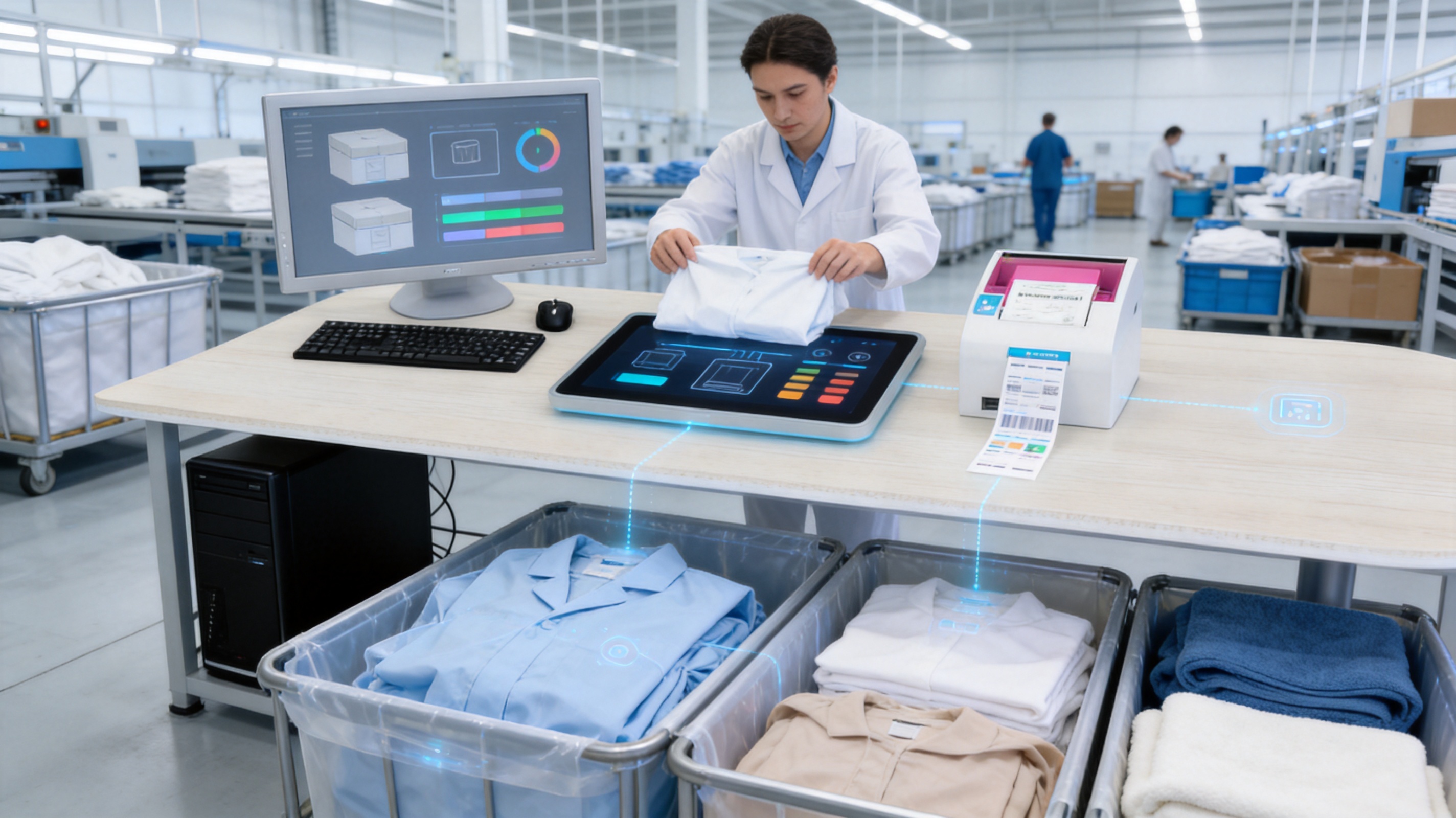
Typical Workflow Using the Station
A practical deployment may begin when clean fabrics arrive from the washing or inspection stage. The operator prepares the workstation and selects the relevant task, customer, order, or destination on the touchscreen. The fabrics are then placed within the RFID identification area or handled according to the configured station procedure.
The system identifies multiple tagged items and presents the results on the screen. If the item information corresponds with the current task, the operator can confirm the classification. If an item is missing, unexpected, duplicated, or associated with another destination, the system can support exception handling according to the configured rules.
Once classification is confirmed, the station can initialize tags where required, bind identified items to a package or delivery record, and print labels. The operator then bundles or packages the fabrics according to the applicable service requirements. The package status can be recorded digitally, creating a transaction that links the contents with the intended destination.
At the outbound stage, the completed package can be verified before dispatch. The facility may use the information to confirm the order, prepare a delivery list, or communicate status to a connected hospital or logistics system. After dispatch, the record can remain available for future inquiry and reporting.
| Process Stage | Station Function | Operational Result |
|---|---|---|
| Task preparation | Display the applicable sorting or packaging task | Operators work against a defined destination or order |
| Item identification | Read multiple RFID-tagged fabrics | Faster batch recognition and reduced manual entry |
| Classification | Apply system rules and display item information | More consistent categorization and exception visibility |
| Tag management | Initialize tags and bind data | Each item or managed unit receives a digital identity |
| Packaging | Associate items with a package or bundle | Physical contents are linked with package records |
| Labeling | Print package or task labels | Electronic and physical identification remain connected |
| Outbound confirmation | Record completion and synchronize information | Distribution records support traceability and reporting |
Implementation Considerations
Organizations considering deployment should begin with a detailed review of their existing fabric process. This review should identify the types of textiles handled, daily and peak volumes, existing RFID or barcode practices, packaging methods, delivery destinations, software platforms, and network conditions.
Tag strategy is a fundamental consideration. RFID tags must be selected and installed in a way that suits repeated washing, drying, folding, handling, and storage. Tag placement should support reliable reading while minimizing interference with fabric use and maintenance. The exact tag specification and attachment method should be determined through application testing.
The physical layout should also be evaluated. The station needs to be positioned so that operators can move fabrics efficiently from the preceding process to the sorting area and then to packaging or outbound staging. A well-designed layout can reduce unnecessary lifting, walking, and repeated handling.
Software configuration should reflect real operational rules. Customer codes, hospital departments, fabric categories, package quantities, delivery routes, and exception conditions should be defined before full production use. The more accurately the system represents the actual process, the more useful the data will be.
Training is another important factor. Operators should understand how to initiate a task, interpret identification results, respond to exceptions, manage unreadable tags, handle network interruptions, and verify package completion. Supervisors should be trained in reporting, data review, and basic troubleshooting.
Maintenance and Operational Management
Regular maintenance supports long-term reliability. The touchscreen and reading area should be kept clean and free from material obstruction. Network connections should be checked periodically. Software versions, user permissions, and synchronization status should be managed according to the facility’s information technology procedures.
Performance monitoring can help identify problems before they affect production. Facilities may track identification success rates, exception frequency, synchronization failures, label-printing issues, and average processing time. If the data shows a recurring problem, managers can investigate whether the cause relates to tag placement, operator training, workflow design, network coverage, or equipment condition.
Tag management should also be included in maintenance planning. Damaged, missing, or unreadable tags can reduce the effectiveness of the system. A defined replacement procedure helps ensure that the digital identity of a fabric item remains accurate throughout its service life.
Because the station may connect with MES, HIS, and logistics systems, cybersecurity and access management should be considered as part of deployment. User accounts, permissions, network segmentation, software updates, and data backup policies should be aligned with the customer’s information technology requirements.
Business Value for Laundry Plants and Medical Centers
The immediate benefit of the station is improved sorting and packaging efficiency, but the wider business value comes from process visibility. A facility can use more reliable operational data to understand workloads, identify bottlenecks, improve labor allocation, and communicate more accurately with customers.
Higher identification accuracy can help reduce misdelivery, package omissions, and time spent searching for misplaced fabrics. Faster batch processing can increase the capacity of existing staff and equipment. Integrated label printing can reduce the number of manual transitions between sorting, recording, and packaging.
Traceability can also strengthen customer confidence. Hospitals and healthcare organizations depend on predictable linen and garment availability. When the laundry provider can provide clearer information about processing and dispatch status, it can support stronger service coordination.
For a regional washing center, standardization is especially valuable. The same basic station and process model can be applied across multiple lines or facilities, while software rules and interfaces can be configured for different customers. This can help create a scalable operating structure rather than a collection of isolated manual practices.
Extension to Other Textile-Intensive Industries
The station is primarily designed for medical fabric management, but its capabilities can be extended to other industries where large numbers of reusable textiles must be identified and distributed accurately.
Hotel linen management is one potential application. Hotels process sheets, towels, bathrobes, table linens, and other textiles in large volumes. RFID-based sorting and package preparation can help associate clean linens with properties, departments, room types, or delivery schedules.
Large logistical support centers may also use the station for uniforms, protective clothing, reusable workwear, or specialized textile kits. The same principles apply: identify items, categorize them, bind them to an order or destination, print labels, and record outbound activity.
Industrial service providers can use similar workflows for rental textile management, provided the tags, software rules, and packaging requirements are adapted to the application. The product’s integration capabilities make it suitable for projects that require coordination between physical handling and enterprise information systems.
Why Manufacturer Capability Matters
Purchasing an intelligent workstation is not only a hardware decision. Customers are investing in a process platform that must work reliably with their existing equipment, software, personnel, and service commitments. Manufacturer capability therefore influences the total value of the solution.
A manufacturer with experience in communication cabinets and electronic equipment understands the importance of structured hardware design, network compatibility, and stable equipment operation. Experience in optical communication and transportation infrastructure also reflects exposure to demanding applications where downtime and inconsistent performance can have significant consequences.
Wanma Technology’s combination of in-house product development, manufacturing, marketing, and customized solution support provides a foundation for project-oriented delivery. This can be advantageous when a customer needs more than a standard catalog product. The manufacturer can participate in requirement analysis, product configuration, system integration, delivery coordination, and ongoing partnership development.
International sales experience can further support organizations operating across different markets. Export customers may need assistance with documentation, shipping coordination, local installation planning, and communication across time zones. These factors do not replace local compliance evaluation, but they can make international cooperation more efficient.
Recommended Evaluation Criteria for Buyers
When comparing the Sorting and Packaging Station with competing solutions, buyers should evaluate the complete operating outcome rather than focusing on one technical specification. The following questions can support a practical assessment.
First, can the solution recognize the required number of fabric items at the facility’s actual operating speed? A demonstration should use representative textiles, tag types, bundle sizes, and working conditions.
Second, does the solution integrate identification, packaging, label printing, and data binding, or will operators need to transfer information manually between separate systems?
Third, how does the solution respond to network interruptions? Buyers should understand the available offline functions, synchronization process, and data recovery controls.
Fourth, can the station connect with the facility’s MES, hospital HIS, warehouse, or logistics platform? API documentation, data fields, security requirements, and integration responsibilities should be clarified before purchase.
Fifth, is the workstation suitable for long-term operator use? Screen size, working height, interface design, task sequence, and physical layout should be evaluated in the actual environment.
Finally, what support can the manufacturer provide after delivery? Product training, software updates, replacement parts, remote assistance, customization, and future expansion are all important elements of total ownership value.
Frequently Asked Questions
What is the primary purpose of the Sorting and Packaging Station?
Its primary purpose is to support the identification, sorting, tag management, packaging, labeling, and outbound preparation of medical fabrics. It serves as a connected workstation between washing operations and distribution.
How many fabric items can the station identify simultaneously?
The station is capable of rapidly identifying more than ten fabric items simultaneously. Actual results may vary according to tag type, fabric composition, item arrangement, reader environment, and software configuration.
What technology does the station use for identification?
It uses RFID technology supported by independently developed identification algorithms. RFID enables electronic identification of tagged items and can support batch processing without relying solely on visual recognition or individual optical scans.
What is the stated identification accuracy?
The product information specifies a categorization accuracy of at least 99 percent under applicable operating conditions. Facilities should conduct application testing with their own fabrics, tags, workflows, and environmental conditions before final deployment.
Yes. Tag initialization is one of the integrated functions. The station can also bind tag data to relevant records in the management platform and support label printing for packages or bundles.
How does the station improve traceability?
It connects the digital identity of a fabric item or managed group with sorting, packaging, and distribution records. This helps create a traceable relationship between physical fabrics, packages, destinations, and outbound transactions.
Can it work if the network connection is temporarily interrupted?
The station supports offline synchronization and automatic data recovery. These functions are intended to help maintain operational continuity during temporary network interruptions. The exact offline workflow should be configured and verified during implementation.
What network options are available?
The station supports both wired and WiFi networking. This allows customers to select a connection method that suits the facility’s infrastructure and workstation layout.
Can it integrate with existing laundry software?
The station is built on a microservices architecture and supports OPEN API integration. It is designed to coordinate with laundry MES, hospital HIS, logistics systems, and other platforms, subject to project-specific interface development and configuration.
Is the station suitable for hospitals themselves?
It is primarily intended for hospital-affiliated laundry plants and medical washing centers. It may also support hospital fabric distribution or central textile management areas when the physical layout, software environment, and operating requirements are suitable.
Can the product be used outside medical textiles?
Yes. The product can be extended to large logistical support centers, hotel linen management, uniform processing, and other fabric-intensive operations that require sorting, bundling, labeling, and traceability.
What hardware is included in the workstation?
The product includes a 21-inch industrial-grade touchscreen, 4G RAM, and 16G ROM. It also integrates RFID-related functions, networking capabilities, and the software environment required for sorting and packaging management.
What should customers prepare before deployment?
Customers should prepare information about fabric types, tag specifications, expected volumes, packaging rules, destinations, network conditions, existing software systems, and operator workflows. This information helps determine the appropriate configuration and integration plan.
How does the manufacturer support customized requirements?
The manufacturer develops and manufactures its own products and also provides integrated solutions for customized products. Customers can discuss project-specific hardware, software, interface, deployment, and workflow requirements during the planning stage.
Conclusion
The Sorting and Packaging Station provides a practical foundation for modernizing medical fabric operations. By combining RFID batch identification, a 21-inch industrial touchscreen, tag initialization, data binding, label printing, network flexibility, offline synchronization, and OPEN API integration, it addresses the interconnected requirements of sorting and outbound packaging.
Its advantage over conventional approaches is not limited to faster recognition. The station is designed to connect physical textile handling with digital records, helping laundry plants improve consistency, reduce avoidable errors, and create clearer traceability from sorting to distribution. Its ergonomic design and industrial-grade hardware support extended operation, while microservices architecture and integration capabilities provide flexibility for complex organizational environments.
The manufacturer’s background in communication cabinets, communication electronic equipment, passive optical components, Ethernet networks, optical communication networks, railway systems, and urban rail transit provides a relevant industrial foundation. Its experience in product development, manufacturing, customized solutions, international sales, delivery, and long-term partnerships strengthens its ability to support project-based deployments.
For medical washing centers seeking higher throughput and better control, the station can serve as an important step toward a fully digitalized fabric management process. When combined with suitable RFID tags, well-designed workflows, reliable network planning, trained operators, and effective software integration, it can help transform sorting and packaging from a labor-intensive checkpoint into a connected and measurable smart operation.
References
1. Product specification materials for the Sorting and Packaging Station, including RFID identification, touchscreen hardware, networking, synchronization, and system integration functions.
2. Industrial RFID deployment principles for textile identification, batch recognition, item traceability, and reusable fabric management.
3. Medical laundry process management practices covering sorting, packaging, distribution, inventory control, and service coordination.
4. Manufacturing and product information concerning Wanma Technology Co., Ltd., its communication equipment portfolio, industrial applications, customized solutions, and international market experience.
5. General enterprise integration concepts related to microservices architecture, OPEN API connectivity, MES systems, hospital information systems, and logistics platforms.
Product: Sorting and Packaging Station
PREV:Indoor AC Metal-Clad Withdrawable Switchgear for Safe and Intelligent Medium-Voltage Distribution
NEXT:WM-2001-H11 Fiber Optic Splice Closure: High-Capacity Protection for Modern Optical Networks
NEXT:WM-2001-H11 Fiber Optic Splice Closure: High-Capacity Protection for Modern Optical Networks
Interested in cooperation or have questions?
Related products
-
-
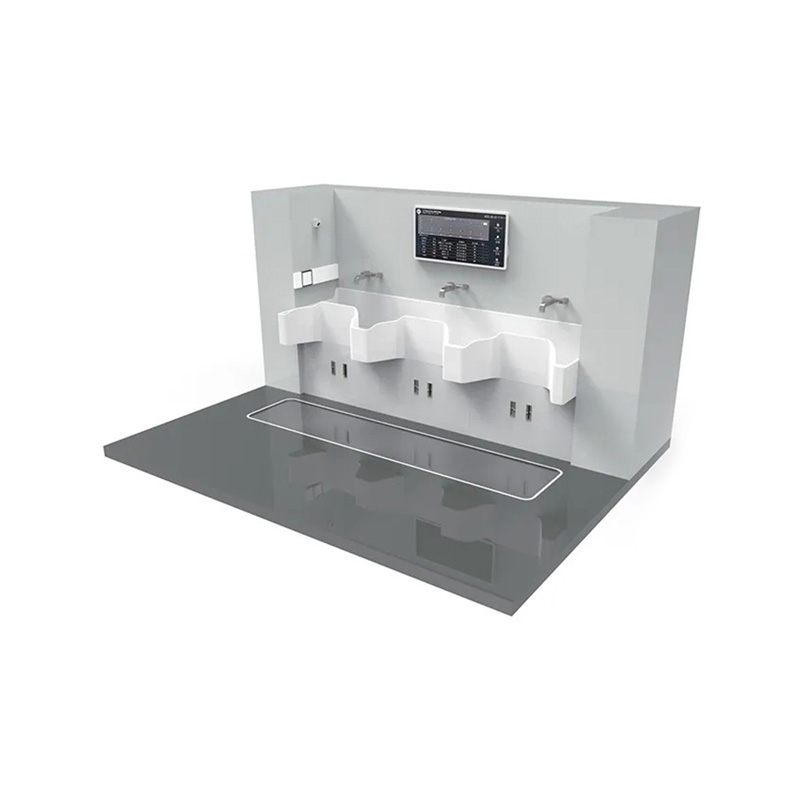
Product DefinitionThe Wanma Hand Washing Compliance Management System is an intelligent hand hygiene supervision solution based on RFID technology. By automatically identifying medical staff and monit...
See Details -
Product Definition:The Intelligent Geng Shoe Box is an advanced storage and management solution for hospitals, operating rooms, and clean zones. It enables automated issuance and collection of shoes a...
See Details -
Product Definition:Intelligent Shelves are a smart warehouse management unit that integrates dynamic sensing, real-time display, and precise positioning. By leveraging advanced sensor technology, they...
See Details
Ready to Get started ? Contact Us Now !

Product.
Contact Details.
-
 +86 13958188250
-
 +86 13958188250
-
 [email protected]
-
 AUDIT Email:[email protected]
- Wanma Industrial Park Taihu Yuan Town Lin'an District Hangzhou City China.
QR Code

Copyright © Wanma Technology Co., Ltd. All Rights Reserved.
Privacy
Custom Ethernet Optical Network Railway Transit Equipments Suppliers
