

 English
 Français
 Español
 Português
 عربى





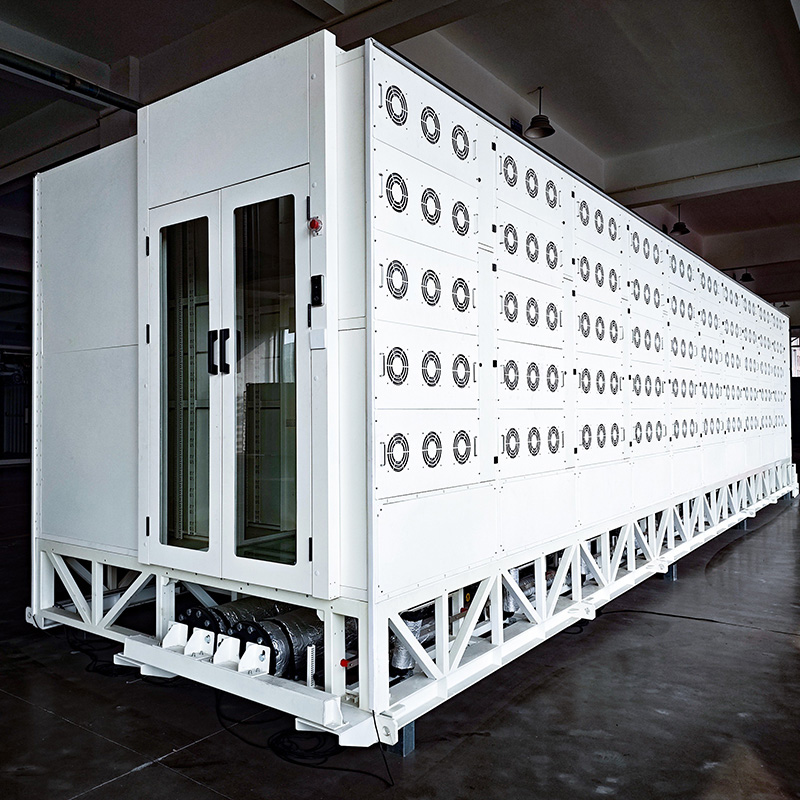
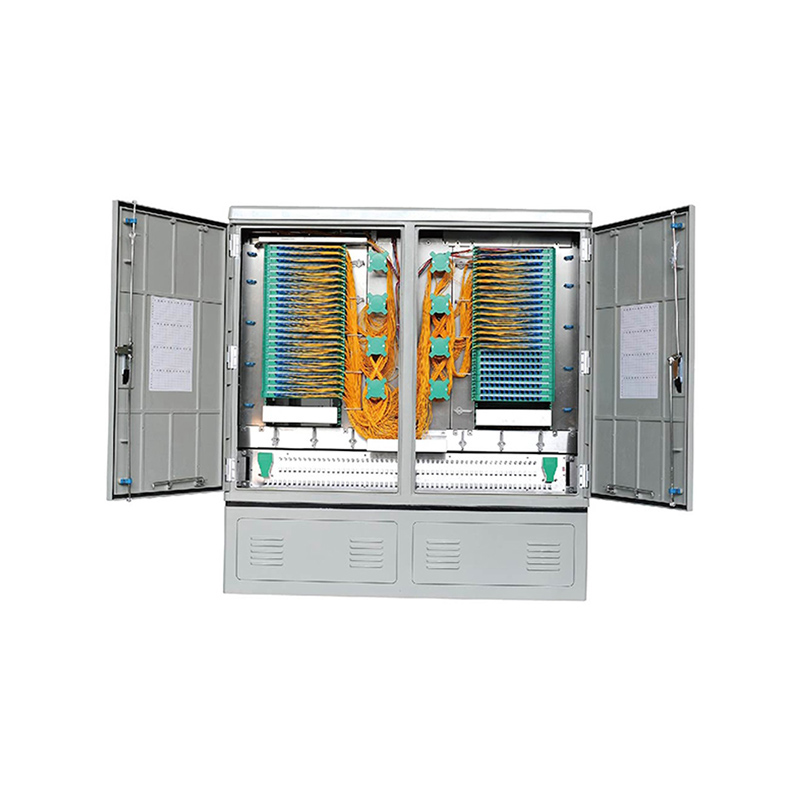
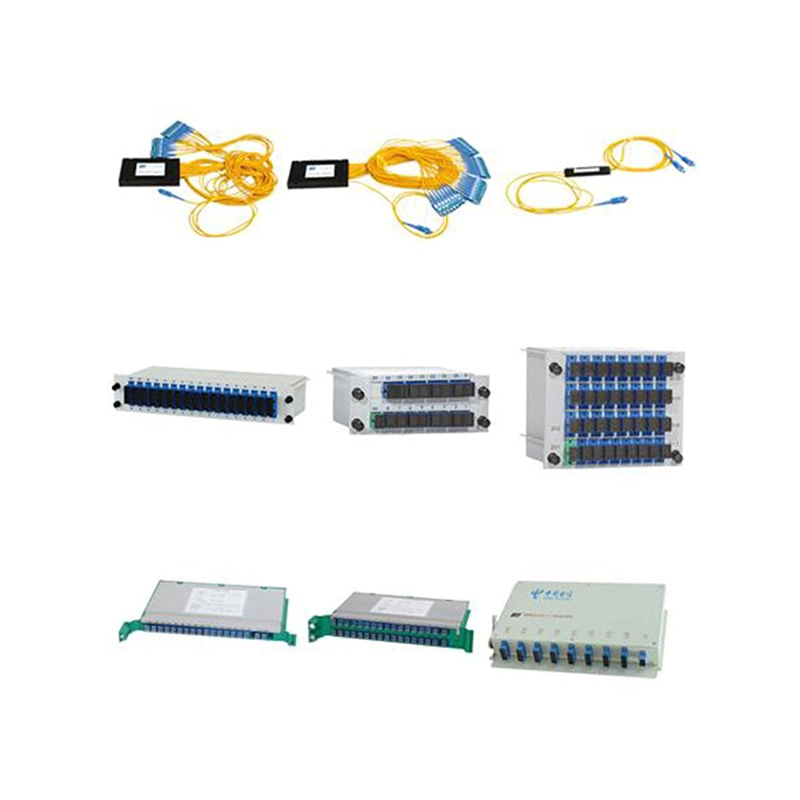
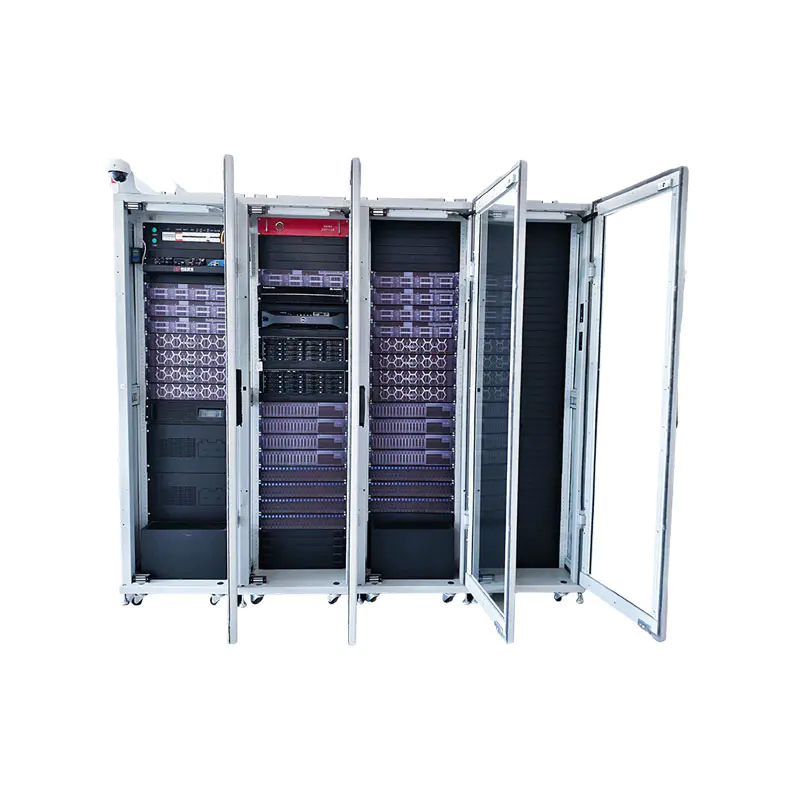

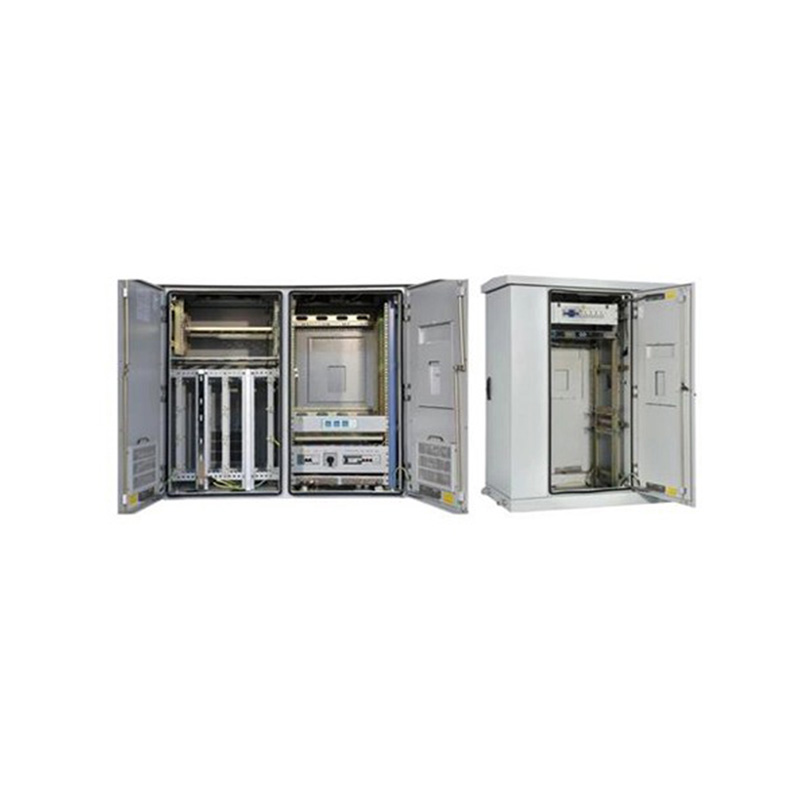
Application:It is used for the fixed network and broadband access, providing physical working environment and security system for the workstation in wired network. Features:•The cabinet is composed of...
See DetailsAdvanced Fiber Access Distribution for Outdoor FTTH Networks
Content
- 1 1. The Role of Fiber Distribution Boxes in Modern Networks
- 2 2. Product Overview and Core Configuration
- 3 3. Design Advantages for Outdoor Fiber Deployment
- 4 4. Capacity for FTTH and Subscriber Distribution
- 5 5. Manufacturing Strengths and Product Development Capability
- 6 6. Advantages Compared with Basic or Less Integrated Alternatives
- 7 7. Installation and Deployment Considerations
- 8 8. Maintenance and Long-Term Serviceability
- 9 9. Applications Across Communication Infrastructure
- 10 10. Company Capabilities and Customer Support Strengths
- 11 11. Project Planning and Selection Guidance
- 12 12. Frequently Asked Questions
- 12.1 What is the primary purpose of the WM-1001-F023?
- 12.2 How many subscriber connections does it support?
- 12.3 How many fibers can the box accommodate?
- 12.4 Can a PLC splitter be installed inside the enclosure?
- 12.5 Which adapters are supported?
- 12.6 Is the product suitable for outdoor installation?
- 12.7 What material is used for the enclosure?
- 12.8 What are the product dimensions?
- 12.9 What temperature range can the box withstand?
- 12.10 Does the box have a lock?
- 12.11 What cable diameters are supported at the entry ports?
- 12.12 What accessories are included?
- 12.13 Does the product comply with environmental substance requirements?
- 12.14 Can the box be used in railway or transit projects?
- 12.15 How does this product compare with a basic splice closure?
- 13 13. Conclusion
- 14 References
- 15 Product: WM-1001-F023 Fiber Optic Distribution Box
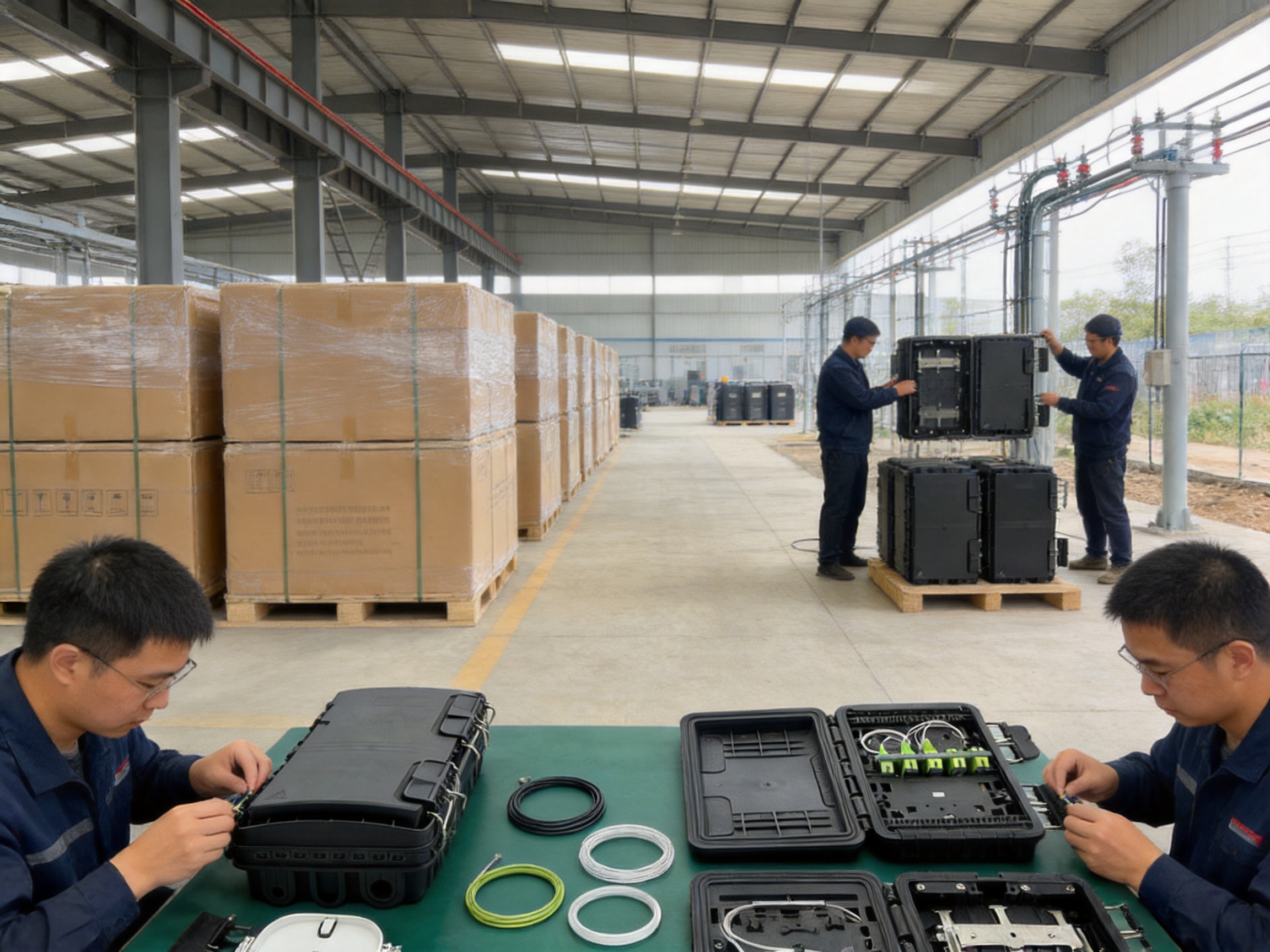
Reliable fiber access infrastructure is essential to the continued expansion of broadband, enterprise connectivity, smart-city services, industrial communications, and railway communications. As network operators move fiber closer to homes, businesses, public facilities, and remote installations, they require distribution equipment that can protect delicate optical fibers while simplifying splicing, splitting, routing, maintenance, and subscriber connection. The WM-1001-F023 Fiber Optic Distribution Box is designed to meet these requirements in a compact outdoor enclosure intended for aerial deployment.
With support for up to 24 fibers, 16 subscriber outlet ports, integrated splice management, PLC splitter installation, and IP65 environmental protection, this distribution box combines several essential functions within one practical enclosure. It is designed for fiber distribution, splicing, and management in fiber access networks, particularly in FTTH deployments and outdoor distribution points. Its hinged and lockable cover, sealing structure, clamshell layout, and flexible adapter compatibility help network technicians perform installation and maintenance more efficiently.
The product is manufactured by Wanma Technology Co., Ltd., a communications equipment company established in 1997. The company specializes in communication cabinets, communication electronic equipment, passive optical components, and integrated network solutions. Its products are used in Ethernet networks, optical communication systems, central equipment rooms, high-speed railway infrastructure, and urban rail transit applications. This broad experience supports the development of practical fiber management products for both conventional telecom networks and increasingly demanding modern communications environments.
1. The Role of Fiber Distribution Boxes in Modern Networks
A fiber distribution box serves as an intermediate point between feeder cables, distribution cables, splitters, splice assemblies, and subscriber drop cables. In a typical FTTH network, the feeder cable arrives at a neighborhood or building access point. The fibers may then be spliced, routed through a passive optical splitter, connected to adapters, and distributed to individual subscribers through drop cables.
Without an organized enclosure, these operations can result in excessive bending, exposed splice points, difficult troubleshooting, and poor protection against moisture or dust. A purpose-designed distribution box provides an enclosure in which optical fibers can be secured and managed according to a repeatable installation method. It also creates a physical boundary between the outdoor environment and sensitive connection points.
The WM-1001-F023 is intended for this intermediate distribution role. It supports aerial mounting and provides 16 outlet ports for subscriber drop cables. Inside the enclosure, the available space is arranged for splicing, adapter installation, cable routing, and splitter integration. This makes the product suitable for networks in which several optical functions must be performed at a single compact access point.
Fiber access infrastructure must balance multiple priorities. A box must be sufficiently compact for installation on poles or other elevated structures, yet spacious enough for technicians to work comfortably. It must protect optical components from weather while allowing controlled access for maintenance. It must also support present network requirements without limiting future configuration options. The WM-1001-F023 addresses these practical needs through a combination of 24-fiber capacity, 16 subscriber ports, splitter support, and a structured internal layout.
2. Product Overview and Core Configuration
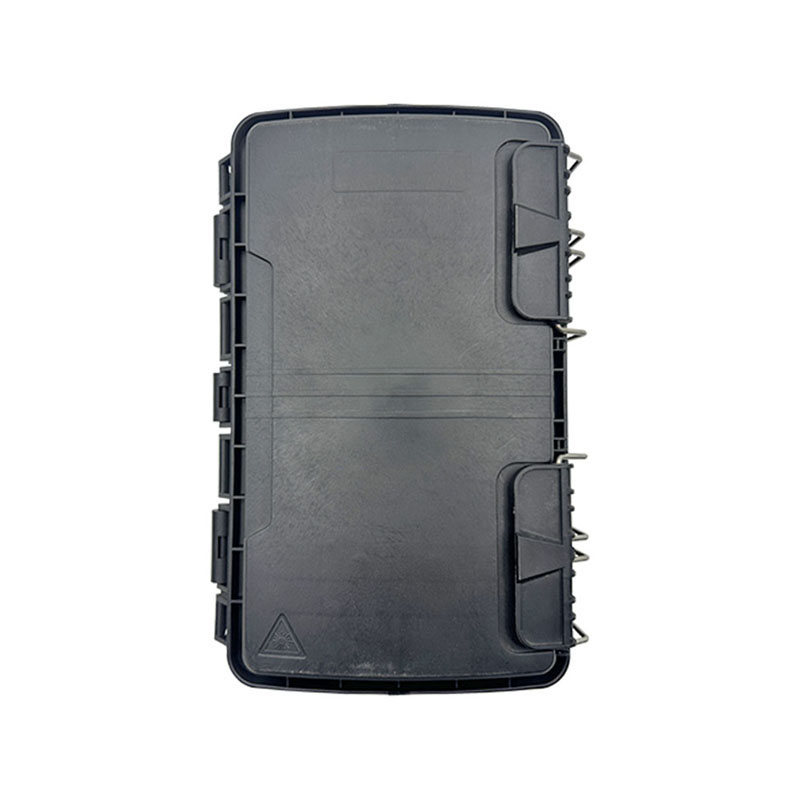
The WM-1001-F023 Fiber Optic Distribution Box uses a PP+GF enclosure material. Polypropylene reinforced with glass fiber provides a lightweight housing with improved structural strength compared with ordinary unreinforced plastic. The enclosure is black, using the RAL 9005 color reference, and has overall dimensions of 290 mm × 190 mm × 110 mm.
The enclosure is designed with a hinged top cover and a lockable structure. This design allows technicians to open the box while keeping the cover connected to the main housing. A hinged cover is useful during installation because it reduces the risk of misplaced components and can provide a more controlled working position in outdoor locations. The lockable design also helps restrict unauthorized access to internal fiber connections.
The box has an IP65 protection rating. This rating indicates protection against dust ingress and protection against water jets from different directions under specified test conditions. It is appropriate for many outdoor telecommunications environments, although installation should still follow appropriate site practices regarding drainage, cable entry, exposure, mechanical loading, and local weather conditions.
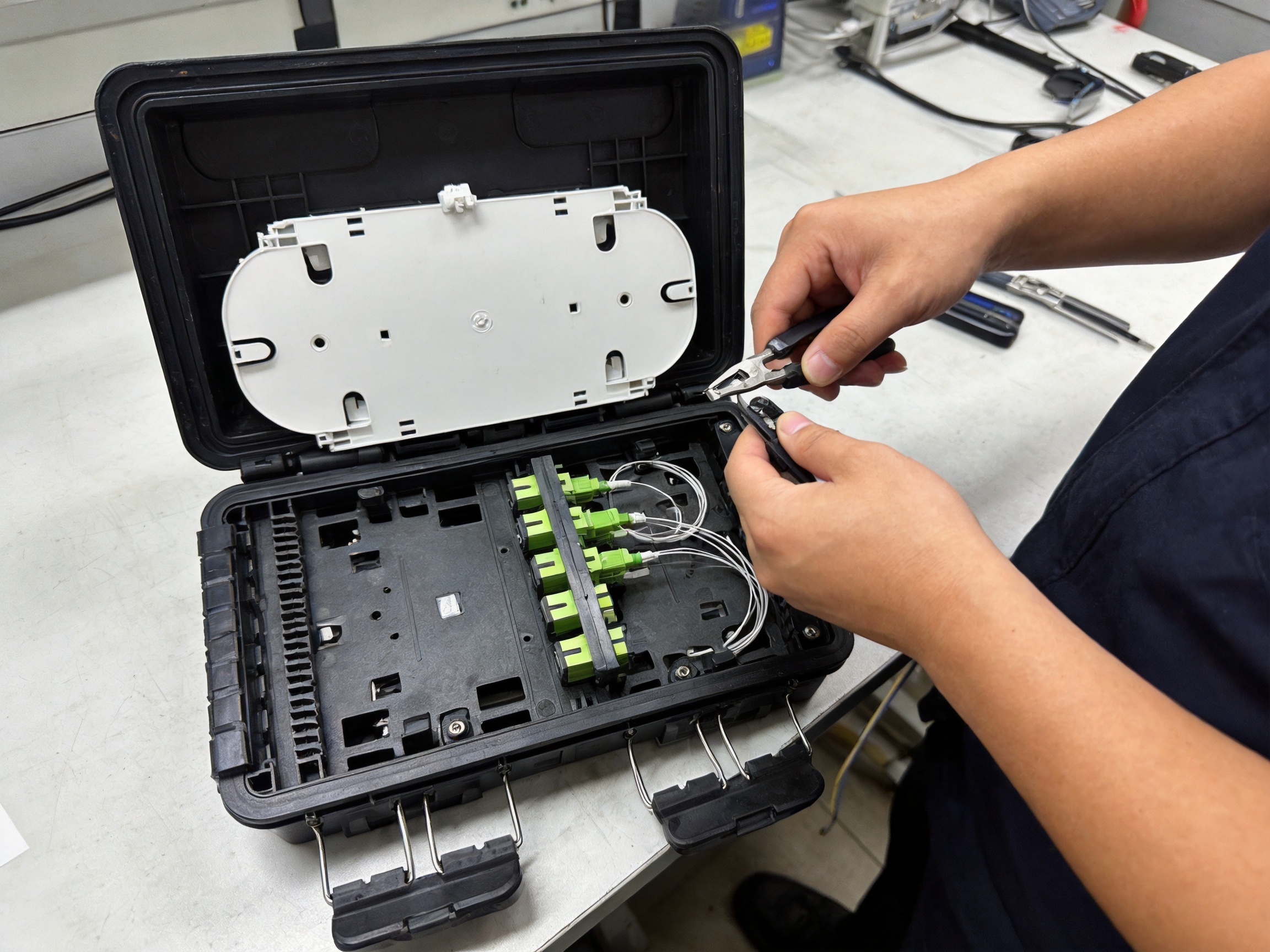
The product supports one splice tray with a maximum capacity of 1 × 24 fibers using heat-shrink splice protection. Its maximum supported fiber count is 24 cores. The enclosure also includes an adapter holder with 16 positions for SC simplex or LC duplex adapters. Sixteen outlet ports are provided for 2 × 3 mm drop cables, while the cable entry ports support cable diameters from approximately 7 mm to 18 mm. Two inlet ports are sealed with rubber seals.
The splitter compartment supports either two 1 × 8 PLC metal tube splitters or one 1 × 16 PLC metal tube splitter. This gives operators flexibility when selecting the optical architecture. A 1 × 16 splitter can serve a centralized sixteen-subscriber configuration, while two 1 × 8 splitters may be used where the network design requires separate groups or staged distribution.
| Product Attribute | Specification |
| Product type | Fiber optic distribution box |
| Model | WM-1001-F023 |
| Enclosure material | PP+GF |
| Color | Black, RAL 9005 |
| Overall dimensions | 290 mm × 190 mm × 110 mm |
| Maximum fiber capacity | 24 cores |
| Splice tray | One tray, 1 × 24 fiber heat-shrink type |
| Outlet ports | 16 ports for 2 × 3 mm drop cables |
| Cable entry diameter | Approximately 7 mm to 18 mm |
| Inlet ports | Two, sealed with rubber seals |
| Adapter holder | 16 positions for SC simplex or LC duplex adapters |
| Splitter compatibility | Two 1 × 8 PLC metal tube splitters or one 1 × 16 PLC metal tube splitter |
| Mounting application | Aerial |
| Protection rating | IP65 |
| Operating temperature | −40 °C to +85 °C |
| Storage temperature | −40 °C to +85 °C |
3. Design Advantages for Outdoor Fiber Deployment
3.1 Reinforced PP+GF Enclosure
The enclosure uses PP+GF rather than basic plastic. The glass-fiber reinforcement improves the housing’s mechanical stability and helps it maintain its shape across changing outdoor temperatures. A robust enclosure is important because aerial equipment can be exposed to wind, sunlight, seasonal temperature changes, vibration, and occasional mechanical impact during nearby construction or maintenance work.
The use of a non-metallic housing also supports practical deployment in telecommunications environments where corrosion resistance, electrical insulation, and reduced weight are valuable. Compared with heavier metal enclosures, a reinforced polymer enclosure can simplify handling and installation, especially when equipment must be mounted on poles or elevated structures.
3.2 IP65 Protection for Outdoor Conditions
Outdoor distribution equipment must protect fibers and adapters from dust and water. The WM-1001-F023 incorporates a sealing ring structure and rubber-sealed cable entries to support its IP65 protection rating. The sealing ring helps close the contact area between enclosure components, while the rubber seals around the inlet ports help reduce the possibility of unwanted openings around incoming cables.
IP protection is not only a specification printed on a product label. It depends on correct installation, proper closure of the cover, suitable cable diameters, intact seals, and appropriate maintenance. The integrated sealing design of this product gives installers a clear physical protection system that can be inspected during deployment and service work.
3.3 Hinged and Lockable Top Cover
A hinged cover provides a practical advantage over loose or fully removable covers. During field installation, technicians often need both hands to prepare cables, position splice sleeves, and organize adapters. A connected cover is less likely to be lost or damaged and can be opened repeatedly during maintenance.
The lockable design supports controlled access. In aerial installations, physical security is important because the distribution box may be positioned in a publicly accessible area or on infrastructure shared with other utilities. A lock does not replace a complete site security strategy, but it helps discourage casual interference and protects the internal optical arrangement during normal operation.
3.4 Clamshell Layout and Cable Organization
The clamshell design is intended to make routing and installation neat. Fiber cables require careful management because excessive bending, pulling, compression, or crossing can increase the risk of optical loss or future maintenance problems. An organized internal layout helps technicians separate incoming cables, splice areas, splitter components, adapters, and outgoing drop cables.
Neat routing also improves serviceability. When a technician opens the enclosure, a logical arrangement makes it easier to identify the feeder path, locate a splice tray, check an adapter, or trace a subscriber drop cable. This can reduce the time required for fault diagnosis and minimize disturbance to neighboring connections.
3.5 Flexible Splitter and Adapter Support
The product supports two common passive optical network configurations. Operators can install two 1 × 8 PLC metal tube splitters or one 1 × 16 PLC metal tube splitter. This flexibility is useful for network planners because different sites may require different distribution ratios or separation between subscriber groups.
The 16-position adapter holder supports SC simplex or LC duplex adapters. This allows the same enclosure platform to accommodate different connector arrangements. SC simplex adapters are widely used in access networks, while LC duplex adapters can be useful where higher connector density or specific equipment interfaces are required.
Compared with a basic splice-only enclosure, the integrated splitter and adapter support gives the WM-1001-F023 a broader functional role. It can serve as a passive distribution point rather than merely a protective container for splices. This may reduce the number of separate enclosures required at an access location and can simplify installation planning.
WM-1001-F023 Fiber Optic Distribution Box
4. Capacity for FTTH and Subscriber Distribution
The product’s 16 outlet ports are one of its most important network-facing characteristics. Each outlet port is intended for a 2 × 3 mm drop cable, making the enclosure suitable for connecting up to 16 subscriber lines or service endpoints, depending on the network architecture and operator’s design.
Sixteen ports provide a useful balance between capacity and physical size. A smaller box may be easy to install but offer insufficient subscriber capacity, forcing operators to deploy several enclosures in the same area. A much larger box may provide additional capacity but require more space, more supporting hardware, and greater installation effort. The WM-1001-F023 is positioned as a compact 16-port solution for residential areas, industrial sites, and distributed access points.
The 24-core maximum capacity provides room for feeder and distribution fiber management beyond the number of subscriber ports. This is useful because the fiber count inside a network node may include working fibers, reserve fibers, splitter inputs, and fibers routed for future use. The one-tray 24-fiber heat-shrink configuration offers a structured location for splicing and protects the completed splice points.
The difference between fiber capacity and subscriber port count is important. A 24-core internal capacity does not mean that all 24 fibers must be connected to individual subscribers. Some fibers may be used as feeder fibers, spare fibers, or dedicated service paths. The enclosure therefore provides a degree of planning flexibility for network operators.
Typical FTTH Configuration
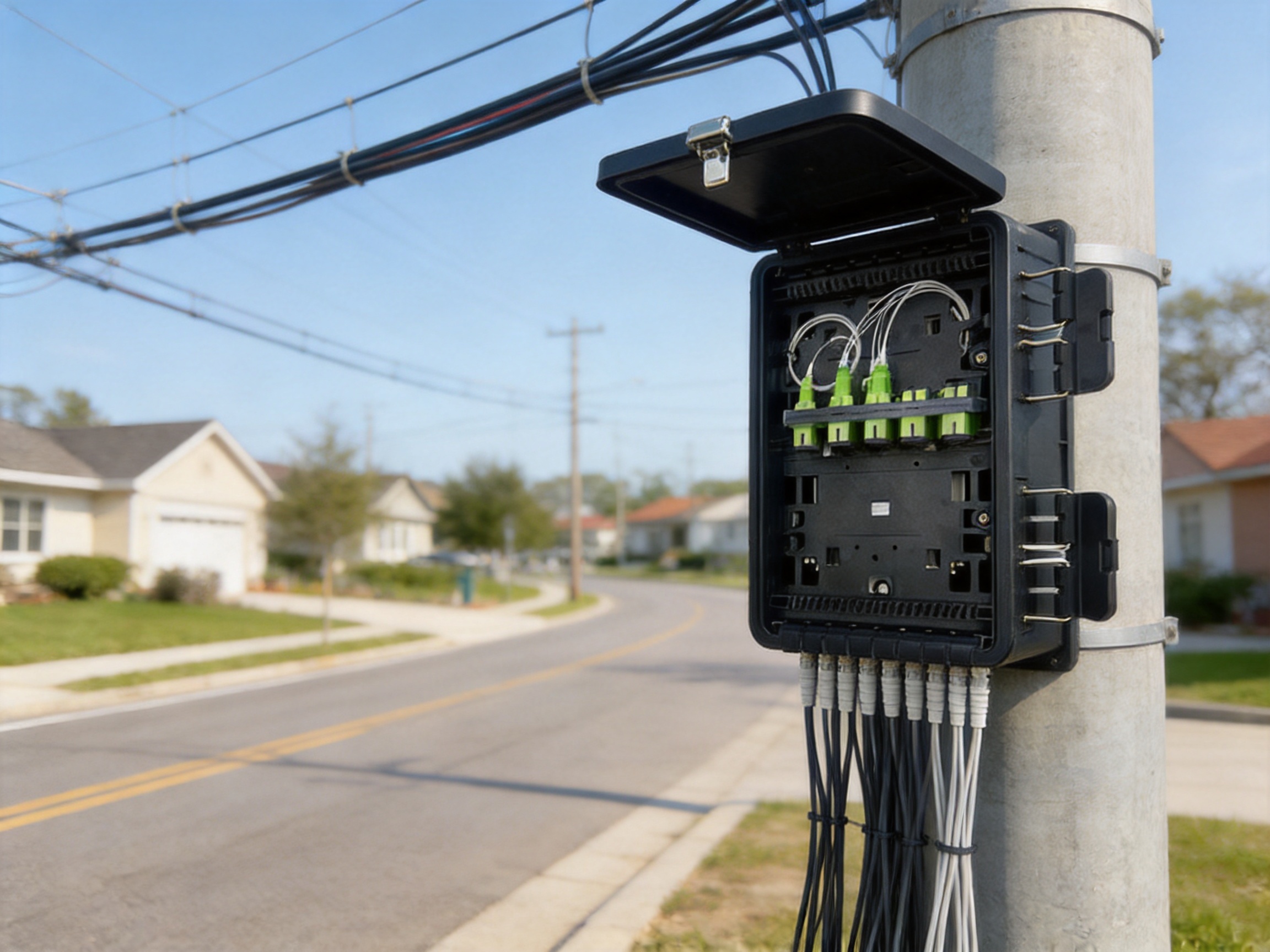
In a typical FTTH deployment, a feeder cable enters through one of the sealed inlet ports. The fibers are prepared and routed to the splice tray. A PLC splitter may be installed inside the enclosure, depending on whether the optical splitting function is centralized or distributed. The splitter output fibers can then be connected to the adapter holder, and individual subscriber drop cables can be routed through the 16 outlet ports.
This configuration allows the enclosure to act as a neighborhood fiber access point, a pole-mounted distribution point, or an intermediate node between a larger optical distribution frame and end-user premises. The exact connection method depends on the operator’s optical budget, cable construction, connector policy, and maintenance procedures.
Residential and Industrial Access Nodes
Residential communities often require multiple subscriber connections in a compact area. A 16-port aerial distribution box can be installed at a strategic point to serve homes, apartment buildings, or small commercial clusters. Its compact dimensions help it fit into locations where a large cabinet would be impractical.
Industrial areas may also benefit from a protected passive distribution point. Warehouses, factories, logistics facilities, and remote production areas can require fiber connections for surveillance, automation, enterprise networking, and data services. The broad operating temperature range supports deployment in environments where the enclosure may experience severe heat or cold, provided that the overall installation meets the site’s environmental requirements.
5. Manufacturing Strengths and Product Development Capability
The performance of an outdoor fiber distribution box depends not only on its design but also on the consistency of its manufacturing. Dimensional accuracy, enclosure fit, sealing interfaces, mounting points, cable entry geometry, and internal component alignment all influence field reliability. Wanma Technology’s long operating history in communications equipment provides an industrial foundation for developing and producing this type of passive optical product.
Established in 1997, the company has experience in communication cabinets, electronic communication equipment, and passive optical components. These product categories require attention to mechanical design, material selection, assembly accuracy, cable management, and compatibility with communications infrastructure. The company’s work across Ethernet networks, optical communication networks, central equipment rooms, high-speed railways, and urban rail transit systems also reflects experience with applications where organized and reliable infrastructure is important.
Material Selection and Enclosure Manufacturing
The PP+GF housing requires controlled material preparation and molding processes. The glass-fiber reinforcement must be distributed consistently within the polymer matrix so that the finished enclosure has predictable strength and dimensional stability. The molding process must also maintain the geometry required for the cover, hinge, lock, sealing ring, cable entries, and mounting accessories.
A well-controlled enclosure manufacturing process helps reduce variation between units. Consistent dimensions are important because the cover must close correctly, the sealing ring must seat properly, and internal accessories must align with their mounting positions. These details are especially important for a product intended to achieve IP65 protection in outdoor environments.
Assembly of Optical Management Components
The distribution box is not simply an empty plastic shell. It includes a splice tray, adapter holder, splitter mounting provisions, cable entry features, seals, and installation accessories. Assembly requires attention to the fit and alignment of these components. Internal parts must remain secure during handling and installation while still allowing technicians to work efficiently.
The internal layout is designed to support splicing and routing. Manufacturing and assembly teams must therefore ensure that the splice tray and adapter holder are installed in a consistent position and that cable paths remain accessible. An orderly assembly process helps maintain repeatability across production batches.
Quality-Oriented Production Approach
For outdoor optical equipment, quality management should address both visible and functional characteristics. Typical areas of attention include enclosure appearance, dimensions, cover operation, lock function, seal placement, cable entry compatibility, component fit, and labeling. Optical management products also require careful handling to avoid contamination or damage to connector interfaces and fiber-routing surfaces.
The product documentation specifies RoHS compliance with Directive 2011/65/EU and amendment Directive (EU) 2015/863, as well as REACH compliance with Regulation 1907/2006/EC. These requirements support responsible material selection and chemical substance management for products supplied into international markets.
The company’s export experience and sales coverage in more than 20 countries and regions also support the development of products intended for varied deployment environments. International customers may have different installation methods, connector preferences, packaging requirements, and documentation expectations. A manufacturer familiar with cross-border supply can better coordinate product preparation, packaging, and delivery requirements.
Packaging and Delivery Preparation
The product is packed using a PE bag and inner box arrangement, with ten units per outer export carton. The stated outer carton size is 410 mm × 330 mm × 610 mm, with a total carton weight of approximately 18–19 kg. The export carton uses five-layer corrugated paper, identified as A+B or A+E construction, with a thickness of approximately 5–8 mm.
This packaging structure is significant for a product that may be shipped internationally. Adequate carton strength helps reduce the risk of damage during loading, transport, warehouse handling, and delivery to project sites. Waterproof and sun-resistant carton labeling materials support identification during logistics operations, particularly where packages may be temporarily exposed to changing storage conditions.
6. Advantages Compared with Basic or Less Integrated Alternatives
Fiber distribution boxes vary considerably in capacity, materials, protection, and internal organization. The WM-1001-F023 offers several practical advantages compared with basic splice boxes or less flexible outdoor enclosures.
Integrated Distribution, Splicing, and Management
A basic splice closure may protect fusion splices but provide limited support for subscriber adapters or splitter mounting. By contrast, the WM-1001-F023 combines splice management, adapter installation, splitter compatibility, and subscriber cable distribution within one enclosure. This integrated design can simplify the bill of materials for a distribution point and reduce the need to combine multiple unrelated boxes.
Higher Subscriber Port Density in a Compact Format
With 16 outlet ports in a housing measuring 290 mm × 190 mm × 110 mm, the product offers substantial subscriber connectivity without requiring a large cabinet. This can be advantageous for pole-mounted and aerial sites where available space, weight, and installation time are limited.
More Flexible Optical Architecture
The ability to support either two 1 × 8 PLC metal tube splitters or one 1 × 16 PLC metal tube splitter gives operators more choice than a fixed-purpose enclosure. The same product can be used in different network designs, which may simplify inventory and reduce the number of enclosure types that a service provider must maintain.
Improved Service Access
The hinged, lockable cover and clamshell arrangement are designed for repeated access. Compared with an enclosure that must be completely removed or disassembled to reach internal components, this approach can make inspection and maintenance more convenient. Better access may also reduce the chance of accidental fiber disturbance during service work.
Outdoor Protection and Broad Temperature Range
The IP65 rating, sealing ring, rubber-sealed inlets, and operating temperature range of −40 °C to +85 °C make the product suitable for many demanding outdoor conditions. The same temperature range is specified for storage, helping support distribution through different climate zones when appropriate logistics and storage procedures are followed.
Compatibility with Common Connector Types
Support for SC simplex and LC duplex adapters enables the box to fit different network practices. Customers do not necessarily need to redesign their complete connector strategy to use the enclosure. This compatibility can be particularly valuable for projects that combine existing infrastructure with new FTTH equipment.
7. Installation and Deployment Considerations
Although the enclosure is designed for practical field deployment, careful installation remains essential. Before mounting the box, the installer should verify the pole, aerial support, or other mounting structure; confirm cable routes; check the required bend radius; and ensure that the enclosure can be opened and serviced safely.
The aerial mounting accessories should be installed according to the project’s structural and safety requirements. The enclosure must be positioned so that cables are not subjected to excessive tension or sharp bends. Incoming cables should be prepared with sufficient working length for splicing and future maintenance.
When using the cable entry ports, the installer should confirm that the cable diameter is compatible with the specified approximate range of 7 mm to 18 mm. Rubber seals must be seated correctly around the cables, and unused openings should remain properly closed according to the installation method. The cover should be fully closed so that the sealing ring can perform as intended.
Inside the enclosure, fibers should be routed without excessive crossing or compression. The splice tray should be used for heat-shrink-protected fusion splices, and the optical fibers should maintain suitable bend control. Splitters should be mounted in their designated positions, and adapter connections should be kept clean and protected from unnecessary handling.
After installation, technicians should inspect the closure, lock, sealing surfaces, cable entries, and mounting points. Optical testing should be performed according to the operator’s procedures. Typical project testing may include continuity checks, connector inspection, insertion-loss measurement, optical return-loss measurement, and documentation of subscriber port assignments.
8. Maintenance and Long-Term Serviceability
Fiber access networks require maintenance throughout their operating life. Subscribers may be added, cables may be repaired, connectors may need cleaning, and optical paths may need testing. The WM-1001-F023 is designed to support these activities through its hinged cover, internal organization, adapter holder, and accessible splice tray.
Periodic visual inspections can identify loose cable routing, damaged seals, contamination, corrosion on nearby mounting hardware, or signs of mechanical stress. Even though the enclosure uses a reinforced polymer housing, the complete installation includes cables, brackets, locks, and external supports that should be checked as part of routine maintenance.
When opening the box, technicians should follow fiber safety procedures. Optical fibers can be difficult to see, and disconnected optical ports may carry invisible laser radiation. Connector end faces should be protected from dust, and unused adapters should be capped where appropriate. Fiber scraps from splicing should be collected and disposed of safely.
The lockable cover helps limit uncontrolled access, but authorized personnel should still maintain accurate port records. A clear record of splitter position, adapter assignment, splice identification, and subscriber connection can reduce repair time. The structured design of the box supports this documentation by separating key functions within a defined enclosure.
9. Applications Across Communication Infrastructure
FTTH Fiber Access Networks
The primary application is FTTH access. The box can be placed between feeder infrastructure and subscriber drop cables to provide a compact point for splitting, splicing, and distribution. Sixteen outlet ports make it suitable for small residential clusters, street-level access points, and aerial sections of larger passive optical networks.
Aerial Fiber Distribution Points
The product is specifically suited to aerial mounting. Aerial deployment can be useful where underground construction is expensive, existing poles are available, or rapid network expansion is required. Its compact form and outdoor protection features support installation on suitable aerial infrastructure, subject to local engineering and safety requirements.
Residential Developments
Residential neighborhoods, apartment communities, and mixed-use developments may require organized fiber distribution close to end users. The 16-port configuration can serve a defined group of homes or building connections while keeping the distribution point relatively compact.
Industrial and Commercial Areas
Industrial parks and commercial areas often require resilient data connections for business systems, security cameras, access control, industrial monitoring, and cloud services. A protected local fiber distribution point can simplify the connection of several buildings or operational zones.
Railway and Urban Transit Communications
Communication infrastructure is also important in railway and urban transit environments. Wanma Technology has experience supplying products used in national high-speed railway and urban rail transit systems. While the exact suitability of this distribution box must be evaluated for each project, its fiber management function may be relevant to external access networks, maintenance areas, auxiliary communications, and other locations where passive optical distribution is required.
10. Company Capabilities and Customer Support Strengths
Wanma Technology Co., Ltd. combines product development, manufacturing, and marketing capabilities in the communications equipment sector. The company develops and manufactures its own branded products while also providing integrated solutions for customized products. This combination can be useful for customers whose projects require standard catalog products as well as modified designs, special packaging, or coordinated network equipment solutions.
The company’s product scope includes communication cabinets, communication electronic equipment, and passive optical components. This range gives it a broader understanding of the physical and optical infrastructure surrounding a distribution box. Customers may therefore be able to coordinate related products through one supplier rather than sourcing every enclosure, cabinet, and passive optical component separately.
International market experience is another important capability. The company’s sales network covers more than 20 countries and regions, including the United States, Australia, the United Kingdom, Italy, South Africa, and Ghana. International supply requires attention to export packaging, technical communication, product documentation, lead-time coordination, and local project expectations.
The company emphasizes reliable product quality, timely delivery, and long-term strategic partnerships. These priorities are important for network operators and contractors because a distribution box is often purchased as part of a larger rollout. Delays or inconsistent components can affect installation schedules, warehouse planning, and subscriber activation targets.
Customer support for a product such as the WM-1001-F023 may include configuration confirmation, adapter selection, splitter arrangement, mounting guidance, packaging coordination, and project-specific documentation. Customers should communicate the intended cable types, connector requirements, environmental conditions, quantity, installation method, and network architecture before final procurement.
11. Project Planning and Selection Guidance
Before selecting the WM-1001-F023 for a project, engineers should confirm that the 16-port capacity matches the planned subscriber count. They should also determine whether the network requires one 1 × 16 splitter, two 1 × 8 splitters, or a different optical splitting arrangement elsewhere in the network.
The available 24-core capacity should be compared with the feeder cable design, reserve-fiber policy, splice plan, and future expansion requirements. If the project requires substantially more than 24 fibers or more than 16 subscriber outlets at one point, a larger enclosure or multiple distribution boxes may be more appropriate.
Connector selection should also be confirmed in advance. The adapter holder is specified for 16 positions supporting SC simplex or LC duplex adapters. Network operators should verify the exact adapter type, flange arrangement, polish type, and compatibility with the planned patch cords and optical equipment.
Environmental planning should include temperature, solar exposure, rain, dust, wind, mechanical loading, and accessibility for maintenance. The IP65 rating and temperature range provide useful protection, but the product should be installed within the limits of the complete system and the applicable local standards.
Finally, customers should confirm delivery packaging and accessories. The standard accessories include cable ties, adhesive tape, expansion screw sets, fusion splice protection sleeves, and a coiled tube specified as approximately 8 mm in diameter and 500 mm in length. Project-specific mounting requirements may require additional hardware or installation methods.
12. Frequently Asked Questions
What is the primary purpose of the WM-1001-F023?
The WM-1001-F023 is a fiber optic distribution box for fiber distribution, splicing, splitting, adapter connection, and subscriber cable management in fiber access networks. It is particularly intended for outdoor aerial deployment.
How many subscriber connections does it support?
The enclosure provides 16 outlet ports for 2 × 3 mm drop cables. The actual number of active subscribers depends on the operator’s splitter configuration and network design.
How many fibers can the box accommodate?
The maximum supported fiber count is 24 cores. One heat-shrink splice tray is provided for 1 × 24 fiber splicing.
Can a PLC splitter be installed inside the enclosure?
Yes. The design supports either two 1 × 8 PLC metal tube splitters or one 1 × 16 PLC metal tube splitter.
Which adapters are supported?
The adapter holder provides 16 positions for SC simplex or LC duplex adapters. The exact adapter configuration should be confirmed when placing an order.
Is the product suitable for outdoor installation?
Yes. It is designed for outdoor aerial applications and has an IP65 protection rating. Correct installation of the cover, sealing ring, cable entries, and mounting accessories is necessary to maintain the intended protection.
What material is used for the enclosure?
The enclosure is made from PP+GF, or polypropylene reinforced with glass fiber. Its specified color is black, RAL 9005.
What are the product dimensions?
The overall dimensions are 290 mm × 190 mm × 110 mm.
What temperature range can the box withstand?
The specified operating temperature range is −40 °C to +85 °C. The specified storage temperature range is also −40 °C to +85 °C.
Does the box have a lock?
Yes. It uses a hinged top cover with a lockable design to support controlled access and convenient maintenance.
What cable diameters are supported at the entry ports?
The cable entry ports support diameters from approximately 7 mm to 18 mm. Installers should confirm the actual cable and seal compatibility before installation.
What accessories are included?
The listed accessories include ten cable ties, one piece of adhesive tape, six expansion screw sets, one set of fusion splice protection sleeves for 16 fusion splices, and one coiled tube measuring approximately 8 mm in diameter and 500 mm in length.
Does the product comply with environmental substance requirements?
The product information states compliance with RoHS 2011/65/EU and amendment Directive (EU) 2015/863, as well as REACH 1907/2006/EC.
Can the box be used in railway or transit projects?
It may be considered for suitable fiber distribution locations within railway or urban transit communication projects, subject to the project’s environmental, mechanical, fire, safety, and installation requirements. The company has experience serving railway and urban transit communications, but each application should be technically evaluated before approval.
How does this product compare with a basic splice closure?
The WM-1001-F023 provides more integrated functionality. In addition to splice protection, it supports 16 adapter positions, PLC splitter installation, 16 subscriber outlet ports, and organized cable management. A basic splice closure may not provide these same distribution and adapter functions.
13. Conclusion
The WM-1001-F023 Fiber Optic Distribution Box is a compact and versatile solution for outdoor fiber access distribution. Its 24-core capacity, 16 subscriber ports, splitter support, adapter compatibility, hinged lockable cover, IP65 protection, and aerial mounting design address the main practical requirements of FTTH and outdoor optical distribution networks.
Its advantages are especially clear where network operators need several functions in one enclosure. The product can support splicing, splitting, adapter connection, subscriber drop routing, and fiber management without requiring a large cabinet. The PP+GF enclosure offers a practical combination of strength, low weight, and outdoor suitability, while the sealing ring and rubber-sealed cable entries support protection against dust and water.
The product is also supported by the capabilities of Wanma Technology Co., Ltd., a communications equipment manufacturer with experience in passive optical components, communication cabinets, Ethernet networks, railway systems, and urban transit infrastructure. Its manufacturing background, international sales experience, export packaging, and capacity for customized integrated solutions make it a suitable partner for network contractors, operators, system integrators, and infrastructure distributors.
For residential FTTH networks, aerial distribution points, industrial areas, commercial developments, and selected transportation communication applications, the WM-1001-F023 offers a balanced combination of capacity, protection, flexibility, and serviceability. By combining a structured optical management design with practical manufacturing and supply capabilities, it supports the continuing expansion of reliable fiber connectivity.
References
1. Product specification and technical information for the WM-1001-F023 Fiber Optic Distribution Box.
2. International Electrotechnical Commission, Degrees of Protection Provided by Enclosures, IP Code classification guidance.
3. European Union, Restriction of Hazardous Substances Directive 2011/65/EU and amendment Directive (EU) 2015/863.
4. European Union, Registration, Evaluation, Authorisation and Restriction of Chemicals Regulation 1907/2006/EC.
5. Passive optical network and fiber-to-the-home infrastructure design practices.
6. Fiber optic installation, fusion splicing, connector management, and outdoor enclosure maintenance practices.
7. Manufacturer-provided information concerning communication cabinets, passive optical components, Ethernet networks, railway communications, and urban rail transit applications.
Product: WM-1001-F023 Fiber Optic Distribution Box
PREV:20-Foot Containerized Data Center: Design, Deployment, and Operational Advantages
NEXT:Engineering a Reliable FTTH Dome Fiber Optic Splice Closure for Demanding Network Environments
NEXT:Engineering a Reliable FTTH Dome Fiber Optic Splice Closure for Demanding Network Environments
Interested in cooperation or have questions?
Related products
-
-
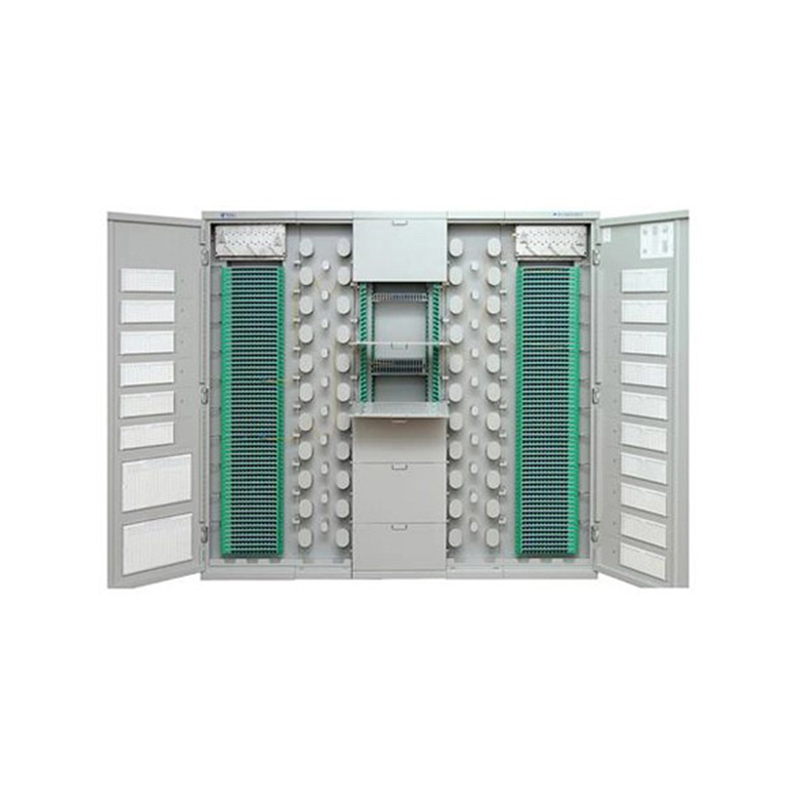
Application Used in FTTH network access-layer equipment rooms where splitting, splicing, distribution and other operations need to be carried out within a frame. Used in FTTH networks where optical sp...
See Details -
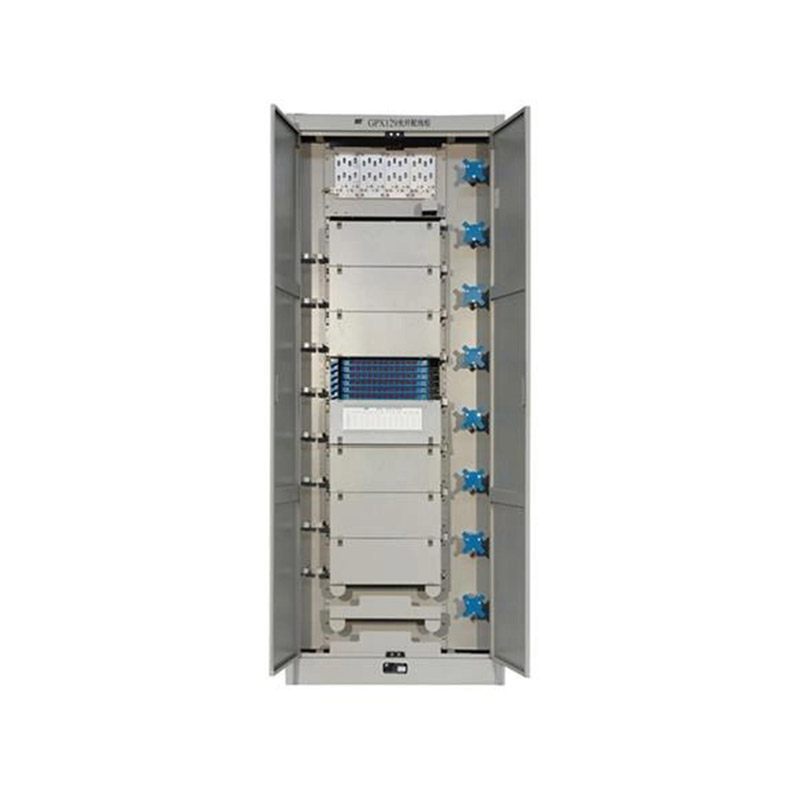
Application ScopeThe GPX129BKC fiber optic distribution frame is used to connect and distribute optical cables to optical communication equipment, and is suitable for large-capacity fiber optic commun...
See Details -
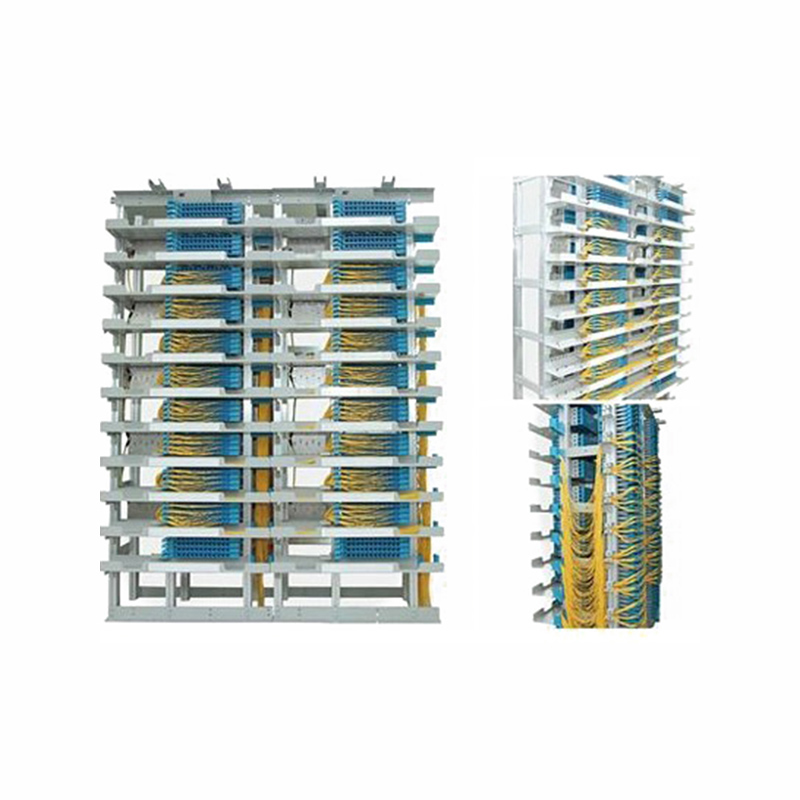
Application Used in independent fiber patching areas of newly built communication equipment rooms and central equipment rooms. After cable removal, the original main distribution frame is dismantled, ...
See Details
Ready to Get started ? Contact Us Now !

Product.
Contact Details.
-
 +86 13958188250
-
 +86 13958188250
-
 [email protected]
-
 AUDIT Email:[email protected]
- Wanma Industrial Park Taihu Yuan Town Lin'an District Hangzhou City China.
QR Code

Copyright © Wanma Technology Co., Ltd. All Rights Reserved.
Privacy
Custom Ethernet Optical Network Railway Transit Equipments Suppliers
