

 English
 Français
 Español
 Português
 عربى
عربى






Application:It is used to allow connection between Φ0.90 /Φ0.25 mm optical fibers or 2 3 Bow-type optical cables in optical cable splice closure, optical cable distribution box, and optical fiber sock...
See DetailsMechanical Fiber Splicing for Reliable Digital Infrastructure
Content
- 1 Product Overview
- 2 Application Scenarios in Telecommunications Networks
- 3 Key Structural Features
- 4 Technical Benefits Compared with Competing Solutions
- 5 Why Low Insertion Loss Matters
- 6 Advantages in Field Installation
- 7 Manufacturing Strength Behind the Product
- 8 Process Control and Quality Assurance
- 9 System-Level Value for Digital Infrastructure
- 10 Material and Structural Reliability
- 11 Installation Considerations for Best Performance
- 12 Advantages for Network Operators
- 13 Advantages for Contractors and Installers
- 14 Customization and OEM/ODM Capability
- 15 Global Network Relevance
- 16 Role in Rail Transit and High-Reliability Systems
- 17 Environmental and Cost Efficiency
- 18 How the Product Supports Intelligent Future Networks
- 19 Q&A Section
- 19.1 What is the Fiber Solution-Mechanical Splice used for?
- 19.2 What are the main types of this mechanical splice?
- 19.3 How does the V-type slot improve performance?
- 19.4 Why is mechanical crimping important?
- 19.5 What is the function of the matching fluid?
- 19.6 Can the splice be reopened?
- 19.7 How does this product compare with fusion splicing?
- 19.8 Why is the manufacturer’s experience important?
- 19.9 Is the product suitable for large-scale telecom projects?
- 19.10 What customer benefits does the product provide?
- 20 Conclusion
- 21 References
- 22 Product: Fiber Solution-Mechanical Splice
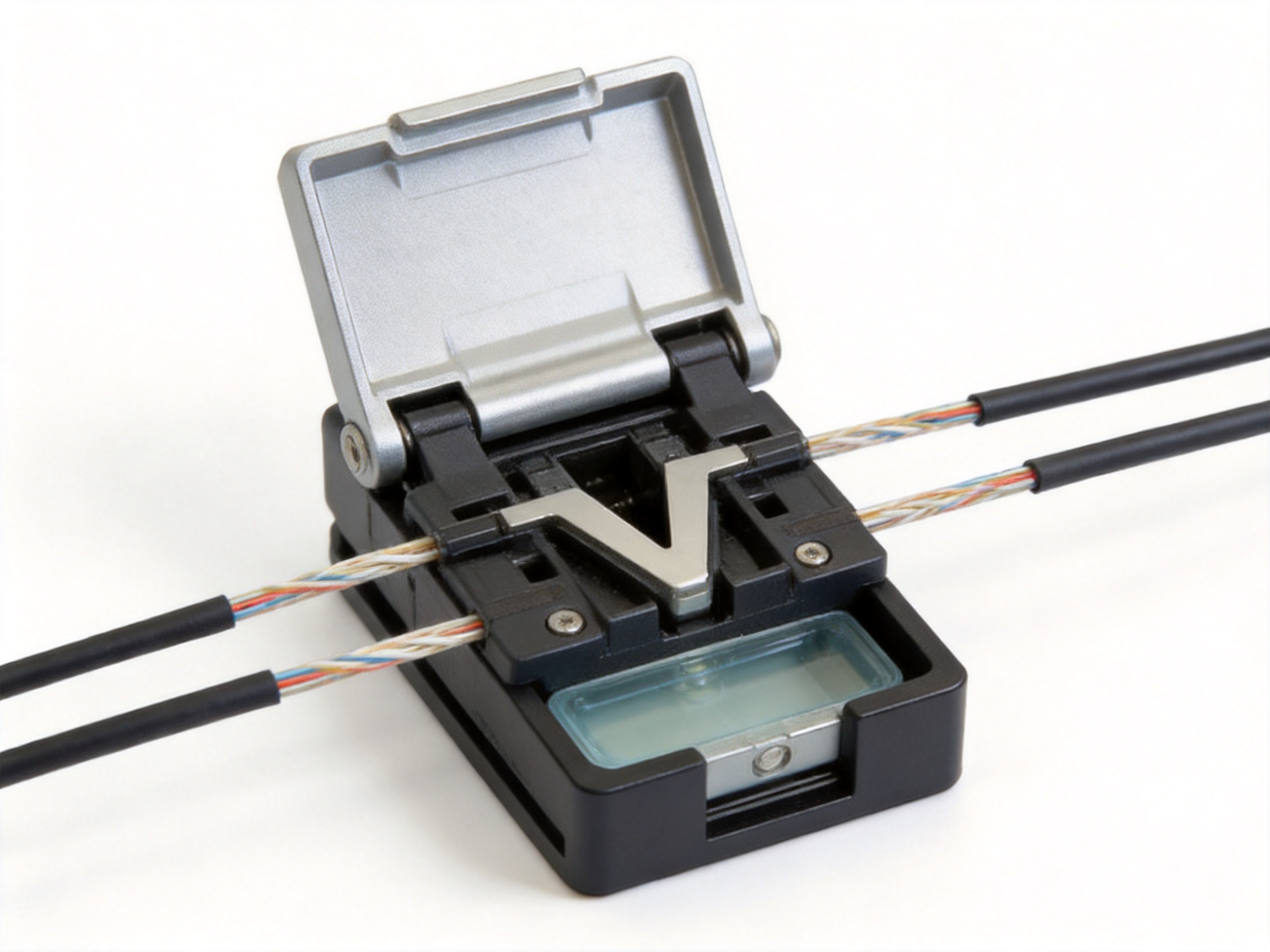
Mechanical fiber splicing is one of the most practical and efficient methods for creating dependable optical fiber connections in modern telecommunications networks. As fiber access expands from backbone networks to distribution boxes, customer premises, industrial facilities, rail transit systems, data centers, and intelligent infrastructure, installers need connection solutions that are fast, repeatable, compact, and stable. The Fiber Solution-Mechanical Splice is designed for this environment. It supports connection between Φ0.90 mm and Φ0.25 mm optical fibers, and it can also be applied to 2×3 bow-type optical cables in optical cable splice closures, optical cable distribution boxes, optical fiber sockets, and related network access points.
This product addresses a common challenge in fiber deployment: how to create a precise, low-loss connection without relying solely on fusion splicing equipment in every installation scenario. In field construction, emergency maintenance, access-network expansion, and indoor optical termination, technicians often require a compact splice that can align fibers accurately, protect the joint, maintain optical performance, and allow rework if needed. The mechanical splice provides this flexibility through a carefully engineered V-type slot, mechanical crimping structure, matching-fluid system, and reopenable design.
Fiber Solution-Mechanical Splice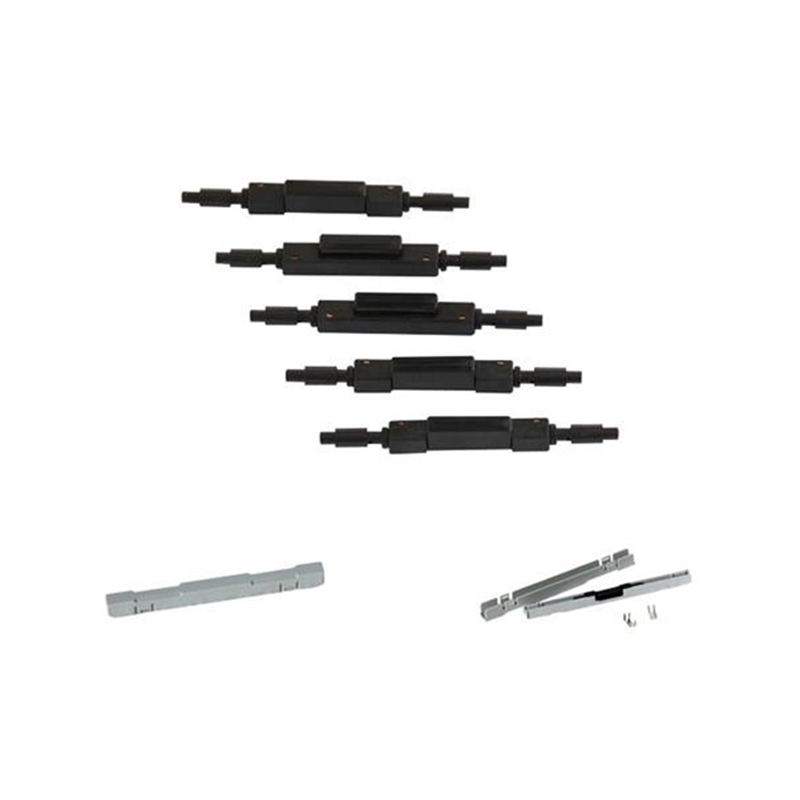
Product Overview
The Fiber Solution-Mechanical Splice is a passive optical connection component used to join optical fibers or small optical cables in telecom infrastructure. It is suitable for use inside optical cable splice closures, fiber distribution boxes, optical fiber sockets, and other network connection modules where space is limited and reliability is essential. The product is available in two main types: an optical fiber splice and an optical cable splice. This dual-type design allows network builders to select the proper structure according to the installation environment and the cable or fiber format being connected.
The mechanical splice uses a V-type slot to position the fiber accurately. The V-type slot allows the stripped optical fiber to sit closely and consistently in the alignment path. Mechanical crimping technology then holds the fibers in place, helping maintain concentricity and reduce the possibility of misalignment. This structure is especially important because the fiber core is extremely small, and even tiny deviations can increase optical loss. By combining a precision alignment slot with stable mechanical fixation, the splice supports low insertion loss and consistent connection quality.
Another important feature is its matching-fluid storage and delivery structure. Storage rooms on both sides supplement the matching fluid and send it to the splicing point by a pump-like action. Matching fluid helps reduce reflection and improves optical continuity at the fiber interface. The supplemented fluid design contributes to long-term service life, making the splice suitable for networks expected to operate continuously over many years.
The product can also be reopened. This feature differentiates it from many fixed or one-time-use connection options. In real-world engineering, mistakes can occur during fiber preparation, insertion, or routing. Network requirements may also change after initial installation. A reopenable mechanical splice allows technicians to inspect, adjust, or reconnect the fiber without completely discarding the component. This reduces waste, saves maintenance time, and supports more flexible network operations.
Application Scenarios in Telecommunications Networks
The product is primarily designed for telecommunications applications. Fiber optic networks have become the foundation of high-speed data transmission, broadband access, enterprise communication, smart city systems, rail transit communication, industrial monitoring, and central equipment room interconnection. In these networks, reliable physical-layer connectivity determines the stability of all upper-layer services. A poor splice can cause unstable bandwidth, packet loss, intermittent faults, increased attenuation, or costly service interruptions.
In an optical cable splice closure, the mechanical splice can be used to connect fibers during outdoor or indoor cable branching, repair, or extension. Closures often contain multiple fibers and require organized, protected, and stable connections. A compact mechanical splice allows technicians to complete connection work efficiently while maintaining the necessary optical performance.
In an optical cable distribution box, the splice helps connect incoming feeder or distribution fibers to outgoing fibers serving buildings, floors, users, base stations, devices, or terminal points. Distribution boxes are often installed in corridors, building basements, communication rooms, poles, wall-mounted positions, or cabinets. Installers may work in tight spaces, and a simple mechanical connection method can improve productivity.
In an optical fiber socket, the product can support final access connection or repair. Fiber-to-the-home and fiber-to-the-office deployments often require small, neat, and dependable connection components. The ability to splice Φ0.90 mm and Φ0.25 mm fibers makes the product useful for different termination environments, especially where compact fiber handling is required.
The splice is also suitable for maintenance scenarios. If a fiber is damaged, technicians may need to restore service quickly. Fusion splicing is highly effective but requires power, calibration, trained operation, and suitable environmental conditions. A mechanical splice can provide a faster field solution when a rapid repair is necessary. Because the product can be reopened, it can also support inspection and correction during troubleshooting.
Key Structural Features
The design of a mechanical splice may appear simple from the outside, but its performance depends on the interaction of multiple precision components. The Fiber Solution-Mechanical Splice combines a V-type alignment slot, mechanical crimping, matching-fluid storage, and a reopenable housing into one compact unit.
V-Type Slot for Accurate Fiber Positioning
The V-type slot is central to the alignment function. Optical fibers must meet at the correct angle and position to minimize insertion loss. The V-shaped geometry guides each fiber into a stable seat and helps keep the fiber axis aligned. Compared with less precise holding structures, a V-type slot provides a more predictable mechanical reference. This contributes to better concentricity and more consistent splicing performance across installations.
Competitor products may rely on simpler positioning channels, lower-precision molded parts, or less controlled material tolerances. Such designs can work in basic conditions, but they may be more sensitive to fiber preparation errors, dust, improper insertion depth, or temperature changes. A high-quality V-type slot helps reduce these risks by creating a stable alignment path that supports repeatable installation.
Mechanical Crimping for Stable Fixation
Mechanical crimping technology fixes the optical fibers after alignment. The purpose is to prevent movement after the fiber is inserted and positioned. Fiber movement can cause optical instability, especially when distribution boxes or closures experience vibration, cable pulling, thermal expansion, or routine maintenance activity. A reliable crimping structure helps hold the fibers firmly without damaging them.
The crimping process must be balanced. If the holding force is too weak, the fiber may shift. If it is too strong or uneven, the fiber can be stressed, bent, or cracked. The product’s mechanical crimping design supports a firm connection while helping maintain concentricity. This balance is one of the reasons the splice is suitable for telecom environments where long-term signal stability is required.
Matching-Fluid System for Optical Continuity
Matching fluid is used at the splice interface to improve optical performance. The fluid helps bridge the gap between fiber ends and reduce Fresnel reflection. In many mechanical splices, loss can increase if the fluid is insufficient, poorly distributed, contaminated, or degraded. This product includes storage rooms on both sides that supplement the matching fluid and send it to the splicing point through a pump-like action. This design supports a longer service life by helping maintain the optical medium at the fiber interface.
This feature gives the splice an advantage over lower-cost alternatives that may contain limited fluid or rely on less stable fluid placement. In large-scale networks, long-term reliability is more important than initial installation alone. A splice that maintains stable optical conditions over time can reduce maintenance visits and help protect customer service quality.
Reopenable Design for Maintenance Flexibility
The reopenable design is particularly valuable for installers and network operators. A permanent one-time splice may be acceptable in controlled factory settings, but field environments are different. Technicians may need to verify fiber insertion, replace a damaged fiber, correct a routing mistake, or adjust a connection after testing. A reopenable splice gives the technician a second opportunity without unnecessary component replacement.
This feature also supports sustainable network maintenance. Reducing discarded components is beneficial for project cost control and environmental responsibility. In addition, when technicians can reopen and inspect a splice, they can diagnose optical faults more efficiently. This helps shorten service interruptions and improves the maintainability of access networks.
Technical Benefits Compared with Competing Solutions
The Fiber Solution-Mechanical Splice competes not only with other mechanical splices but also with field fusion splicing and connector-based termination methods. Each method has a proper role, but this product offers a strong balance of speed, accuracy, maintainability, and cost-effectiveness.
Compared with ordinary low-grade mechanical splices, this product emphasizes precise fiber alignment, low insertion loss, consistency, supplemented matching fluid, and long service life. Basic mechanical splices may be inexpensive, but they can produce inconsistent results if the alignment groove is not accurate, the holding force is unstable, or the matching fluid is poorly controlled. In contrast, this design focuses on repeatable optical performance and field reliability.
Compared with fusion splicing, the mechanical splice offers simplicity and fast deployment. Fusion splicing creates a permanent joint by melting fiber ends together, and it is widely used for backbone and high-performance permanent connections. However, fusion splicing requires a splicer, cleaver, power supply, calibration, and skilled operation. In many access-network or emergency repair situations, a mechanical splice can be faster and more convenient. It is especially useful when working conditions are limited or when a temporary or adjustable connection is preferred.
Compared with field-installable connectors, the mechanical splice provides a compact internal joint suitable for closures and boxes. Field connectors are useful for plug-in interfaces, but they may be less ideal when the goal is to create an internal fiber-to-fiber connection protected inside a distribution enclosure. The mechanical splice allows direct joining of prepared fibers or bow-type optical cables without necessarily creating an external connector interface.
| Evaluation Area | Fiber Solution-Mechanical Splice | Typical Low-Cost Mechanical Splice | Fusion Splicing |
|---|---|---|---|
| Installation Speed | Fast field installation with simple tools and repeatable process | Fast, but performance may vary by component precision | Slower due to equipment setup, arc calibration, and protection steps |
| Alignment Method | Precision V-type slot supports close fiber attachment and concentricity | May use less precise alignment structure | Core or cladding alignment depends on fusion splicer capability |
| Insertion Loss | Designed for low insertion loss and consistency | Can be inconsistent if tolerance control is weak | Generally very low when properly performed |
| Maintenance | Can be reopened for adjustment, inspection, or reuse-related correction | Some models may not reopen reliably | Permanent splice; rework requires cutting and resplicing |
| Matching Fluid | Storage rooms supplement fluid and deliver it to the splice point | May have limited or less controlled fluid retention | Not required because fibers are fused |
| Best Use | Distribution boxes, closures, sockets, emergency repair, access networks | Basic low-demand installations | Permanent high-performance backbone or controlled installations |
Why Low Insertion Loss Matters
Insertion loss is one of the most important performance indicators for any fiber connection. It describes how much optical power is lost when light passes through a splice, connector, or other component. In a fiber network, each connection contributes to the overall optical power budget. If a network has too much loss, receivers may not detect signals reliably, which can lead to unstable communication or service failure.
A mechanical splice must control multiple variables to achieve low insertion loss. The fiber ends must be cleaved cleanly, aligned accurately, held securely, and surrounded by a suitable optical medium. The Fiber Solution-Mechanical Splice addresses these requirements through its V-type slot, mechanical crimping technology, and matching-fluid delivery design. These elements work together to reduce alignment error and improve optical continuity.
Consistency is just as important as low loss. In large deployments, network operators do not want performance that varies widely from one installation to another. A splice that performs well only under ideal conditions is less valuable than a splice that provides dependable results across many installation sites. The product is designed with consistency in mind, helping installers achieve predictable outcomes.
For telecom operators and infrastructure builders, consistent low-loss splicing reduces troubleshooting work. When splices are stable, technicians can focus on network expansion instead of repeated repair. For end users, this stability supports higher service availability, smoother data transmission, and better long-term broadband performance.
Advantages in Field Installation
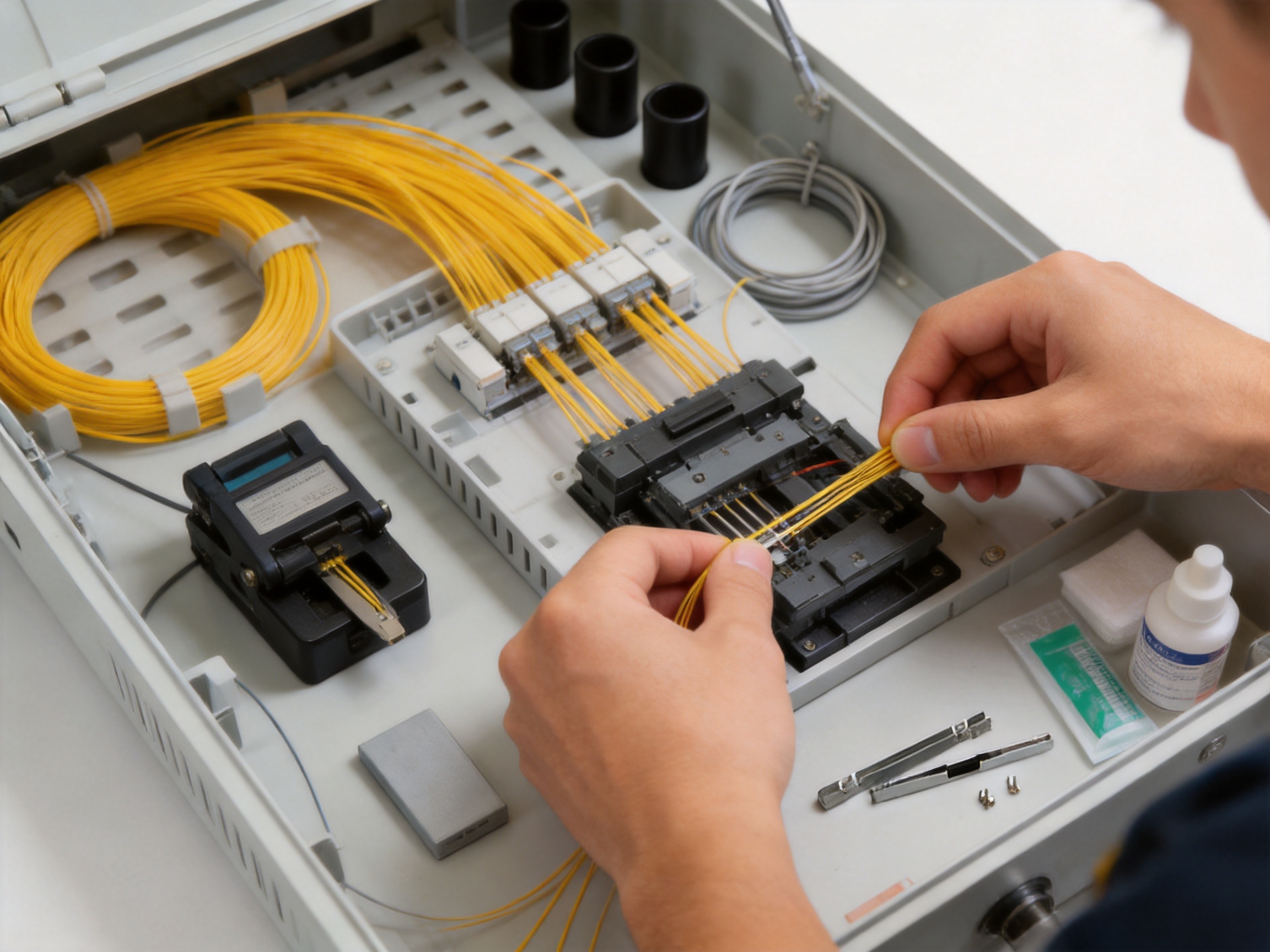
Field installation is demanding. Technicians often work in outdoor closures, narrow cabinets, wall-mounted boxes, indoor corridors, basements, equipment rooms, or active service areas. Time, space, lighting, and environmental cleanliness may be limited. A good mechanical splice must therefore be easy to handle, tolerant of practical field conditions, and reliable after installation.
The compact structure of the Fiber Solution-Mechanical Splice helps it fit into splice trays and distribution modules. Its suitability for Φ0.90 mm and Φ0.25 mm optical fibers gives installers flexibility when dealing with different fiber formats. Its compatibility with 2×3 bow-type optical cables expands its usefulness in access-network and indoor applications.
The product’s reopenable design supports installation correction. If an insertion is not perfect or a test result suggests excessive loss, the technician can reopen the splice and adjust the connection. This reduces the pressure of one-time installation and helps improve project success rates. It also reduces waste because the component does not necessarily need to be discarded after an initial error.
The mechanical crimping design also simplifies fixation. Once the fiber is seated in the V-type slot and the connection is confirmed, crimping holds the fiber in place. A stable joint can then be protected inside the closure, box, or socket. This sequence is practical for large-scale rollout projects where installation speed and consistency directly influence project cost.
Manufacturing Strength Behind the Product
A precision fiber splice depends on advanced manufacturing capability. The company behind this product, Wanma Technology Co., Ltd., was established in 1997 and has long experience in communication cabinets, communication electronic equipment, and passive optical components. This background gives the manufacturer a broad understanding of telecom infrastructure, from mechanical enclosures to optical connectivity and integrated digital infrastructure solutions.
The company develops, manufactures, and markets its own products while also providing customized integrated solutions. This is important because a mechanical splice is not an isolated component. It must operate inside a larger ecosystem that includes cabinets, distribution boxes, closures, optical modules, fiber routing accessories, and network equipment rooms. A manufacturer with system-level knowledge can design components that better match real installation needs.
Advanced manufacturing for a mechanical splice begins with material selection. The housing and internal alignment structures must maintain dimensional stability, resist deformation, and support long-term use. Precision molding or machining is required to produce the V-type slot with consistent geometry. Even small dimensional errors can affect fiber alignment, so mold quality, process control, and inspection methods are essential.
Assembly also requires careful process control. The matching fluid must be applied or stored properly, internal components must be positioned accurately, and the mechanical crimping structure must move as intended. Quality checks are needed to verify appearance, fit, alignment, function, and optical performance. By combining manufacturing experience with telecom application knowledge, the company can support stable product output and large-volume supply.
The manufacturer’s experience in communication electronic equipment and passive optical components also supports product customization. Telecom projects often vary by region, network architecture, installation environment, and operator requirements. OEM and ODM capability allows the product to be adapted for specific distribution boxes, splice closures, user terminals, or integrated solutions. This flexibility is a major advantage over suppliers that only provide standard commodity components.
Process Control and Quality Assurance
For a mechanical splice, quality assurance must cover both mechanical and optical performance. The company’s manufacturing approach can be understood through several key areas: design verification, precision production, assembly discipline, optical testing, packaging control, and delivery management.
Design verification ensures that the product concept meets practical requirements. Engineers evaluate whether the V-type slot aligns fibers accurately, whether the crimping force is appropriate, whether the matching-fluid system delivers fluid effectively, and whether the reopenable design can withstand field handling. Design verification also considers installation workflow, because a product that is technically sound but difficult to use may not perform well in real projects.
Precision production focuses on component consistency. In fiber optics, micrometer-level differences can influence final performance. Manufacturing processes must therefore maintain stable tolerances. Tooling, molding conditions, material batches, and component inspection are all part of this control system. A well-managed production line reduces variation, which helps ensure that each splice performs similarly to the next.
Assembly discipline is essential because optical components are sensitive to contamination and misalignment. Dust, oil, scratches, or incorrect part placement can cause loss or instability. Controlled assembly methods help protect the optical path and preserve the function of the matching fluid. Workers and automated fixtures must follow standardized procedures to ensure repeatable results.
Optical testing provides evidence of performance. Low insertion loss and consistency are among the product’s stated advantages, so testing procedures must verify that the splice supports these goals. Inspection may include visual checks, mechanical operation checks, and optical measurements using appropriate test instruments. Batch-level quality control helps prevent defective products from reaching installation sites.
Packaging control also matters. A mechanical splice may be small, but it must arrive clean, undamaged, and ready for use. Packaging should protect the product from dust, pressure, moisture, and confusion during transportation and storage. Proper labeling and organized packing support efficient installation at project sites.
Delivery management is another part of competitiveness. Telecom projects are often scheduled tightly, and delays can affect network rollout. The company emphasizes reliable product quality and timely delivery, helping customers maintain project timelines. This combination of quality and supply capability is especially valuable for operators, contractors, and distributors managing large-scale deployment.
System-Level Value for Digital Infrastructure
The product is part of a broader category of digital infrastructure solutions and telecom electronic equipment. Modern networks are no longer limited to simple voice communication. They support cloud computing, smart manufacturing, transportation systems, remote monitoring, artificial intelligence services, video communication, and connected healthcare environments. Fiber connectivity is the physical foundation that allows these systems to exchange high volumes of data with low latency and high reliability.
A small component such as a mechanical splice may appear minor compared with core switches, servers, or optical transmission systems, but it plays a critical role in the network chain. Every optical path depends on the quality of its physical connections. If a splice fails, the service path can be interrupted. If a splice has high loss, network margin decreases. If a splice is difficult to maintain, operational costs increase. Therefore, choosing a well-engineered mechanical splice contributes directly to infrastructure reliability.
The company’s broader manufacturing scope strengthens this value. Because it is involved in communication cabinets, communication electronic equipment, and passive optical components, it understands how different network layers interact. This enables better coordination between mechanical protection, fiber routing, component placement, and service accessibility. Customers seeking integrated solutions can benefit from a supplier that understands both individual components and complete network environments.
The product also supports the growth of fiber access networks. As fiber-to-the-home, fiber-to-the-building, and fiber-to-the-premises deployments expand, installation teams need splicing solutions that are scalable. A mechanical splice that is easy to use, low-loss, consistent, and maintainable can help reduce labor intensity and improve rollout efficiency. This is especially relevant in regions where rapid broadband expansion is a priority.
Material and Structural Reliability
Long-term reliability depends on how the product responds to mechanical stress, environmental changes, and repeated handling. In distribution networks, components may be exposed to temperature variation, vibration, cable movement, and maintenance activity. While the splice is typically housed inside a protective closure, box, or socket, it still needs structural integrity.
The V-type slot must maintain shape over time. If the alignment geometry changes, optical loss may increase. The material around the slot must resist deformation and provide a stable seating surface for the fiber. The crimping structure must maintain holding force without creating excessive stress. The matching-fluid system must retain its function so that optical continuity remains stable.
The reopenable design must also be durable enough for practical field use. Reopening should not easily damage the internal alignment system or make the splice unreliable. This requires careful design of the housing and locking elements. Compared with products that become loose or unstable after adjustment, a well-designed reopenable splice provides better maintenance value.
Material selection affects all these factors. Engineering plastics, metal elements, or hybrid structures must be chosen according to strength, dimensional stability, processability, and compatibility with optical materials. Manufacturing control then ensures that the selected materials perform consistently in production. This combination of design and process capability is a key reason to choose a professional telecom manufacturer rather than an unknown commodity source.
Installation Considerations for Best Performance
Although the mechanical splice is designed for practical field use, proper installation remains essential. Optical fiber preparation strongly affects final connection quality. Technicians should strip the fiber carefully, clean it thoroughly, and cleave it with a suitable fiber cleaver. The fiber end face should be clean and properly cut before insertion. Poor cleaving, contamination, or incorrect insertion depth can increase loss even in a well-designed splice.
During installation, the technician should confirm that the fiber enters the V-type slot smoothly. The fiber should sit closely in the alignment path without bending or twisting. After positioning, the mechanical crimping action should be completed according to the recommended procedure. Optical testing after installation is good practice, especially for critical network paths.
The splice should be placed securely inside the closure, distribution box, or socket. Fiber routing should maintain proper bend radius. Excess fiber should be organized neatly to avoid stress on the splice. The product’s compact design helps with organization, but good workmanship remains important. A reliable component combined with disciplined installation produces the best result.
If testing shows unsatisfactory performance, the reopenable design allows inspection and correction. The technician can reopen the splice, check fiber preparation, clean or re-cleave if necessary, and reconnect. This feature is valuable because it transforms some installation errors from costly failures into manageable adjustments.
Advantages for Network Operators
Network operators evaluate components not only by purchase price but also by total lifecycle value. A low-cost component that causes high maintenance costs is not truly economical. The Fiber Solution-Mechanical Splice offers value in several lifecycle areas: installation speed, stable optical performance, maintenance flexibility, reduced waste, and compatibility with common access-network environments.
Fast installation reduces labor cost. In large fiber projects, labor can be a major part of total expense. A mechanical splice that supports efficient workflow can improve productivity, especially when many connections must be completed in distribution boxes or customer access points.
Stable optical performance protects service quality. Low insertion loss and consistency help maintain optical power budgets and reduce the risk of marginal links. This is important as networks become denser and more service-dependent. Customers expect stable broadband, reliable enterprise connections, and uninterrupted digital services.
Maintenance flexibility reduces downtime. When a splice can be reopened, field teams can adjust or repair connections more quickly. This is especially useful in access networks where service restoration speed affects customer satisfaction. Operators can also reduce component waste because not every adjustment requires a new splice.
Compatibility with multiple installation points simplifies inventory. A splice that can be used in closures, distribution boxes, and optical fiber sockets helps operators standardize materials. Standardization can reduce training complexity, purchasing fragmentation, and storage burden.
Advantages for Contractors and Installers
Telecom contractors and installers need products that perform reliably under project pressure. They are often responsible for meeting deadlines, passing acceptance tests, and minimizing rework. A mechanical splice with good alignment, low loss, and reopenability supports these goals.
The V-type slot helps guide the fiber, reducing uncertainty during installation. The mechanical crimping structure provides a clear fixation method. The matching-fluid system supports optical performance. The ability to reopen the splice gives installers a practical safety margin. Together, these features reduce the risk of failed test results and repeated site visits.
Installers also benefit from a supplier with broad telecom manufacturing experience. When products are manufactured by a company familiar with cabinets, distribution equipment, and passive optical components, the design is more likely to fit real project needs. Technical support, customization options, and timely delivery can further improve contractor efficiency.
Customization and OEM/ODM Capability
Different telecom projects may require different packaging, labeling, mechanical dimensions, installation accessories, or integration with specific boxes and closures. OEM and ODM capability allows the product to be supplied in forms that match customer requirements. This is valuable for telecom brands, distributors, system integrators, and project contractors seeking differentiated or application-specific solutions.
Customization may include adapting the splice for particular enclosure layouts, optimizing the user handling process, matching packaging to project logistics, or aligning quality documentation with customer standards. Because the manufacturer has experience in both branded product development and integrated customized solutions, it can support customers from product selection through project implementation.
This capability gives the product an advantage over suppliers that only sell standard parts. In competitive telecom markets, customers often need more than a component; they need reliable supply, engineering communication, production scalability, and the ability to solve practical installation problems. A manufacturer with OEM/ODM experience can become a long-term partner rather than a one-time vendor.

Global Network Relevance
The company’s sales network covers more than 20 countries and regions, including the United States, Australia, the United Kingdom, Italy, South Africa, and Ghana. This international presence indicates that its products are intended for diverse network environments and customer expectations. Global markets differ in installation standards, climate conditions, network architectures, and procurement requirements. Experience across regions helps a manufacturer improve product adaptability and service awareness.
Fiber deployment continues to grow worldwide. Developed markets are upgrading broadband capacity, expanding 5G transport networks, and modernizing data infrastructure. Emerging markets are accelerating fiber access to support economic development, education, healthcare, and digital services. In both contexts, dependable passive optical components are essential. Mechanical splicing solutions provide a practical way to support flexible and scalable network construction.
The Fiber Solution-Mechanical Splice fits this global trend because it supports fast installation and maintainable connections. It can be used in dense urban networks, enterprise access points, residential broadband projects, rail transit communication systems, and central equipment room extensions. Its value is not limited to one network type; it supports the broader movement toward intelligent, fiber-based infrastructure.
Role in Rail Transit and High-Reliability Systems
The company’s products are widely used in Ethernet networks, optical communication networks, central equipment rooms, national high-speed railways, and urban rail transit systems. These applications demonstrate the importance of dependable communication infrastructure. Rail transit systems, for example, require reliable networks for signaling, monitoring, passenger information, video surveillance, operational control, and emergency communication.
In such systems, passive optical connections must remain stable despite vibration, movement, and continuous operation. While the mechanical splice is only one component, its low-loss and stable alignment characteristics help protect the integrity of the optical path. The mechanical crimping structure and secure installation inside protected enclosures make it suitable for demanding communication environments when applied correctly.
High-reliability systems also require maintainability. Service windows may be limited, and technicians must complete repair work quickly. A reopenable splice can support efficient maintenance, especially in access or distribution sections where rapid restoration is important. This practical advantage makes the product relevant to infrastructure projects that value both performance and operational efficiency.
Environmental and Cost Efficiency
Modern infrastructure projects increasingly consider environmental responsibility and total cost efficiency. A reopenable mechanical splice supports both goals. Because the product can be reopened, some installation errors or network changes can be corrected without immediately discarding the component. This reduces material waste and lowers replacement costs.
Fast installation also reduces energy and resource consumption associated with prolonged field operations. When technicians complete splicing work efficiently, project vehicles, equipment operation, and labor time can be reduced. While the environmental effect of one splice is small, the cumulative impact across large fiber deployments can be meaningful.
The long service life supported by the matching-fluid storage and delivery structure also contributes to sustainability. Components that last longer require fewer replacements, fewer maintenance trips, and less inventory turnover. This aligns with the broader goal of building durable digital infrastructure rather than short-lived networks that require frequent intervention.
How the Product Supports Intelligent Future Networks
Future networks will carry more data, connect more devices, and support more mission-critical services. Smart cities, industrial automation, telemedicine, remote education, cloud platforms, and artificial intelligence applications all depend on stable high-speed connectivity. Fiber optic networks provide the bandwidth and latency advantages needed for these services, but their reliability depends on physical-layer quality.
The Fiber Solution-Mechanical Splice supports intelligent future networks by making optical connections easier to deploy and maintain. Its low-loss design helps preserve signal quality. Its consistent alignment supports predictable network planning. Its reopenable structure supports flexible maintenance. Its compatibility with common access-network locations helps extend fiber connectivity closer to users and devices.
As networks become more distributed, connection points increase. More distribution boxes, sockets, terminals, and closures mean more splices and more opportunities for failure if components are poorly made. Selecting a reliable mechanical splice is therefore an investment in network stability. A small improvement in connection reliability can have a significant effect when multiplied across thousands or millions of network points.
Q&A Section
What is the Fiber Solution-Mechanical Splice used for?
It is used to connect Φ0.90 mm and Φ0.25 mm optical fibers or 2×3 bow-type optical cables. It is suitable for optical cable splice closures, optical cable distribution boxes, optical fiber sockets, and similar telecom network connection points.
What are the main types of this mechanical splice?
The product is available in two types: an optical fiber splice and an optical cable splice. This allows users to select the proper structure according to whether they are connecting individual fibers or small optical cables.
How does the V-type slot improve performance?
The V-type slot guides the fiber into a stable alignment position. By allowing the fiber to attach closely to the slot, it helps improve concentricity and reduces misalignment, which supports low insertion loss and consistent optical performance.
Why is mechanical crimping important?
Mechanical crimping holds the fibers securely after alignment. A stable crimping structure helps prevent movement caused by handling, vibration, or cable routing stress, which supports long-term connection stability.
What is the function of the matching fluid?
Matching fluid improves optical continuity at the fiber interface and helps reduce reflection. The product includes storage rooms on both sides that supplement the matching fluid and deliver it to the splicing point, supporting long service life.
Can the splice be reopened?
Yes. The splice can be reopened, which allows technicians to inspect, adjust, or reconnect the fiber if necessary. This feature helps reduce waste, improve maintenance flexibility, and simplify troubleshooting.
How does this product compare with fusion splicing?
Fusion splicing is excellent for permanent, high-performance joints but requires specialized equipment, power, and skilled operation. This mechanical splice offers faster and simpler field installation, especially in access networks, distribution boxes, sockets, and emergency repair scenarios.
Why is the manufacturer’s experience important?
The manufacturer has experience in communication cabinets, communication electronic equipment, and passive optical components. This system-level knowledge supports better product design, manufacturing control, customization, and integration with real telecom infrastructure.
Is the product suitable for large-scale telecom projects?
Yes. Its fast installation, low insertion loss, consistency, reopenable design, and compatibility with common fiber network locations make it suitable for large-scale broadband access, distribution, maintenance, and infrastructure projects.
What customer benefits does the product provide?
It helps customers reduce installation time, maintain optical performance, simplify maintenance, reduce rework, and improve network reliability. Its OEM/ODM support also allows adaptation to specific project requirements.
Conclusion
The Fiber Solution-Mechanical Splice is a practical and reliable optical connection product for modern telecommunications infrastructure. It is designed for connecting Φ0.90 mm and Φ0.25 mm optical fibers or 2×3 bow-type optical cables in splice closures, distribution boxes, optical fiber sockets, and related access-network environments. Its V-type slot, mechanical crimping technology, matching-fluid storage and delivery system, low insertion loss, consistency, long service life, and reopenable structure make it a strong choice for field deployment and maintenance.
Compared with ordinary mechanical splices, it offers more thoughtful alignment, better fluid support, and improved maintainability. Compared with fusion splicing, it provides speed, simplicity, and flexibility in suitable applications. Compared with one-time connection products, its reopenable design reduces waste and improves troubleshooting efficiency. These advantages make it valuable for operators, contractors, distributors, and system integrators.
The company’s manufacturing strength further enhances the product’s competitiveness. With long experience in telecom equipment and passive optical components, advanced production control, customization capability, international market experience, and a commitment to reliable quality and timely delivery, the manufacturer can support both standard product supply and integrated digital infrastructure solutions.
As global networks continue to expand, the quality of every fiber connection becomes increasingly important. A well-engineered mechanical splice helps protect optical performance, reduce maintenance costs, and support the stable operation of intelligent future networks. For projects that require fast installation, consistent connection quality, and long-term reliability, this mechanical splice provides a balanced and dependable solution.
References
Agrawal, G. P. Fiber-Optic Communication Systems. Wiley.
Keiser, G. Optical Fiber Communications. McGraw-Hill Education.
Senior, J. M., and Jamro, M. Y. Optical Fiber Communications: Principles and Practice. Pearson.
International Electrotechnical Commission. IEC Standards for Fiber Optic Interconnecting Devices and Passive Components.
International Telecommunication Union. Recommendations on Optical Fibers, Cables, and Optical Access Networks.
Telecommunications Industry Association. Fiber Optic Test Procedures and Cabling Infrastructure Guidelines.
Product: Fiber Solution-Mechanical Splice
PREV:Turn-Over Intelligent Clothes and Shoes Machine for Closed-Loop Hospital Apparel Management
NEXT:Intelligent Clean Fabric Temporary Storage Cabinets for Traceable Healthcare Textile Management
NEXT:Intelligent Clean Fabric Temporary Storage Cabinets for Traceable Healthcare Textile Management
Interested in cooperation or have questions?
Related products
-
-
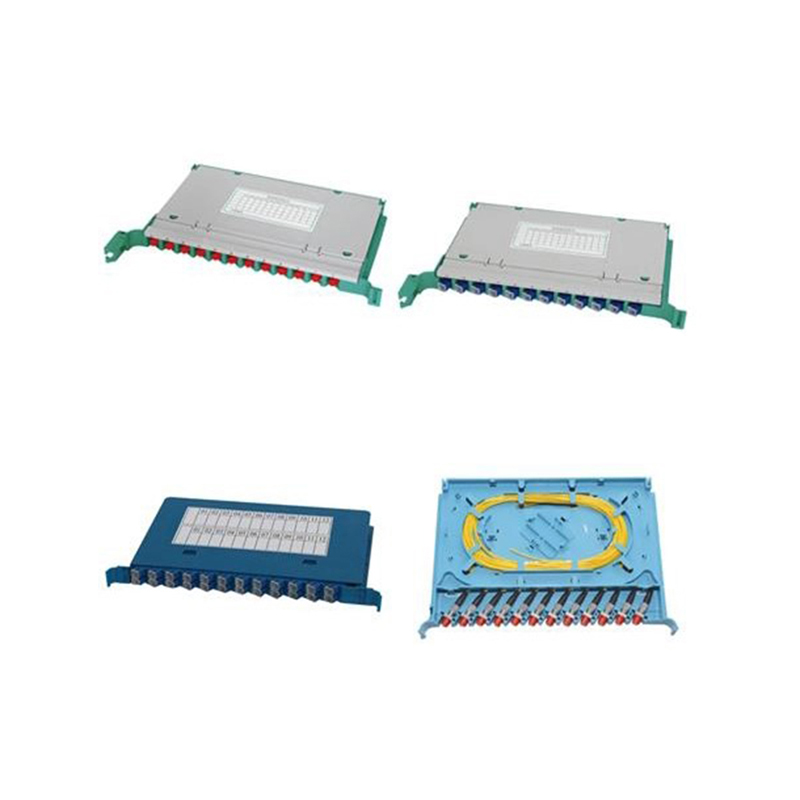
Application:It is extensively used as optical cable splicing and distribution unit in the OMDF, ODF, OCC and outdoor cabinet. Features:1. Splice Module can be used for fiber splicing, fiber distributi...
See Details -
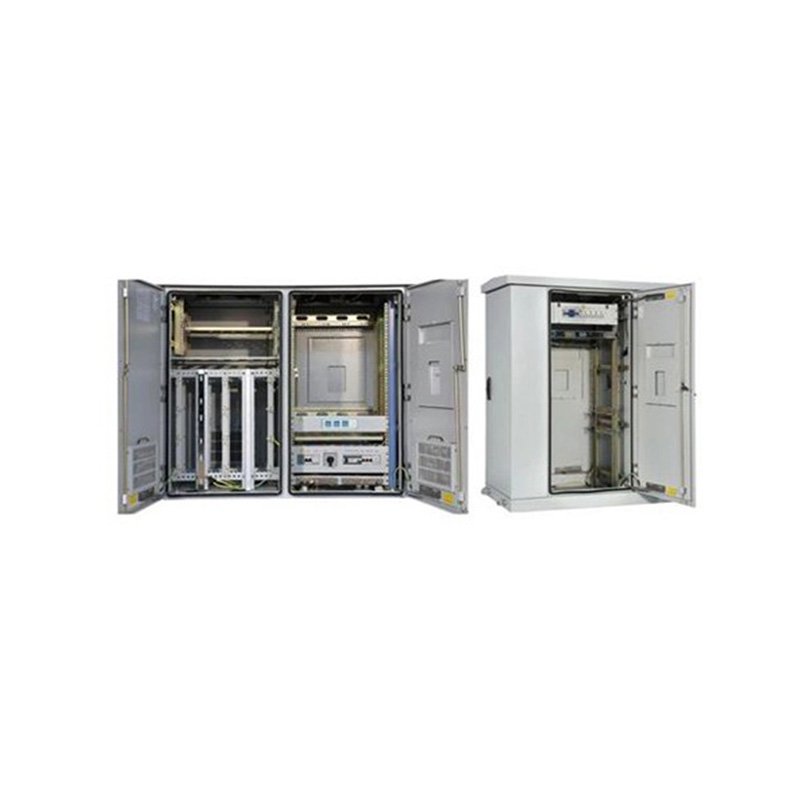
Application:It is used for the fixed network and broadband access, providing physical working environment and security system for the workstation in wired network. Features:•The cabinet is composed of...
See Details -
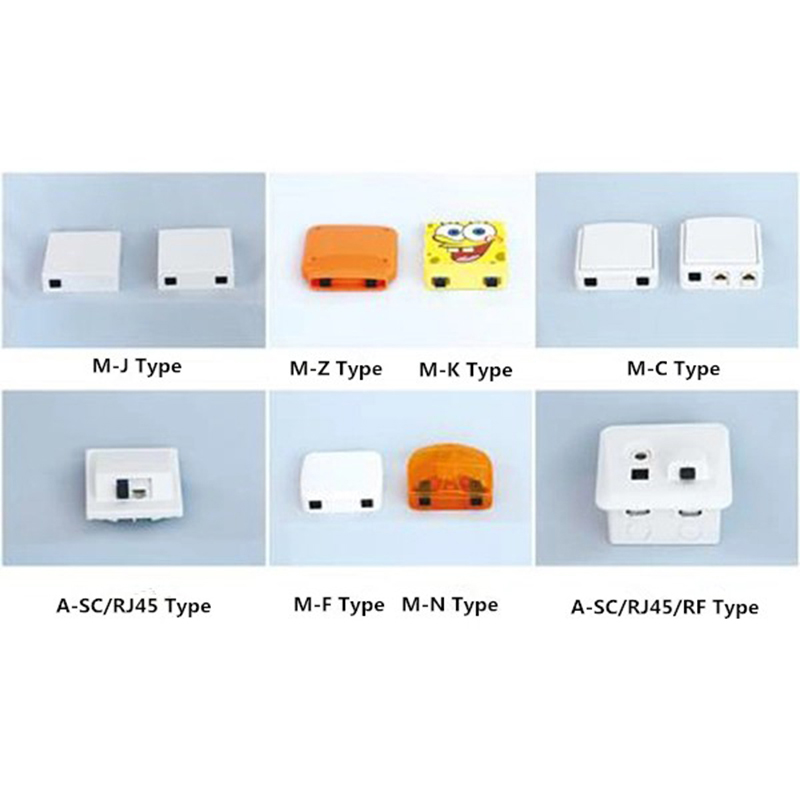
Application:It can be applied to FTTH, FTTO, FTTB applications and also has the functions of splicing, welding and installing connectors. Features:•Large variety; Full specification; Pleasing appearan...
See Details
Ready to Get started ? Contact Us Now !

Product.
Contact Details.
-
 +86 13958188250
-
 +86 13958188250
-
 [email protected]
- Wanma Industrial Park Taihu Yuan Town Lin'an District Hangzhou City China.
QR Code

Copyright © Wanma Technology Co., Ltd. All Rights Reserved.
Custom Ethernet Optical Network Railway Transit Equipments Suppliers
