

 English
 Français
 Español
 Português
 عربى
عربى





Product Overview The WM-1001-F023 Fiber Optic Distribution Box is designed for fiber distribution, splicing and management in fiber access networks. It supports aerial mounting and provides 16 subscri...
See DetailsHigh-Density 24-Port Fiber Optic Distribution Box for Future-Ready FTTx Networks
Content
- 1 Product Overview: A Compact Distribution Platform for High-Speed Fiber Access
- 2 Key Specifications
- 3 Designed for FTTx Networks, CATV, LAN, and Optical Fiber Communication
- 4 Competitive Advantage 1: High Capacity in a Compact Footprint
- 5 Competitive Advantage 2: Strong Environmental Protection with IP65 Rating
- 6 Competitive Advantage 3: Installer-Friendly Construction
- 7 Competitive Advantage 4: Flexible Connector and Cable Compatibility
- 8 Competitive Advantage 5: Integrated Splicing, Patching, and Splitting
- 9 Manufacturing Strength Behind the Product
- 10 Precision Molding and Material Control
- 11 Sealing Design and Environmental Reliability
- 12 Fiber Management for Lower Maintenance Risk
- 13 Future-Proofing Network Infrastructure
- 14 Application Scenario: Residential FTTH Deployment
- 15 Application Scenario: Office and Commercial Network Access
- 16 Application Scenario: CATV and LAN Optical Distribution
- 17 Quality Assurance and Consistency
- 18 Customization and Integrated Solution Capability
- 19 Global Market Experience and Long-Term Reliability
- 20 Why This Distribution Box Stands Out from Competitors
- 21 Operational Benefits for Network Owners
- 22 Installation Considerations and Best Practices
- 23 Q&A Section
- 23.1 What is the main purpose of the WM-1001-F051 Fiber Optic Distribution Box?
- 23.2 How many ports does the enclosure provide?
- 23.3 What is the maximum splice capacity?
- 23.4 Can the product be used outdoors?
- 23.5 What adapter types are supported?
- 23.6 Why is the IP65 rating important?
- 23.7 Does the box support PLC splitters?
- 23.8 What material is used for the enclosure?
- 23.9 What makes this product different from lower-cost competitor boxes?
- 23.10 Who manufactures the product?
- 23.11 What industries can use this distribution box?
- 23.12 Why is integrated fiber management important?
- 24 Conclusion
- 25 References
Fiber access networks are no longer optional infrastructure for modern cities, residential communities, enterprise campuses, industrial parks, transportation systems, or smart buildings. As bandwidth demand continues to rise, network operators need field-proven components that can protect optical fibers, simplify deployment, reduce maintenance time, and support long service life in indoor and outdoor environments. The WM-1001-F051 Fiber Optic Distribution Box is designed for exactly this role: it brings high-speed fiber connectivity closer to homes, offices, and commercial premises while providing a compact, durable, and installer-friendly platform for splicing, patching, splitting, and distribution.
This 24-port outdoor enclosure is engineered for FTTx access networks, CATV systems, LAN infrastructure, and optical fiber communication applications. With a maximum single fiber count of 96 fibers, support for up to 96 splices, four integrated splice trays, 24 adapter holders, and compatibility with SC simplex or LC duplex adapters, the product provides a practical balance between capacity, compact size, mechanical protection, and operational flexibility. Its IP65-rated enclosure, UV- and water-resistant body, hinged and lockable top cover, sealed cable entry and outlet ports, and wall-mount design make it suitable for demanding installations where network uptime and long-term stability are essential.
Unlike basic fiber termination boxes that only provide minimal fiber storage, the WM-1001-F051 is built as a complete fiber management solution. It combines cable access, fiber routing, splice protection, adapter mounting, patching capability, splitter accommodation, and weather-resistant enclosure design into a single compact product. This integrated approach helps network owners reduce the number of separate accessories required at the installation site, improves deployment consistency, and makes maintenance easier for technicians who need clear routing, organized splice trays, and protected fiber paths.
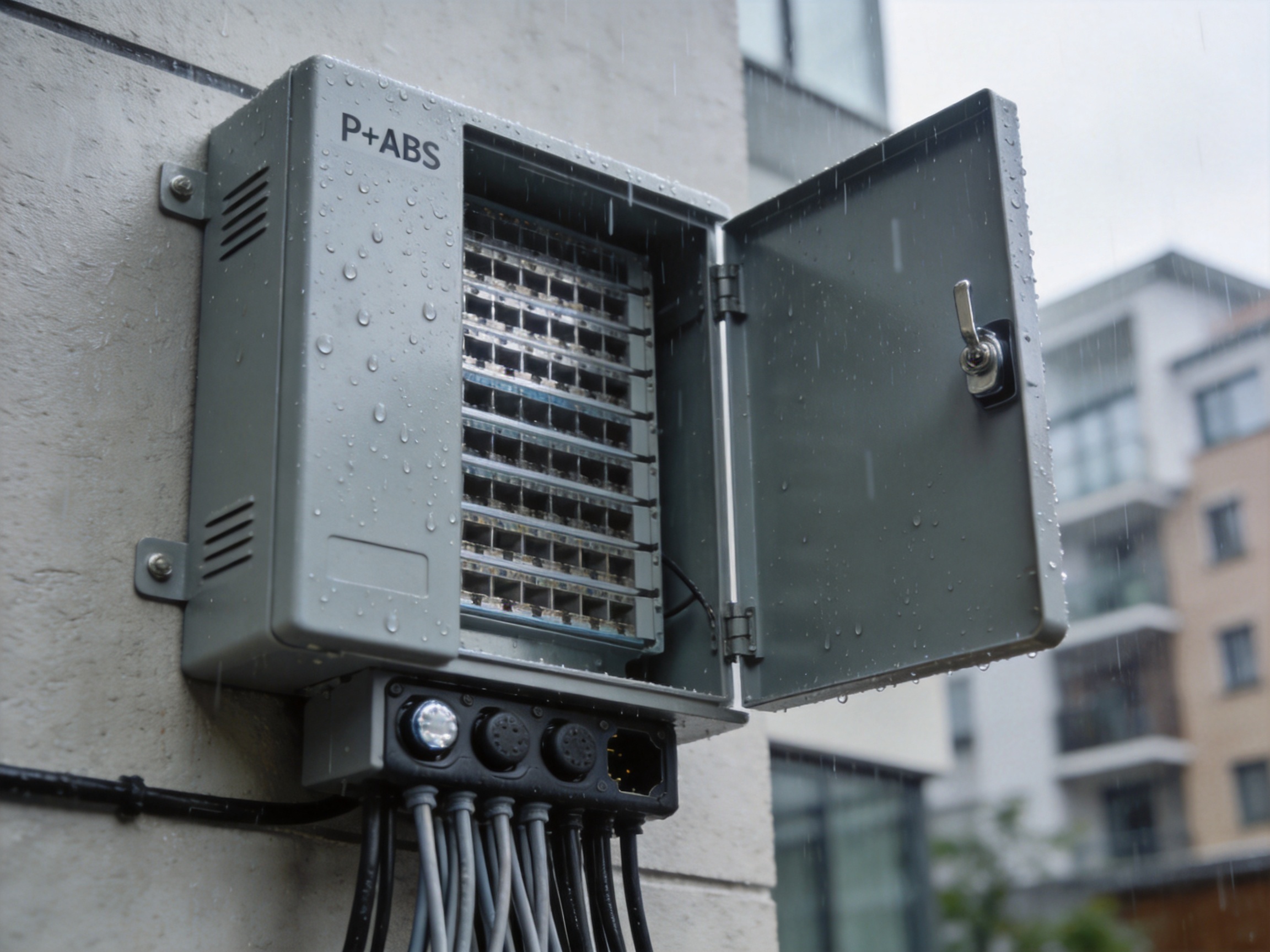
Product Overview: A Compact Distribution Platform for High-Speed Fiber Access
The WM-1001-F051 Fiber Optic Distribution Box is a 24-port enclosure developed to support fiber-to-the-home, fiber-to-the-office, and broader FTTx access network deployments. Its role is to provide a secure transition point between feeder cables, distribution fibers, drop cables, optical adapters, and splice management systems. By consolidating these functions, the enclosure becomes a critical node in the last-mile optical network, where reliability, accessibility, and space efficiency matter most.
The product is suitable for both indoor and outdoor use. This dual-environment capability is particularly valuable for operators that standardize their network hardware across varied deployment scenarios. A box used in a building corridor, a telecom room, a pole-mounted environment, or an outside wall location must withstand different conditions while maintaining consistent optical performance. The product’s compact design and wall-mounting application make it easy to integrate into both new network rollouts and upgrade projects.
The enclosure is designed with bottom cable entry access, which helps support cleaner cable routing and reduces exposure to rainwater entry points when installed outdoors. Inlet and outlet ports are sealed with rubber grommets to help maintain environmental protection and minimize dust, moisture, and insect intrusion. The hinged and lockable top cover offers convenient technician access while adding a layer of physical security for the fibers, adapters, and internal routing components.
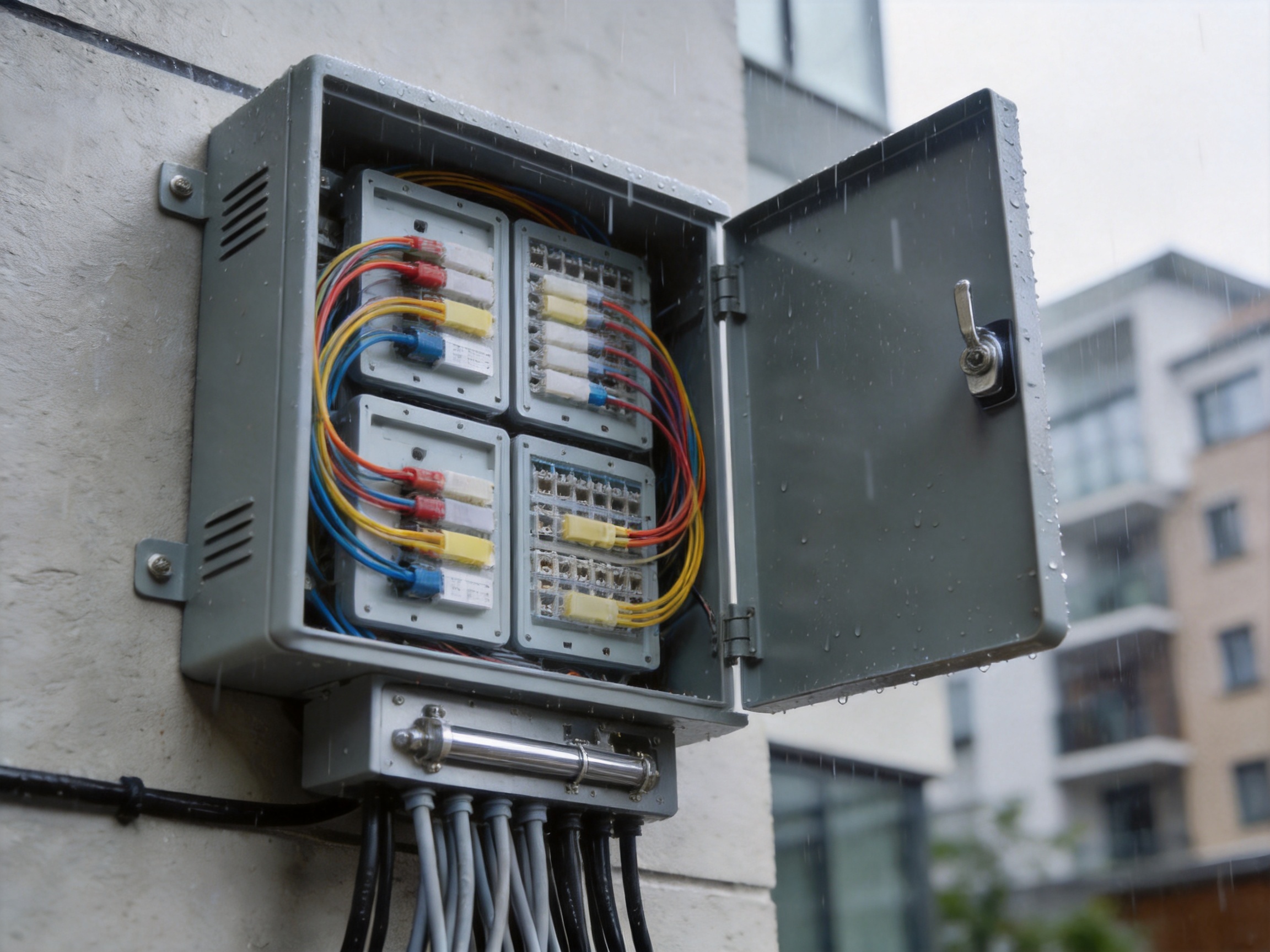
Inside the enclosure, integrated fiber splice cassettes and splice trays allow technicians to organize and protect fusion splices. The box supports splicing and patching, giving network operators the flexibility to use it as a termination point, a distribution node, or a small optical splitting point. It can accommodate PLC metal tube splitters, allowing passive optical network architectures to be implemented in a controlled and compact enclosure.
Key Specifications
Specification Item |
WM-1001-F051 Fiber Optic Distribution Box |
Single Fiber Count, Maximum |
96 fibers |
Splices, Maximum |
96 splices |
Heatshrink Splice Holders, Maximum |
96 holders |
Splice Trays |
4 trays, each supporting 24 fibers |
Cable Entry Ports |
3 ports, 14 mm |
Outlet Ports |
24 ports, 3 mm to 5 mm |
Outlet Grommets |
24 pieces for 3 mm to 5 mm cables, 3 pieces for 7 mm cables, 3 pieces for 10 mm cables |
Adapter Holders |
24 holders |
Adapter Type |
SC simplex or LC duplex |
Mounting Application |
Wall mounting |
Dimensions |
307 mm height by 245 mm width by 81 mm depth |
Material |
PC plus ABS |
Color |
Grey |
IP Rating |
IP65 |
Compliance |
RoHS |
Designed for FTTx Networks, CATV, LAN, and Optical Fiber Communication
The growing demand for high-capacity broadband has made FTTx deployment a core priority for operators and infrastructure developers. FTTx architectures require reliable passive components that can maintain fiber integrity from central offices and aggregation points all the way to the final user. The WM-1001-F051 is specifically suited to the access layer, where multiple drop cables may need to be routed from a centralized distribution point to homes, offices, or service endpoints.
In fiber-to-the-home networks, the enclosure can serve as a distribution box that organizes incoming feeder or distribution cables and routes outgoing drop fibers to subscribers. Its 24 outlet ports align well with common residential building or community deployment needs. The ability to support up to 96 fiber splices provides ample capacity for future expansion, repair operations, or multi-service fiber routing.
In office and enterprise environments, the product can support structured optical cabling where space is limited but organization is essential. The compact dimensions of 307 mm by 245 mm by 81 mm allow the box to be mounted in communication rooms, service shafts, equipment walls, or building distribution areas. Because it supports both SC simplex and LC duplex adapter configurations, network designers can select a connector strategy that aligns with existing equipment and optical patching practices.
For CATV and LAN applications, stable optical distribution is vital for signal reliability. The product’s splice management and adapter protection reduce fiber handling risks and help maintain low insertion loss over time. In optical communication systems where networks may be expanded, rearranged, or serviced regularly, the hinged cover and organized internal structure help technicians work efficiently without disturbing unrelated fibers.
Competitive Advantage 1: High Capacity in a Compact Footprint
One of the most important advantages of the WM-1001-F051 is its ability to provide high fiber capacity within a compact wall-mount enclosure. Many competing boxes either offer a small footprint with limited splice capacity or higher capacity with bulky dimensions that complicate installation. This product balances both priorities by supporting 24 outlet ports, 24 adapter holders, and up to 96 splices in a cabinet only 81 mm deep.
This compact capacity is valuable in dense access networks. Building corridors, outdoor wall areas, indoor telecom corners, and service rooms often have limited space. Installers must avoid oversized cabinets that obstruct pathways or require special mounting structures. A compact box reduces installation constraints and makes it easier to deploy fiber distribution points near the end user, which is a central goal of FTTH and FTTx network design.
The four splice trays, each supporting 24 fibers, help divide fiber groups into manageable sections. Organized tray separation improves serviceability because technicians can identify and access the required fiber group without unnecessary movement of unrelated fibers. This reduces the risk of accidental bending, displacement, or damage during maintenance. In comparison with simpler boxes that contain loose fiber storage or less structured trays, the WM-1001-F051 provides more disciplined fiber management.
The ability to accommodate PLC metal tube splitters further increases deployment flexibility. Optical splitting is frequently required in passive optical network applications, and placing a splitter inside a protected distribution box can reduce external component requirements. Competitor products that lack splitter accommodation may force operators to install separate splitter modules or larger cabinets, increasing cost, installation time, and network complexity.
Competitive Advantage 2: Strong Environmental Protection with IP65 Rating
Outdoor optical infrastructure must resist rain, dust, sunlight, humidity, temperature variation, and physical exposure. The WM-1001-F051 is designed for indoor and outdoor use and carries an IP65 rating, which indicates protection against dust ingress and water jets from multiple directions under defined test conditions. This level of protection is essential for field installations where environmental contamination can degrade fibers, adapters, splice points, and mechanical components.
The enclosure uses PC plus ABS material, a combination valued for mechanical strength, impact resistance, dimensional stability, and practical weathering performance. The UV- and water-resistant design helps support long service life in outdoor applications, where sunlight and moisture can cause lower-grade plastics to become brittle, faded, or deformed. For operators, material durability directly affects maintenance cost because enclosure failure can expose internal optical components and lead to service interruptions.
The bottom cable entry design and sealed inlet and outlet ports are important details. Cable entry points are common weak areas in outdoor boxes. If they are poorly sealed, water or dust can enter the enclosure and compromise optical reliability. Rubber grommets around the inlet and outlet ports help create a controlled cable interface that reduces environmental intrusion while also supporting cable organization. The product includes outlet grommet options for 3 mm to 5 mm, 7 mm, and 10 mm cable needs, giving installers practical flexibility during deployment.
Compared with standard low-cost enclosures that may rely on loose cable holes, simple plastic knockouts, or insufficient sealing accessories, the WM-1001-F051 offers a more complete protection concept. It is not merely a box; it is a sealed fiber management system designed to protect the optical network connection point throughout its service life.
Competitive Advantage 3: Installer-Friendly Construction
Installation efficiency is a major factor in total network cost. A fiber distribution box may appear to be a small component, but when hundreds or thousands of units are deployed across a network, every minute saved during installation can significantly affect project economics. The WM-1001-F051 includes several features that help reduce installation difficulty and improve consistency in the field.
The wall-mount design makes the box suitable for a wide range of locations. A wall mount kit and fixing material are included, helping installers complete mounting work without sourcing extra accessories. This reduces the chance of installation delays caused by missing hardware and supports more standardized deployment quality across different teams and sites.
The hinged top cover provides easy access during installation and maintenance. Compared with removable covers that must be placed on the ground or held during service work, a hinged cover remains attached to the enclosure, reducing the risk of lost parts and improving technician convenience. The lockable design adds security, helping prevent unauthorized access or accidental opening in public or semi-public installation areas.
Inside the enclosure, integrated fiber splice cassettes and splice protectors support organized splicing operations. Fiber splicing requires careful handling, protection from stress, and adequate bend radius control. By providing defined splice tray structures, the box allows technicians to route fibers predictably and maintain a cleaner internal layout. This leads to easier troubleshooting, clearer documentation, and fewer service errors during later upgrades.
The 24 adapter holders support structured patching. A well-organized adapter field allows technicians to identify ports, connect or disconnect patch cords, and manage subscriber connections more efficiently. Products with poorly arranged adapters or limited routing space can create congested cable paths, increasing the chance of fiber bending and connector contamination. The WM-1001-F051 addresses this by combining compact design with a practical internal arrangement for splicing and patching.
Competitive Advantage 4: Flexible Connector and Cable Compatibility
Modern fiber networks often contain a mix of connector types, cable diameters, and installation practices. A distribution box that supports only one rigid configuration may limit network design choices. The WM-1001-F051 supports SC simplex and LC duplex adapter types, enabling it to serve networks that prioritize either robust single-fiber connector arrangements or higher-density duplex configurations.
SC connectors remain widely used in FTTH and access networks because of their push-pull design, stable performance, and broad compatibility with optical network terminals and passive optical network equipment. LC connectors are valued where higher port density is needed, especially in equipment rooms and enterprise environments. Supporting both gives the product broader market applicability and makes it easier for network planners to standardize on one enclosure type across different optical distribution scenarios.
The cable interface is also flexible. The box includes 3 cable entry ports with 14 mm capacity and 24 outlet ports for 3 mm to 5 mm cables. Additional grommet support for 7 mm and 10 mm cable sizes allows the product to handle more than a single drop cable format. This flexibility is useful in real-world installation environments where cable selection may vary according to building structure, operator preference, subscriber density, or local standards.
Compared with competing distribution boxes that require field modification to fit different cable sizes, the WM-1001-F051 helps installers maintain enclosure integrity. Field drilling, cutting, or improvised sealing can compromise waterproofing and appearance. Predefined cable ports and grommet options support a more professional installation and reduce the risk of future leakage or cable strain issues.
Competitive Advantage 5: Integrated Splicing, Patching, and Splitting
A fiber access node often needs to perform multiple functions. It may terminate feeder cables, distribute fibers to drop cables, protect fusion splices, house adapters, support patch connections, and sometimes include passive splitters. If each function requires a separate component, the network becomes more complex and expensive. The WM-1001-F051 integrates splicing, patching, and PLC metal tube splitter accommodation in one enclosure.
This integration offers both technical and commercial value. Technically, it shortens optical routing paths, reduces the number of exposed connection points, and keeps key passive components inside a protected enclosure. Commercially, it can lower total installed cost by reducing accessory count, simplifying procurement, and shortening deployment time. Operators can use the same box in multiple network designs, which improves inventory management and spare part planning.
For passive optical network applications, splitter accommodation is particularly important. A PLC splitter divides optical signals from one input to multiple outputs, enabling one feeder fiber to serve several subscribers. Housing such a splitter inside the distribution box can improve the cleanliness of the deployment and reduce the need for separate splitter cabinets. This creates a more compact access point that is easier to mount and maintain.
In comparison, many basic terminal boxes provide only adapter mounting and limited slack storage. Others provide splicing but lack convenient patching or splitter space. The WM-1001-F051 stands out by offering a multifunctional internal structure that supports the practical realities of FTTx deployment.
Manufacturing Strength Behind the Product
A high-quality fiber distribution box is the result of more than a list of specifications. Its reliability depends on design experience, materials selection, molding precision, assembly control, inspection discipline, and supply chain capability. Wanma Technology Co., Ltd. was established in 1997 and has built long-term expertise in communication cabinets, communication electronic equipment, and passive optical components. This background gives the company a broad understanding of network infrastructure requirements from indoor equipment rooms to outdoor optical access points.
The company develops, manufactures, and markets its own branded products while also providing integrated solutions for customized products. This combination of standard product manufacturing and customization capability is important for telecommunications customers. Network operators often require different port counts, adapter types, labeling systems, mounting accessories, material performance levels, or project-specific packaging. A manufacturer with strong engineering and production capabilities can respond more effectively than a simple trading supplier.
Advanced manufacturing processes for a product like the WM-1001-F051 typically involve controlled material preparation, precision mold development, injection molding, component finishing, sealing structure verification, assembly, fit testing, and final inspection. The use of PC plus ABS material requires stable processing conditions to ensure the enclosure achieves the intended mechanical strength and surface quality. Poor molding can result in warping, weak hinges, inconsistent sealing surfaces, or dimensional mismatch. A mature manufacturer reduces these risks through process control and production experience.
The company’s product range is widely used in Ethernet networks, optical communication networks, central equipment rooms, national high-speed railways, and urban rail transit systems. These application areas impose demanding expectations for reliability, consistency, and long-term support. Experience in such environments strengthens the manufacturer’s ability to design components that meet the practical needs of network construction, operation, and maintenance.
Precision Molding and Material Control
The enclosure body of the WM-1001-F051 uses PC plus ABS, a polymer blend selected for balanced mechanical and environmental properties. Polycarbonate contributes toughness and impact resistance, while ABS improves processability and dimensional stability. The final enclosure must maintain shape, protect internal components, support hinge and locking functions, and preserve sealing performance throughout its service life.
Precision molding is crucial for IP-rated enclosures. The mating surfaces around the cover, port areas, grommet interfaces, and mounting features must be dimensionally consistent. If a molded part is uneven or distorted, the enclosure may not close properly, sealing pressure may be inconsistent, and water resistance may be compromised. A strong manufacturing system uses qualified tooling, stable processing parameters, and inspection steps to confirm repeatable part quality.
The hinged and lockable top cover must also be manufactured with careful attention to tolerance. Hinges experience repeated opening and closing during installation, inspection, repair, and upgrade work. A weak hinge can crack or loosen, while an imprecise cover fit may reduce sealing performance. By controlling mold design and assembly accuracy, the manufacturer helps ensure that the enclosure remains convenient to use while maintaining physical protection.
UV- and water-resistant performance is not achieved by appearance alone. It depends on material selection, formulation, wall thickness, surface quality, and design geometry. Products made with inferior plastics may look acceptable at delivery but fail after extended exposure. A mature manufacturer understands that outdoor optical products must be evaluated with long-term environmental stress in mind, not just initial cost.
Sealing Design and Environmental Reliability
The WM-1001-F051’s IP65 rating is supported by a complete sealing concept. The enclosure must resist dust and water at the cover interface, cable entry points, outlet ports, and other potential openings. Rubber grommets around cable entry and outlet positions help seal the cables while accommodating realistic installation variations. This is especially important because field cables may not always be perfectly straight, clean, or identical in diameter.
Sealing performance depends on both component design and manufacturing consistency. Grommet material must be flexible enough to compress around cables but durable enough to resist aging and deformation. Port geometry must provide secure seating for the grommets. The cover must close uniformly, and locking pressure must help maintain contact. When these elements are engineered and manufactured correctly, the enclosure can protect internal fibers from environmental contamination.
Competitor products may claim outdoor suitability but fail to provide robust sealing at every entry point. Even a small opening can allow moisture, dust, or insects to enter over time. Once contamination reaches adapters, connector end faces, or splice areas, optical performance may degrade. By integrating sealed inlet and outlet ports with weather-resistant enclosure construction, the WM-1001-F051 provides stronger field reliability than low-cost alternatives that treat sealing as an afterthought.
Environmental reliability also reduces operational cost. When enclosures remain dry and clean, technicians make fewer emergency visits, optical links remain stable, and subscriber satisfaction improves. In broadband access networks, every avoided service call helps protect profitability. Therefore, the enclosure’s weather-resistant design is not merely a technical feature; it is a long-term business advantage.
Fiber Management for Lower Maintenance Risk
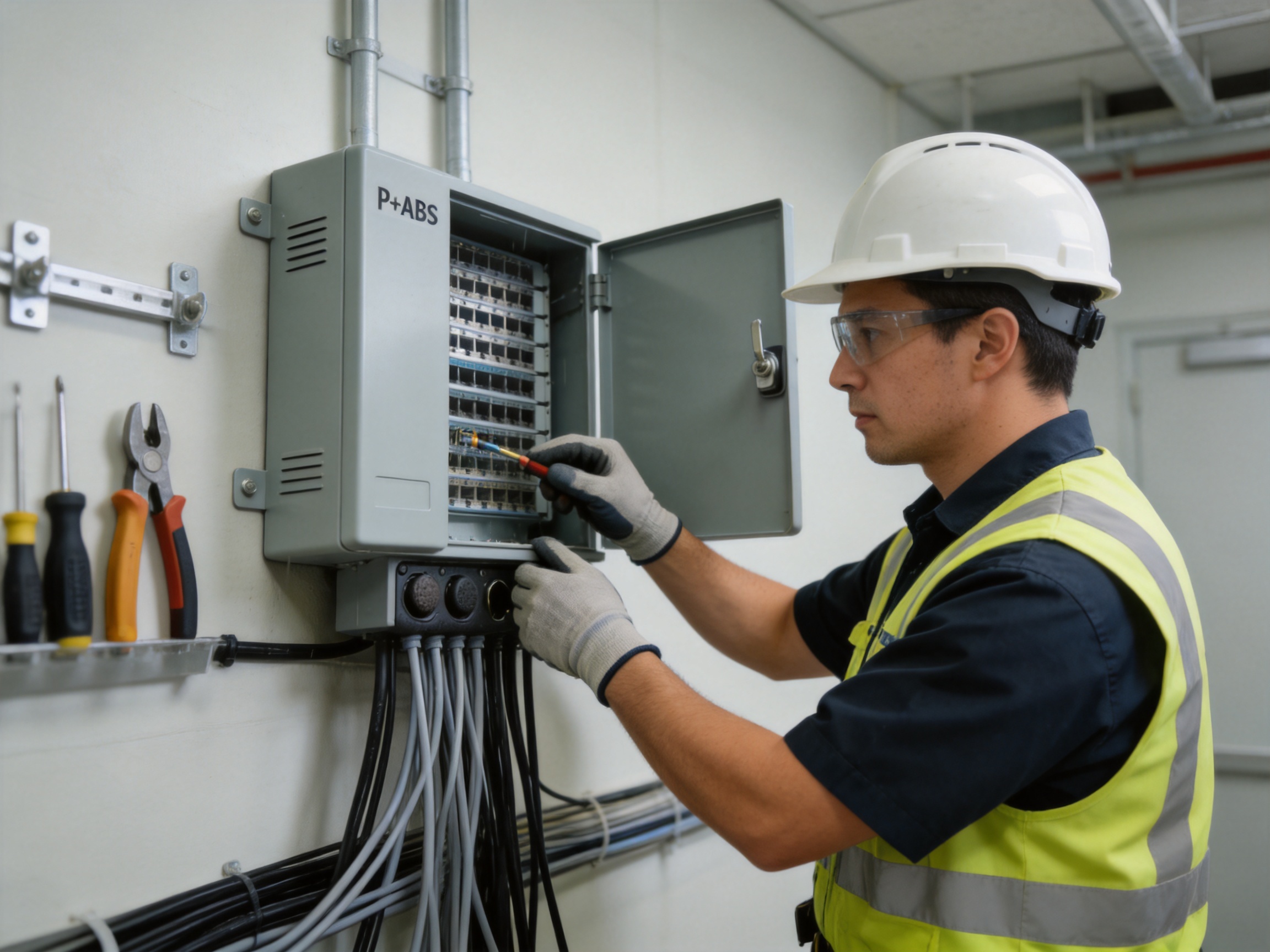
Optical fibers are highly capable but physically sensitive. Excessive bending, poor routing, inadequate splice protection, and congested interiors can all lead to attenuation, breakage, or difficult troubleshooting. The WM-1001-F051 addresses these concerns through integrated splice cassettes, four splice trays, splice protector support, and an organized adapter area.
The maximum support for 96 heatshrink splice holders aligns with the maximum splice capacity, allowing each splice to be properly protected. Heatshrink splice protectors reinforce the splice area after fusion splicing and help prevent microbending or mechanical damage. Including splice protectors as part of the product configuration supports field readiness and reduces the need for separate accessory sourcing.
Four trays provide a logical way to separate fibers by cable, subscriber group, splitter output, floor, building zone, or service type. This separation is useful during maintenance because a technician can access the relevant tray without disrupting the entire enclosure. In networks with many subscribers, accidental disturbance of active fibers can lead to service outages. Organized tray architecture reduces that risk.
The 24 adapter holders support clean patching and connection management. Adapters must be held firmly to maintain connector alignment and prevent accidental movement. A stable adapter field also helps technicians maintain labeling discipline and avoid port confusion. In comparison with products that provide loose adapter positions or less structured internal routing, the WM-1001-F051 supports a more professional and maintainable network node.
Future-Proofing Network Infrastructure
Fiber networks are long-term investments. Operators deploy optical infrastructure with the expectation that it will serve multiple generations of services, equipment, bandwidth upgrades, and customer growth. A distribution box must therefore support present needs while leaving room for future expansion. The WM-1001-F051 is designed with this principle in mind.
Although the product is described as a 24-port enclosure, its internal splice capacity reaches 96 fibers. This gives network planners additional flexibility for cable routing, spare fibers, multi-fiber distribution, or reconfiguration. A network may initially activate only part of the enclosure’s capacity, then use additional splice positions or ports as subscriber demand grows. This helps avoid premature replacement and supports a staged investment strategy.
The compatibility with SC simplex and LC duplex adapters also supports future-proofing. As network equipment evolves, connector preferences may change by application. Having an enclosure platform that can accommodate more than one adapter type gives customers greater design freedom. It also allows customized project configurations while retaining a proven mechanical enclosure.
FTTH and FTTx technologies continue to evolve as users demand higher bandwidth for streaming, cloud applications, remote work, smart security, telemedicine, industrial monitoring, education platforms, and high-speed enterprise connectivity. The distribution box helps bring the fiber connection closer to the end user, which is fundamental to supporting future bandwidth growth. By protecting and organizing the passive optical layer, the product helps create a stable foundation for next-generation services.
Application Scenario: Residential FTTH Deployment
In a residential FTTH project, the WM-1001-F051 can be installed on an exterior building wall, inside a communication closet, or in a shared service area. Incoming fibers can enter through the bottom cable entry ports, while outgoing drop cables can be routed through the 24 outlet ports to individual homes or apartments. The wall-mount form factor makes the enclosure suitable for buildings where floor space is unavailable or where equipment must be positioned near cable pathways.
The lockable top cover helps protect the access node in shared residential spaces. Unauthorized handling of fibers can create service failures, so physical security is an important practical feature. The hinged design simplifies technician access when new subscribers are connected or when existing services are modified.
Because the enclosure can accommodate PLC metal tube splitters, it can support passive optical network distribution within the building or community. The splitter can be protected inside the box, and output fibers can be organized through adapter holders and outlet ports. This creates a cleaner and more serviceable installation than loosely mounted splitter components.
For network owners, the product’s compact footprint reduces visual impact. A neat grey enclosure mounted on a wall is often more acceptable in residential environments than large cabinets or exposed cable assemblies. A clean installation improves the perceived professionalism of the network provider and reduces the likelihood of tenant complaints.
Application Scenario: Office and Commercial Network Access
In office buildings, shopping centers, business parks, and enterprise campuses, fiber distribution points must support reliable connectivity while fitting into restricted utility spaces. The WM-1001-F051 provides a compact solution for routing fibers to offices, tenants, equipment rooms, wireless access infrastructure, security systems, or other network endpoints.
Commercial environments often change over time. Tenants move, office layouts change, bandwidth requirements increase, and new services are added. A distribution box with organized splicing and patching can simplify these changes. Technicians can access ports, trays, and adapters in a controlled way, reducing disruption to active services.
The product’s compatibility with SC simplex and LC duplex adapters is useful in commercial installations because different network equipment may use different connector standards. LC duplex may be preferred where density is important, while SC simplex remains common for access and FTTH-type systems. The ability to support both options improves the product’s usefulness across varied projects.
Compared with improvised fiber termination methods, a purpose-built distribution box improves network documentation and maintenance. Port labeling, organized tray assignment, and stable adapter placement allow facility managers and telecom technicians to understand the network layout more quickly. Over the lifetime of a commercial building, this can save many hours of troubleshooting and upgrade work.
Application Scenario: CATV and LAN Optical Distribution
CATV and LAN networks increasingly rely on optical fiber to deliver stable, high-capacity connectivity. Signal quality depends not only on active equipment but also on the passive infrastructure that protects splices, connectors, and fiber routing. The WM-1001-F051 provides a protected enclosure for optical distribution points where signal stability and service continuity are important.
In CATV applications, optical distribution nodes may serve multiple end users or internal building segments. The enclosure’s 24 outlet ports and 96-splice capability provide the flexibility to organize distribution paths while maintaining environmental protection. In LAN applications, the box can support backbone-to-distribution transitions, fiber extensions, and structured connectivity between network zones.
Because the product is RoHS compliant, it supports modern environmental and regulatory expectations for electronic and communication infrastructure components. RoHS compliance is increasingly important in procurement processes, particularly for customers that require responsible material standards and long-term project documentation.
Competitor products with limited compliance documentation or inconsistent quality may create procurement risk for large projects. A product from an experienced manufacturer with established industry applications provides greater confidence for buyers who must balance cost, performance, and supply reliability.
Quality Assurance and Consistency
Quality consistency is especially important for telecommunications products because network projects often require large quantities of identical components. If enclosure dimensions, sealing parts, adapter holders, or splice trays vary from unit to unit, installation teams face delays and inconsistent outcomes. Wanma Technology’s experience in communication products supports the disciplined production needed for repeatable quality.
Quality assurance for a fiber distribution box may include incoming material checks, dimensional inspection of molded parts, hinge and cover fit evaluation, grommet fit verification, assembly review, visual inspection, packaging inspection, and sampling tests related to mechanical protection and sealing. Each step helps reduce the risk that defective products reach the field.
For customers, consistent quality lowers hidden costs. A cheaper enclosure that requires field repair, extra sealing work, replacement hardware, or repeated inspection can become more expensive than a well-manufactured product. The WM-1001-F051 is designed to reduce such risks through integrated accessories, defined cable management, and robust environmental protection.
The company’s emphasis on reliable product quality, timely delivery, and long-term strategic partnerships further strengthens the value proposition. Telecommunications projects are time-sensitive. Delayed components can slow construction schedules, postpone service activation, and increase labor costs. A manufacturer with established production and delivery capabilities helps customers keep projects on track.
Customization and Integrated Solution Capability
Network operators, system integrators, and project contractors often require customized configurations. A fiber distribution box may need a specific adapter type, splitter arrangement, port labeling scheme, packaging standard, color preference, mounting accessory set, or internal routing adaptation. Wanma Technology provides integrated solutions for customized products, which is a significant advantage over suppliers that only offer fixed catalog items.
Customization capability is supported by engineering experience and manufacturing control. It is not enough to simply alter a part; modifications must preserve sealing performance, mechanical strength, fiber bend radius, installation convenience, and compliance expectations. A company with long-term involvement in passive optical components and communication cabinets is better positioned to evaluate how changes affect the complete product.
For large network rollouts, customization can create operational efficiency. If the enclosure arrives preconfigured according to the project’s connector type, splitter plan, or labeling requirement, field teams can install faster and with fewer errors. Standardized customized configurations also improve documentation and inventory control.
This solution-oriented approach differentiates the manufacturer from commodity suppliers. Instead of treating the distribution box as a simple plastic shell, the company can support it as part of a broader network infrastructure strategy. This is valuable for customers who need not only products but also reliable manufacturing partnership.

Global Market Experience and Long-Term Reliability
Wanma Technology has a sales network covering more than 20 countries and regions, including the United States, Australia, the United Kingdom, Italy, South Africa, and Ghana. Serving diverse markets gives a manufacturer exposure to different installation climates, standards, customer expectations, and deployment practices. This international experience can inform product improvement and quality expectations.
Outdoor optical products may face very different conditions depending on location. Some markets require resistance to strong sunlight and high temperature. Others require protection against heavy rainfall, humidity, dust, or urban pollution. A distribution box with IP65 protection, UV resistance, and sealed cable ports is well positioned for such varied environments.
Global market participation also reflects supply and service capability. Customers importing telecommunications products need confidence in production capacity, export documentation, packaging integrity, communication responsiveness, and after-sales support. The company’s long operating history since 1997 adds credibility, especially for buyers who seek stable partners rather than short-term suppliers.
Long-term reliability is not achieved by a single feature. It results from the combination of material selection, structural design, fiber management, sealing performance, manufacturing control, and user-friendly maintenance. The WM-1001-F051 brings these elements together in a practical access network enclosure that supports dependable optical connectivity.
Why This Distribution Box Stands Out from Competitors
Many fiber distribution boxes on the market look similar at first glance, but their real differences become clear during installation and years of operation. The WM-1001-F051 stands out because it combines high capacity, compact dimensions, environmental protection, flexible adapter compatibility, integrated splice trays, splitter accommodation, and included mounting and fixing materials.
Its 96-splice capacity gives it more internal management capability than many compact 24-port boxes. Its 24 outlet ports make it practical for multi-subscriber FTTx deployment. Its three 14 mm cable entry ports provide useful feeder cable access. Its 24 adapter holders support organized patching. Its PC plus ABS body and IP65 rating help protect the network in indoor and outdoor environments. Its hinged and lockable top cover improves both convenience and security.
Competitor products may compete on price alone, but low purchase cost can hide later expenses. If a box lacks reliable sealing, technicians may need to revisit the site. If it lacks organized trays, maintenance becomes slower and riskier. If it lacks proper grommets, cable entry may be improvised. If it lacks splitter space, additional components may be needed. If it is made from weak material, outdoor service life may be reduced. The WM-1001-F051 is designed to avoid these common compromises.
The product also benefits from the manufacturing background of an established communication infrastructure company. The enclosure is not an isolated item; it is part of a broader expertise base covering communication cabinets, electronic communication equipment, passive optical components, optical communication networks, equipment rooms, high-speed rail systems, and urban rail transit systems. This experience supports practical design decisions that matter in real networks.
Operational Benefits for Network Owners
For network owners, the primary value of a distribution box lies in stable service delivery and lower lifecycle cost. The WM-1001-F051 supports these goals through protection, organization, scalability, and ease of access. A cleanly installed and well-protected fiber distribution point reduces the likelihood of outages caused by environmental exposure, physical disturbance, or routing confusion.
Maintenance efficiency is another key benefit. When a subscriber is added, disconnected, upgraded, or repaired, technicians need to work quickly and accurately. The organized splice trays, adapter holders, and patching area support this workflow. The hinged cover prevents cover loss and simplifies access. The lockable design supports controlled maintenance access.
Inventory simplification also matters. Because the product can serve FTTH, office, CATV, LAN, and general optical communication applications, customers can reduce the number of enclosure models they need to stock. Its compatibility with SC simplex and LC duplex adapters further increases deployment flexibility. Standardizing on a versatile enclosure can simplify procurement and training.
The product’s future-ready design helps protect investment. As bandwidth needs grow, the fiber network can be expanded or reconfigured using existing splice and port capacity. This supports long-term network planning and reduces the need for premature enclosure replacement.
Installation Considerations and Best Practices
To achieve the best performance from the WM-1001-F051, installation teams should follow standard fiber handling and enclosure mounting practices. The mounting surface should be stable, flat, and appropriate for the environment. The included wall mount kit and fixing material should be used according to site conditions and project requirements.
Cables should be routed through the appropriate entry and outlet ports using the correct rubber grommets for cable diameter. Proper grommet selection helps maintain sealing performance and reduces cable movement. Installers should avoid cutting or modifying ports unnecessarily because field modifications can compromise IP protection.
Inside the enclosure, fibers should be routed with adequate bend radius and arranged according to the project’s documentation plan. Splices should be protected with heatshrink splice protectors and placed securely in the splice holders. Trays should be assigned logically, such as by cable group, subscriber zone, or splitter output. Clear labeling should be applied where required by the network owner.
Connector end faces should be cleaned before mating, and adapter ports should be protected from dust during installation. After splicing and patching are complete, the cover should be closed and locked correctly. A final inspection should confirm that all ports are sealed, cables are strain-relieved, fibers are not pinched, and the enclosure is securely mounted.
Q&A Section
What is the main purpose of the WM-1001-F051 Fiber Optic Distribution Box?
The main purpose of the product is to provide a protected and organized access point for fiber splicing, patching, distribution, and optional splitter accommodation in FTTx, CATV, LAN, and optical communication networks. It helps bring high-speed fiber connectivity closer to homes, offices, and other end users.
How many ports does the enclosure provide?
The enclosure provides 24 outlet ports and 24 adapter holders. It is designed as a practical 24-port fiber distribution solution for access network deployment.
What is the maximum splice capacity?
The product supports up to 96 splices and includes four splice trays, each supporting 24 fibers. It also supports up to 96 heatshrink splice holders.
Can the product be used outdoors?
Yes. The enclosure is designed for indoor and outdoor use. It features UV and water resistance, sealed cable ports with rubber grommets, and an IP65 rating for environmental protection.
What adapter types are supported?
The product supports SC simplex and LC duplex adapter types, allowing it to be used in a variety of fiber network configurations.
Why is the IP65 rating important?
The IP65 rating indicates protection against dust ingress and water jets under defined conditions. This is important for outdoor and semi-outdoor fiber installations because dust and moisture can affect optical performance and service reliability.
Does the box support PLC splitters?
Yes. The enclosure can accommodate PLC metal tube splitters, making it suitable for passive optical network distribution applications.
What material is used for the enclosure?
The enclosure is made from PC plus ABS material, which provides a balance of toughness, dimensional stability, impact resistance, and practical outdoor durability.
What makes this product different from lower-cost competitor boxes?
The product combines compact size, high splice capacity, 24 outlet ports, organized splice trays, adapter holders, sealed ports, UV and water resistance, IP65 protection, splitter accommodation, a hinged and lockable cover, and included mounting materials. Many low-cost alternatives compromise on sealing, internal organization, material quality, or installation convenience.
Who manufactures the product?
The product is manufactured by Wanma Technology Co., Ltd., a company established in 1997 with experience in communication cabinets, communication electronic equipment, passive optical components, and integrated customized solutions.
What industries can use this distribution box?
The product can be used in FTTH and FTTx access networks, home and office fiber installations, CATV systems, LAN infrastructure, optical communication networks, and other broadband distribution environments.
Why is integrated fiber management important?
Integrated fiber management helps protect splices, maintain bend radius, organize ports, simplify maintenance, and reduce the risk of accidental service disruption. A well-organized enclosure supports long-term network reliability.
Conclusion
The WM-1001-F051 Fiber Optic Distribution Box is a compact yet high-capacity enclosure designed for the practical needs of modern fiber access networks. It supports up to 96 fibers and 96 splices, provides 24 outlet ports and 24 adapter holders, accommodates SC simplex or LC duplex adapters, and includes four splice trays for organized internal fiber management. Its IP65-rated PC plus ABS enclosure, UV- and water-resistant design, sealed cable ports, hinged and lockable cover, and wall-mount installation make it suitable for both indoor and outdoor deployment.
The product’s advantages over ordinary competitor boxes are clear. It offers more than simple termination; it integrates splicing, patching, splitter accommodation, environmental protection, and installer-friendly features in one practical enclosure. This reduces field complexity, supports faster installation, improves maintenance efficiency, and helps protect long-term optical performance.
Behind the product is the manufacturing strength of Wanma Technology Co., Ltd., a company with decades of experience in communication infrastructure and passive optical components. Its capabilities in product development, manufacturing, customization, quality control, and global supply support the reliability of the enclosure and make it a strong choice for operators, contractors, system integrators, and infrastructure developers.
As fiber networks continue to expand, the access layer must be built with components that are durable, scalable, and easy to maintain. The WM-1001-F051 Fiber Optic Distribution Box provides the protection, organization, and flexibility required to support high-speed broadband services today while preparing networks for tomorrow’s bandwidth demands.
References
International Electrotechnical Commission. IEC 60529: Degrees of Protection Provided by Enclosures.
International Electrotechnical Commission. IEC 61753 Series: Fibre Optic Interconnecting Devices and Passive Components Performance Standards.
International Telecommunication Union. ITU-T G.652: Characteristics of a Single-Mode Optical Fibre and Cable.
International Telecommunication Union. ITU-T G.657: Characteristics of a Bend-Insensitive Single-Mode Optical Fibre and Cable.
Telcordia Technologies. GR-326: Generic Requirements for Singlemode Optical Connectors and Jumper Assemblies.
European Union. Directive 2011/65/EU on the Restriction of the Use of Certain Hazardous Substances in Electrical and Electronic Equipment.
Fiber Optic Association. Reference Guide to Fiber Optic Network Design.
Broadband Forum. Best Practices for Fiber Access Network Deployment.
PREV:Intelligent Medical Carts for Safer, Faster, and More Connected Clinical Care
NEXT:Outdoor Pre-Fabricated Enclosed Ring Main Unit for Intelligent 12 kV Distribution Networks
NEXT:Outdoor Pre-Fabricated Enclosed Ring Main Unit for Intelligent 12 kV Distribution Networks
Interested in cooperation or have questions?
Related products
-
-
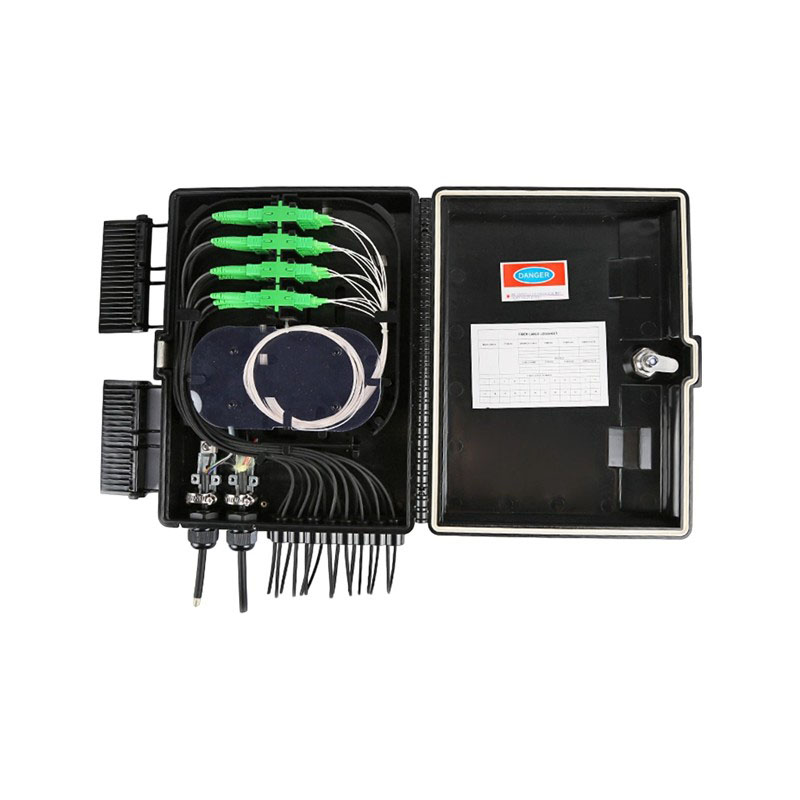
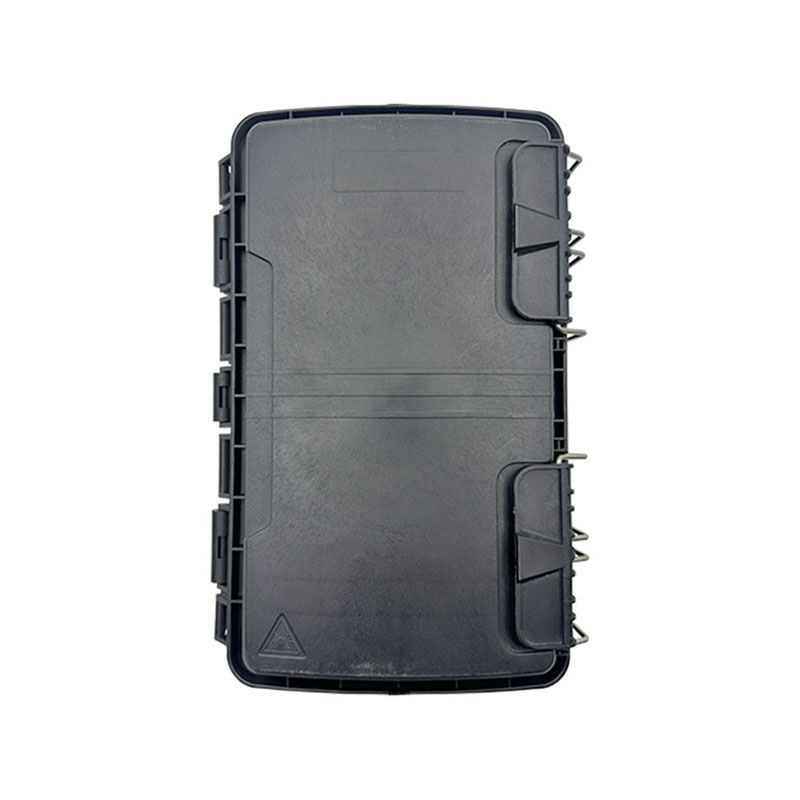
Description: The equipment is used as a termination point for the feeder cable to connect with drop cable in FTTx communication network system. The fiber splicing, splitting, distribution can be done ...
See Details -
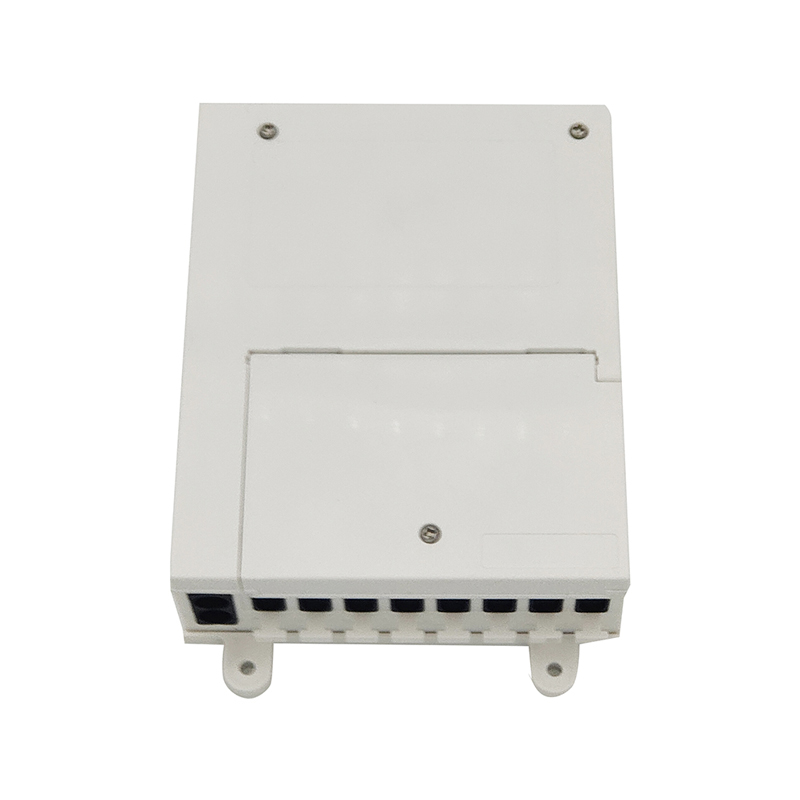
Application:This product integrates the function of splicing with splitting, suitable for the straight through or branch connection, and terminal connection in optical system, as well as protection co...
See Details -
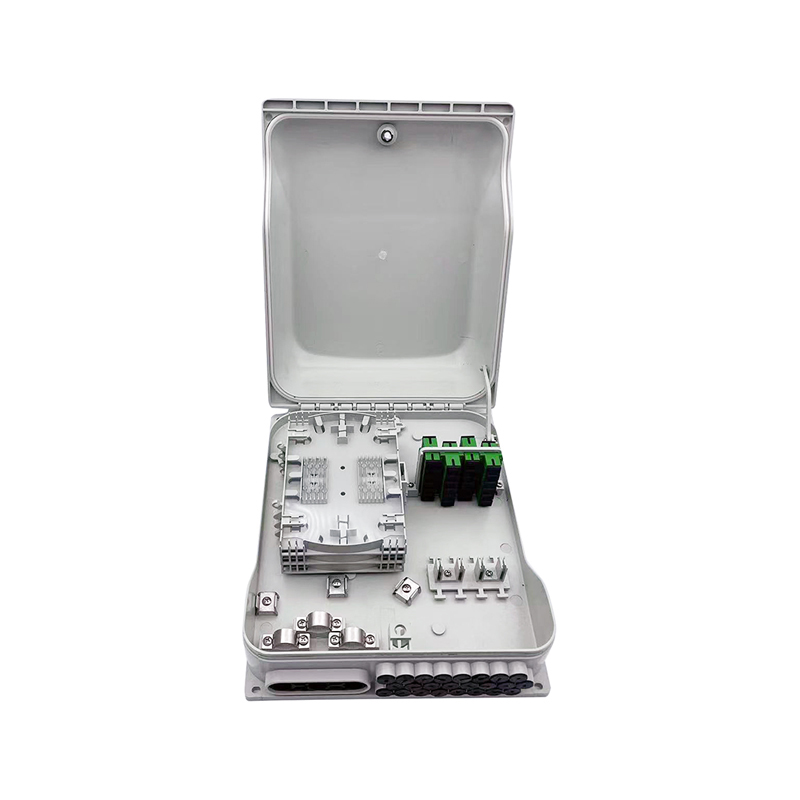
DescriptionThe speed outdoor 24-port enclosure is designed to bring a high-speed fibre connection and greater bandwidth closer to home and business. FTTH offers the user flexibility and the opportunit...
See Details
Ready to Get started ? Contact Us Now !

Product.
Contact Details.
-
 +86 13958188250
-
 +86 13958188250
-
 [email protected]
- Wanma Industrial Park Taihu Yuan Town Lin'an District Hangzhou City China.
QR Code

Copyright © Wanma Technology Co., Ltd. All Rights Reserved.
Custom Ethernet Optical Network Railway Transit Equipments Suppliers
