

 English
 Français
 Español
 Português
 عربى
عربى




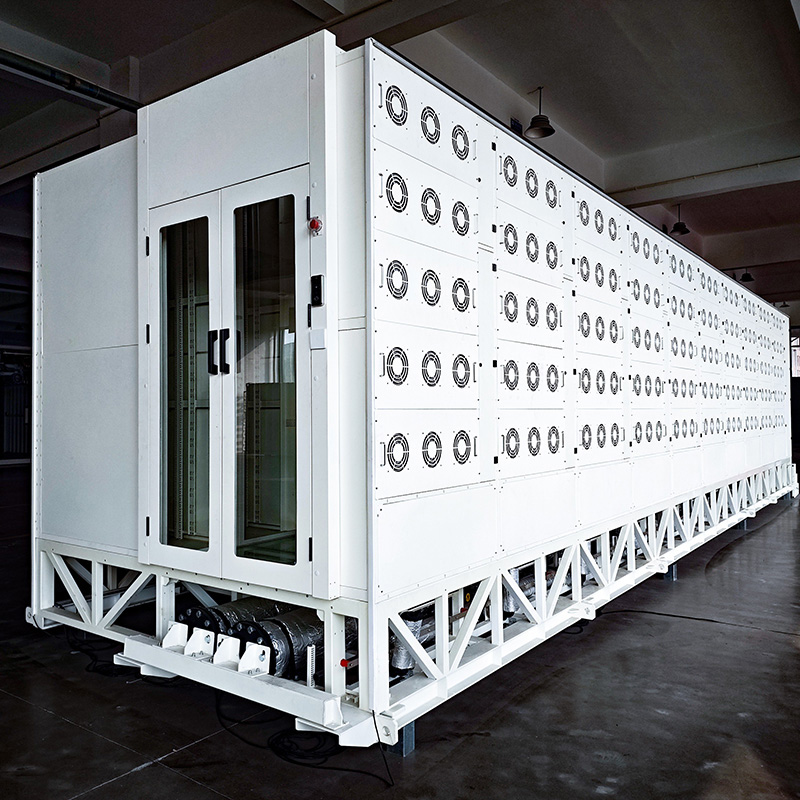
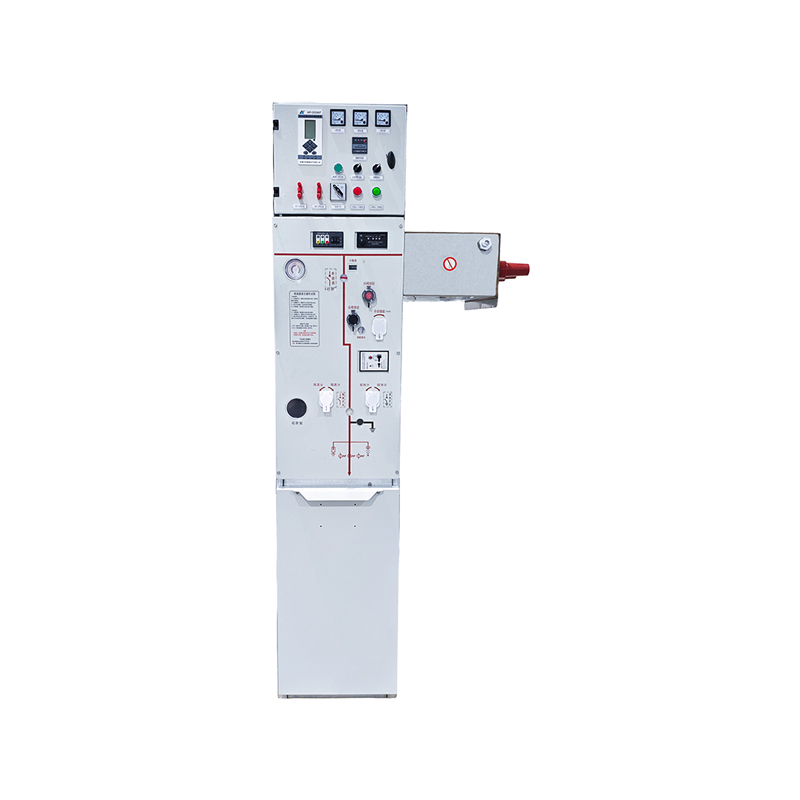
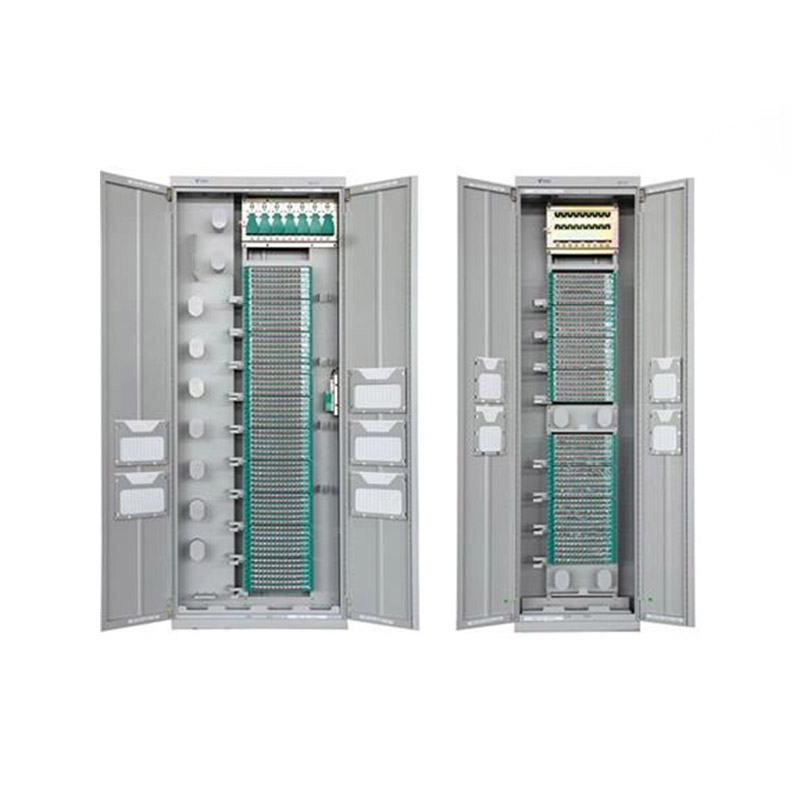
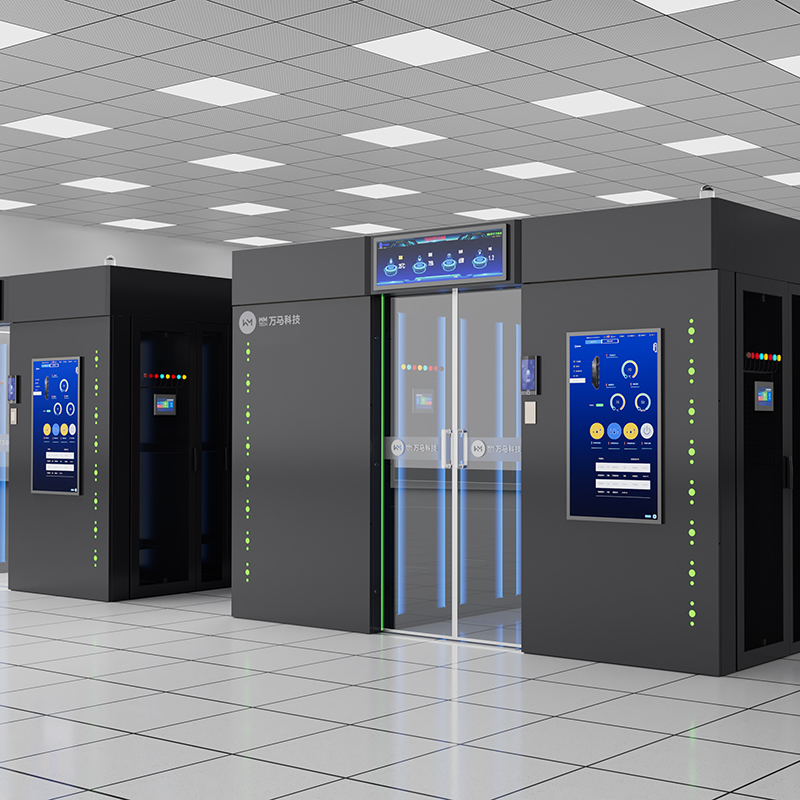

Application ScopeData center server cabinets are used in Internet Data Center (IDC) facilities to install and support server equipment, providing the necessary working environment conditions such as n...
See DetailsHigh-Performance Server Rack Cabinets for Reliable Digital Infrastructure
Content
- 1 1. The Role of Server Rack Cabinets in Digital Infrastructure
- 2 2. Product Overview and Application Scope
- 3 3. Structural Design: Strength, Durability, and Practical Engineering
- 4 4. Thermal Performance and Airflow Efficiency
- 5 5. Maintenance Convenience and Operational Efficiency
- 6 6. Power Distribution and Electrical Safety
- 7 7. Competitive Advantages Over Ordinary Server Cabinets
- 8 8. Advanced Manufacturing Processes Behind the Cabinet
- 9 9. Quality Control and Reliability Assurance
- 10 10. Customization and OEM/ODM Capability
- 11 11. Integration with Telecom and Data Center Systems
- 12 12. Grounding, Copper Bars, and Electrical Organization
- 13 13. Installation Experience and Deployment Efficiency
- 14 14. Lifecycle Cost and Long-Term Value
- 15 15. Company Strengths Supporting Product Reliability
- 16 16. Practical Selection Guide for Buyers
- 17 17. Recommended Use Scenarios
- 18 18. Q&A Section
- 18.1 Q1: What is the main purpose of this Server Rack/Cabinet?
- 18.2 Q2: What sizes are available?
- 18.3 Q3: Why are honeycomb mesh doors important?
- 18.4 Q4: How does the cabinet improve maintenance efficiency?
- 18.5 Q5: What electrical safety features are included?
- 18.6 Q6: What makes the PDU design different from ordinary cabinet PDUs?
- 18.7 Q7: Is the cabinet suitable for high-density data centers?
- 18.8 Q8: What accessories are included or supported?
- 18.9 Q9: Can the cabinet be customized?
- 18.10 Q10: Why is the surface treatment important?
- 19 19. Conclusion
- 20 References
- 21 Product: Server Rack/Cabinet
Modern data centers, network rooms, telecom hubs, and intelligent infrastructure facilities all depend on one essential physical foundation: the server rack cabinet. Although software, cloud platforms, and high-speed transmission systems often receive the most attention, the rack cabinet is the structure that organizes equipment, protects valuable devices, enables effective cooling, supports power distribution, and simplifies maintenance. A well-designed cabinet is not merely a metal enclosure; it is an engineered platform for uptime, scalability, electrical safety, and long-term operational efficiency.
The Server Rack/Cabinet described here is designed for Internet Data Center facilities and other demanding digital infrastructure environments. It provides a reliable installation and operating environment for servers, network switches, optical communication devices, power distribution units, and related electronic equipment. Built from high-quality steel plate with electroplating and powder-coated surface treatment, the cabinet combines strength, corrosion resistance, clean appearance, ventilation efficiency, and service convenience. Its honeycomb mesh front and rear doors offer a perforation rate of no less than 70%, improving airflow and helping maintain thermal stability inside the cabinet.
In an industry where downtime can be costly and maintenance windows are increasingly short, this cabinet offers practical advantages over ordinary racks. Its removable side doors, robust structure, flexible PDU configuration, current and voltage display functions, and independently serviceable electrical components help data center operators reduce installation complexity and improve maintenance efficiency. The patented PDU design supports overall disassembly and replacement, while circuit breakers and sockets can also be independently removed. This combination of structural integrity and modular serviceability makes the cabinet suitable for both new data center construction and the upgrade of existing server rooms.
1. The Role of Server Rack Cabinets in Digital Infrastructure
Every digital service depends on physical equipment. Servers process applications, switches transmit data, optical modules convert signals, and power systems keep the infrastructure alive. However, these devices must be installed in an orderly, safe, and thermally controlled environment. The server rack cabinet performs that role by creating a standardized framework for equipment mounting, cable management, ventilation, grounding, power distribution, and access control.
In Internet Data Centers, a cabinet must handle a combination of high equipment density, continuous heat generation, heavy cable loads, frequent maintenance, and strict operational standards. Poor cabinet design may lead to blocked airflow, tangled cables, difficult device replacement, excessive heat accumulation, unstable power access, and reduced service life of expensive IT equipment. In contrast, a properly engineered cabinet improves airflow direction, supports predictable equipment layout, and enables technicians to access components quickly and safely.
The Server Rack/Cabinet is especially suitable for facilities that require organized installation of server equipment with reliable network access, stable power supply, and effective cooling support. Its 42U and 47U configurations address common data center deployment requirements, while its 600 mm width and 1200 mm depth support many server and network equipment applications. With front and rear honeycomb mesh doors, removable side panels, shelves, L-shape brackets, copper bars, blank panels, and configurable PDU options, it provides a complete cabinet solution rather than a basic enclosure.
2. Product Overview and Application Scope
The Server Rack/Cabinet belongs to the Cabinets / Racks product category and is intended for use in digital infrastructure, telecommunications facilities, medical data environments, enterprise equipment rooms, cloud service platforms, and other mission-critical sites. In Internet Data Center applications, it installs and supports server equipment while providing essential working conditions, including network access, power supply, and cooling support.
Data center cabinets must meet higher expectations than general storage racks. They must support standardized mounting, allow smooth airflow, resist corrosion, provide enough mechanical strength for equipment loads, and make daily maintenance faster. This product addresses these needs through high-quality steel construction, electroplating and powder-coated surface treatment, mesh ventilation doors, quick-removal side panels, and advanced PDU architecture.
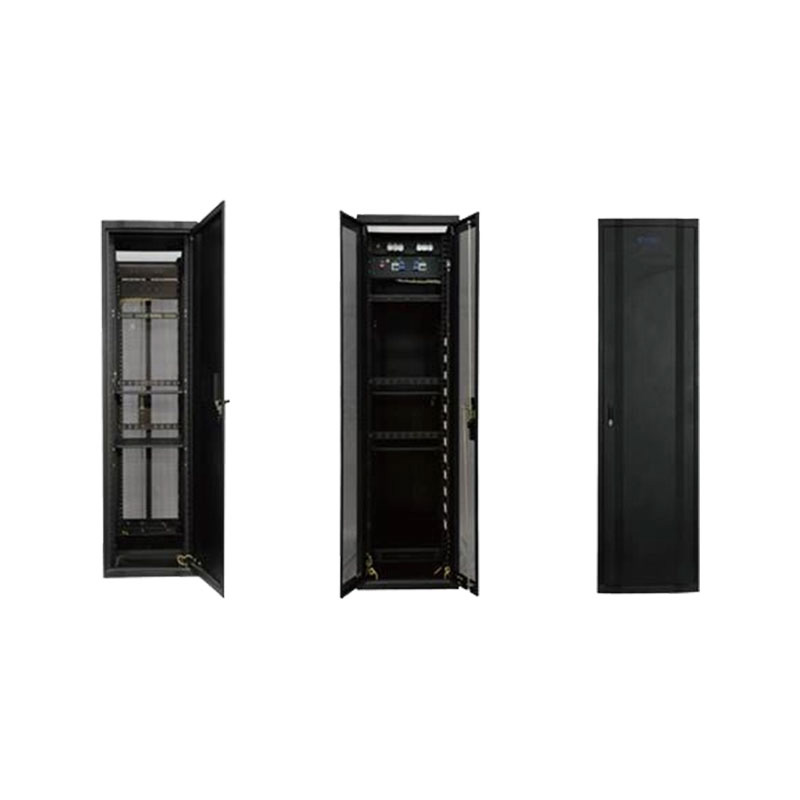
The cabinet is available in two ordering models. The JPG-IDC-61220 model provides 2000 mm height, 600 mm width, 1200 mm depth, and 42U installation space. The JPG-IDC-61222 model provides 2200 mm height, 600 mm width, 1200 mm depth, and 47U installation space. Both models are configured with dual input 40A PDU capacity and output arrangements suitable for dual power distribution requirements. Supporting configurations include L-shape brackets, shelves, copper bars, and blank panels.
Model |
Dimensions H x W x D |
Installation Space |
PDU Configuration |
Other Configurations |
JPG-IDC-61220 |
2000 x 600 x 1200 mm |
42U |
Dual input 40A, output 11 x 2 dual 10A, 1 x 2 dual 12A |
L-shape brackets, shelf, copper bar, blank panel |
JPG-IDC-61222 |
2200 x 600 x 1200 mm |
47U |
Dual input 40A, output 11 x 2 dual 10A, 1 x 2 dual 12A |
L-shape brackets, shelf, copper bar, blank panel |
3. Structural Design: Strength, Durability, and Practical Engineering
The cabinet body is manufactured from high-quality steel plate. Steel remains the preferred material for professional data center cabinets because it provides a strong balance of mechanical strength, dimensional stability, manufacturability, grounding compatibility, and long service life. Compared with lightweight frames that may deform under repeated equipment installation or heavy load concentration, a well-processed steel cabinet maintains alignment, supports precise mounting, and protects installed equipment from mechanical instability.
The product is described as lightweight, high-strength, robust, and durable. These characteristics are achieved through material selection, structural layout, forming accuracy, and surface treatment. For data center operators, cabinet durability is not only about resisting visible damage; it is also about retaining door alignment, rail positioning, side panel fit, and equipment support accuracy over years of operation. A cabinet that stays square and stable reduces installation frustration and helps prevent equipment stress.
The steel plate is treated through electroplating and powder coating. Electroplating improves surface protection and corrosion resistance, while powder coating creates a uniform, attractive, and durable finish. In comparison with basic painted surfaces, powder coating often provides stronger adhesion, better scratch resistance, and a more consistent appearance. These features are important in high-density equipment rooms, where cabinets are handled during installation, moved into position, opened regularly, and exposed to changing environmental conditions.
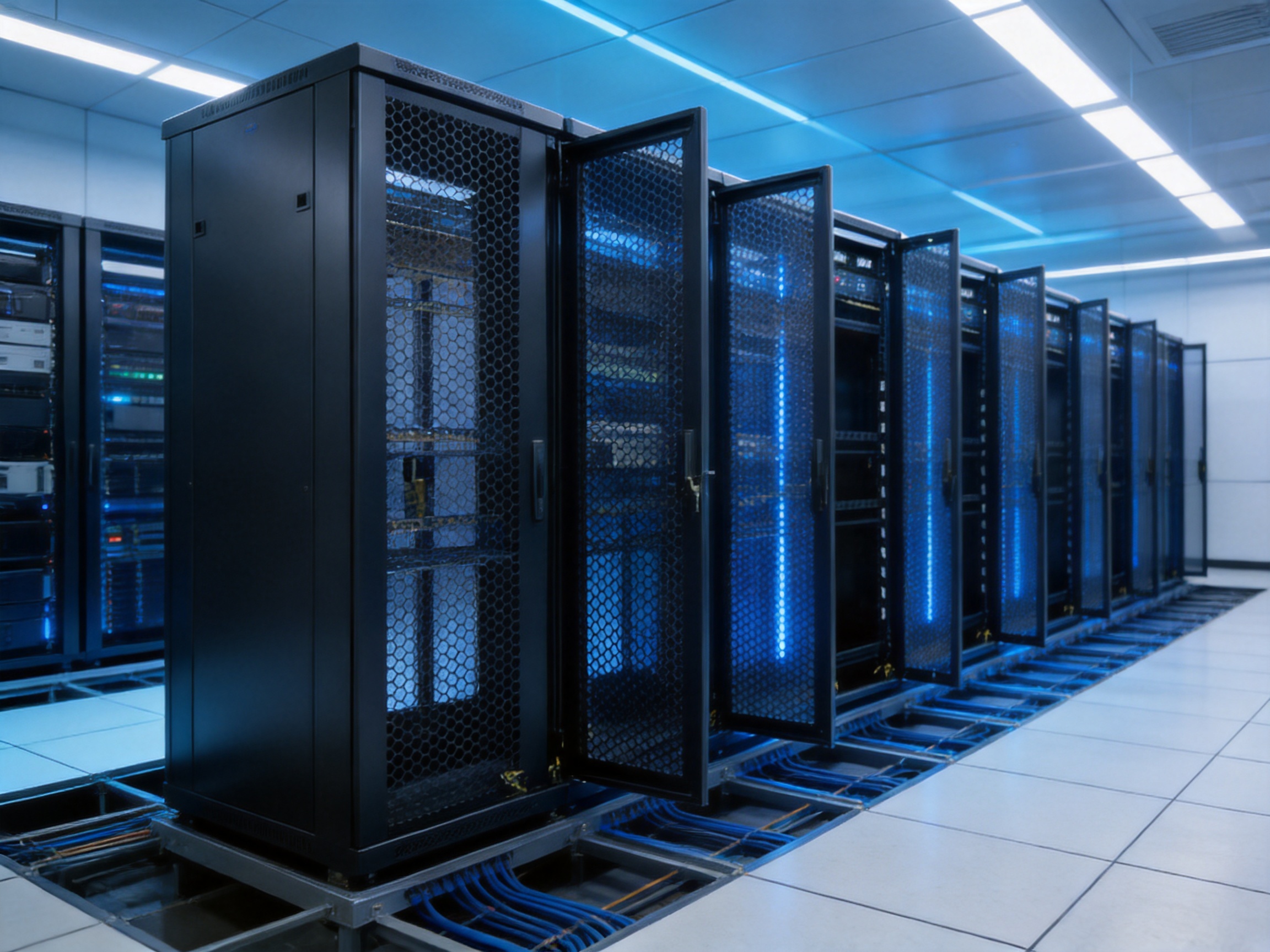
The cabinet’s front and rear doors use a honeycomb mesh design. This design is not simply aesthetic; it is a functional airflow solution. Data center equipment typically draws cool air from the front and exhausts hot air through the rear. Mesh doors with a high perforation rate allow airflow to move through the cabinet with less resistance. The cabinet’s front and rear honeycomb mesh doors provide a perforation rate of no less than 70%, which improves ventilation efficiency and supports better heat dissipation inside the cabinet.
4. Thermal Performance and Airflow Efficiency
Heat is one of the most persistent challenges in data centers. Servers, storage systems, network switches, and power devices generate continuous heat during operation. If this heat is not removed efficiently, internal equipment temperature rises, component reliability decreases, and fan energy consumption increases. A server cabinet must therefore support the airflow strategy of the room rather than obstruct it.
The Server Rack/Cabinet addresses airflow through its front and rear honeycomb mesh doors. With a perforation rate of no less than 70%, the doors allow a large volume of air to enter and exit the cabinet. This is especially useful in facilities using hot aisle and cold aisle layouts, where cool air is supplied to the cabinet front and hot air is exhausted from the rear. Reduced airflow resistance helps cooling systems work more effectively and helps equipment fans maintain stable operating temperatures.
Many low-cost cabinets use doors with limited perforation, decorative openings, or solid panels that restrict airflow. Such designs may appear acceptable at low equipment loads but can become problematic when cabinet density increases. A high-perforation honeycomb mesh door helps avoid heat accumulation and supports more predictable thermal behavior. This advantage becomes increasingly important as cabinet power density rises and operators install more equipment in limited floor space.
The honeycomb structure also offers a clean, professional appearance. It balances ventilation, strength, and visual consistency. The front and rear doors contribute to the cabinet’s overall aesthetic while performing a critical technical function. For equipment rooms visited by customers, auditors, or partner organizations, appearance can be part of operational professionalism. A cabinet that looks orderly and well-engineered reflects the quality of the overall infrastructure.
The inclusion of blank panels in the cabinet configuration also supports airflow management. Blank panels can help prevent air recirculation by closing unused rack spaces. Without blank panels, cool air can bypass active equipment or hot exhaust air can circulate back toward the front. When combined with mesh doors and organized equipment placement, blank panels help build a more effective airflow path.
5. Maintenance Convenience and Operational Efficiency
Data center maintenance must be fast, safe, and predictable. Technicians may need to add equipment, replace components, check cables, inspect power distribution, or perform emergency troubleshooting. A cabinet that is difficult to access increases service time and may raise the risk of accidental cable movement or device interruption. This Server Rack/Cabinet is designed with several features that improve maintenance convenience.
The side doors use a plastic snap-on structure that allows quick removal. This design provides convenient access to the side of installed equipment and cable routes. In traditional cabinets, side panels may require tools, screws, or complicated locking mechanisms. Quick-removal panels reduce the time required for installation and daily maintenance. They are especially valuable during initial deployment, when technicians need to route cables, adjust mounting positions, and verify connections.
The front and rear doors provide direct equipment access while supporting ventilation. For routine work, technicians can access devices from the front for status checking, patching, and equipment insertion, while the rear provides access to power cords, network cables, and exhaust-side components. The honeycomb mesh doors maintain airflow even when the cabinet is closed, but they can still be opened when physical access is required.
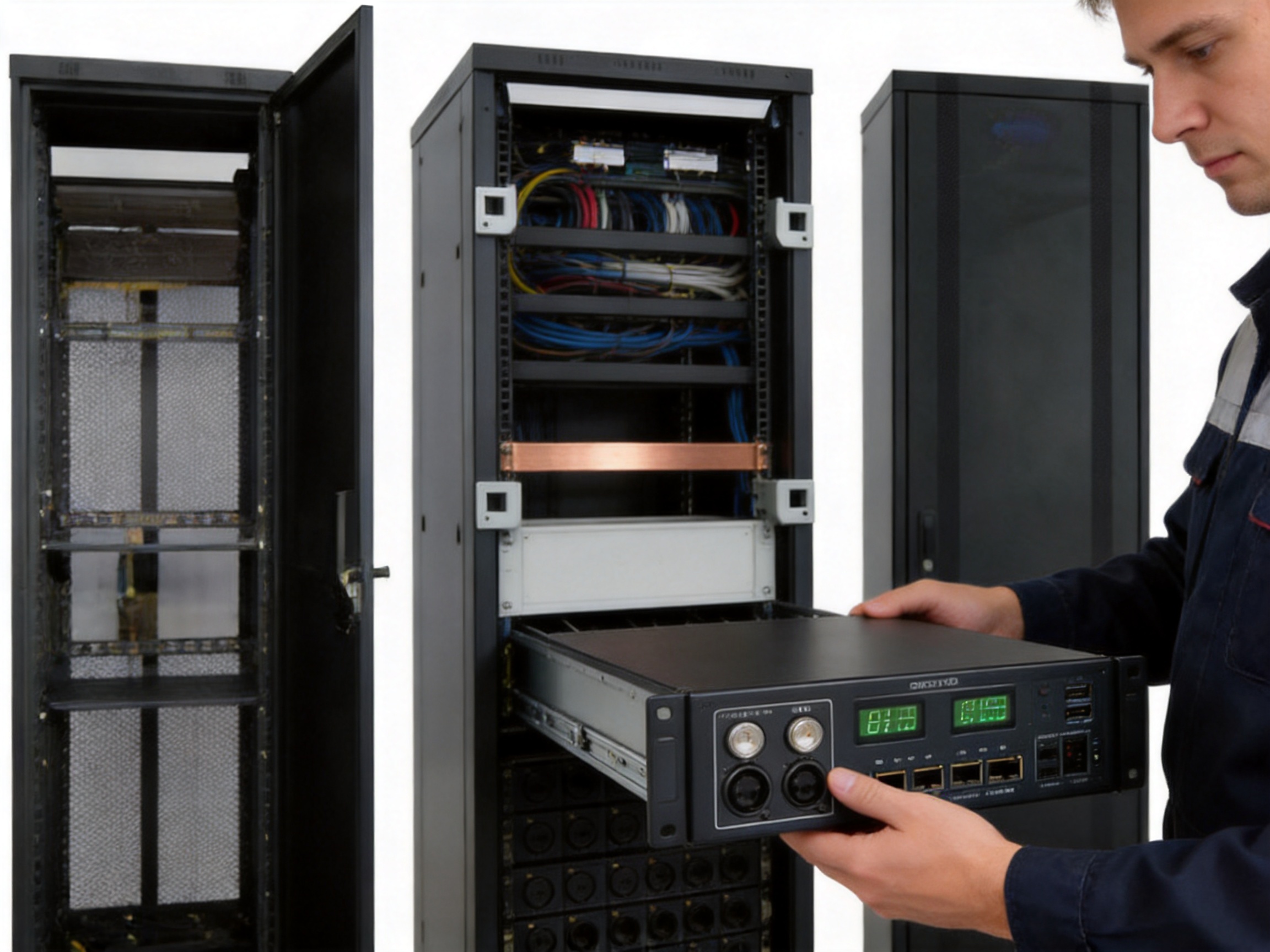
The PDU design provides another important maintenance advantage. The PDU supports integrated and modular configurations, includes current and voltage display functions, and supports multiple electrical safety protections such as overcurrent protection and overvoltage protection. In addition, the patented design allows the PDU to be disassembled and replaced as a whole, while the circuit breaker and sockets can be independently disassembled. This is a major benefit compared with standard PDU designs that require more complex replacement work or may force operators to replace larger assemblies when only one component needs service.
By supporting independent replacement of circuit breakers and sockets, the cabinet helps reduce maintenance cost, shorten service time, and improve parts-level flexibility. In high-availability environments, maintenance design directly affects operational risk. When a technician can replace a specific part efficiently, the chance of extended service interruption decreases. This is one of the most valuable competitive advantages of the product.
6. Power Distribution and Electrical Safety
Power distribution inside the cabinet is a critical element of data center reliability. Servers and network devices require stable electricity, and many installations use dual power input to support redundancy. The cabinet’s PDU configuration includes dual input 40A capability and output combinations of 11 x 2 dual 10A and 1 x 2 dual 12A. This configuration is suitable for installations that need multiple device connections with organized distribution.
The PDU supports current and voltage display functions. These display functions help operators monitor electrical conditions more conveniently. When current or voltage information is visible, maintenance personnel can check cabinet-level power status without relying only on external measurement tools. This improves operational awareness and supports preventive maintenance. Overloaded circuits, abnormal voltage conditions, or unexpected load changes can be identified more easily.
Electrical safety protections include overcurrent protection and overvoltage protection. Overcurrent protection helps prevent excessive current from damaging equipment or wiring. Overvoltage protection helps reduce the risk of voltage spikes harming connected devices. In data center environments, power-related incidents can cause significant downtime, so built-in protection at the cabinet level provides an additional safety layer.
The modular PDU architecture is particularly important for long-term operations. Many facilities evolve over time. Equipment is replaced, higher-density servers are installed, and power distribution requirements change. A PDU that supports both integrated and modular configurations offers more flexibility than a fixed, non-serviceable design. The ability to replace the overall PDU or independently service circuit breakers and sockets improves adaptability and reduces maintenance complexity.
Compared with ordinary rack cabinets that treat the PDU as an accessory, this product integrates power distribution into the cabinet’s value proposition. It recognizes that cabinet performance is not limited to mechanical structure; it also includes electrical management, operational visibility, and serviceability. This integrated view better matches the needs of modern data center operators.
7. Competitive Advantages Over Ordinary Server Cabinets
The Server Rack/Cabinet offers several advantages over common alternatives in the market. The first advantage is the combination of high-quality steel construction with electroplating and powder-coated surface treatment. Some basic cabinets may use thinner materials or less durable finishing methods, which can affect long-term stability, corrosion resistance, and appearance. This product emphasizes robust structure and surface protection, making it suitable for professional environments where cabinets must perform reliably over many years.
The second advantage is ventilation performance. The front and rear honeycomb mesh doors provide at least 70% perforation, improving heat dissipation efficiency inside the cabinet. Cabinets with restricted door openings can create unnecessary airflow resistance and increase the burden on cooling systems. By using high-perforation mesh doors, this cabinet supports better airflow and helps protect equipment from thermal stress.
The third advantage is maintenance convenience. The side doors use a plastic snap-on structure for quick removal. This makes installation and daily maintenance easier than cabinets with slower side panel removal methods. Maintenance speed is important because technicians often work in tight schedules and need fast access to cabling and equipment.
The fourth advantage is the patented PDU service design. The PDU supports overall disassembly and replacement, while circuit breakers and sockets can be independently disassembled. This is a practical advantage that directly affects maintenance efficiency, spare parts management, and lifecycle cost. Instead of replacing an entire assembly for a localized issue, operators can address specific components more efficiently.
The fifth advantage is configuration completeness. The cabinet can include L-shape brackets, shelves, copper bars, and blank panels. These accessories support mounting flexibility, grounding, equipment support, and airflow management. A cabinet supplied as a more complete system can reduce the need for separate sourcing and compatibility verification.
Evaluation Area |
This Server Rack/Cabinet |
Common Basic Cabinet |
Operational Benefit |
Material and finish |
High-quality steel plate with electroplating and powder coating |
May use basic painted steel or lighter structure |
Improved durability, corrosion resistance, and appearance |
Ventilation |
Honeycomb mesh front and rear doors with at least 70% perforation |
May have lower perforation or less optimized airflow |
Better heat dissipation and airflow efficiency |
Side access |
Plastic snap-on side door structure for quick removal |
Often requires tools or slower disassembly |
Faster installation and easier daily maintenance |
PDU serviceability |
Patented design with overall replacement and independent breaker and socket disassembly |
Often fixed or less modular |
Reduced maintenance time and improved replacement convenience |
Electrical visibility |
Current and voltage display functions |
May lack cabinet-level monitoring display |
Better operational awareness and preventive maintenance |
8. Advanced Manufacturing Processes Behind the Cabinet
A high-performance server cabinet depends on more than design drawings. Manufacturing quality determines whether the final product achieves its intended strength, appearance, alignment, and usability. Wanma Technology Co., Ltd. has experience in communication cabinets, communication electronic equipment, and passive optical components, supporting the development and production of cabinets for demanding infrastructure environments. The company’s manufacturing strengths include material processing, surface finishing, structural assembly, customization capability, and quality management.
The production of a professional server cabinet begins with material selection. High-quality steel plate is chosen to provide the necessary strength and stability. The steel must be suitable for cutting, punching, bending, welding, surface treatment, and final assembly. Consistent material quality contributes to consistent cabinet dimensions and long-term performance.
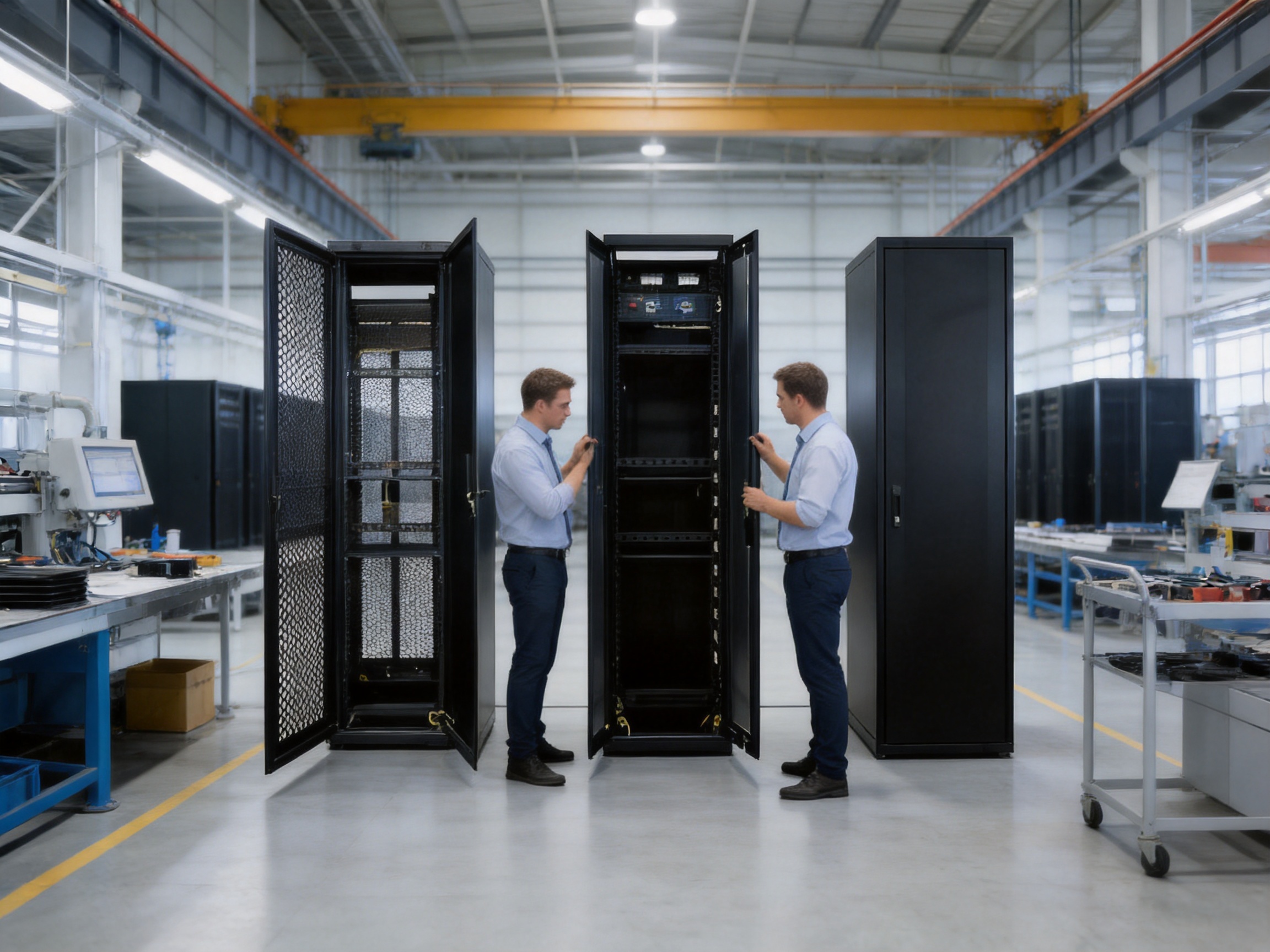
After material preparation, sheet metal processing forms the core cabinet parts. Precision cutting creates panels and structural components according to design requirements. Punching or perforation processes create the honeycomb mesh doors and mounting features. The accuracy of these operations affects not only appearance but also ventilation performance, door fit, and equipment mounting precision.
Bending and forming processes shape the steel into frames, rails, panels, brackets, and support structures. Accurate bending is essential because even small deviations can affect cabinet alignment. Professional production systems control bending angles, dimensions, and repeatability to ensure that parts fit together correctly during assembly.
Welding, riveting, or mechanical fastening processes create the cabinet structure. A robust cabinet must maintain strength while still supporting removable parts such as doors and side panels. The assembly process must balance rigidity, modularity, and service convenience. The final structure should resist deformation, maintain squareness, and allow smooth door operation.
Surface treatment is another key manufacturing step. Electroplating provides a protective base treatment, while powder coating creates a durable and attractive outer finish. Powder coating involves applying dry powder to the surface and curing it to form a strong coating. This process can provide good coverage, surface hardness, and resistance to wear. For data center cabinets, the finish must withstand handling, installation, and years of operation while maintaining a professional appearance.
Final assembly includes installation of doors, side panels, rails, brackets, shelves, copper bars, blank panels, and PDU systems. The cabinet must be checked for fit, alignment, mounting positions, and functional operation. Doors should open and close smoothly, side panels should be removable without excessive force, and internal components should be securely installed. Electrical components require additional inspection for safety and functional correctness.
9. Quality Control and Reliability Assurance
Quality control is essential in cabinet manufacturing because small defects can lead to major user inconvenience. A poorly aligned door may interfere with access. Incorrect mounting spacing can delay equipment installation. Weak coating adhesion can lead to premature corrosion or appearance problems. Loose electrical components can introduce safety concerns. Therefore, reliable production requires inspection at multiple stages.
Dimensional inspection helps ensure that height, width, depth, mounting holes, rails, doors, and panels meet design requirements. For rack cabinets, standard installation spacing is critical. Equipment must fit into the U-space properly, and mounting rails must remain aligned from top to bottom. Precision supports faster deployment and reduces field modification.
Surface inspection verifies that powder coating is uniform, clean, and free from significant defects. A consistent finish reflects controlled production and improves product durability. In data center environments, cabinets may be installed in large rows, and visual consistency is important for professional appearance.
Structural inspection confirms that the cabinet is stable and durable. Doors, panels, hinges, locks, brackets, shelves, and frame members must be properly assembled. Side panels should remove and reinstall smoothly. Mesh doors should provide ventilation without compromising structural integrity. Accessories such as shelves and blank panels should fit correctly.
Electrical inspection is especially important for the PDU system. Current and voltage display functions must operate correctly. Overcurrent protection and overvoltage protection features must meet the design intent. Circuit breakers and sockets should be properly connected, securely installed, and serviceable as intended. The patented modular service structure should be verified to ensure replacement convenience.
Reliability assurance also comes from company experience. Wanma Technology Co., Ltd. was established in 1997 and has specialized in communication cabinets, communication electronic equipment, and passive optical components. Its products are used in Ethernet networks, optical communication networks, central equipment rooms, national high-speed railways, and urban rail transit systems. This background supports an understanding of infrastructure reliability requirements and practical field conditions.
10. Customization and OEM/ODM Capability
Digital infrastructure projects often require customization. Cabinet dimensions, internal layouts, PDU configurations, accessories, cable management features, grounding arrangements, and surface finishes may vary depending on the project. A supplier with OEM/ODM capability can help customers transform project requirements into manufacturable cabinet solutions.
The Server Rack/Cabinet already offers two standard models, 42U and 47U, with 600 mm width and 1200 mm depth. These models satisfy many data center applications, but project-specific requirements may still arise. For example, a customer may need a particular PDU arrangement, additional shelves, special blank panel quantities, enhanced grounding provisions, project labeling, or integration with existing room layouts. Custom design and manufacturing support allow the cabinet to match the operational plan rather than forcing the operator to adapt to a generic product.
Wanma Technology Co., Ltd. develops, manufactures, and markets its own branded products while also providing integrated solutions for customized products. This means the company is not only a parts supplier but also a solution-oriented manufacturer. Its experience across communication cabinets, telecom electronic equipment, and passive optical components helps it understand the broader system requirements of network infrastructure.
Customization is especially valuable for telecommunications and medical-related infrastructure. Telecommunications rooms may require high cable density, fiber distribution compatibility, grounding reliability, and long-term environmental resistance. Medical data environments may require stable operation, organized equipment management, and dependable power distribution for critical information systems. A cabinet that can be adapted to project requirements provides more value than a fixed commodity rack.
OEM/ODM capability also supports customers who need private-label or project-specific cabinet solutions. With manufacturing experience and design support, the company can help customers optimize cabinet structure, ventilation, power distribution, and accessory configuration. This strengthens supply chain efficiency and gives project owners more control over final system performance.
11. Integration with Telecom and Data Center Systems
The cabinet is suitable not only for traditional server environments but also for broader telecom and digital infrastructure systems. Communication networks rely on structured equipment deployment. Optical communication networks, Ethernet networks, central equipment rooms, high-speed railway communication systems, and urban rail transit systems all require reliable enclosures and racks to organize and protect equipment.
In telecom applications, cabinets must support high cable volumes and long service cycles. Equipment may include routers, switches, optical distribution systems, transmission equipment, patch panels, and power devices. A strong steel cabinet with removable side panels and high-ventilation doors helps technicians manage installation and maintenance tasks efficiently.
In enterprise data centers, the cabinet can house servers, storage units, network devices, security appliances, and monitoring systems. The 42U and 47U options provide flexibility for different room heights and equipment density requirements. The 1200 mm depth is suitable for many deep server installations and helps provide rear space for cable and power management.
In cloud and edge computing environments, standardized cabinets help operators deploy repeatable infrastructure modules. Repeatability improves planning, procurement, installation, and maintenance. A cabinet with reliable ventilation and modular PDU serviceability can support scalable deployments across multiple sites.
In medical data infrastructure, reliability and maintenance convenience are also important. Hospitals and healthcare facilities increasingly depend on electronic medical records, imaging systems, networked medical devices, and secure communication platforms. A stable cabinet platform helps support continuous information system operation and organized equipment management.
12. Grounding, Copper Bars, and Electrical Organization
Grounding is a vital aspect of cabinet safety and equipment protection. The product configuration includes a copper bar, which can support grounding and electrical organization requirements. Proper grounding helps reduce electrical risk, provides a path for fault current, and supports electromagnetic compatibility considerations. In professional data center and telecom environments, grounding practices are part of overall system reliability.
Copper is commonly used for grounding and electrical conduction because of its excellent conductivity. A copper bar inside the cabinet can help organize grounding connections and support safer installation practices. When combined with a steel cabinet structure and appropriate electrical design, grounding provisions contribute to equipment protection and operational safety.
Electrical organization also depends on clear separation and access to power components. The cabinet’s PDU system supports visible current and voltage information, protection functions, and modular maintenance. These features help operators understand cabinet-level electrical conditions and maintain organized power delivery to installed devices.
Compared with cabinets that provide only basic mounting space, this product considers power distribution and electrical maintenance as central design elements. This makes it more suitable for professional environments where power visibility and serviceability matter.
13. Installation Experience and Deployment Efficiency
Fast and efficient installation reduces project cost and accelerates service readiness. When cabinets are difficult to assemble, align, or configure, installation teams spend more time solving mechanical problems instead of deploying equipment. This Server Rack/Cabinet is designed to simplify deployment through standardized dimensions, practical accessories, removable side doors, and integrated power distribution options.
The L-shape brackets support equipment mounting and structural flexibility. Shelves provide support for devices that may not be rail-mounted or that require additional support. Blank panels help close unused spaces and manage airflow. Copper bars support grounding arrangements. The cabinet therefore arrives as a functional platform for real equipment deployment rather than a simple empty frame.
The 42U and 47U installation spaces allow users to choose the model that best matches available room height and equipment density. A 42U cabinet is widely used in many data center environments, while a 47U cabinet offers additional vertical capacity for higher-density installations. Both models use 600 mm width and 1200 mm depth, supporting consistent row layout and equipment compatibility.
The quick-removal side panels help installers access internal cable routes during deployment. Instead of struggling through front and rear openings only, technicians can work from the side when needed. This can speed up cabling, equipment positioning, and inspection. After installation, the side panels can be reattached to maintain security and appearance.
The PDU’s modular service features also help during installation. If project requirements change or a component needs replacement, the PDU structure supports more convenient adjustment. This reduces the risk that a minor electrical component issue will delay an entire cabinet deployment.
14. Lifecycle Cost and Long-Term Value
A server cabinet should be evaluated not only by purchase price but also by lifecycle value. The true cost of a cabinet includes installation time, maintenance labor, equipment protection, cooling impact, power management, replacement parts, and service interruptions. A cheaper cabinet may appear attractive initially but can become more expensive if it restricts airflow, complicates maintenance, wears quickly, or lacks electrical flexibility.
The high-quality steel structure and durable surface treatment support long service life. Strong construction reduces the likelihood of deformation, damage, or premature replacement. Electroplating and powder coating help protect the cabinet surface, preserving both performance and appearance.
The honeycomb mesh doors support cooling efficiency. Better airflow can reduce thermal stress on installed equipment and help cooling systems operate more effectively. Although cabinet doors alone do not determine total cooling cost, low airflow resistance is an important part of efficient data center thermal management.
Maintenance-friendly side panels and PDU modularity reduce labor time. Faster access means technicians can complete tasks more efficiently. Independent disassembly of circuit breakers and sockets can reduce replacement cost and avoid unnecessary replacement of larger assemblies. This improves the cabinet’s long-term economic value.
The cabinet’s compatibility with accessories such as shelves, blank panels, brackets, and copper bars also supports long-term flexibility. As equipment changes, the cabinet can adapt to new layouts. Flexibility is valuable because data centers and telecom rooms rarely remain unchanged for their entire lifecycle.
15. Company Strengths Supporting Product Reliability
Wanma Technology Co., Ltd. was established in 1997 and has built long-term expertise in communication cabinets, communication electronic equipment, and passive optical components. This history matters because server cabinets for professional infrastructure require both manufacturing skill and application understanding. A company with experience in communication networks, equipment rooms, rail transit communication systems, and optical networks is better positioned to design cabinets that meet real-world operational needs.
The company develops, manufactures, and markets its own products while also offering integrated solutions for customized products. This combination supports control over design, manufacturing, and customer adaptation. Instead of relying only on generic products, customers can work with an experienced manufacturer to obtain solutions aligned with their infrastructure requirements.
The company’s products are used in Ethernet networks, optical communication networks, central equipment rooms, national high-speed railways, and urban rail transit systems. These application areas require stability, safety, and long service life. Experience in such environments supports product development for data center cabinets that must operate under continuous demand.
The company has a sales network covering more than 20 countries and regions, including the United States, Australia, the United Kingdom, Italy, South Africa, and Ghana. International market experience helps the company understand varied project requirements, quality expectations, packaging needs, delivery schedules, and customer communication practices. For global buyers, this experience can reduce procurement risk.
Reliable product quality, timely delivery, and long-term strategic partnerships are emphasized as company strengths. In infrastructure projects, delivery reliability is critical. Delayed cabinets can delay equipment installation, commissioning, and service launch. A manufacturer that understands project timelines and provides dependable supply support adds value beyond the physical product.
16. Practical Selection Guide for Buyers
Selecting the right server cabinet requires a careful review of equipment size, total load, cooling plan, power distribution, maintenance access, and future expansion. The two available models provide different installation heights. Buyers should consider whether 42U or 47U better matches the equipment plan and room layout.
The 42U model is suitable for standard cabinet deployments where room height, installation density, and operational access align with typical data center layouts. It provides sufficient capacity for many server and network installations while maintaining compatibility with common deployment practices.
The 47U model offers additional vertical space, which can be valuable where equipment density is higher or where extra room is needed for cable management, airflow blanking, monitoring devices, or future expansion. However, buyers should confirm room height, overhead clearance, transportation route, and installation access before selecting a taller cabinet.
Depth is also important. The 1200 mm depth supports many server applications and provides rear space for cable and power routing. Buyers should compare equipment depth, rear cable bend radius, power plug space, and airflow requirements before finalizing the layout.
Power requirements should be reviewed carefully. The dual input 40A PDU configuration supports redundant or organized power distribution strategies, but each project should verify load calculations, power source compatibility, plug and socket requirements, and electrical standards. Current and voltage display functions can support operation, but proper electrical planning remains essential.
Cooling strategy should also be considered. The cabinet’s high-perforation mesh doors support airflow, but room-level cooling design, hot aisle and cold aisle layout, blank panel usage, cable management, and equipment placement also affect thermal performance. Buyers should plan the cabinet as part of the entire facility cooling system.
17. Recommended Use Scenarios
This Server Rack/Cabinet is recommended for Internet Data Centers that require stable server installation, efficient airflow, and convenient maintenance. Its 42U and 47U configurations make it suitable for both standard and higher-capacity cabinet rows.
It is also suitable for enterprise server rooms, where organizations need reliable infrastructure for business applications, storage systems, network security devices, and communication equipment. The cabinet helps create an orderly and professional equipment environment.
Telecommunications facilities can benefit from the cabinet’s robust steel structure, cable access convenience, and power distribution features. Communication networks require organized equipment deployment and long-term maintainability, both of which are supported by this product.
Medical information system environments can also use this cabinet for data and network equipment. Healthcare operations require stable access to digital systems, and organized cabinets contribute to service reliability.
Rail transit, urban communication systems, optical network nodes, and central equipment rooms may also benefit from the manufacturer’s experience and the cabinet’s practical design. The product is particularly appropriate where durability, airflow, electrical safety, and maintenance efficiency are priorities.
18. Q&A Section
Q1: What is the main purpose of this Server Rack/Cabinet?
The main purpose is to install, support, organize, and protect server and network equipment in data centers, telecom rooms, enterprise equipment rooms, and similar digital infrastructure environments. It provides a structured space for equipment mounting while supporting power distribution, cooling airflow, and maintenance access.
Q2: What sizes are available?
Two standard models are available. The JPG-IDC-61220 model measures 2000 x 600 x 1200 mm and provides 42U installation space. The JPG-IDC-61222 model measures 2200 x 600 x 1200 mm and provides 47U installation space.
Q3: Why are honeycomb mesh doors important?
The honeycomb mesh doors improve ventilation by allowing air to pass through the front and rear of the cabinet. With a perforation rate of no less than 70%, the doors help reduce airflow resistance and improve heat dissipation inside the cabinet.
Q4: How does the cabinet improve maintenance efficiency?
The side doors use a plastic snap-on structure for quick removal, allowing technicians to access internal cabling and equipment more easily. The PDU also supports overall replacement, while circuit breakers and sockets can be independently disassembled, making maintenance faster and more flexible.
Q5: What electrical safety features are included?
The PDU supports current and voltage display functions and includes safety protections such as overcurrent protection and overvoltage protection. These features improve operational visibility and help protect connected equipment.
Q6: What makes the PDU design different from ordinary cabinet PDUs?
The PDU features a patented serviceable design. It can be removed and replaced as a complete unit, and its circuit breakers and sockets can also be independently disassembled. This improves replacement convenience and reduces maintenance time.
Q7: Is the cabinet suitable for high-density data centers?
Yes, the cabinet is suitable for data center environments requiring reliable airflow, organized power distribution, and strong mechanical support. The 47U model provides additional vertical capacity for higher-density deployments, while the mesh doors support effective airflow.
Q8: What accessories are included or supported?
The cabinet configuration includes L-shape brackets, shelves, copper bars, and blank panels. These accessories support equipment mounting, grounding, airflow management, and general cabinet organization.
Q9: Can the cabinet be customized?
Customization is supported through the manufacturer’s integrated product solution and OEM/ODM capability. Project-specific requirements may include PDU options, accessory changes, special layout requirements, and other configuration adjustments.
Q10: Why is the surface treatment important?
Electroplating and powder coating improve corrosion resistance, durability, and appearance. A high-quality surface finish helps the cabinet withstand handling, installation, and long-term operation in professional environments.
19. Conclusion
The Server Rack/Cabinet is a practical and high-value solution for modern digital infrastructure. It combines strong steel construction, durable electroplated and powder-coated surfaces, high-ventilation honeycomb mesh doors, quick-removal side panels, and advanced PDU serviceability. These features directly address the core needs of data centers and telecom facilities: reliable equipment support, efficient cooling, safe power distribution, and convenient maintenance.
Its advantages over ordinary cabinets are clear. The high perforation rate improves airflow. The plastic snap-on side panels reduce service effort. The patented PDU structure supports faster replacement and independent component maintenance. The current and voltage display functions improve operational awareness. The accessory set, including brackets, shelves, copper bars, and blank panels, makes the cabinet a more complete infrastructure platform.
Behind the product is an experienced manufacturer with a history in communication cabinets, communication electronic equipment, and passive optical components. Established in 1997, Wanma Technology Co., Ltd. has developed products used in Ethernet networks, optical communication networks, central equipment rooms, high-speed railways, and urban rail transit systems. Its manufacturing experience, customization capability, global sales network, and emphasis on reliable quality and timely delivery strengthen the value of the cabinet for project owners, integrators, and operators.
For organizations building or upgrading data centers, telecom rooms, enterprise server rooms, or other mission-critical equipment environments, this Server Rack/Cabinet provides a strong foundation for dependable digital operations. It is not only a cabinet for holding equipment; it is a carefully engineered infrastructure component designed to support uptime, maintainability, scalability, and long-term value.
References
ASHRAE Technical Committee 9.9. Thermal Guidelines for Data Processing Environments.
BICSI. Data Center Design and Implementation Best Practices.
IEC 60297. Mechanical Structures for Electronic Equipment: Dimensions of Mechanical Structures of the 482.6 mm Series.
ISO/IEC 30134. Information Technology: Data Centres Key Performance Indicators.
Uptime Institute. Data Center Site Infrastructure Tier Standard: Topology.
TIA-942. Telecommunications Infrastructure Standard for Data Centers.
Product: Server Rack/Cabinet
PREV:High-Capacity Fiber Optic Splice Closure for Durable FTTH and Backbone Network Protection
NEXT:Intelligent Medical Carts for Safer, Faster Clinical Workflows
NEXT:Intelligent Medical Carts for Safer, Faster Clinical Workflows
Interested in cooperation or have questions?
Related products
-
-
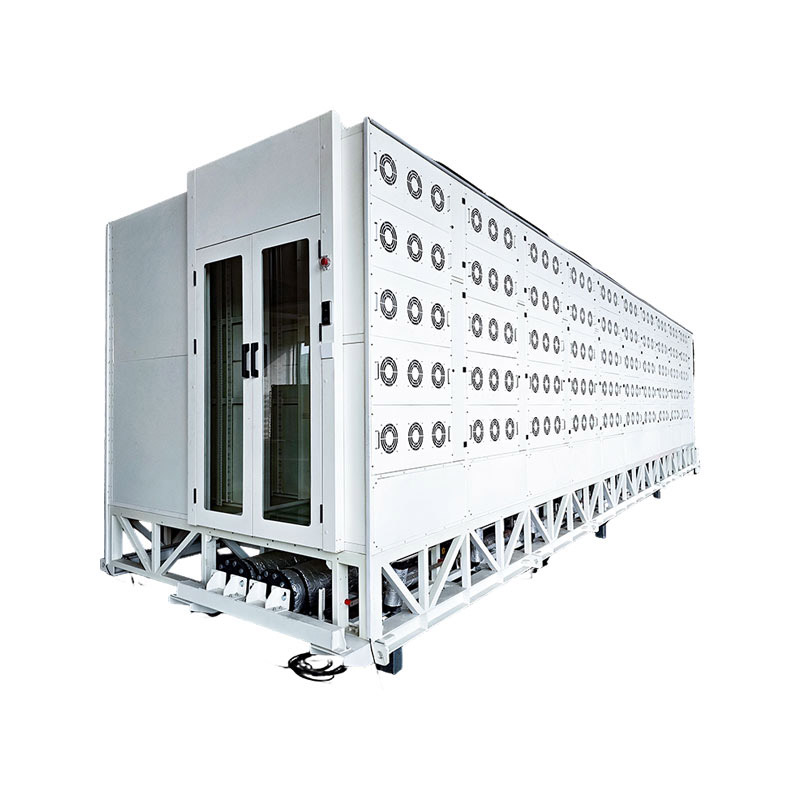
An IT container is an integrated, flexibly deployable mobile IT infrastructure platform. It often serves as the core functional unit of a modular data center, housing IT racks and various electronic ...
See Details -
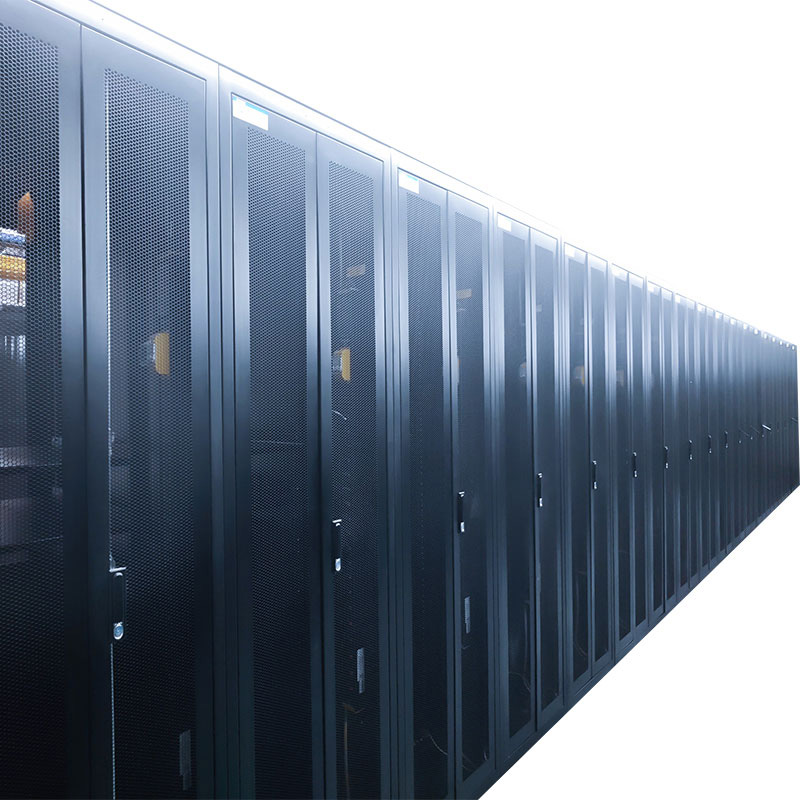
Application:It is used in internet data center equipment room to house server cabinets and provides them with required working environment. Features:•Modularization: Two cabinets combined sharing one ...
See Details -
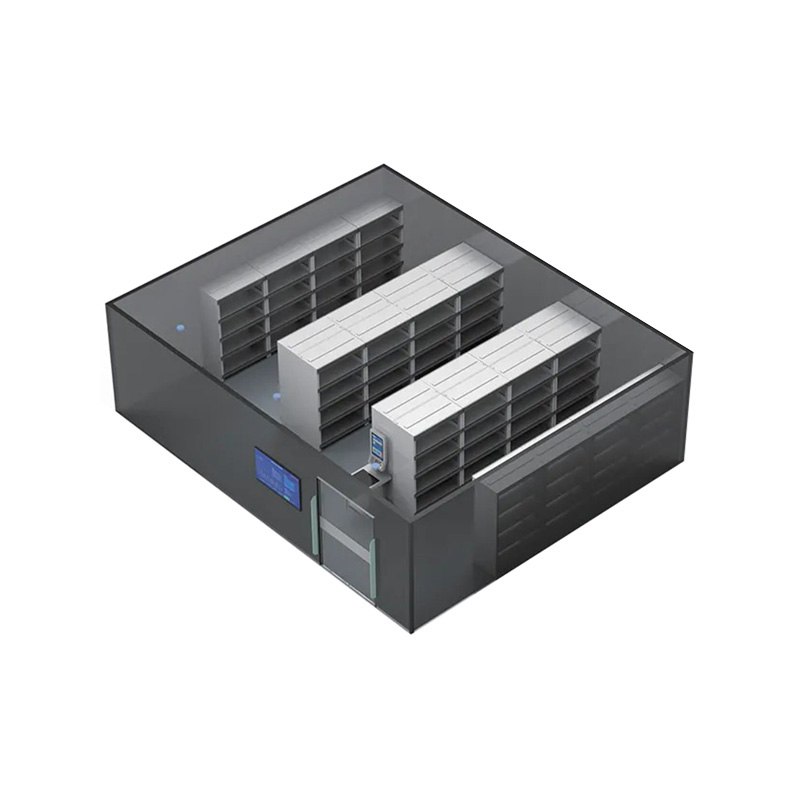
Product Definition:The High-Value Consumables House is not a traditional storage cabinet, but a digital management hub that integrates smart access, precise traceability, and security monitoring. It i...
See Details
Ready to Get started ? Contact Us Now !

Product.
Contact Details.
-
 +86 13958188250
-
 +86 13958188250
-
 [email protected]
- Wanma Industrial Park Taihu Yuan Town Lin'an District Hangzhou City China.
QR Code

Copyright © Wanma Technology Co., Ltd. All Rights Reserved.
Custom Ethernet Optical Network Railway Transit Equipments Suppliers
