

 English
 Français
 Español
 Português
 عربى
عربى




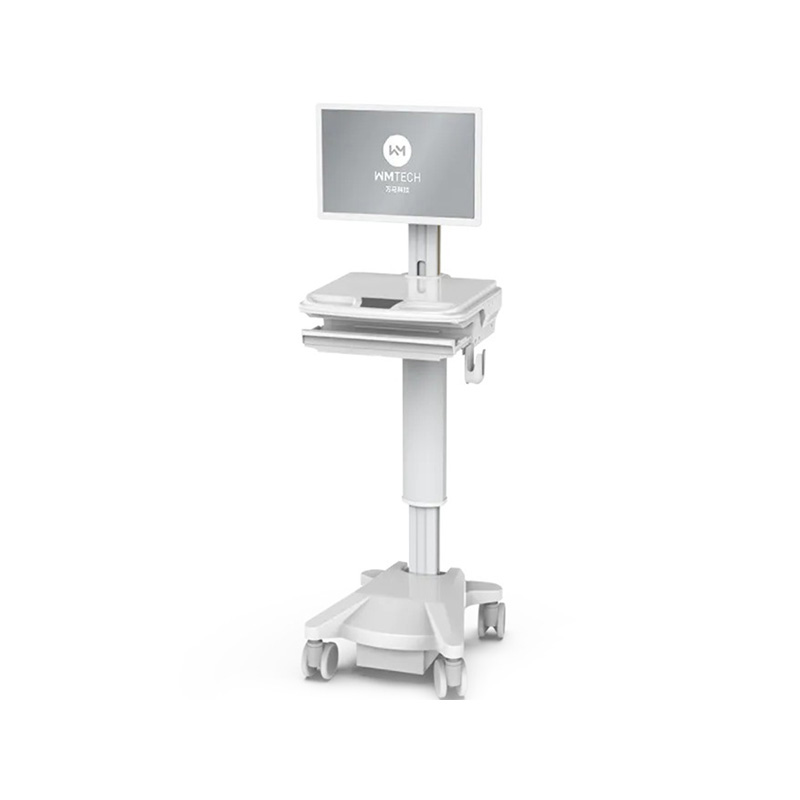

Product DefinitionThe WMYC-J2-24 Medical Cart (with Drawer) is an intelligent mobile workstation designed for modern clinical environments. Featuring a lightweight aluminum structure, it integrates a ...
See DetailsIntelligent Medical Carts with Personalized Drawers for Modern Ward Management
Content
- 1 From Simple Trolley to Intelligent Mobile Workstation
- 2 Personalized Drawer Design as a Practical Clinical Advantage
- 3 Mobility, Stability, and Ergonomic Operation
- 4 Reliable Power for Extended Clinical Work
- 5 Integration with Clinical Information Workflows
- 6 Comparison of Key Product Values
- 7 Applications Across Hospital Departments
- 8 Manufacturing Strength Behind Product Reliability
- 9 Advanced Process Thinking from Communication Equipment to Healthcare
- 10 Material and Structural Advantages
- 11 Power Integration and Cable Management
- 12 Hygiene, Maintenance, and Daily Practicality
- 13 Why Customization Matters in Modern Procurement
- 14 Advantages Over Common Competing Cart Types
- 15 Role in Reducing Workflow Fragmentation
- 16 Supporting Digital Hospital Transformation
- 17 Company Strengths Supporting Global Supply
- 18 OEM and ODM Opportunities
- 19 Design Details That Improve User Experience
- 20 Long-Term Value for Hospitals
- 21 Implementation Recommendations
- 22 Q&A
- 22.1 What is the main purpose of the WMYC-J2-24 Medical Cart with Drawer?
- 22.2 How does the personalized drawer system improve clinical efficiency?
- 22.3 Why is the lithium iron phosphate battery important?
- 22.4 What makes the cart more ergonomic than traditional designs?
- 22.5 Can the cart support hospital digital systems?
- 22.6 Which departments can use this medical cart?
- 22.7 How does it compare with ordinary storage trolleys?
- 22.8 Does the product support OEM or ODM customization?
- 22.9 Why is the company’s communication equipment background relevant?
- 22.10 What is the future development direction of intelligent medical carts?
- 23 Conclusion
- 24 References
- 25 Product: WMYC-J2-24 Medical Carts with Drawer
Modern healthcare facilities are under constant pressure to improve safety, accelerate clinical workflows, reduce documentation delays, and support increasingly digital models of care. In this environment, a medical cart is no longer a simple trolley used to move supplies from one room to another. It has become a mobile clinical workstation, an information access point, a medication organization platform, and a practical bridge between caregivers, patients, and hospital information systems. The WMYC-J2-24 Medical Cart with Drawer is designed for this changing reality, combining intelligent mobility, ergonomic operation, reliable power support, and modular storage in one integrated solution.
The product is especially relevant for hospitals seeking a cart that can support ward rounds, mobile nursing, emergency response, pharmacy verification, electronic medical record entry, and bedside information checking. Its lightweight aluminum structure, 24-inch LED display, lithium iron phosphate battery system, electric lifting column, sliding keyboard tray, 100 mm casters with dual locking brakes, and personalized drawer options position it as a comprehensive workstation for clinical environments where efficiency and reliability directly affect care quality.
Unlike conventional carts that often focus on only one function, such as transportation or storage, this medical cart is developed as a platform. It supports all-in-one or split computer configurations, accommodates different clinical workflows, and allows hospitals to customize drawer layouts and accessory combinations. This makes it suitable for departments with very different needs, including general wards, emergency departments, intensive care units, operating preparation areas, and pharmacy-related verification scenarios.
WMYC-J2-24 Medical Carts with Drawer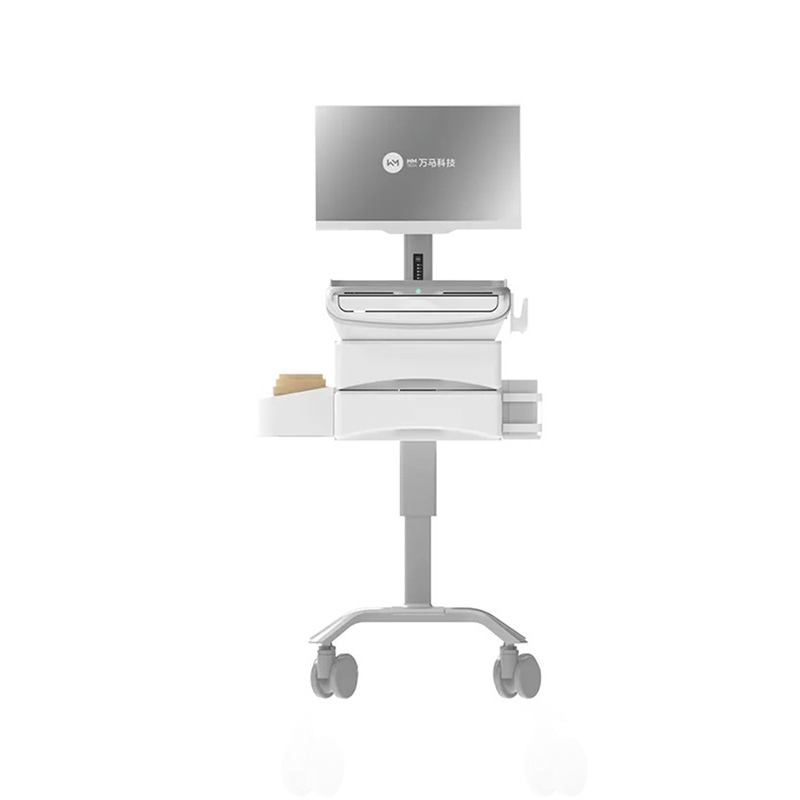
From Simple Trolley to Intelligent Mobile Workstation
For many years, medical carts were evaluated mainly by their load capacity, wheel quality, and number of shelves. That approach is no longer sufficient. Today’s nursing and clinical teams need mobile equipment that can carry supplies, protect medical items, support computer-based work, and provide stable operation over a full shift. The WMYC-J2-24 Medical Cart with Drawer reflects this transition from a traditional cart to a smart mobile workstation.
At the center of this evolution is the integration of digital care processes. Electronic medical records, electronic medication administration records, order entry systems, patient identity confirmation, and bedside nursing documentation all require convenient access to computing equipment. If nurses must repeatedly return to a fixed workstation, valuable time is lost, interruptions increase, and documentation may be delayed. A mobile workstation reduces these inefficiencies by bringing the digital interface directly to the point of care.
The 24-inch LED display supports clear information viewing, which is valuable for reviewing patient data, checking orders, entering nursing notes, and verifying treatment instructions. Compatibility with all-in-one or split computer systems gives hospitals more flexibility when integrating the cart into existing IT environments. Rather than forcing a facility to adopt one rigid hardware format, the cart can adapt to the hospital’s preferred workstation architecture.
The cart’s intelligent and efficient design also contributes to clinical safety. By supporting guided workflows and order entry interfaces, it helps improve order integrity and reduces the chance of operational errors caused by fragmented information access. In high-frequency clinical environments, even small workflow improvements can produce meaningful benefits. Faster access to records, more organized storage, and better bedside verification all contribute to safer patient care.
Personalized Drawer Design as a Practical Clinical Advantage
One of the most important features of the WMYC-J2-24 Medical Cart with Drawer is its personalized drawer system. In many hospitals, traditional carts rely on fixed compartments that do not match the working habits of different departments. A layout that works for a general ward may not be appropriate for an emergency department. A configuration suitable for medication rounds may not be suitable for wound care, consumable distribution, or intensive care procedures.
Personalized drawer design solves this problem by allowing internal storage to be configured according to practical clinical needs. Medication areas, consumable zones, document sections, emergency tool compartments, and specialty supply spaces can be arranged in a way that reflects real work patterns. This has direct value for nursing efficiency because staff can locate items faster and with less cognitive burden.
In urgent situations, time spent searching through poorly arranged storage can create frustration and risk. A well-organized drawer system reduces retrieval time and helps maintain consistency between staff members and shifts. When drawer layouts are standardized within a department, every nurse can quickly understand where critical items are stored. This is particularly important in emergency response and high-pressure nursing tasks.
The drawer system also supports secure movement. During transportation through corridors, elevators, and patient rooms, medical items must remain stable and organized. Drawers with secure locking and smooth movement help prevent internal displacement, protect stored items, and maintain cleanliness. Compared with open shelves or loosely divided compartments, personalized drawers provide a more controlled storage environment.
The modular nature of the drawers gives the cart a long-term advantage over many competing products. Some competitors offer carts with fixed trays or limited drawer options, which may be acceptable at the time of purchase but become restrictive as workflows change. A hospital department may introduce new medication protocols, digital documentation procedures, or specialty nursing kits. A modular drawer platform can adjust to these changes more easily than a fixed cart design.
Mobility, Stability, and Ergonomic Operation
A medical cart must move smoothly, stop securely, and remain comfortable for repeated daily use. The WMYC-J2-24 Medical Cart with Drawer addresses these requirements through its lightweight aluminum structure, ergonomic handles, electric height adjustment, and 100 mm casters equipped with dual locking brakes. These details may seem simple, but they strongly influence user experience over long shifts.
The lightweight aluminum construction helps reduce pushing effort while maintaining structural strength. Compared with heavier steel carts, aluminum-based designs can reduce physical strain during long ward rounds. Compared with lower-strength plastic structures, aluminum provides greater durability and a more stable workstation feel. This balance between weight and strength is particularly important in hospitals where equipment is moved frequently throughout the day.
The 100 mm casters help the cart travel across different floor conditions, including corridors, ward rooms, thresholds, and elevator transitions. Smooth mobility reduces noise and improves control, which contributes to a better patient environment. Dual locking brakes improve safety by securing the cart during documentation, medication preparation, or bedside procedures. A cart that shifts unexpectedly during data entry or treatment verification can create inconvenience and risk, so reliable braking is essential.
Ergonomics are equally important. Nurses, doctors, and technicians vary in height and working posture. The electric lifting column allows the workstation height to be adjusted for seated or standing use, helping reduce neck, shoulder, and wrist strain. A sliding keyboard tray further supports comfortable data entry while saving working space when the keyboard is not needed. Over time, ergonomic features can help reduce fatigue and improve staff satisfaction.
Many competing medical carts provide height adjustment only through manual mechanisms or fixed work surfaces. Manual adjustment can be inconvenient during busy workflows, while fixed-height carts may force users into uncomfortable positions. Electric height adjustment gives users quick and precise control, making the cart more adaptable to different staff members and clinical scenarios.
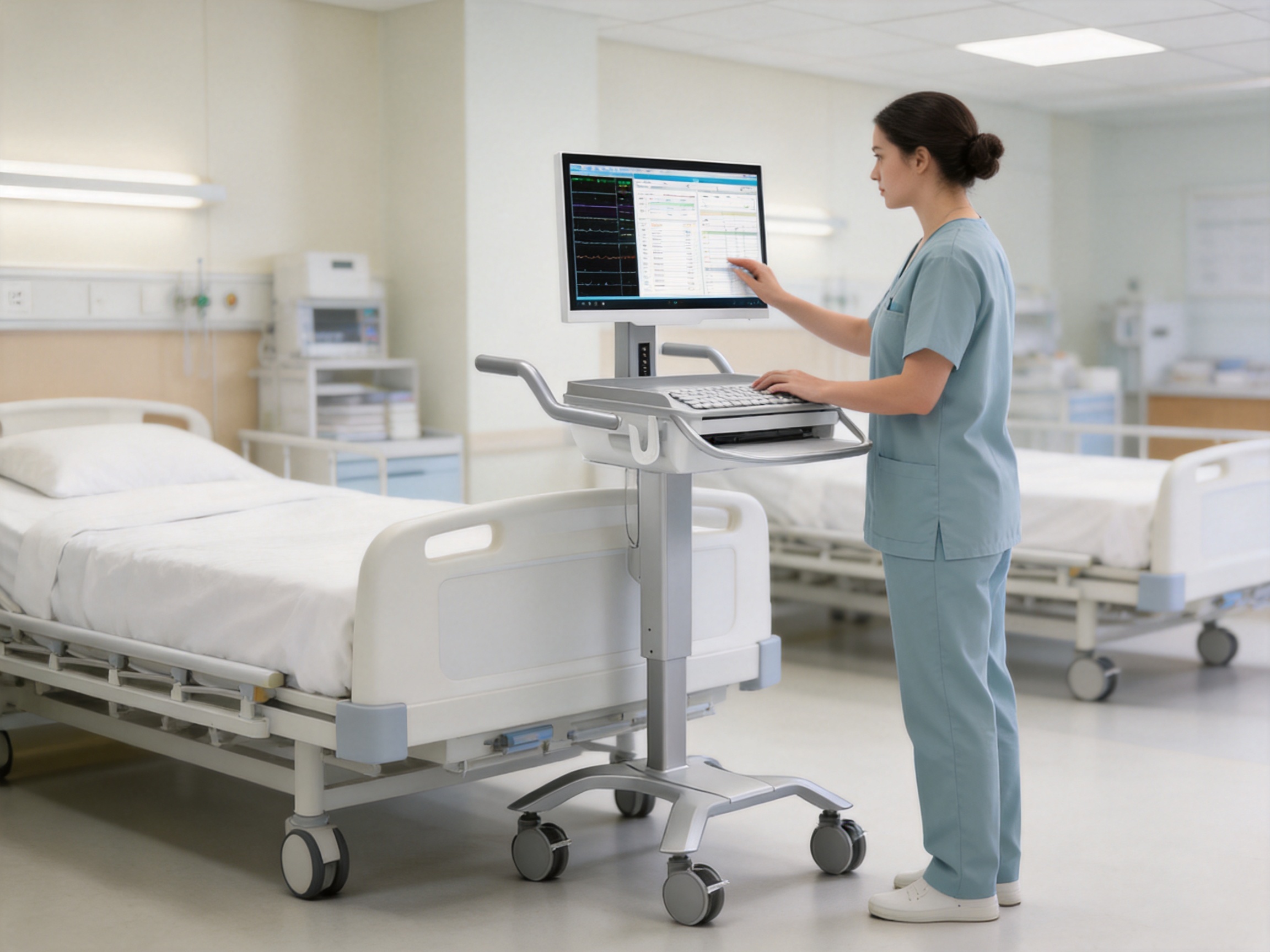
Reliable Power for Extended Clinical Work
Power reliability is a defining requirement for intelligent medical carts. A mobile workstation that loses power in the middle of rounds can interrupt documentation, delay order confirmation, and reduce staff confidence. The WMYC-J2-24 Medical Cart with Drawer integrates a lithium iron phosphate battery system designed to support approximately eight hours of continuous operation, making it suitable for extended nursing and clinical tasks.
Lithium iron phosphate battery technology is valued for stability, durability, and safety characteristics. In hospital environments, where equipment reliability is directly connected to care continuity, battery performance cannot be treated as a secondary feature. The intelligent power management system helps support predictable operation and reduces the risk of unexpected downtime.
An eight-hour runtime is especially valuable because it aligns with many clinical shift patterns and extended ward rounds. Staff can rely on the cart as a practical mobile workstation rather than constantly worrying about charging availability. This advantage becomes more significant when compared with carts that use lower-capacity batteries or non-integrated power systems requiring frequent charging, battery swapping, or dependence on wall outlets.
Reliable mobile power also supports digital transformation. As hospitals increase their use of electronic systems, mobile equipment must be ready whenever caregivers need it. The cart can support bedside data entry, order review, patient information checking, and pharmacy verification without forcing staff to search for fixed power sources. This contributes to smoother workflows and reduces interruptions.
Integration with Clinical Information Workflows
The WMYC-J2-24 Medical Cart with Drawer is designed to support intelligent clinical operations. It can serve as a bedside data terminal, a mobile nursing station, or a workstation for order execution and patient information verification. This flexibility is important because hospitals rarely use a single workflow across all departments. Each clinical environment has its own documentation requirements, communication patterns, and equipment preferences.
During ward rounds, medical staff can review patient records, input notes, check instructions, and confirm treatment plans directly at the bedside. During medication distribution, nurses can verify orders and patient information while accessing stored medications or supplies. In emergency treatment, the cart can bring both digital access and organized tools closer to the patient. In pharmacy verification, it can support checking procedures that require both storage and screen-based confirmation.
The cart’s guided interface and smart order entry compatibility can help improve order integrity and reduce medical errors. While no cart alone can replace clinical protocols, equipment design can strongly influence whether protocols are easy to follow. When digital records, supplies, and verification steps are available in one mobile platform, staff can complete tasks more consistently.
Competitor products that separate storage from computing or rely on non-integrated accessories may create workflow gaps. For example, a storage cart without a proper display may require staff to use separate computers, while a computer cart without drawer customization may be unsuitable for medication or supply tasks. The WMYC-J2-24 design addresses this gap by combining information access, power support, mobility, and storage customization.
Comparison of Key Product Values
| Product Element | Practical Benefit | Competitive Advantage |
|---|---|---|
| Personalized drawer system | Allows department-specific storage for medications, consumables, records, and tools | More adaptable than fixed-compartment carts |
| Lithium iron phosphate battery | Supports approximately eight hours of continuous work | Reduces downtime compared with carts requiring frequent charging |
| 24-inch LED display | Provides clear viewing for electronic records and order verification | Improves bedside information access compared with storage-only carts |
| Electric lifting column | Enables ergonomic height adjustment for different users | More convenient than fixed-height or manual adjustment designs |
| Lightweight aluminum structure | Balances mobility, durability, and clean appearance | More practical for frequent movement than heavy steel alternatives |
| 100 mm casters with dual locking brakes | Improves movement control and stable positioning | Enhances safety during data entry and bedside operation |
| All-in-one or split computer compatibility | Supports different hospital IT configurations | Reduces integration limitations compared with rigid workstation formats |
| Optional accessories | Supports medical record holders, sanitizer frames, and specialty drawer options | Allows broader clinical customization and future expansion |
Applications Across Hospital Departments
The WMYC-J2-24 Medical Cart with Drawer is suitable for a broad range of clinical environments because it is not limited to one use model. Its core value lies in combining mobility, information access, storage, and ergonomic operation. This makes it relevant for departments with frequent movement and high demand for accurate task execution.
General Wards
In general wards, nurses often perform repeated rounds involving vital sign recording, medication delivery, patient education, documentation, and order confirmation. A mobile workstation helps reduce the number of trips between patient rooms and nurse stations. The personalized drawers can be configured for daily consumables, medication-related items, and documentation materials, while the screen and keyboard support electronic record entry at the bedside.
Emergency Departments
Emergency environments require rapid access, flexible movement, and reliable storage. The cart’s smooth casters, secure drawers, and intelligent workstation functions support fast response. Personalized compartments can help emergency teams organize critical tools and supplies in a logical layout, reducing search time when speed matters most.
Intensive Care Units
ICUs require stable equipment, organized workflows, and compatibility with digital monitoring and documentation practices. The cart’s electric height adjustment and reliable power supply are valuable in this setting. Staff can use the cart near patient beds while maintaining access to records and necessary supplies. A stable drawer system also helps reduce clutter in already equipment-dense spaces.
Pharmacy Verification and Medication Management
Medication safety depends on accurate order checking, patient verification, and controlled item handling. The cart supports these processes by combining a display-based workstation with customizable storage. This can help medication teams and nursing staff manage verification tasks more efficiently than using separate storage carts and fixed computer stations.
Emergency Treatment and Procedure Preparation
For treatment preparation areas, the cart can be configured with consumables, records, sanitation accessories, and necessary tools. Optional accessories such as medical record holders and sanitizer frames extend its practicality. Because the platform is modular, departments can adjust configurations as protocols evolve.
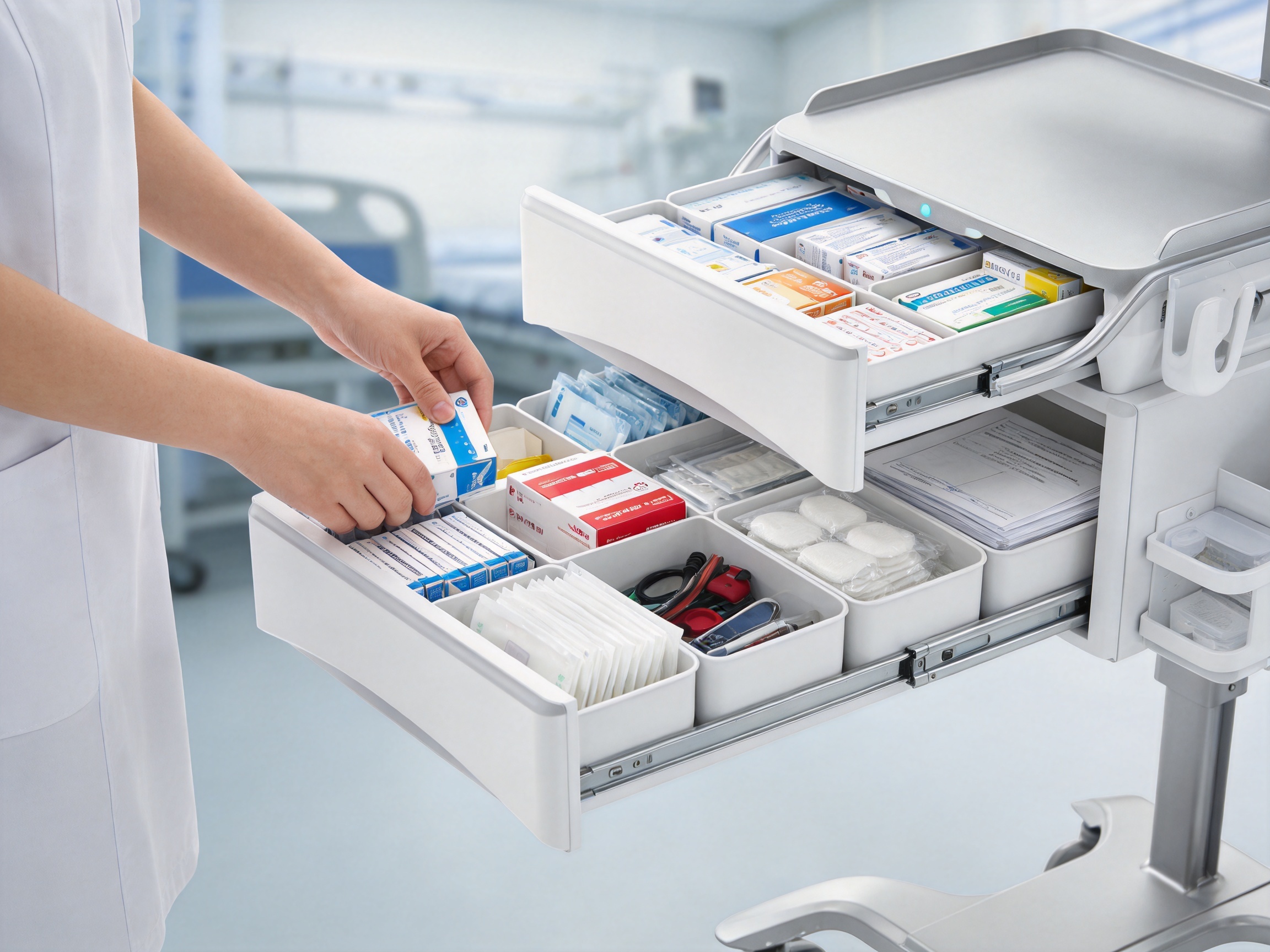
Manufacturing Strength Behind Product Reliability
The quality of a medical cart depends not only on its design concept but also on the manufacturing system behind it. Wanma Technology Co., Ltd., established in 1997, has long specialized in communication cabinets, communication electronic equipment, and passive optical components. Its products are used in Ethernet networks, optical communication networks, central equipment rooms, national high-speed railways, and urban rail transit systems. These industries demand stable structures, reliable integration, consistent production, and long-term durability.
This background provides a strong foundation for medical cart manufacturing. Communication cabinets and rail transit equipment require precise fabrication, disciplined assembly, and dependable performance under demanding conditions. When these capabilities are applied to medical carts, they support structural integrity, power system integration, component consistency, and customized production.
The company’s experience in both branded products and customized integrated solutions is also significant. Hospitals do not always need identical carts; they need equipment that fits local workflows. As a supplier and OEM/ODM company for medical carts with personalized drawers, the manufacturer can provide standardized product platforms while adapting configurations to different procurement requirements, department needs, and user preferences.
Advanced Process Thinking from Communication Equipment to Healthcare
Medical equipment manufacturing benefits from the same engineering disciplines that support high-reliability communication products. In communication infrastructure, small errors in design or production can lead to service interruptions, maintenance costs, and system instability. The same logic applies to mobile medical workstations. A weak frame, poor cable arrangement, unreliable drawer slide, unstable battery connection, or inconsistent caster assembly can affect daily clinical use.
The WMYC-J2-24 Medical Cart with Drawer benefits from manufacturing thinking focused on stability, modularity, and repeatable quality. The lightweight aluminum structure requires controlled fabrication to ensure that the cart remains stable while still easy to move. Drawer assemblies must be aligned for smooth operation, and locking mechanisms must be dependable under repeated use. The electric lifting column and power management system must be integrated in a way that protects wiring, supports daily adjustment, and maintains a clean workstation appearance.
Process discipline also supports product scalability. Because the cart can be customized with personalized drawers and optional accessories, production must be able to handle variation without sacrificing consistency. This is where OEM/ODM capability becomes important. A mature manufacturer can manage different configurations, maintain quality control, and deliver products that meet the specific requirements of hospitals or distributors.
Material and Structural Advantages
The aluminum structure is a major part of the cart’s value proposition. Aluminum offers an effective balance of weight, strength, corrosion resistance, and professional appearance. In hospital environments, equipment is frequently moved, cleaned, and exposed to daily contact with users and surrounding objects. A weak frame may loosen over time, while an overly heavy cart can increase staff fatigue. Aluminum helps solve both problems by providing strength without unnecessary weight.
Structural design also affects stability during use. A medical cart carrying a display, computer equipment, drawers, battery system, keyboard tray, and accessories must maintain balance during movement and operation. If the center of gravity is poorly designed, the cart may feel unstable, especially when drawers are opened or the workstation height is adjusted. The WMYC-J2-24 Medical Cart with Drawer is developed as an integrated workstation, meaning the major components are considered together rather than added as afterthoughts.
This integrated approach gives it an advantage over carts assembled from generic parts or modified from basic trolleys. In lower-end competitive products, computer mounts, battery packs, and drawers may be added separately without optimized structural harmony. Such designs can lead to cable clutter, reduced stability, difficult cleaning, and less professional appearance. By contrast, an integrated medical cart provides a cleaner and more reliable user experience.
Power Integration and Cable Management
Mobile clinical workstations must manage power safely and conveniently. The lithium iron phosphate battery system in the WMYC-J2-24 Medical Cart with Drawer is not merely a portable energy source; it is part of the cart’s intelligent operation. Proper battery integration affects runtime, user confidence, internal space utilization, and maintenance convenience.
Power management should be predictable. Healthcare workers cannot afford uncertainty during rounds or medication verification. Intelligent power management helps maintain continuity and allows the cart to serve as a dependable workstation throughout clinical tasks. This is especially valuable in hospitals where wireless systems, electronic records, and mobile documentation are central to daily operations.
Cable management is another area where manufacturing discipline matters. A cart supporting a display, keyboard, computer system, battery, and lifting column must keep cables organized and protected. Exposed or poorly arranged wiring can interfere with movement, collect dust, create cleaning difficulties, and reduce product life. A professionally engineered cart protects the electronic system while maintaining a neat exterior.
Hygiene, Maintenance, and Daily Practicality
Hospitals require equipment that can withstand frequent cleaning and practical daily use. Although the medical cart is not a sterile surgical device, it operates in clinical areas where cleanliness and surface organization are important. Smooth surfaces, controlled storage, and orderly accessory placement help support routine hygiene practices.
Personalized drawers reduce clutter by keeping supplies contained. Optional sanitizer frames can support hand hygiene workflows by placing sanitizing supplies within convenient reach. Medical record holders can reduce loose documents on the work surface. The sliding keyboard tray keeps the input area compact and can be stored when not in use, helping preserve workspace.
Maintenance practicality also matters. Carts used every day must remain easy to inspect, charge, move, and adjust. Durable casters, reliable brakes, stable drawer slides, and well-integrated power systems reduce the need for frequent repairs. Over the product lifecycle, these details can reduce operational disruption and improve procurement value.
Why Customization Matters in Modern Procurement
Hospital procurement is increasingly focused on lifecycle value rather than initial purchase price alone. A low-cost cart may seem attractive at first but can become expensive if it does not match workflow needs, requires frequent maintenance, or becomes obsolete when hospital processes change. Customization helps extend product usefulness by adapting the cart to real clinical tasks.
The WMYC-J2-24 Medical Cart with Drawer supports this procurement approach. Hospitals can choose drawer configurations and accessories that match department requirements. A general ward may prioritize lightweight mobility and documentation convenience. An emergency department may prioritize fast-access storage and secure movement. An ICU may prioritize workstation stability and compatibility with complex digital workflows. The same cart platform can be adjusted for all of these situations.
This modular strategy reduces procurement complexity. Instead of purchasing completely different cart families for each department, hospitals can standardize around a flexible platform. Standardization can simplify training, maintenance, spare parts management, and user familiarity. At the same time, customization ensures that each department receives a practical configuration.
Advantages Over Common Competing Cart Types
The competitive landscape for medical carts includes basic storage trolleys, non-powered computer carts, heavy steel carts, lightweight but weak plastic carts, and high-end workstations with limited customization. The WMYC-J2-24 Medical Cart with Drawer offers advantages across these categories.
Compared with basic storage trolleys, it provides digital workstation capability, reliable battery support, ergonomic adjustment, and a display platform. This makes it suitable for modern electronic workflows rather than only physical supply transport.
Compared with non-powered computer carts, it offers an integrated lithium iron phosphate battery system with approximately eight hours of runtime. This gives users greater freedom from fixed power outlets and reduces interruptions during rounds.
Compared with heavy steel carts, its aluminum structure improves mobility while maintaining durability. Reduced pushing effort is important for nurses who may move carts throughout long shifts.
Compared with low-cost plastic carts, it provides stronger structural confidence and better support for workstation components such as a display, computer system, keyboard tray, and lifting mechanism. It is designed as clinical infrastructure rather than temporary storage equipment.
Compared with high-end but rigid workstation carts, its personalized drawer design and optional accessories give hospitals more configuration flexibility. This is especially important for departments whose needs change over time.
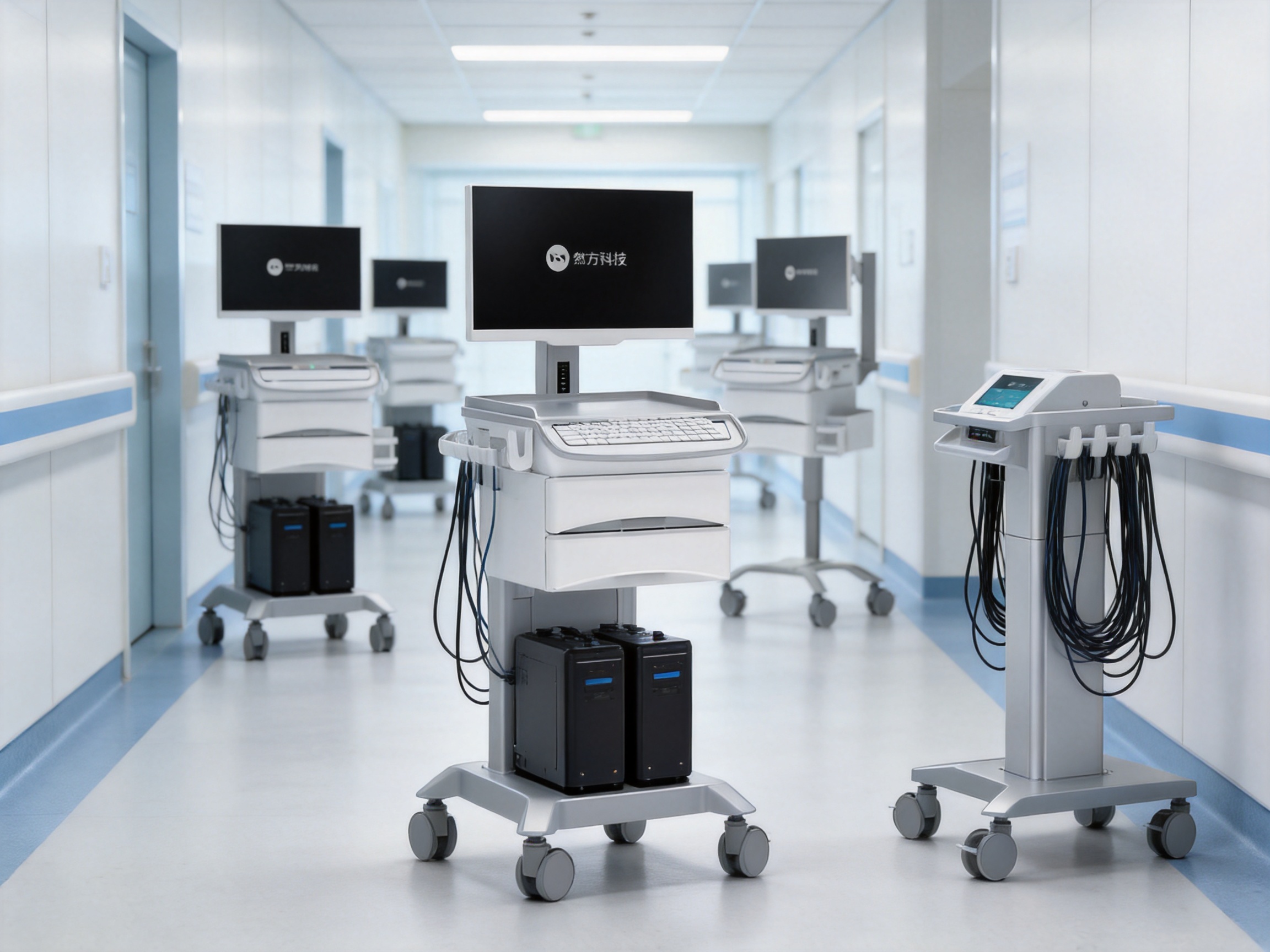
Role in Reducing Workflow Fragmentation
Clinical work is often fragmented. A nurse may need to check a patient chart, confirm a medication order, collect supplies, document an intervention, respond to a call, and communicate with another department within a short time. Equipment that forces staff to move repeatedly between locations increases fragmentation and mental load.
The WMYC-J2-24 Medical Cart with Drawer reduces this problem by bringing multiple functions together. Staff can access electronic information, store necessary materials, adjust the workstation height, and move smoothly between rooms. By reducing unnecessary walking and repeated station visits, the cart helps preserve workflow continuity.
Workflow continuity is not only about speed. It also affects accuracy. When staff can complete tasks at the point of care, there is less risk of forgetting details before documentation. Patient information can be checked immediately, and orders can be reviewed in context. This supports safer care and more efficient team communication.
Supporting Digital Hospital Transformation
Hospitals are moving toward digital and intelligent management systems. Electronic records, networked devices, bedside verification, inventory tracking, and clinical decision support are becoming more common. Medical carts must evolve to support this transformation. A cart that only moves supplies may no longer be enough.
The WMYC-J2-24 Medical Cart with Drawer is aligned with this future direction. Its workstation design, computer compatibility, power system, and modular storage provide a foundation for more intelligent clinical operations. The company’s background in communication equipment and network infrastructure further strengthens its ability to understand digital system requirements.
As medical carts become more platform-based, manufacturers with experience in electronics, structural systems, and customized engineering will have an advantage. They can design carts that not only meet today’s needs but also support future upgrades. The WMYC-J2-24 platform reflects this direction by combining physical mobility with digital usability.
Company Strengths Supporting Global Supply
Wanma Technology Co., Ltd. has developed a sales network covering more than 20 countries and regions, including the United States, Australia, the United Kingdom, Italy, South Africa, and Ghana. This international experience supports the company’s ability to serve different market requirements and customer expectations. For medical cart buyers, global supply capability indicates experience in communication, delivery coordination, product adaptation, and long-term partnerships.
The company emphasizes reliable product quality, timely delivery, and strategic cooperation with industry partners. These qualities are important for hospitals, distributors, and OEM/ODM clients because medical equipment procurement often requires consistent supply, configuration support, and after-sales communication. A product is only as reliable as the organization that manufactures and supports it.
The company’s mission to create satisfaction for customers, fulfillment for employees, and value for society is also relevant to healthcare product development. Medical equipment must serve practical human needs. It should help caregivers work more efficiently, support safer patient care, and provide hospitals with dependable infrastructure. The WMYC-J2-24 Medical Cart with Drawer reflects this mission by turning engineering capability into a clinical workflow solution.
OEM and ODM Opportunities
OEM and ODM customization is particularly valuable for distributors, hospital groups, and regional healthcare solution providers. Different markets may require different drawer layouts, computer mounting preferences, accessory combinations, language interfaces, or visual design details. A manufacturer with customization experience can help partners develop products that fit local demand without starting from zero.
For hospitals, OEM/ODM capability means the cart can be aligned with internal standards. Drawer arrangements can follow department protocols. Accessories can be selected according to nursing practice. Workstation configuration can match IT procurement rules. This avoids the common problem of buying a generic cart and then modifying it later with improvised accessories.
For distributors, customization supports market differentiation. A distributor can offer tailored medical cart solutions for emergency care, nursing rounds, medication verification, or digital ward management. Because the core platform is already developed, customization can focus on practical enhancements rather than basic product creation.
Design Details That Improve User Experience
Good medical equipment design is often found in details. The aluminum alloy handles provide better control during movement. The sliding keyboard tray keeps input devices accessible but not intrusive. The electric lifting system helps users adjust posture quickly. The 24-inch screen size supports visibility without making the workstation excessively bulky. Drawers organize supplies while maintaining a clean exterior. Casters with dual locking brakes allow both mobility and secure positioning.
These details add up. A cart used only once per week might tolerate inconvenience, but a medical cart used every day must feel dependable and comfortable. Nurses and doctors quickly notice whether wheels roll smoothly, whether drawers open easily, whether the screen is positioned properly, and whether the cart remains stable when typing. The WMYC-J2-24 Medical Cart with Drawer is designed for repeated clinical use, not occasional demonstration.
User experience also affects equipment adoption. If a cart is difficult to move or uncomfortable to use, staff may avoid it and return to older workflows. If it saves time, supports documentation, and organizes supplies effectively, it becomes part of daily practice. This is why ergonomic and operational design should be viewed as essential, not optional.
Long-Term Value for Hospitals
Hospitals must evaluate medical carts in terms of long-term value. A high-quality mobile workstation can improve staff efficiency, reduce workflow interruptions, support documentation accuracy, and adapt to changing clinical needs. These benefits can be more important than the initial cost difference between products.
The WMYC-J2-24 Medical Cart with Drawer offers long-term value through durability, modularity, reliable power, ergonomic design, and customization potential. Its ability to serve multiple departments reduces the risk of narrow use. Its battery system supports continuous operation. Its drawer design can evolve with workflows. Its aluminum structure supports frequent movement. Its computer compatibility helps it integrate with digital care systems.
When hospitals invest in such a platform, they are not simply purchasing a cart. They are investing in mobile clinical infrastructure that can improve daily operations and support future digital transformation.
Implementation Recommendations
To maximize the value of the WMYC-J2-24 Medical Cart with Drawer, hospitals should begin with workflow analysis. Each department should identify the main tasks the cart will support, the supplies it must store, the digital systems it must access, and the movement patterns it will follow. This information can guide drawer configuration, accessory selection, and workstation setup.
Training is also important. Staff should understand how to adjust the electric lifting column, use the brakes correctly, manage battery charging, organize drawers, and follow cleaning procedures. A well-designed cart provides the platform, but consistent staff practice ensures full value.
Hospitals should also consider standardizing configurations where possible. For example, all general ward carts may use a similar drawer layout, while emergency carts may use a different but standardized layout. This improves familiarity and reduces errors when staff move between units.
Q&A
What is the main purpose of the WMYC-J2-24 Medical Cart with Drawer?
Its main purpose is to provide a mobile intelligent workstation for clinical environments. It supports bedside documentation, order checking, patient information verification, medication or supply organization, and mobile nursing operations.
How does the personalized drawer system improve clinical efficiency?
The personalized drawer system allows hospitals to arrange storage according to department-specific workflows. This reduces search time, helps prevent misplaced items, improves organization, and supports faster response during routine and urgent tasks.
Why is the lithium iron phosphate battery important?
The lithium iron phosphate battery system provides stable mobile power and supports approximately eight hours of continuous operation. This helps staff complete extended rounds and documentation tasks without frequent charging interruptions.
What makes the cart more ergonomic than traditional designs?
The electric lifting column allows users to adjust the workstation height for comfortable standing or seated operation. The sliding keyboard tray, ergonomic handles, and smooth mobility further reduce physical strain during daily use.
Can the cart support hospital digital systems?
Yes. It is compatible with all-in-one or split computer configurations and includes a 24-inch LED display, making it suitable for electronic medical record access, order entry, and bedside verification workflows.
Which departments can use this medical cart?
It is suitable for general wards, emergency departments, ICUs, mobile nursing stations, pharmacy verification areas, treatment preparation rooms, and other clinical environments requiring mobile information access and organized storage.
How does it compare with ordinary storage trolleys?
Ordinary storage trolleys mainly transport supplies. This cart integrates storage, computing support, power supply, ergonomic adjustment, and intelligent workflow support, making it more suitable for modern digital healthcare settings.
Does the product support OEM or ODM customization?
Yes. The manufacturer provides OEM and ODM customization, including drawer configurations, accessory options, and product adaptations based on hospital or distributor requirements.
Why is the company’s communication equipment background relevant?
Experience in communication cabinets, electronic equipment, optical components, railway systems, and network infrastructure contributes to strong manufacturing discipline, structural reliability, integration capability, and customized engineering expertise.
What is the future development direction of intelligent medical carts?
Future medical carts are expected to become more modular, digital, and platform-based. They may support broader hospital information integration, inventory management, device interconnection, and more intelligent clinical workflows.
Conclusion
The WMYC-J2-24 Medical Cart with Drawer represents the modern direction of medical cart design. It is not limited to transportation or storage; it functions as a mobile workstation that supports intelligent care, efficient nursing, digital documentation, and safer bedside operation. Its 24-inch LED display, lithium iron phosphate battery with eight-hour runtime, electric lifting column, sliding keyboard tray, 100 mm casters with dual locking brakes, aluminum structure, and personalized drawer system create a balanced solution for demanding clinical environments.
Its advantages over competitors are clear. It offers more digital capability than basic storage carts, more mobility than heavy steel alternatives, more durability than weak plastic carts, more runtime confidence than carts with limited power, and more customization than rigid workstation products. For hospitals seeking adaptable, long-term clinical infrastructure, these advantages are meaningful.
The manufacturing strength behind the product further enhances its value. Wanma Technology Co., Ltd. brings decades of experience in communication equipment, electronic systems, passive optical components, and high-reliability infrastructure applications. This background supports disciplined production, structural design, power integration, customization, and global supply capability. By applying cross-industry engineering expertise to healthcare equipment, the company provides a medical cart platform that is practical today and scalable for future hospital digitalization.
As healthcare continues to evolve, medical carts will play a larger role in connecting caregivers, patients, supplies, and information systems. The WMYC-J2-24 Medical Cart with Drawer is well positioned for this transformation, offering a flexible, intelligent, and reliable solution for modern ward management.
References
1. Healthcare Information and Management Systems Society. Clinical Mobility and Point-of-Care Technology in Digital Hospitals.
2. World Health Organization. Patient Safety and Medication Management Principles in Clinical Environments.
3. Association for the Advancement of Medical Instrumentation. Human Factors and Usability Considerations for Medical Equipment.
4. International Electrotechnical Commission. General Principles for Electrical Safety and Performance in Medical Electrical Equipment.
5. Nursing Management Review. Mobile Workstations and Workflow Efficiency in Ward-Based Care.
6. Hospital Engineering Journal. Materials, Mobility, and Ergonomics in Modern Medical Cart Design.
Product: WMYC-J2-24 Medical Carts with Drawer
PREV:High-Value Consumables House for Secure Digital Hospital Supply Management
NEXT:Intelligent ICU Medical Carts for Safer, Faster, and More Connected Bedside Care
NEXT:Intelligent ICU Medical Carts for Safer, Faster, and More Connected Bedside Care
Interested in cooperation or have questions?
Related products
-
-
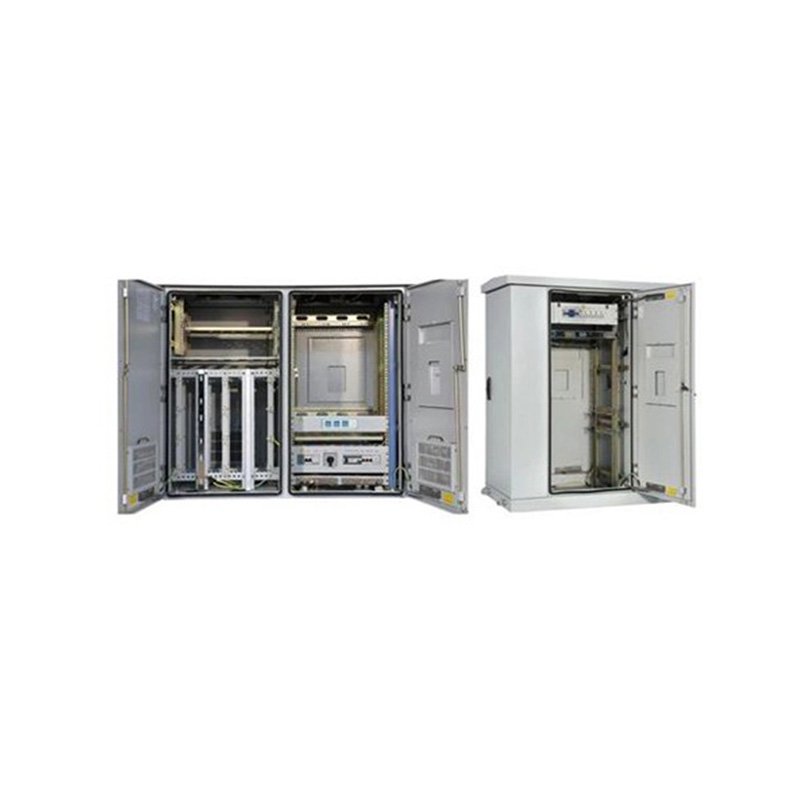
Application:It is used for the fixed network and broadband access, providing physical working environment and security system for the workstation in wired network. Features:•The cabinet is composed of...
See Details -
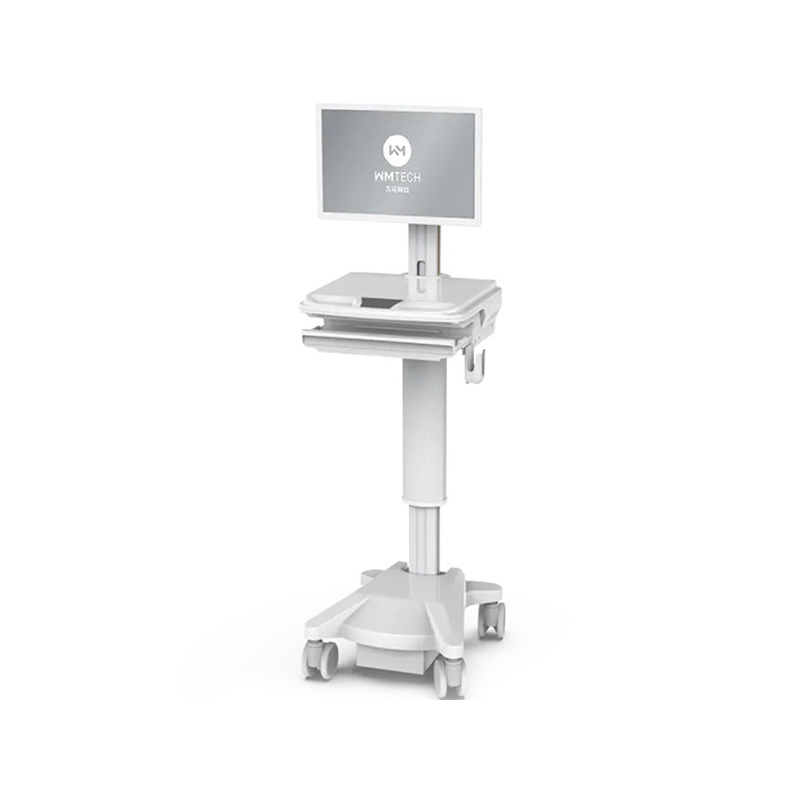
Product DefinitionThe WMYC-D2-30 Medical Cart is an intelligent mobile medical workstation integrating informatization and clinical assistance functions. It supports medical order management, patient ...
See Details -
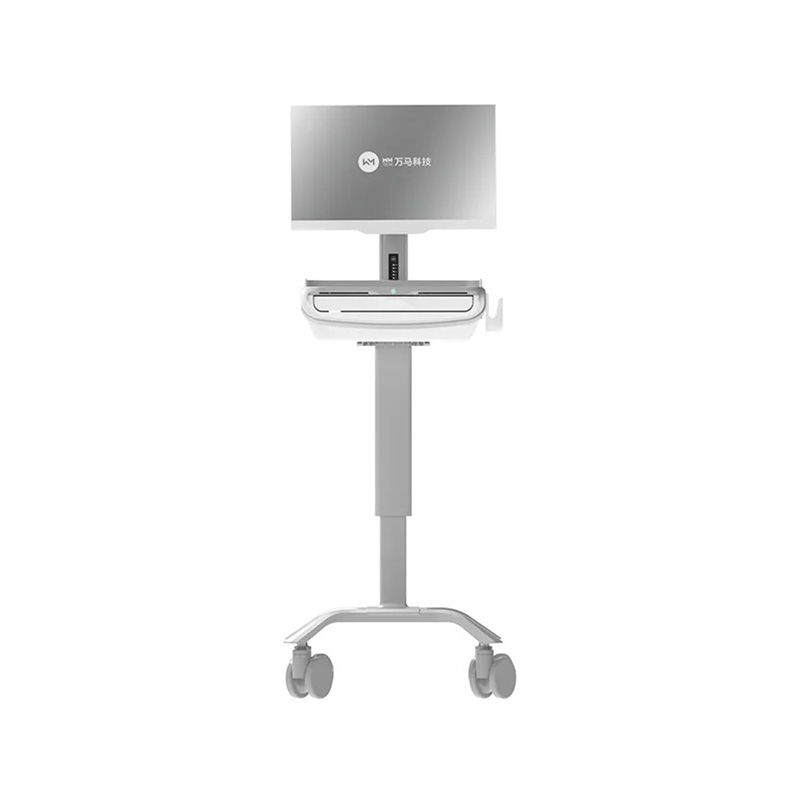
Product Definition:The WMYC-J2-24 Medical Cart is an intelligent mobile workstation integrating information display, order entry, clinical management, and device storage, designed to enhance hospital ...
See Details
Ready to Get started ? Contact Us Now !

Product.
Contact Details.
-
 +86 13958188250
-
 +86 13958188250
-
 [email protected]
- Wanma Industrial Park Taihu Yuan Town Lin'an District Hangzhou City China.
QR Code

Copyright © Wanma Technology Co., Ltd. All Rights Reserved.
Custom Ethernet Optical Network Railway Transit Equipments Suppliers
