

 English
 Français
 Español
 Português
 عربى





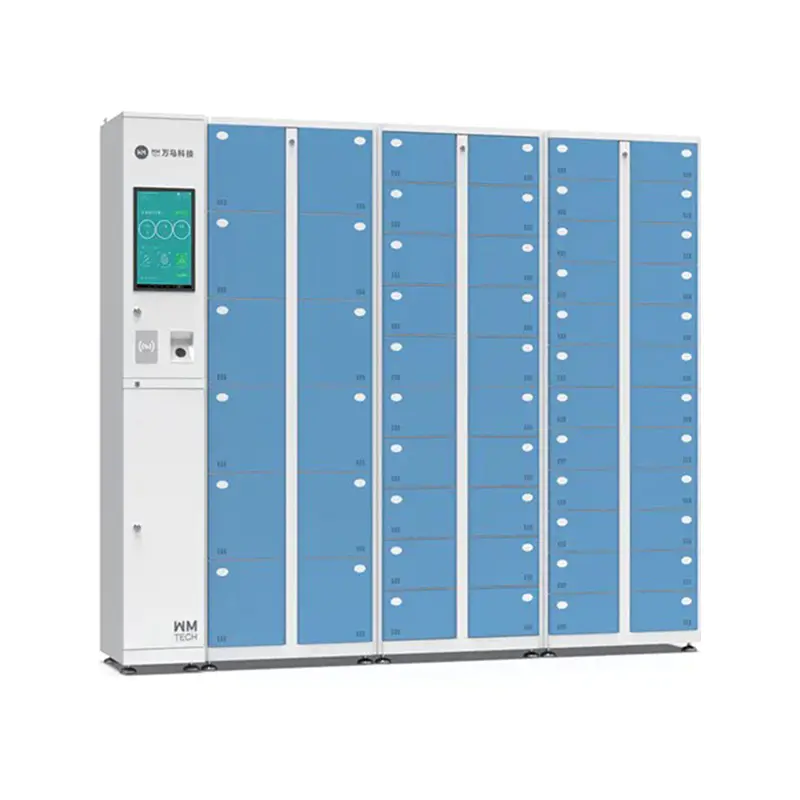
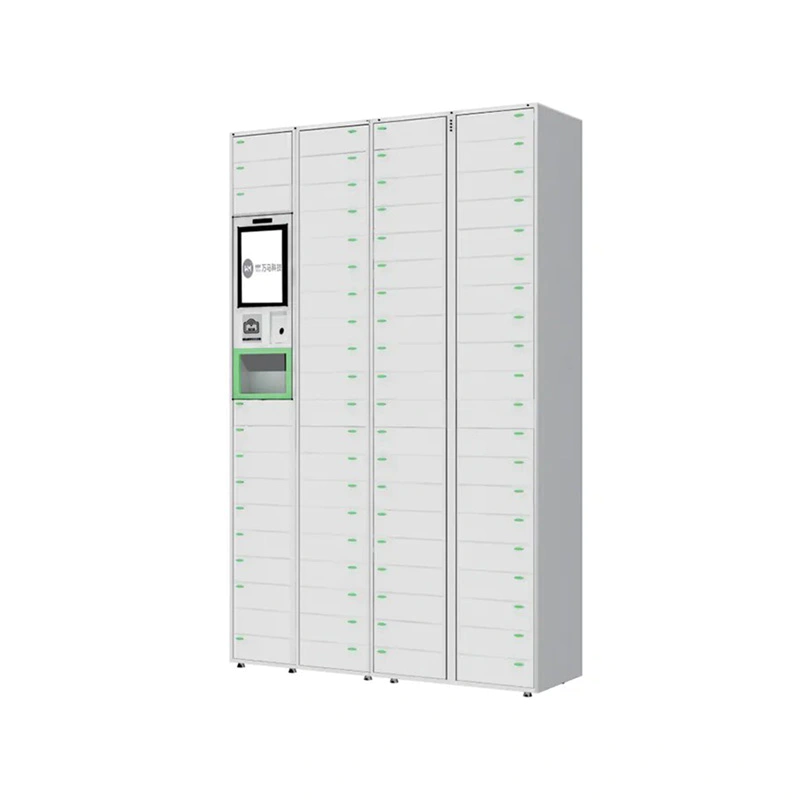

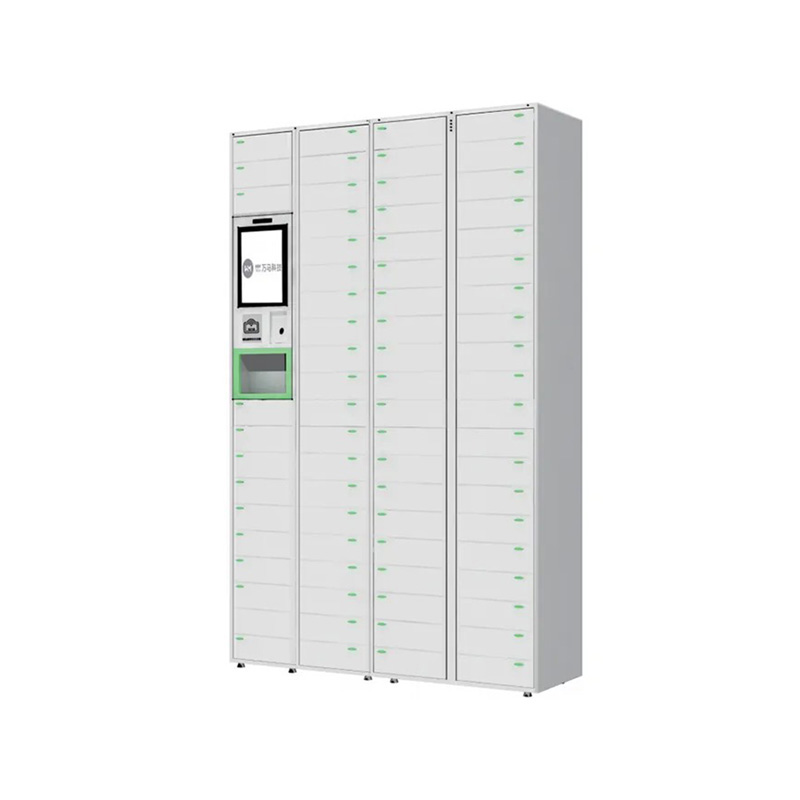
Product Definition:The Uniform Distribution Cabinet is an intelligent management solution for hospitals and medical institutions, designed for automated distribution, inventory management, and trackin...
See DetailsIntelligent Uniform Distribution Systems for Safer, More Efficient Hospital Clean-Zone Operations
Content
- 1 1. The Role of Intelligent Uniform Management in Healthcare
- 2 2. Product Definition and Core Operating Concept
- 3 3. Major Product Advantages
- 4 4. Comparison with Conventional and Less-Integrated Alternatives
- 5 5. Standardized Workflow for Hospital Use
- 6 6. Contribution to Infection-Control and Clean-Zone Management
- 7 7. Manufacturing and Engineering Strengths
- 8 8. Data Management and System Integration
- 9 9. Deployment Planning
- 10 10. Operational Benefits for Different Stakeholders
- 11 11. Sustainability and Resource Efficiency
- 12 12. Maintenance, Service, and Long-Term Value
- 13 13. Recommended Evaluation Criteria for Buyers
- 14 14. Questions and Answers
- 14.1 Q1: What is the Chain Intelligent Clothes and Shoes Sending Machine?
- 14.2 Q2: Which items can the system manage?
- 14.3 Q3: Which authentication methods are supported?
- 14.4 Q4: Can different employees receive different items?
- 14.5 Q5: How does the system help prevent inventory shortages?
- 14.6 Q6: What happens if the network is temporarily unavailable?
- 14.7 Q7: Can the system be expanded after installation?
- 14.8 Q8: Does the equipment replace infection-control procedures?
- 14.9 Q9: Why is electronic operation recording important?
- 14.10 Q10: What company manufactures the system?
- 14.11 Q11: Is the manufacturer able to support customized projects?
- 14.12 Q12: What should a hospital prepare before purchasing?
- 15 15. Conclusion
- 16 References
- 17 Product: Chain Intelligent Clothes and Shoes Sending Machine
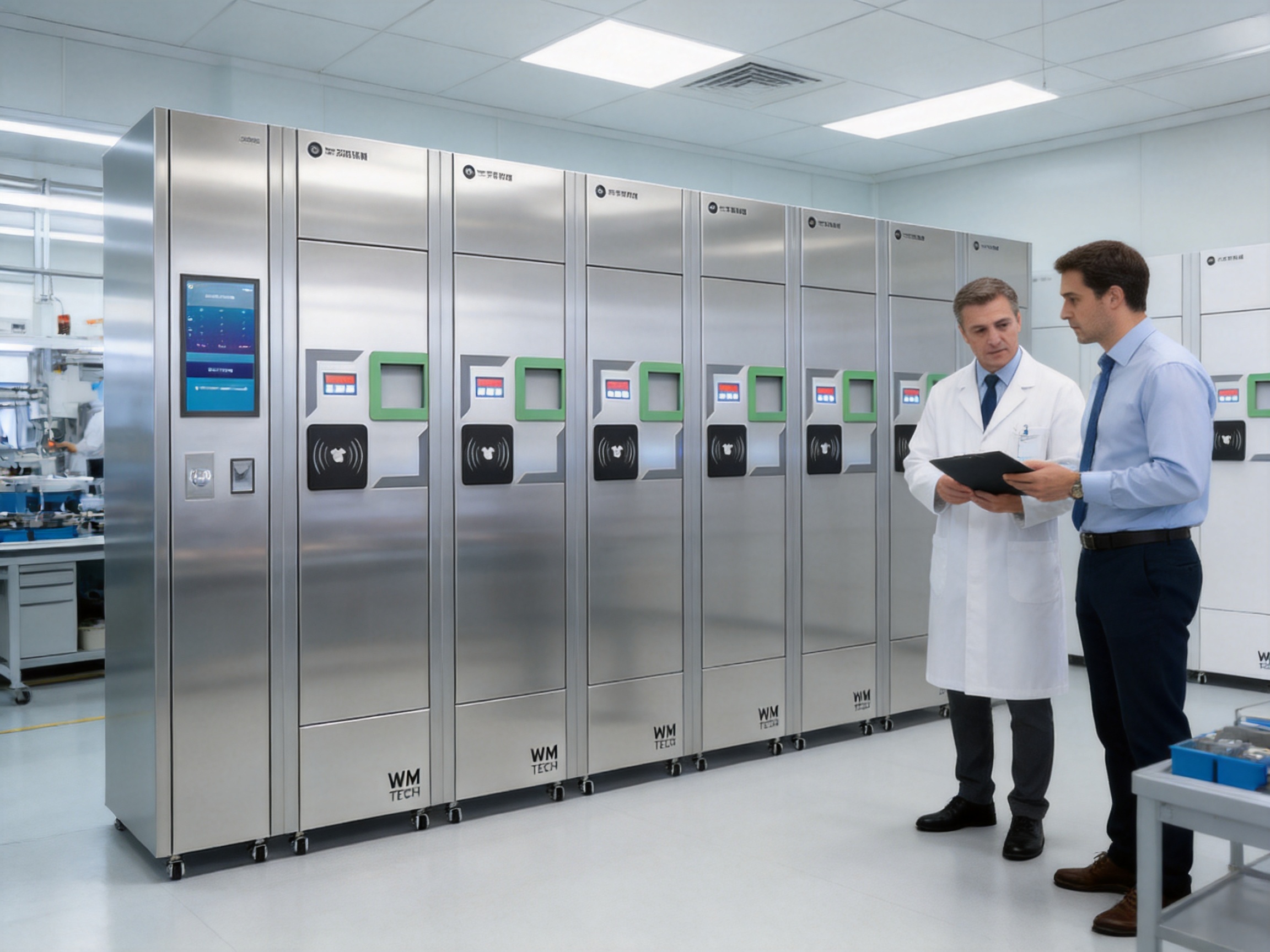
Intelligent Uniform Distribution Systems for Safer, More Efficient Hospital Clean-Zone Operations
Hospitals are under constant pressure to improve hygiene, operational efficiency, traceability, and staff convenience at the same time. Operating rooms, sterile preparation areas, laboratories, isolation zones, and other controlled environments require disciplined management of clothing and footwear. Surgical garments, clean shoes, work uniforms, and related protective items must be available when needed, issued only to authorized personnel, managed according to site rules, and collected or recycled through standardized procedures.
The Chain Intelligent Clothes and Shoes Sending Machine is designed to address these requirements through an integrated uniform management system. It combines automatic storage, identity verification, inventory supervision, controlled distribution, operational recording, and flexible cabinet expansion in one coordinated platform. Instead of relying entirely on manual distribution counters, paper records, or loosely controlled storage rooms, hospitals can use an intelligent equipment-based process to organize how personnel receive and return clothing and shoes.
This approach is particularly valuable in hospital operating rooms and clean zones, where the movement of people and materials must be controlled carefully. The machine supports facial recognition, IC cards, NFC, and fingerprint authentication, allowing facilities to select an identity-verification method that fits their existing policies and information systems. It can also provide inventory reminders, quantity allocation, offline data repair, and complete operation records, helping managers maintain continuity even when network conditions are temporarily unstable.
The system is not simply a cabinet for storing garments. It is a coordinated management solution that connects physical storage with digital permissions, inventory data, user identity, and operational accountability. Its modular structure also allows hospitals to expand the system with shoe cabinets, changing cabinets, recycling cabinets, and clothing cabinets as their requirements develop.
1. The Role of Intelligent Uniform Management in Healthcare
Uniform distribution may appear to be a simple administrative activity, but it has a direct relationship with hospital safety and efficiency. In a conventional process, staff may collect clothing and shoes from a central room, sign a paper sheet, present an identification card, or depend on an attendant to verify eligibility. These methods can work in small facilities, but they become more difficult to control when the hospital has multiple departments, shift changes, high personnel turnover, or strict clean-zone requirements.
Manual processes can create several operational problems. Garments may be issued to the wrong person, quantities may be recorded inaccurately, and inventory shortages may remain unnoticed until the beginning of a shift. Paper records can also be incomplete, difficult to search, or vulnerable to loss. When returned items are not tracked consistently, managers may not know whether garments are in use, waiting for cleaning, stored in the wrong location, or missing entirely.
An intelligent uniform management system provides a more consistent alternative. By connecting authentication with storage access, the system helps ensure that only approved users can obtain designated clothing or footwear. By recording distribution and return activities electronically, it creates a more reliable operational history. By monitoring stock levels, it supports earlier intervention when inventory begins to decline.
The Chain Intelligent Clothes and Shoes Sending Machine is intended for this type of controlled workflow. It can support the distribution of surgical clothes, operating-room shoes, work uniforms, and similar items while helping facilities standardize the movement of garments from storage to personnel and, where configured, from personnel to recycling or return areas.
2. Product Definition and Core Operating Concept
The Chain Intelligent Clothes and Shoes Sending Machine is an advanced management system for hospital operating rooms and clean zones. Its main functions include automatic storage, identity verification, inventory management, clothing and shoe distribution, and data recording.
The system is based on several connected operating principles:
First, the user must be identified before access is granted. Depending on the deployment, authentication may use facial recognition, an IC card, NFC, fingerprint recognition, or a combination of methods. This creates a controlled entry point for uniform distribution.
Second, the system applies permissions to determine what the user may receive. Authorization can be connected to staff identity, department, job role, shift, operating-room assignment, or other hospital-defined rules. The available permissions depend on the customer’s configuration and system integration requirements.
Third, the equipment manages the stored items and records relevant transactions. When a garment or pair of shoes is distributed, the system can record the user, time, item category, and related operation. These records create a digital history that is easier to review than handwritten logs.
Fourth, the system supports inventory supervision. Managers can receive reminders when stock levels require attention, allocate quantities for specific areas, and use data repair functions when an offline event must later be synchronized or corrected.
Finally, the modular design allows the equipment to grow with the facility. A hospital may begin with a basic clothes and shoes distribution arrangement and later add recycling cabinets, changing cabinets, shoe cabinets, or clothing cabinets. This flexibility reduces the risk of choosing a system that becomes unsuitable as operational requirements expand.
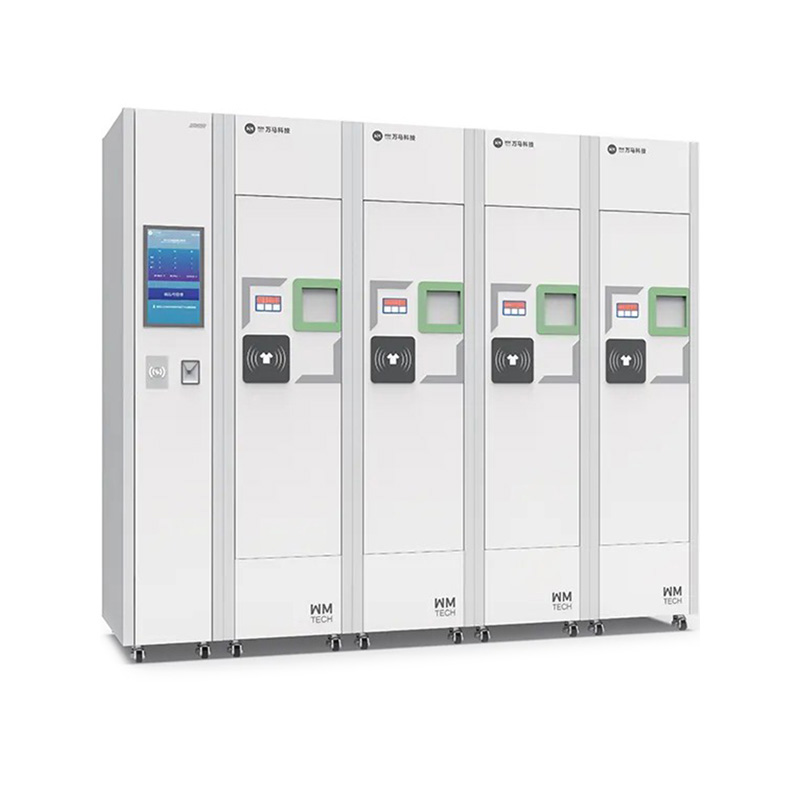
Chain Intelligent Clothes and Shoes Sending Machine
3. Major Product Advantages
3.1 Multi-Method Identity Verification
One of the most important strengths of the system is its support for multiple authentication methods. Hospitals have different security policies, staff habits, and infrastructure conditions. A single authentication method may not be suitable for every user or every zone.
Facial recognition can offer a hands-free and convenient approach for authorized staff. It may be useful when personnel are wearing gloves, carrying supplies, or moving quickly through a controlled area. IC cards provide a familiar and manageable solution for organizations that already use card-based access control. NFC can support compatible mobile or contactless identification workflows, while fingerprint authentication can provide another form of personal verification.
Supporting several authentication options provides greater deployment flexibility than a system designed around only one method. It also allows a hospital to establish a primary method and retain an alternative method for special cases, equipment changes, or user groups with different access requirements.
From a management perspective, multiple authentication options can improve continuity. If one method is temporarily unavailable or unsuitable in a particular location, an approved alternative may help maintain controlled operations. The exact configuration should always follow the hospital’s privacy, cybersecurity, infection-control, and access-management policies.
3.2 Controlled Permission Management
Identity verification alone is not sufficient. The system must also determine what an authenticated user is permitted to do. The Chain Intelligent Clothes and Shoes Sending Machine is designed to support permission control so that distribution can be aligned with hospital management rules.
For example, different user groups may require different items. Operating-room staff may need surgical clothing and designated shoes, while maintenance personnel may require a different uniform. Some employees may be authorized to collect items but not to access recycling or administrative functions. Managers may require reporting rights that ordinary users do not have.
By connecting authentication with authorization, the equipment helps reduce uncontrolled access and supports a more orderly uniform process. This is especially important in clean zones where personnel movement and clothing selection can influence compliance with internal procedures.
Permission management can also support accountability. If the system records each authorized transaction, supervisors can review who accessed a cabinet, when the transaction occurred, and what type of item was involved. This creates a stronger management foundation than an open storage room or an unattended shelf.
3.3 Automatic Inventory Reminders
Inventory shortages can disrupt hospital operations. If the required number of surgical garments or clean shoes is not available, staff may experience delays, departments may need to borrow supplies, and administrators may be forced to arrange urgent replenishment.
The system’s automatic inventory reminder function is intended to support earlier awareness. Instead of waiting until a cabinet is empty, managers can monitor stock conditions and receive notification when quantities approach a defined threshold. This allows replenishment and allocation decisions to be made before the shortage becomes critical.
Inventory reminders are also useful for planning. Historical distribution information can help facilities understand consumption patterns by department, shift, or period. Although the specific reporting functions depend on the configured system, a digital record generally provides a more practical basis for planning than estimates based only on visual inspection.
Efficient inventory management can reduce two opposite risks: insufficient stock and unnecessary overstocking. Too little inventory affects service continuity, while excessive inventory ties up space and working capital. A controlled system helps managers make better-informed decisions about how many garments and shoes should be stored and where they should be allocated.
3.4 Quantity Allocation and Departmental Coordination
Hospitals often need to distribute clothing and footwear among several operating rooms, clean zones, departments, or staff groups. The quantity allocation function supports a more organized approach to this task.
Rather than allowing supplies to be taken without a consistent limit, administrators can establish allocation rules according to operational needs. This can help balance availability across different areas and make unusual consumption patterns easier to identify.
Quantity allocation is particularly useful in facilities with shift-based activity. Demand may rise during certain periods, and the hospital may need to reserve sufficient items for scheduled procedures or special assignments. A digital distribution system helps make these decisions more visible and easier to adjust.
Allocation also contributes to accountability. When the system records the quantity distributed to a particular user or group, management can compare actual use with expected use. This does not replace professional supervision, but it provides useful information for improving procedures and reducing avoidable loss.
3.5 Offline Data Repair and Operational Resilience
Healthcare operations cannot always depend on perfect network conditions. Network interruptions, system maintenance, equipment upgrades, or local communication problems may temporarily affect connectivity between the uniform management equipment and other hospital systems.
The offline data repair function is designed to help maintain continuity in these circumstances. When an operation takes place during a temporary communication interruption, the relevant data can be repaired or synchronized according to the configured process after connectivity is restored.
This capability is important because a network interruption should not automatically force staff to abandon controlled procedures or return to completely manual recording. Offline data support can reduce the risk of missing transactions and help preserve a more complete operational history.
Actual offline behavior, data retention, synchronization timing, and recovery procedures should be confirmed during project planning. Hospitals should also establish backup, cybersecurity, and data-validation policies appropriate to their information environment.
3.6 Modular Expansion
The modular design is another major advantage. Hospital facilities rarely remain static. Departments may expand, clean-zone requirements may change, and staff volumes may increase. A fixed-purpose device can become a limitation if it cannot accommodate new workflows.
The Chain Intelligent Clothes and Shoes Sending Machine can be expanded with shoe cabinets, changing cabinets, recycling cabinets, and clothing cabinets. These modules allow a facility to organize different stages of the uniform process within one coordinated system.
Shoe cabinets can support the controlled storage and distribution of designated footwear. Changing cabinets can help organize the transition between personal clothing and workwear. Recycling cabinets can support the return of used items for subsequent cleaning or processing. Clothing cabinets can increase storage capacity or separate different garment categories.
Modular expansion also supports phased investment. A hospital may begin with the most urgent distribution function and add additional modules after evaluating user behavior, inventory needs, and workflow performance. This can be more practical than installing a large and complex arrangement before the facility fully understands its long-term requirements.
4. Comparison with Conventional and Less-Integrated Alternatives
Product comparisons should be based on actual project requirements rather than general claims. However, the system offers several structural advantages over common alternatives such as open shelving, manually managed cabinets, basic vending-style units, and isolated access-control devices.
| Management approach | Identity control | Inventory visibility | Operational records | Expansion potential |
|---|---|---|---|---|
| Open storage or shelving | Usually dependent on staff supervision | Often based on manual counting | Paper or incomplete records | Limited by room layout |
| Manually managed distribution room | Controlled by an attendant | Possible but labor-intensive | Dependent on staff accuracy | Requires additional personnel and space |
| Single-function automated cabinet | May support one authentication method | Usually limited to the cabinet | May record basic transactions | Often limited to the original configuration |
| Integrated intelligent uniform system | Supports multiple authentication options | Supports reminders and quantity management | Provides a digital operation history | Can add clothing, shoe, changing, and recycling modules |
Open storage is simple, but it provides limited accountability. Anyone with physical access may be able to take an item, and managers may have difficulty determining whether stock differences result from consumption, misplaced items, or recording errors.
A manually managed distribution room provides more human control, but it requires staffing during operating hours and depends heavily on the consistency of individual attendants. Staff absences, shift changes, and high demand can produce delays or inconsistent recordkeeping.
A single-function automated cabinet may improve access control, but it may not support the full uniform lifecycle. If clothing distribution, shoe storage, changing, and recycling are handled by unrelated devices, managers may still face fragmented data and disconnected procedures.
The integrated system is differentiated by the combination of functions. Authentication, authorization, storage, inventory, data recording, and modular expansion are considered as parts of one management process. This integrated design can reduce the number of separate systems that staff must learn and administrators must maintain.
The main competitive advantage is therefore not necessarily one isolated feature. It is the way multiple functions work together to support a controlled and traceable workflow. Hospitals should still compare technical specifications, capacity, integration compatibility, service response, and total cost with other suppliers before making a final procurement decision.
5. Standardized Workflow for Hospital Use
5.1 User Identification
The process begins when an employee approaches the equipment and selects or uses the authorized authentication method. The system verifies the user’s identity and checks whether the person has permission to obtain the relevant items.
This stage establishes a clear control point. It helps prevent unapproved access and provides the basis for recording subsequent operations. Hospitals can define authentication policies according to the sensitivity of the zone and the nature of the items being distributed.
5.2 Item Selection and Distribution
After successful verification, the system provides access to the designated clothing, shoes, or workwear. The exact distribution method depends on the cabinet configuration and customer requirements. The objective is to make the process clear, efficient, and consistent for the user.
The system may apply quantity limits or item permissions to prevent excessive or inappropriate collection. This is useful when different employees require different types of clothing or when the facility needs to control daily consumption.
5.3 Transaction Recording
Each approved operation can be recorded as part of the system’s operational history. The record may include identity, time, item category, and transaction status, depending on the deployed configuration.
Digital records support later review. If a manager needs to investigate an inventory discrepancy, analyze distribution by department, or confirm whether a procedure was followed, the electronic history can provide a clearer starting point than a handwritten register.
5.4 Return and Recycling
Where recycling cabinets or related modules are installed, used items can be directed into a designated return process. This helps separate distribution from collection and supports a more orderly transition to cleaning, inspection, or further processing.
The system does not replace the hospital’s laundering, disinfection, or infection-control procedures. Instead, it provides an equipment framework for managing the movement and recording of items before those procedures take place.
5.5 Inventory Review and Replenishment
Managers can review stock conditions and respond to reminders. When quantities fall below defined requirements, personnel can replenish the relevant cabinet or adjust allocations between areas.
This final stage closes the management loop. Distribution data influences replenishment decisions, and replenishment activity helps maintain readiness for future shifts and procedures.
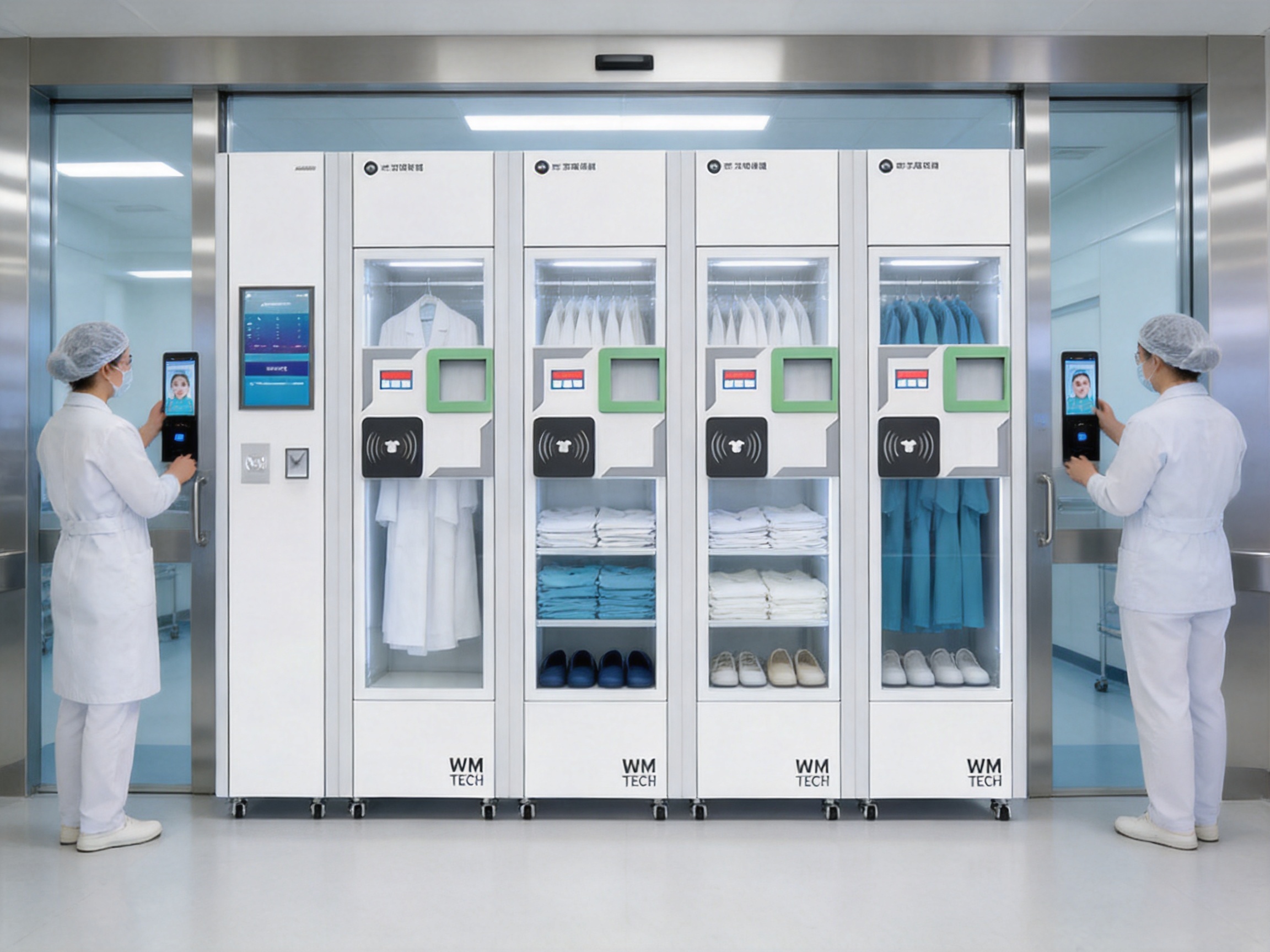
6. Contribution to Infection-Control and Clean-Zone Management
Infection control is a professional and multidisciplinary responsibility. Equipment alone cannot guarantee compliance, but well-designed equipment can help staff follow standardized processes more consistently.
The Chain Intelligent Clothes and Shoes Sending Machine supports clean-zone management by controlling who can access designated items and by organizing the movement of clothing and footwear. When distribution is linked to authentication and permission rules, the hospital can reduce casual or uncontrolled access to clean-zone supplies.
Standardized storage can also help separate garment categories. Surgical clothes, work uniforms, designated shoes, and returned items can be arranged according to the facility’s workflow. Clear separation may reduce confusion and support staff adherence to changing and return procedures.
Operational logs can assist supervisors in identifying process deviations. If a department shows unusually high consumption, repeated access outside expected periods, or irregular return activity, management can investigate the underlying cause. The purpose is not merely disciplinary. Data can reveal training needs, unclear procedures, insufficient stock, or an inefficient physical layout.
Hospitals should configure the system in accordance with their infection-control protocols, environmental requirements, cleaning procedures, and local regulations. The equipment should be treated as one part of a broader quality and safety system.
7. Manufacturing and Engineering Strengths
7.1 Experience in Communication and Electronic Equipment
The manufacturer, Wanma Technology Co., Ltd., was established in 1997 and has experience in communication cabinets, communication electronic equipment, and passive optical components. Its products are used in Ethernet networks, optical communication networks, central equipment rooms, national high-speed railways, and urban rail transit systems.
This background is relevant to the development of intelligent uniform management equipment. Products used in hospitals require dependable electronic control, structured cabinet design, communication capability, data handling, and consistent production management. Experience in communication and infrastructure equipment can provide a useful foundation for designing systems that must operate as part of a larger technical environment.
The company’s history also indicates familiarity with projects where reliability, delivery coordination, and long-term equipment support are important. Although a hospital uniform system has different application requirements from railway or communications infrastructure, both environments benefit from disciplined engineering, clear interfaces, stable components, and systematic quality control.
7.2 In-House Product Development and Manufacturing
The company develops, manufactures, and markets its own branded products while also providing integrated solutions for customized products. This combination can support a more direct connection between product design, production, installation requirements, and customer feedback.
For an intelligent uniform management project, in-house development can be valuable because hospitals may require changes in cabinet combinations, authentication methods, communication interfaces, user permissions, data fields, or workflow sequencing. A manufacturer with product development capability may be better positioned to evaluate these requirements than a reseller that only distributes standardized equipment.
Customization should nevertheless be managed through a formal technical process. The hospital and supplier should define requirements, acceptance criteria, data responsibilities, installation conditions, maintenance procedures, and integration boundaries before production begins.
7.3 Structured Cabinet and Module Engineering
The product’s modular architecture requires careful cabinet engineering. Clothing cabinets, shoe cabinets, recycling cabinets, and changing cabinets must fit the available space and support the intended movement of personnel and items.
Effective manufacturing includes more than assembling panels and electronic parts. It involves coordinating structural design, access mechanisms, authentication devices, internal storage arrangements, wiring, control boards, user interfaces, and service access. The final equipment should be practical for daily users and maintainable for technical personnel.
Modular engineering can also simplify future upgrades. If modules are designed with consistent interfaces and clear installation requirements, a hospital may be able to add capacity or functions without replacing the entire system. This is one of the important ways in which product architecture affects long-term value.
7.4 Quality and Process Discipline
Reliable operation depends on repeatable manufacturing processes. Electronic equipment used in hospitals should be assembled, tested, inspected, and documented according to controlled procedures. Key areas may include component inspection, wiring verification, authentication testing, cabinet access testing, communication testing, software validation, and final functional inspection.
The manufacturer’s experience serving communication and transportation-related markets suggests an orientation toward equipment reliability and project delivery. Customers should request specific quality documentation, inspection records, warranty terms, and service procedures during procurement so that the product’s capabilities can be evaluated objectively.
Quality is also connected to delivery consistency. A product that performs well in a demonstration must continue to perform after installation, configuration, and repeated daily use. Production traceability, standardized assembly, and clear commissioning processes help reduce variation between units.
7.5 Integrated Solutions for Different Customer Requirements
Hospitals differ in building layout, staffing levels, authentication infrastructure, infection-control policies, and information-system architecture. A one-size-fits-all approach may not be appropriate.
The company’s experience with customized integrated solutions can support project-specific planning. A deployment may need to combine several cabinet types, connect with an existing hospital platform, or accommodate a particular access-control policy. The supplier can work with the customer to define the required functions and identify which elements are standard and which require configuration or development.
Customization should remain controlled. Excessive alteration can increase complexity, maintenance requirements, and future upgrade costs. The best approach is usually to use a stable product platform while adapting the module combination, interface configuration, user permissions, and operational rules to the hospital’s actual needs.
8. Data Management and System Integration
Data is central to the value of an intelligent distribution system. Authentication data identifies the user, permission data determines access, inventory data reflects availability, and transaction data records activity. When these elements are organized consistently, managers can obtain a more complete view of uniform operations.
Integration with hospital systems may be considered where appropriate. Potential integration areas can include staff identity management, department information, access permissions, inventory platforms, or facility management systems. The exact integration scope should be confirmed through technical analysis and should respect hospital cybersecurity and privacy requirements.
Data governance is especially important when facial recognition or fingerprint authentication is used. Hospitals should define who may access identity data, how long records are retained, how information is protected, and how users are informed according to applicable policies and regulations.
System administrators should also establish procedures for account creation, permission changes, employee departure, device maintenance, backup, recovery, and audit review. These procedures ensure that the system remains accurate over time rather than becoming outdated after the initial installation.
Offline data repair adds another dimension to data management. Synchronization procedures should be tested so that temporary interruptions do not create duplicate records, missing transactions, or incorrect inventory balances. A commissioning plan should include simulated network interruptions and recovery checks.
9. Deployment Planning
9.1 Site Assessment
Before installation, the hospital should assess the intended location. Important considerations include available floor area, user circulation, clean-zone boundaries, power supply, network access, lighting, ventilation, environmental conditions, emergency access, and proximity to changing or operating areas.
The layout should allow users to approach, authenticate, collect items, and leave without creating congestion. If return or recycling functions are included, the movement of used items should be planned separately from the movement of clean items wherever possible.
9.2 Workflow Mapping
Hospitals should document the existing uniform process before configuring the equipment. The analysis should identify who receives each item, when distribution occurs, where garments are stored, how used items are returned, who replenishes stock, and which records are required.
This information allows the supplier to recommend a suitable combination of modules and permissions. It also helps identify whether the system should serve one operating room, several clean zones, or a larger group of departments.
9.3 Capacity Planning
Capacity should be based on actual staffing levels, shift patterns, peak demand, cleaning turnaround time, emergency reserves, and expected growth. The hospital should avoid selecting capacity only according to average daily usage because peak periods may create much higher demand.
Inventory calculations should distinguish between items in storage, items issued to staff, items awaiting collection, items undergoing cleaning, and reserve stock. A complete lifecycle view produces more reliable capacity planning than counting only the items physically present in the cabinet.
9.4 User Training
Even an automated system requires effective training. Users should understand how to authenticate, select or receive items, respond to error messages, return items, and contact support. Supervisors should learn how to manage permissions, review records, respond to alerts, and handle exceptions.
Training should include both normal and unusual situations. Examples include an unrecognized user, a failed authentication attempt, an empty compartment, a network interruption, a damaged item, and a user who has forgotten the approved authentication method.
9.5 Acceptance Testing
Acceptance testing should verify the complete workflow rather than only the appearance of the equipment. Tests may include identity verification, permission control, item distribution, transaction recording, inventory updates, reminder generation, offline operation, data repair, recycling functions, and integration with related hospital systems.
The hospital and supplier should agree in advance on measurable acceptance criteria. A clear commissioning process protects both parties and provides a reference for future maintenance.
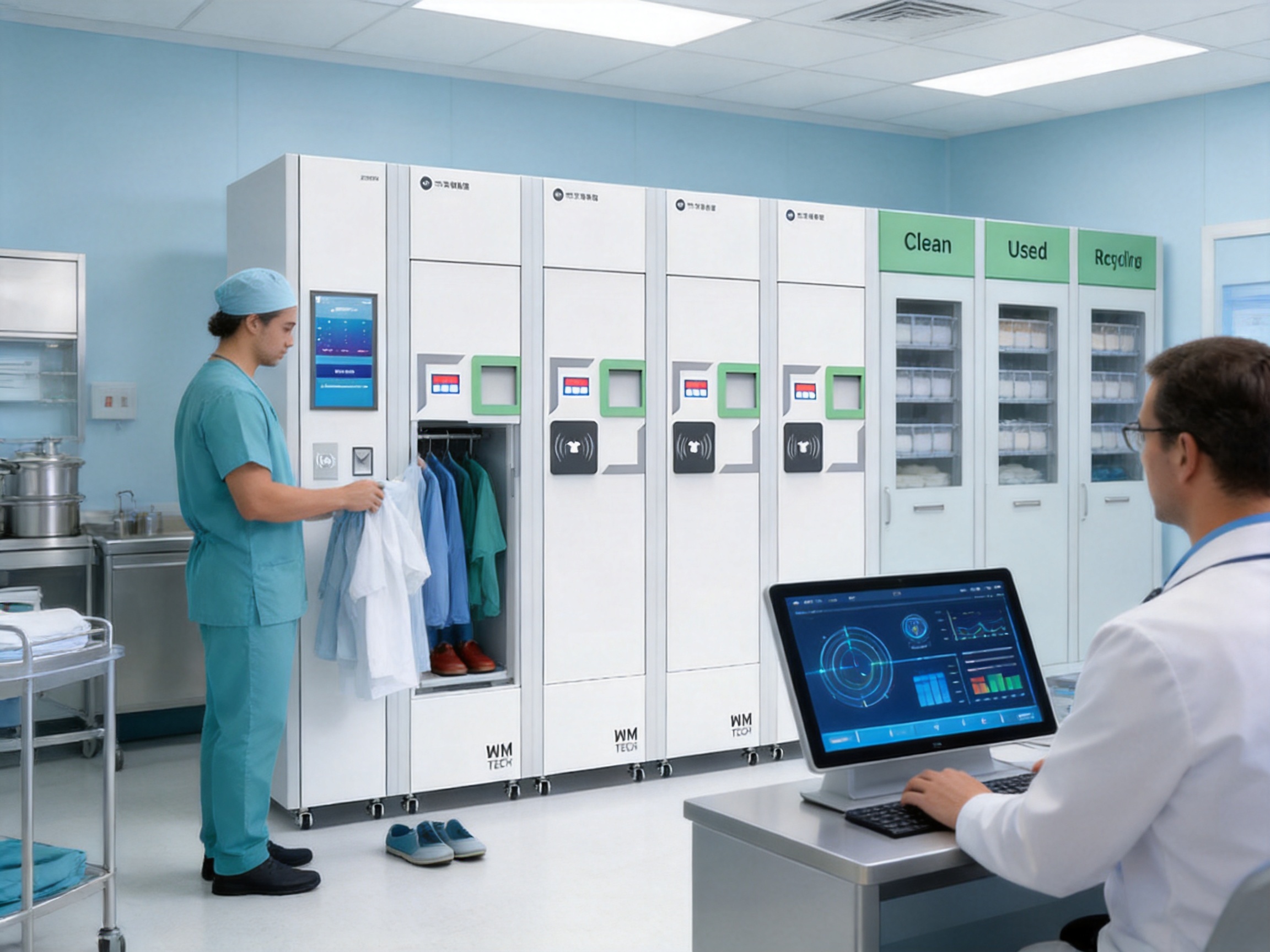
10. Operational Benefits for Different Stakeholders
10.1 Benefits for Hospital Administrators
Administrators gain improved visibility into uniform consumption, stock levels, user access, and operational trends. Digital records can reduce the time required to investigate discrepancies and prepare internal reports.
The modular structure also supports long-term planning. Administrators can begin with a focused deployment and expand the system as staff numbers, departments, or compliance requirements change.
10.2 Benefits for Infection-Control Managers
Infection-control managers can use standardized access and storage arrangements to support clean-zone procedures. Transaction histories may help identify areas where staff training or workflow improvement is needed.
The system does not replace infection-control expertise, but it can provide a more consistent operational foundation for enforcing approved clothing and footwear procedures.
10.3 Benefits for Department Supervisors
Supervisors can monitor whether their teams have access to the correct supplies and whether unusual consumption patterns require attention. Automated reminders can reduce dependence on visual inspection and manual counting.
10.4 Benefits for Hospital Staff
Staff members can obtain required clothing and shoes through a clearer and potentially faster process. Multiple authentication options can improve convenience, while automated availability information can reduce unnecessary waiting and searching.
A well-designed deployment should make compliance easier rather than adding unnecessary complexity. The user interface, cabinet layout, and authentication method should therefore be selected with real staff behavior in mind.
10.5 Benefits for Technical and Maintenance Teams
Technical teams benefit from a structured equipment platform with defined modules, documented interfaces, and recorded operational conditions. Clear diagnostics and service procedures can support faster troubleshooting, subject to the capabilities included in the selected configuration.
11. Sustainability and Resource Efficiency
Intelligent inventory management can support more efficient use of uniforms and footwear. By recording distribution and return activity, the hospital may be better able to identify loss, overstocking, underused items, or uneven allocation between departments.
Better visibility can also support purchasing decisions. Hospitals may reduce emergency procurement and avoid holding unnecessarily large quantities of certain items. More accurate allocation can extend the useful value of existing stock by ensuring that supplies are available where they are most needed.
Resource efficiency also depends on the broader laundering and recycling process. The equipment should be integrated with the hospital’s garment cleaning, inspection, repair, and replacement policies. A digital cabinet cannot solve problems caused by inadequate cleaning capacity or unclear ownership of returned items, but it can make the movement of items easier to organize.
Modular expansion may contribute to equipment sustainability as well. If additional functions can be added without replacing the entire platform, the hospital may be able to extend the system’s useful life as its needs evolve.
12. Maintenance, Service, and Long-Term Value
Long-term performance depends on more than initial installation. The hospital should establish preventive maintenance schedules, software update procedures, authentication-device checks, cabinet inspection routines, data backup practices, and emergency support contacts.
Frequently used components should be inspected according to actual operating conditions. Access doors, electronic locks, card or NFC readers, fingerprint sensors, cameras, screens, internal compartments, and communication connections may require periodic testing or cleaning.
Service agreements should clarify response times, spare-parts availability, remote support, on-site service, warranty coverage, and responsibilities for third-party systems. Hospitals should also understand how configuration changes are approved and documented.
The manufacturer’s experience in communication equipment and infrastructure projects can be valuable for long-term support, especially when the customer requires coordinated delivery, integration, and after-sales service. Nevertheless, each project should evaluate service capability using clear criteria rather than relying only on general company history.
13. Recommended Evaluation Criteria for Buyers
Hospitals considering an intelligent uniform management system should evaluate the complete solution. Important questions include:
Does the system support the authentication methods required by the hospital?
Can permissions be configured according to departments, roles, shifts, and item types?
Does the inventory function provide reminders and quantity allocation?
How are transactions stored, searched, exported, and audited?
What happens when the network is interrupted?
How does offline data repair operate, and how is synchronization verified?
Can the system add shoe, clothing, changing, and recycling cabinets later?
Can the supplier integrate the system with existing hospital platforms?
What privacy and cybersecurity controls are available for biometric information?
How is the equipment tested before delivery and during commissioning?
What maintenance, spare parts, training, and technical support are provided?
How does the supplier manage customized requirements without compromising product stability?
These questions help buyers compare integrated solutions on practical value rather than focusing only on cabinet appearance or the number of advertised features.
14. Questions and Answers
Q1: What is the Chain Intelligent Clothes and Shoes Sending Machine?
It is an intelligent uniform management system designed for hospital operating rooms, clean zones, and staff workwear management. It combines automatic storage, identity verification, controlled distribution, inventory management, and operational data recording.
Q2: Which items can the system manage?
The system is designed to manage surgical clothes, designated shoes, work uniforms, and related clothing items. The exact item categories depend on the cabinet configuration and the hospital’s workflow.
Q3: Which authentication methods are supported?
The system supports facial recognition, IC cards, NFC, and fingerprint authentication. A hospital may select one method or combine methods according to its policies and infrastructure.
Q4: Can different employees receive different items?
Yes. The system supports identity and permission control, allowing distribution rules to be aligned with user roles, departments, or other hospital-defined requirements. The detailed permission structure should be configured during implementation.
Q5: How does the system help prevent inventory shortages?
It supports automatic inventory reminders and quantity allocation. These functions help managers identify declining stock levels earlier and distribute available items according to operational needs.
The system includes offline data repair capabilities intended to help maintain operational continuity and restore or synchronize relevant data after communication conditions recover. The exact behavior should be confirmed during technical planning and acceptance testing.
Q7: Can the system be expanded after installation?
Yes. Its modular structure allows additional shoe cabinets, changing cabinets, recycling cabinets, and clothing cabinets to be added according to the hospital’s requirements and available space.
Q8: Does the equipment replace infection-control procedures?
No. It supports standardized access, storage, distribution, and return processes, but it does not replace professional infection-control policies, cleaning procedures, laundering, disinfection, staff training, or supervision.
Q9: Why is electronic operation recording important?
Electronic records provide a clearer history of access and distribution activity. They can support inventory review, discrepancy investigation, compliance checks, and workflow improvement.
Q10: What company manufactures the system?
The product is offered by Wanma Technology Co., Ltd., a company established in 1997 with experience in communication cabinets, communication electronic equipment, passive optical components, and integrated customized solutions.
Q11: Is the manufacturer able to support customized projects?
The company develops and manufactures its own products and also provides integrated solutions for customized products. Project-specific functions, interfaces, cabinet combinations, and data requirements should be reviewed and confirmed before production.
Q12: What should a hospital prepare before purchasing?
The hospital should define its user groups, item categories, peak demand, authentication policy, clean-zone workflow, return and recycling process, integration requirements, installation location, data governance rules, and maintenance expectations.
15. Conclusion
The Chain Intelligent Clothes and Shoes Sending Machine provides a structured approach to one of the often-overlooked operational challenges in healthcare: the controlled distribution and management of clothing and footwear.
Its principal strengths come from the combination of multiple authentication methods, permission control, automatic inventory reminders, quantity allocation, offline data repair, electronic operational records, and modular expansion. Together, these functions can help hospitals improve availability, accountability, workflow consistency, and clean-zone management.
Compared with open storage, manual distribution rooms, or isolated single-function cabinets, an integrated intelligent system offers a broader management framework. It connects the identity of the user with the item issued, the inventory condition, and the record of the operation. This creates a stronger foundation for data-based supervision and continuous improvement.
The manufacturer’s background in communication cabinets, electronic equipment, passive optical components, and infrastructure-oriented projects supports the product’s engineering positioning. Its ability to develop, manufacture, market, and customize products can be useful for hospitals seeking a solution that fits their own environment rather than a purely generic cabinet.
Successful deployment depends on careful planning. Site conditions, infection-control requirements, user behavior, data privacy, network reliability, cabinet capacity, integration boundaries, training, and service responsibilities should all be considered. When the product is configured around a clearly defined workflow, it can become more than an automated storage unit. It can serve as a practical digital platform for safer, more efficient, and more transparent uniform management.
References
1. World Health Organization. Guidelines on Hand Hygiene in Health Care.
2. World Health Organization. Core Components for Infection Prevention and Control Programmes.
3. International Organization for Standardization. Quality Management Systems: Requirements.
4. International Organization for Standardization. Information Security Management Systems: Requirements.
5. International Electrotechnical Commission. General Requirements for the Safety of Electrical Equipment for Measurement, Control, and Laboratory Use.
6. International Organization for Standardization. Cleanrooms and Associated Controlled Environments.
7. Hospital infection-prevention and control policies concerning operating-room clothing, designated footwear, garment handling, and clean-zone access.
8. Manufacturer product information for the Chain Intelligent Clothes and Shoes Sending Machine and related modular uniform management equipment.
9. Manufacturer corporate information concerning communication cabinets, communication electronic equipment, passive optical components, customized manufacturing, and integrated solutions.
10. General best-practice guidance for healthcare inventory management, access control, electronic audit trails, and facility workflow planning.
Product: Chain Intelligent Clothes and Shoes Sending Machine
PREV:Outdoor Telecom Cabinet Design for Reliable Network Infrastructure
NEXT:Liquid-Cooled Containerized Data Centers for High-Density Computing and Rapid Infrastructure Deployment
NEXT:Liquid-Cooled Containerized Data Centers for High-Density Computing and Rapid Infrastructure Deployment
Interested in cooperation or have questions?
Related products
-
-
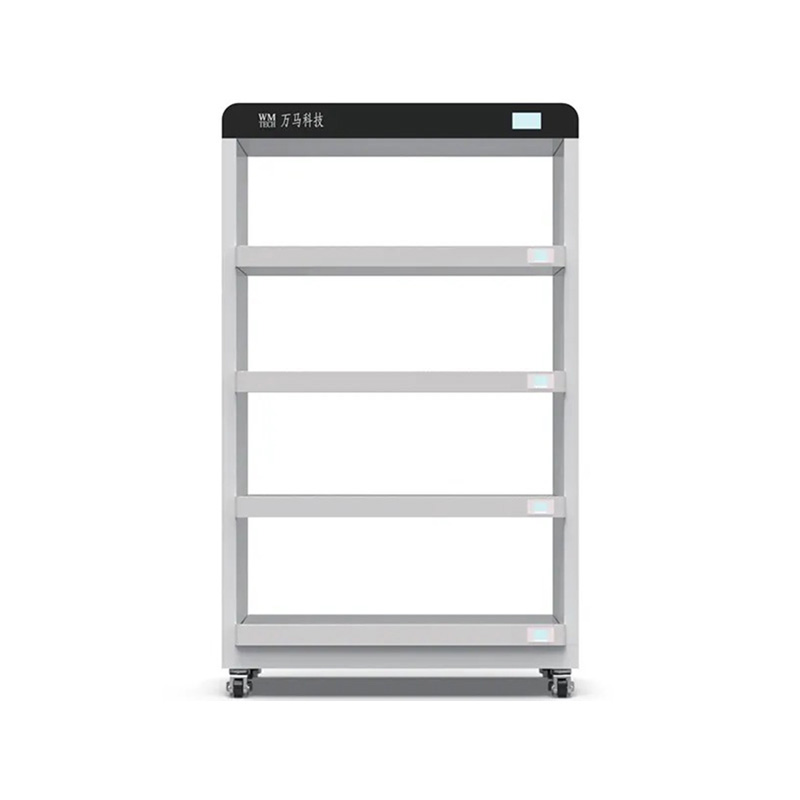
Product Definition:Intelligent Shelves are a smart warehouse management unit that integrates dynamic sensing, real-time display, and precise positioning. By leveraging advanced sensor technology, they...
See Details -
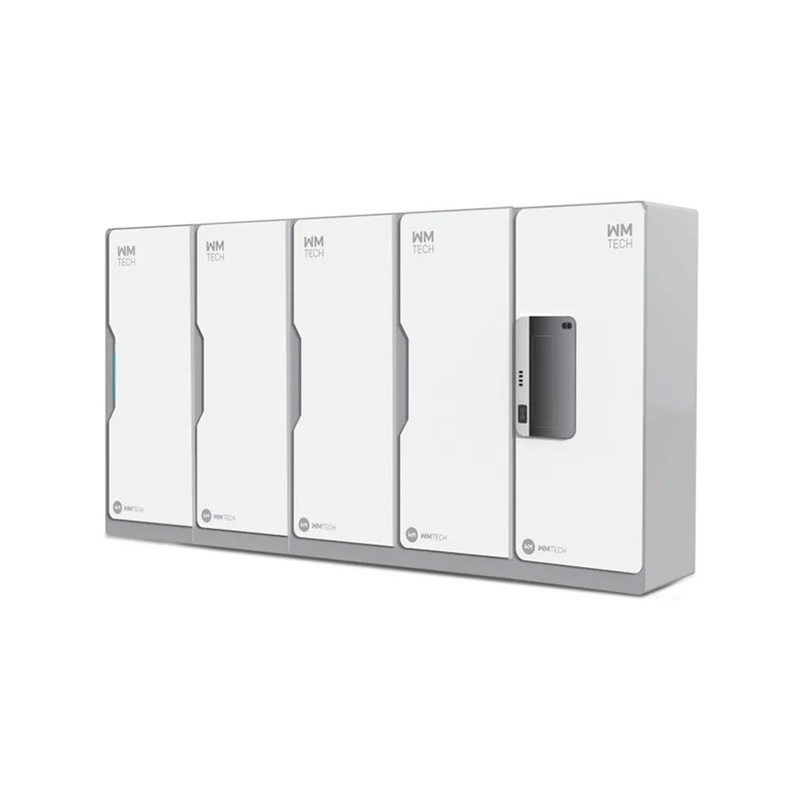
Product DefinitionThe Wanma Clean Fabric Temporary Storage Cabinet is an intelligent terminal device integrated with RFID, IoT, and facial recognition technologies, designed for managing medical fabri...
See Details -
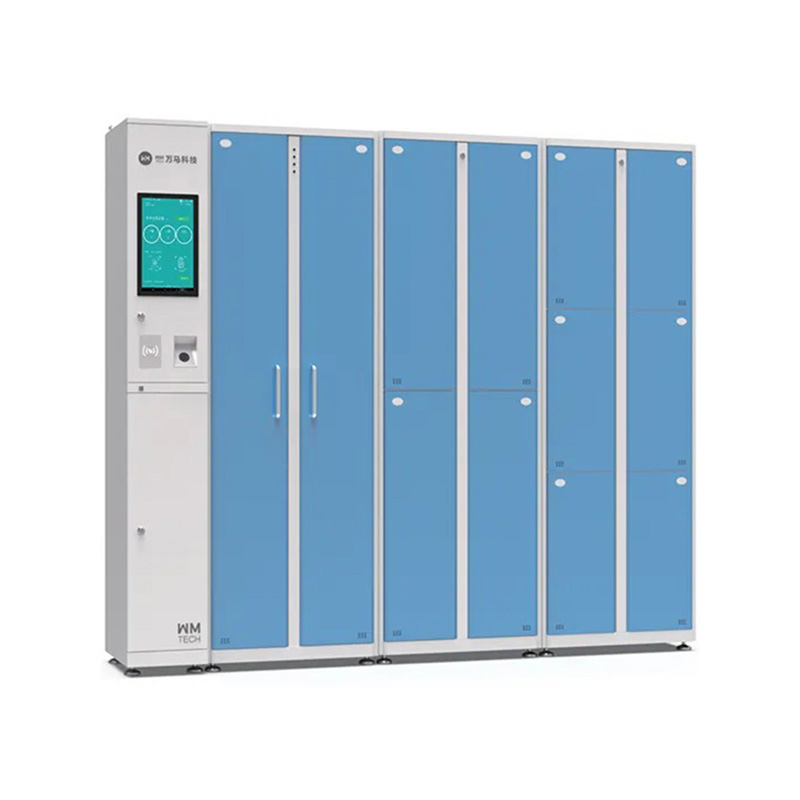
Product DefinitionThe Intelligent Locker is a smart medical supplies and personal items management system developed based on IoT and biometric technologies. Integrating multiple authentication methods...
See Details
Ready to Get started ? Contact Us Now !

Product.
Contact Details.
-
 +86 13958188250
-
 +86 13958188250
-
 [email protected]
-
 AUDIT Email:[email protected]
- Wanma Industrial Park Taihu Yuan Town Lin'an District Hangzhou City China.
QR Code

Copyright © Wanma Technology Co., Ltd. All Rights Reserved.
Privacy
Custom Ethernet Optical Network Railway Transit Equipments Suppliers
