

 English
 Français
 Español
 Português
 عربى





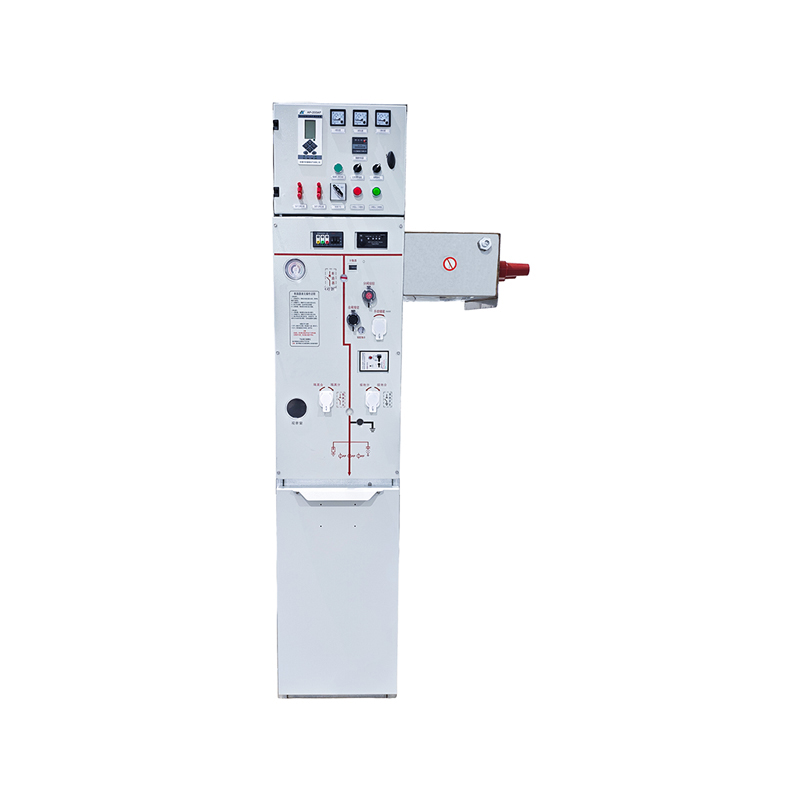
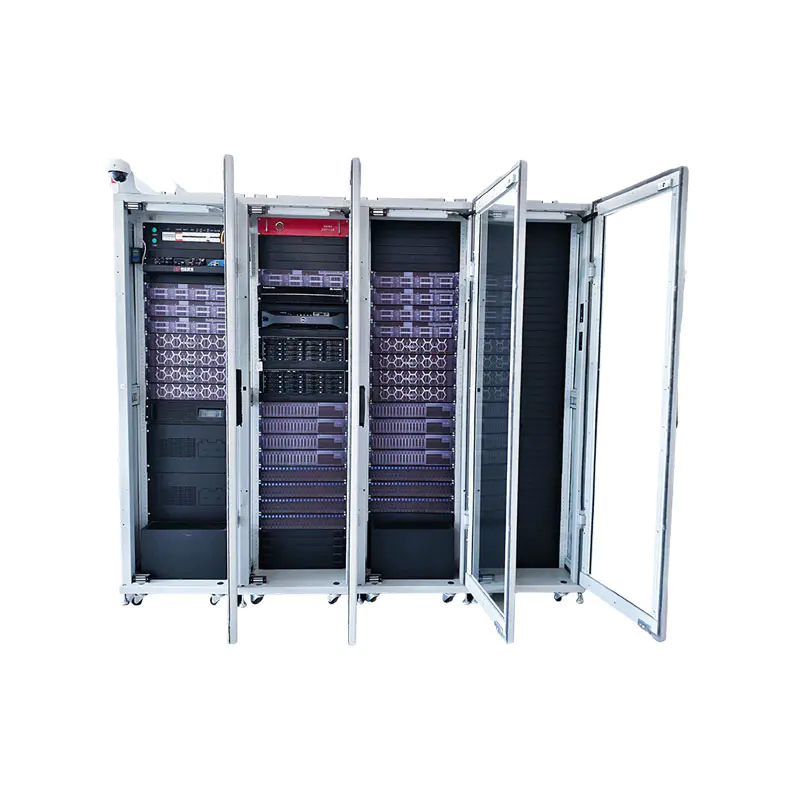
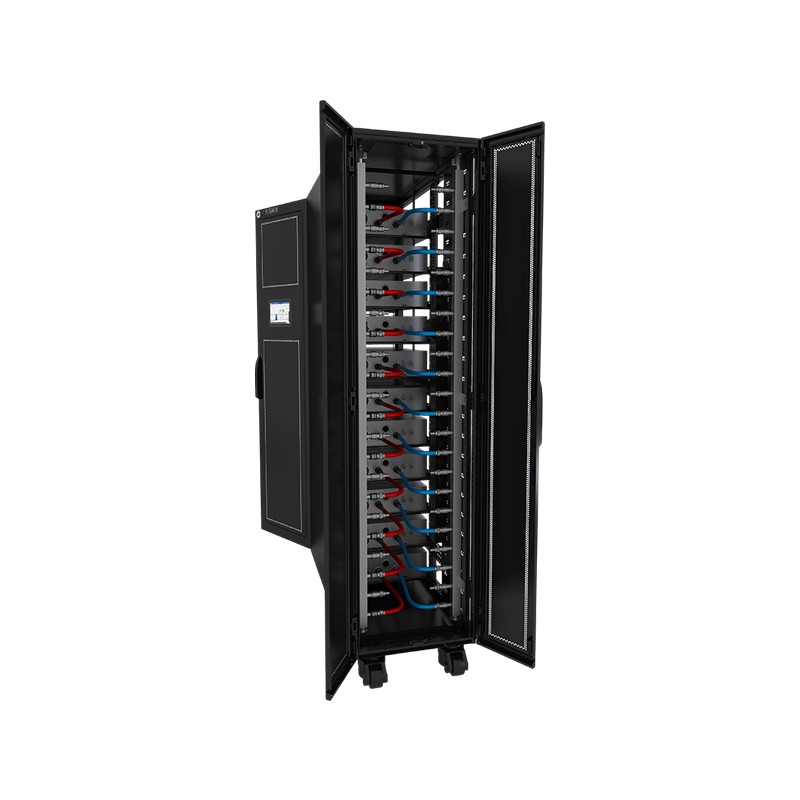
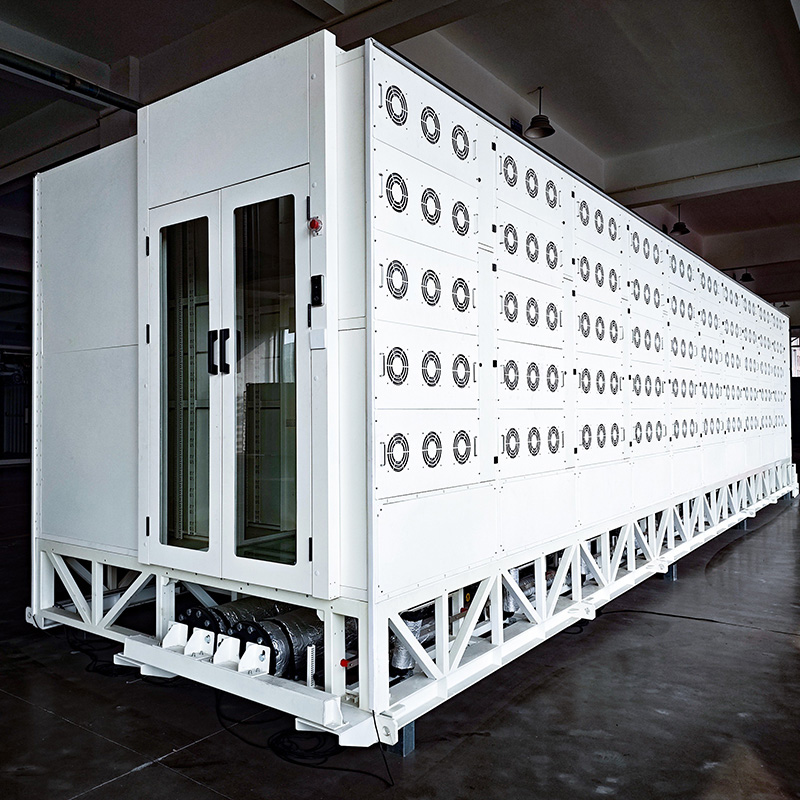

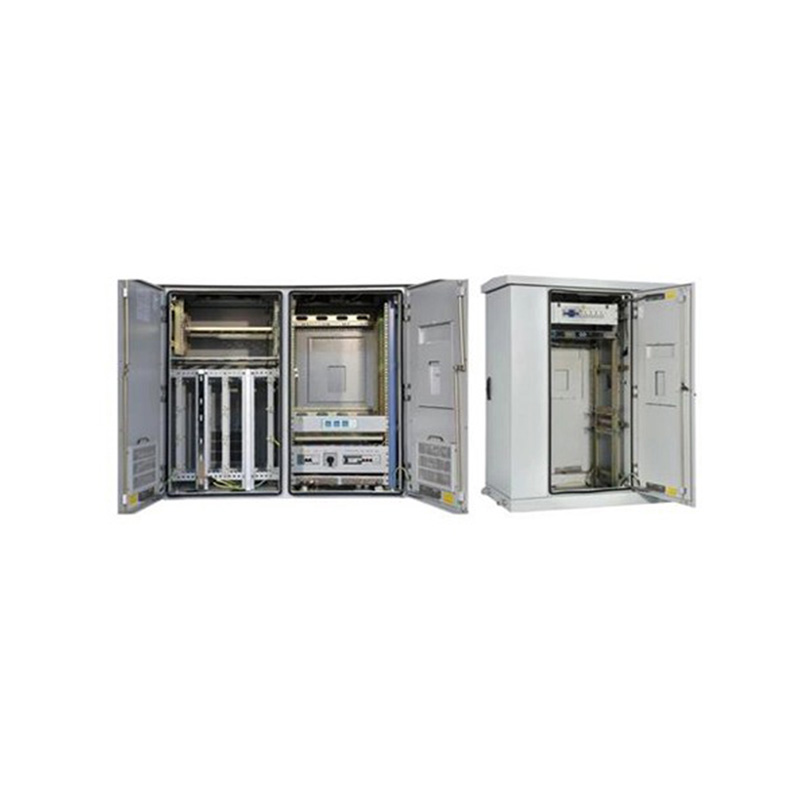
Application:It is used for the fixed network and broadband access, providing physical working environment and security system for the workstation in wired network. Features:•The cabinet is composed of...
See DetailsOutdoor Telecom Cabinet Design for Reliable Network Infrastructure
Content
- 1 1. The Role of an Outdoor Telecom Cabinet
- 2 2. Product Overview
- 3 3. Protection for Demanding Outdoor Environments
- 4 4. Integrated Thermal Management
- 5 5. Standardized Equipment Mounting
- 6 6. Electrical and Service Features
- 7 7. Modularity and Maintenance Efficiency
- 8 8. Advantages Over Conventional Outdoor Enclosures
- 9 9. Manufacturing and Product Development Strengths
- 10 10. Application Scenarios
- 11 11. Installation and Deployment Considerations
- 12 12. Maintenance Strategy
- 13 13. Sustainability and Lifecycle Value
- 14 14. Selecting the Product for a Project
- 15 15. Why the Product Is a Strong Infrastructure Choice
- 16 16. Frequently Asked Questions
- 16.1 Q1: What type of equipment can be installed in the SPX3-KI01?
- 16.2 Q2: What are the cabinet dimensions?
- 16.3 Q3: What material is used for the cabinet?
- 16.4 Q4: What does the IP55 rating provide?
- 16.5 Q5: Does the cabinet include active cooling?
- 16.6 Q6: Why is 48VDC used for the air conditioner and lighting?
- 16.7 Q7: How many internal LED lights are included?
- 16.8 Q8: Is the cabinet suitable for battery-backed systems?
- 16.9 Q9: Is the cabinet appropriate for railway and urban rail transit projects?
- 16.10 Q10: How does the product compare with a fan-cooled cabinet?
- 16.11 Q11: Does IP55 mean the cabinet can be submerged?
- 16.12 Q12: What maintenance is required?
- 16.13 Q13: Can defective components be replaced?
- 16.14 Q14: Can the cabinet be customized?
- 16.15 Q15: Which organizations may benefit from this cabinet?
- 17 17. Conclusion
- 18 References
- 19 Product: SPX3-KI01 Telecom Outdoor Cabinet
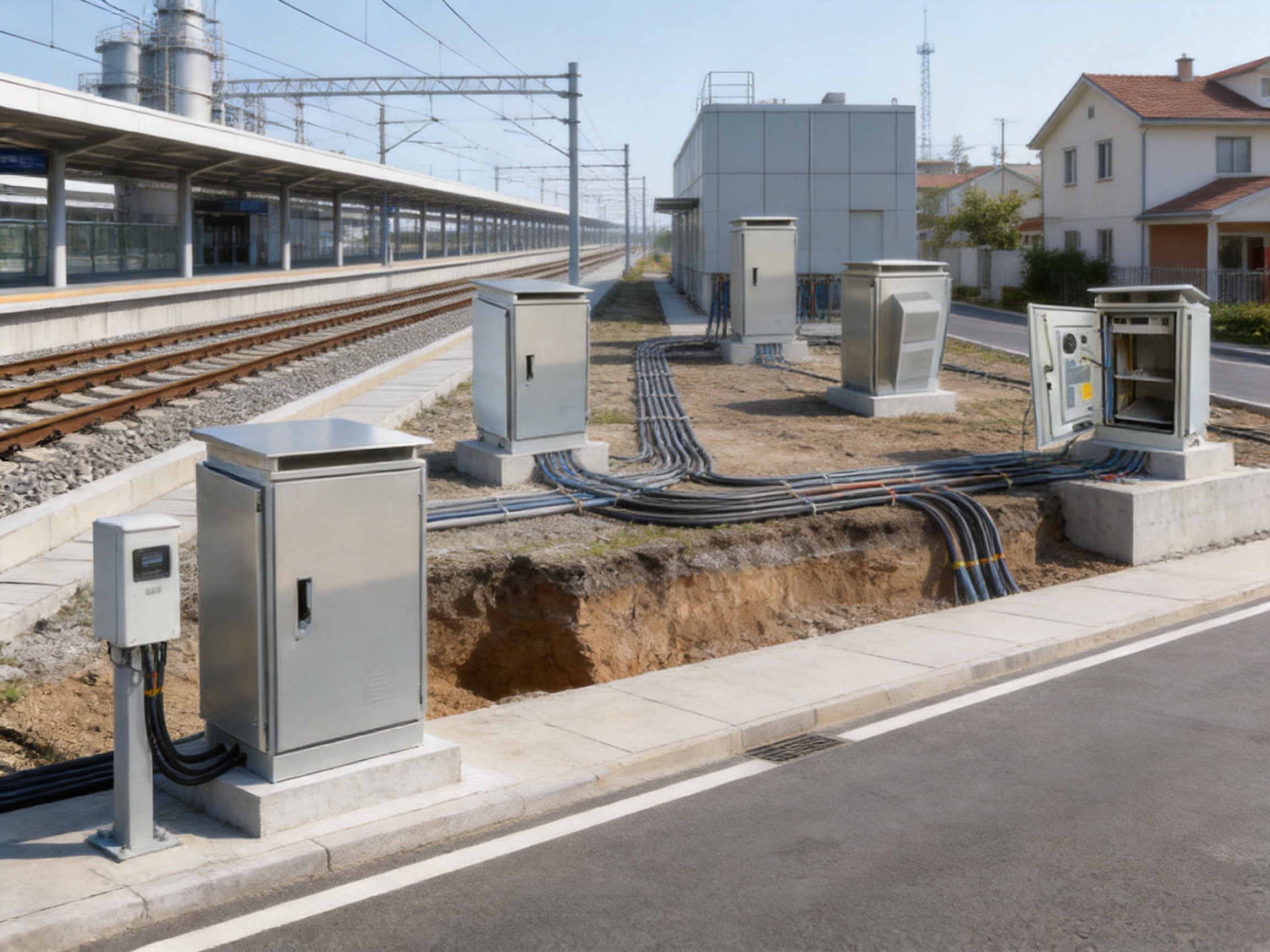
Outdoor communication networks require more than a simple metal enclosure. Equipment installed outside must remain accessible to technicians while being protected from rain, dust, temperature variation, condensation, accidental impact, unauthorized access, and electrical service requirements. The SPX3-KI01 Telecom Outdoor Cabinet is designed as an integrated shelter for telecommunications equipment, distribution frames, power systems, batteries, and environmental-control components. It combines a standardized 19-inch mounting structure with galvanized steel construction, IP55 protection, active air conditioning, internal lighting, and a practical modular design.
This combination makes the cabinet suitable for telecommunications access points, Ethernet network nodes, fiber distribution applications, outdoor power systems, railway communication installations, urban rail transit infrastructure, and other distributed network locations. Rather than treating the enclosure as an empty box, the design addresses the complete outdoor equipment environment: mechanical protection, thermal management, power access, serviceability, and long-term operational stability.
Manufactured by Wanma Technology Co., Ltd., a company established in 1997 and focused on communication cabinets, communication electronic equipment, and passive optical components, the product reflects experience in communication infrastructure. The company serves Ethernet networks, optical communication networks, central equipment rooms, national high-speed railways, and urban rail transit systems. Its ability to develop, manufacture, and market communication products supports a product approach centered on standardized construction, application-specific integration, and long-term service value.
1. The Role of an Outdoor Telecom Cabinet
Telecommunications equipment is increasingly distributed away from controlled indoor equipment rooms. Network operators place active equipment, optical distribution systems, power supplies, batteries, and monitoring devices at roadside cabinets, railway locations, industrial sites, campuses, residential developments, and remote access points. These locations may not have permanent climate-controlled buildings. As a result, the cabinet must provide many of the functions normally supplied by an indoor equipment room.
The enclosure must protect sensitive electronics from environmental exposure while allowing heat generated by power supplies, batteries, and active network devices to be removed. It must also provide a structured space for cable routing, equipment mounting, power distribution, inspection, maintenance, and future expansion. If any one of these functions is neglected, network reliability can decline. Excessive heat may shorten component life, moisture may lead to corrosion or electrical faults, and poor organization may make installation and troubleshooting unnecessarily difficult.
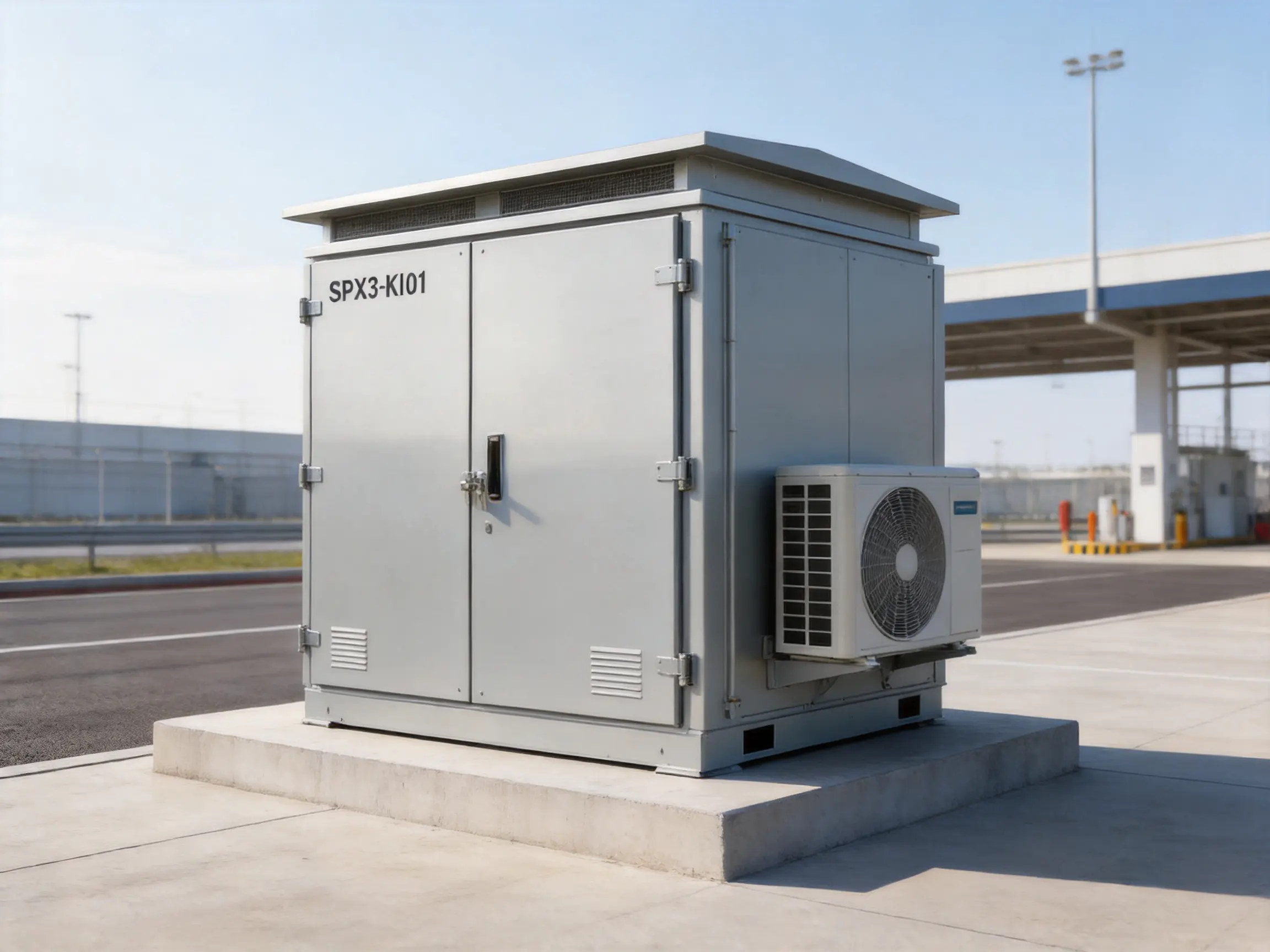
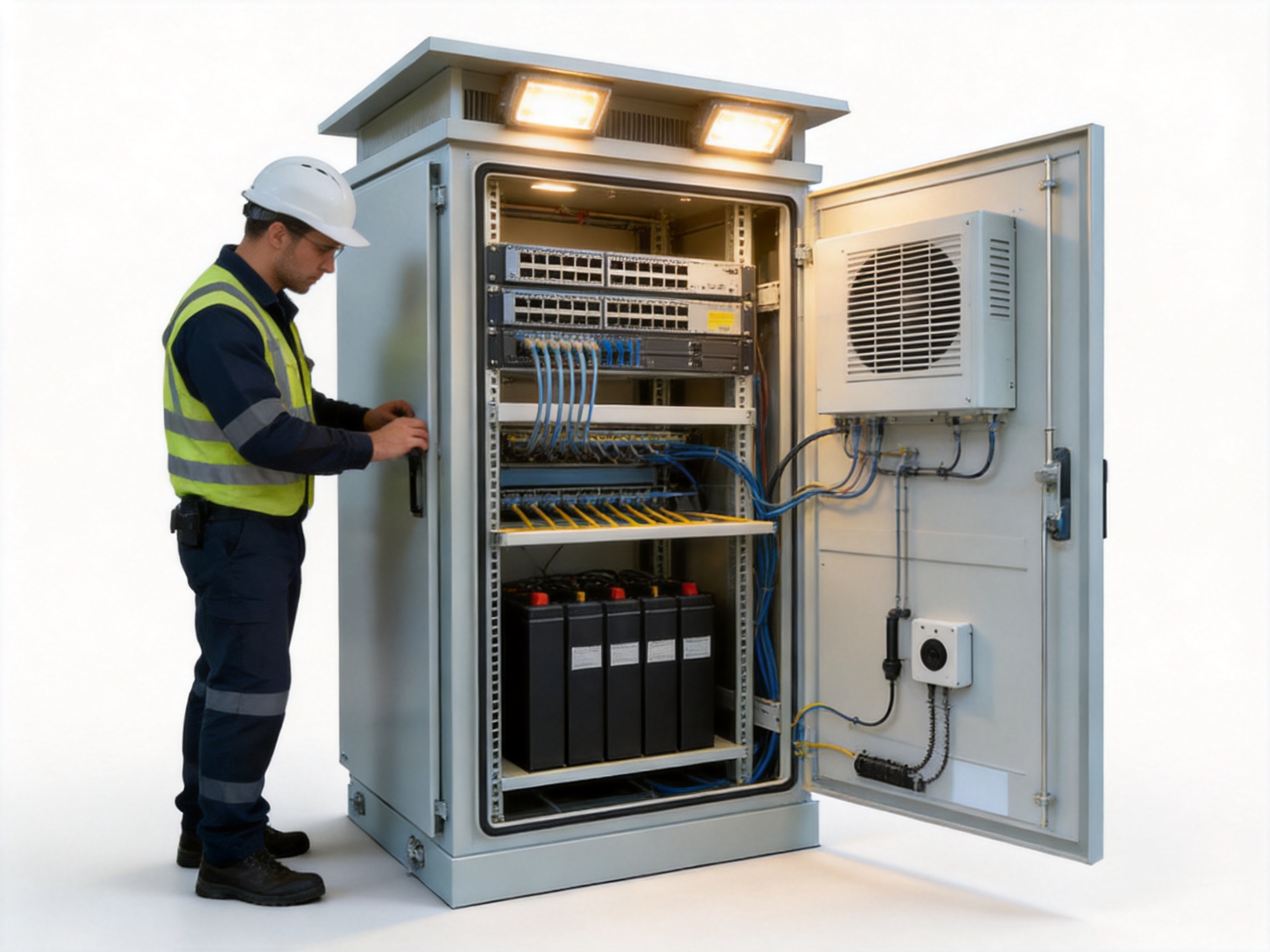
The SPX3-KI01 is designed around this complete operating requirement. Its 19-inch mounting frame supports widely used telecommunications equipment formats. The galvanized steel body provides a strong and durable enclosure structure. IP55 protection helps limit the entry of dust and water. A 48VDC, 500W air conditioner supports temperature control, while two 48VDC LED lights improve visibility during service work. A power inlet socket simplifies connection to the external power system, and an anti-vandalism design helps protect equipment in exposed or publicly accessible locations.
These functions are particularly valuable where equipment must operate continuously and where a service visit is expensive or difficult. A well-designed outdoor cabinet can reduce environmental risk, simplify maintenance, and help operators achieve a longer useful life from the equipment installed inside.
2. Product Overview
The SPX3-KI01 Telecom Outdoor Cabinet is an outdoor enclosure for telecommunications equipment, distribution frames, power supply systems with accumulator batteries, temperature-control equipment, and line-operated power supply services. It is configured for applications that need both equipment protection and integrated environmental management.
| Item | Specification |
|---|---|
| Product type | Telecom outdoor cabinet |
| Product category | Cabinets and racks |
| Mounting format | Standard 19-inch mounting frame |
| Construction material | 2.0 mm galvanized steel |
| Dimensions | 1000 mm high × 700 mm wide × 750 mm deep |
| Ingress protection | IP55 |
| Cooling system | 48VDC, 500W air conditioner |
| Internal lighting | Two 48VDC LED lights |
| Power access | Power inlet socket connection |
| Design features | Low maintenance, anti-vandalism construction, modular serviceability |
| Typical applications | Telecommunications, Ethernet networks, optical communication, railway and urban rail transit infrastructure |
The dimensions provide a practical balance between internal capacity and external footprint. At 1000 mm high, 700 mm wide, and 750 mm deep, the cabinet can accommodate a meaningful combination of network equipment, power components, batteries, cable management elements, and environmental accessories without requiring the space of a full outdoor equipment shelter.
The 19-inch mounting format is a major practical advantage. Network operators, system integrators, and maintenance teams can use familiar equipment dimensions and mounting practices rather than developing special brackets for every installation. Standardization also helps simplify replacement planning, because compatible equipment can be selected from a broad range of telecommunications and networking suppliers.
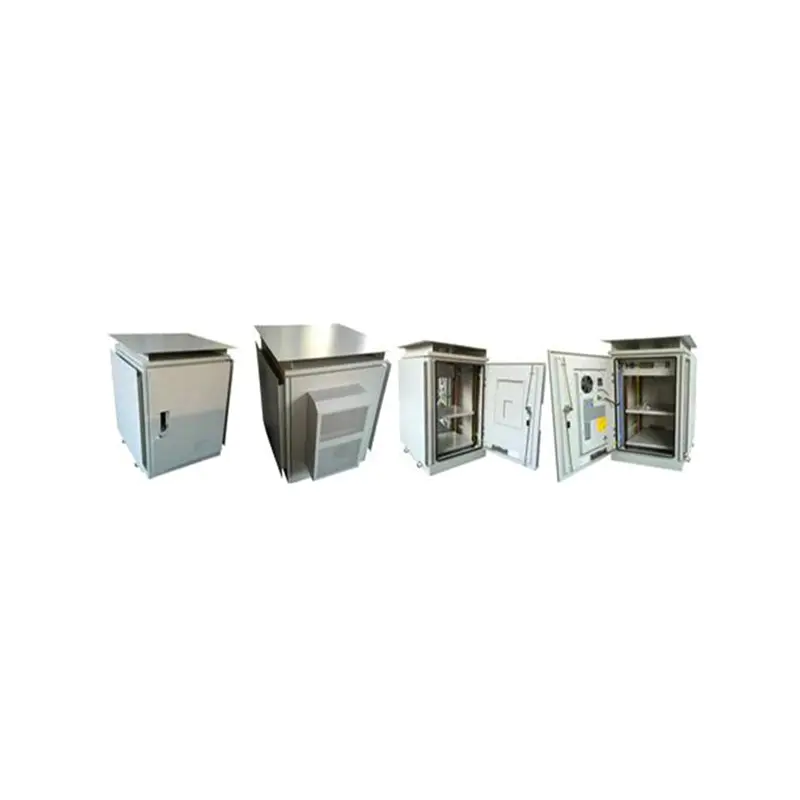
SPX3-KI01 Telecom Outdoor Cabinet
3. Protection for Demanding Outdoor Environments
3.1 Galvanized Steel Construction
The cabinet uses 2.0 mm galvanized steel. This material choice is important for an outdoor enclosure because the cabinet must provide both mechanical strength and resistance to environmental deterioration. The steel body helps protect equipment from accidental impact, handling damage, windborne debris, and unauthorized physical interference. The galvanized surface provides a protective barrier against corrosion, which is especially relevant in humid, rainy, industrial, coastal, and roadside environments.
A 2.0 mm steel structure also provides a robust foundation for mounted equipment. Internal devices, battery systems, cable assemblies, and power components can create significant static loads. A strong cabinet body helps maintain alignment and reduces the risk that doors, mounting rails, or panels will deform during installation and service.
Compared with lightweight enclosures made from thin sheet metal or less durable materials, the SPX3-KI01 is positioned for installations where strength and long-term protection are important. Material thickness alone does not determine total cabinet quality, but it is a meaningful part of the product’s mechanical design. When combined with proper forming, joining, finishing, sealing, and inspection practices, galvanized steel supports a durable outdoor solution.
3.2 IP55 Protection
The cabinet has an IP55 protection level. The first digit indicates protection against dust ingress at a level that prevents harmful deposits from entering the enclosure. The second digit indicates protection against water jets from different directions. This protection is appropriate for many outdoor communication installations where the cabinet is exposed to rain, dust, and routine washdown or spray conditions.
IP55 does not mean that the cabinet can be submerged or installed without regard to site conditions. Correct installation remains essential. Cable entries, doors, seals, drainage considerations, foundation alignment, and maintenance procedures must all support the intended protection level. Even so, an IP55-rated enclosure gives network planners a defined level of environmental protection and is substantially more suitable for outdoor deployment than an ordinary indoor rack.
The protection system also helps reduce the frequency of cleaning and corrective work. By limiting dust and water penetration, the cabinet can help protect fans, connectors, circuit boards, power supplies, and optical components from contamination. Reduced contamination can contribute to more stable operation and lower maintenance requirements over the service life of the installation.
3.3 Anti-Vandalism Design
Outdoor network cabinets may be installed in locations where they are visible and accessible to the public. Railway corridors, streets, construction areas, industrial compounds, parking facilities, and residential developments can all expose infrastructure to accidental or deliberate damage. The anti-vandalism design of the SPX3-KI01 addresses this practical risk.
Physical protection is not a substitute for site security, but it can make unauthorized access and casual interference more difficult. A stronger cabinet structure also helps protect equipment from impacts caused by tools, carts, maintenance vehicles, or surrounding construction work. This is particularly important because the cost of a network interruption can be much higher than the cost of replacing a damaged panel or door.
The enclosure approach supports a layered protection strategy. The cabinet body provides the first physical barrier, the IP-rated construction helps shield the environmental system, and controlled access allows authorized technicians to inspect or replace equipment. Together, these elements help protect network availability and reduce avoidable service calls.
4. Integrated Thermal Management
Heat management is one of the most important functions of an outdoor telecom cabinet. Network devices, power conversion equipment, batteries, and other electrical components generate heat during operation. In a sealed or partially sealed enclosure, that heat can accumulate quickly, especially under direct sunlight or during periods of high ambient temperature. Excessive internal temperature can cause equipment alarms, accelerate component aging, reduce battery performance, and lead to unexpected shutdowns.
The SPX3-KI01 includes a 48VDC, 500W air conditioner. This integrated cooling system is designed to remove heat from the cabinet while operating from a telecommunications-compatible direct-current power system. The use of 48VDC is practical for communication sites because 48VDC power architectures are widely used in telecom equipment and backup-power arrangements.
Active cooling offers a major advantage over passive ventilation when the cabinet contains heat-generating equipment or must maintain a controlled internal environment. Ventilation systems exchange internal air with outside air, which can introduce dust and humidity. Passive heat dissipation may also become inadequate in strong sunlight or high ambient temperatures. An air conditioner can provide a more controlled approach, especially when equipment performance depends on stable operating conditions.
The 500W cooling capacity should be assessed together with the actual heat load, ambient temperature, solar exposure, cabinet placement, and power conditions at each project site. Proper system engineering is still required. However, the inclusion of a dedicated air conditioner demonstrates that the cabinet is intended for active equipment and environmental control rather than simple passive storage.
4.1 Reducing Condensation Risk
Outdoor cabinets experience repeated temperature changes. Warm, humid air may cool rapidly at night, during rain, or when the enclosure is opened for service. This can create condensation on internal surfaces or electronic components. The product design is intended to cause little or no condensation, helping protect equipment from moisture-related deterioration.
Condensation control is especially important for optical communication equipment, power supplies, terminal blocks, batteries, and connectors. Moisture can cause corrosion, insulation problems, signal instability, and progressive damage that may not be immediately visible. A controlled thermal environment, appropriate sealing, disciplined cable-entry practice, and correct maintenance can work together to reduce this risk.
Operators should still consider local humidity, temperature range, installation elevation, solar loading, and door-opening frequency. Environmental control is most effective when the entire cabinet installation is designed as a system rather than treated as an isolated enclosure.
4.2 Cooling Compared with Competitor Approaches
Many basic outdoor cabinets rely on passive ventilation, natural convection, or fan-only cooling. These solutions may be adequate for low-power equipment in mild climates, but they can become less effective as equipment density and ambient temperature increase. Fan-only designs may also draw dusty air into the cabinet and may require more frequent filter maintenance.
The SPX3-KI01 differentiates itself by combining IP55 protection with active 48VDC air conditioning. This approach supports a more controlled internal environment while avoiding the need to sacrifice enclosure protection for airflow. For network operators deploying active Ethernet, optical transport, access, or power equipment, the integrated air conditioner can provide a stronger thermal-management foundation than a simple ventilated box.
Cooling selection should always be matched to the actual thermal load. Nevertheless, the product’s integrated cooling system provides a clear competitive advantage for projects where temperature stability, dust control, and equipment density are important selection criteria.
5. Standardized Equipment Mounting
The standard 19-inch mounting frame is one of the most valuable features of the cabinet. The 19-inch format is widely used for network switches, patch panels, optical distribution units, power shelves, monitoring modules, and telecommunications accessories. Familiar mounting dimensions reduce engineering time and make it easier for installers to plan rack space before equipment arrives at the site.
Standardization also improves lifecycle management. When an installed device reaches the end of its useful life, a compatible replacement can usually be sourced without changing the entire cabinet. This helps reduce project downtime and lowers the risk associated with proprietary mounting arrangements. Maintenance teams can use known tools, mounting hardware, and installation procedures.
The frame also creates a more orderly internal layout. Equipment can be positioned according to power, heat, cable-routing, and access requirements. Optical components can be separated from power equipment, while patching and distribution functions can be arranged for easier inspection. A structured arrangement reduces accidental disconnection and makes troubleshooting more efficient.
For system integrators, a standard frame provides a foundation for customization. The same cabinet platform may be adapted to different network architectures by changing the equipment combination, internal shelves, cable-management accessories, or power configuration. This supports modular project delivery without requiring a completely new cabinet design for every customer.
6. Electrical and Service Features
6.1 Power Inlet Socket Connection
The power inlet socket connection provides a practical interface between the cabinet and the external power service. A clearly defined power-entry arrangement can simplify installation, reduce improvised wiring, and improve the organization of power cables. It also helps technicians identify the cabinet’s service connection during commissioning and maintenance.
Because outdoor cabinets may contain equipment with different power requirements, project planners should verify the complete electrical design, including input voltage, protection, grounding, battery integration, circuit separation, and local code requirements. The cabinet provides a platform for these functions, while the final electrical configuration must be selected for the specific installation.
6.2 48VDC LED Lighting
Two 48VDC LED lights are included inside the cabinet. Internal lighting may appear to be a small feature, but it has a direct effect on service efficiency and technician safety. Outdoor cabinets are often inspected in poor weather, at night, in railway service windows, or in locations where external lighting is insufficient. Integrated LED lighting allows technicians to identify cables, labels, connectors, and equipment indicators without carrying a separate lamp.
Using 48VDC lighting aligns the illumination system with the cabinet’s communication power architecture. LED technology provides efficient lighting with low heat generation, which is appropriate for an enclosure where thermal management matters. Two light sources can improve visibility across the internal working area and reduce shadows created by equipment or cable assemblies.
6.3 Battery and Power-System Accommodation
The cabinet is designed to accommodate a power supply system with an accumulator battery. Backup power is essential in many communications applications because network service must continue during short-term utility interruptions or power-quality events. Housing the battery and associated power equipment in the same protected enclosure can simplify site deployment and reduce the need for a separate shelter.
Battery installation requires careful consideration of weight, ventilation, temperature, service access, electrical isolation, and safety requirements. The cabinet’s robust construction and environmental-control system provide a suitable foundation for this type of integrated arrangement. Final battery selection and internal layout should be reviewed against the operating requirements of the selected battery technology.
7. Modularity and Maintenance Efficiency
Outdoor infrastructure is valuable only when it can be maintained efficiently. A cabinet may protect equipment from the environment, but if every repair requires extensive disassembly, service costs can remain high. The SPX3-KI01 emphasizes modularity so that defective parts can be replaced more easily after impact or equipment failure.
Modular design can include separable panels, accessible mounting components, replaceable environmental-control elements, organized cable paths, and equipment sections that can be serviced independently. The practical benefit is reduced mean time to repair. Technicians can focus on the failed component rather than removing unrelated equipment or dismantling the entire cabinet.
Little or no maintenance is required under normal operating conditions, according to the product description. This reflects the value of a sealed, durable, and integrated design. It does not mean that inspections should be eliminated. Outdoor cabinets still benefit from scheduled checks of door seals, cable entries, grounding, cooling performance, lighting, power connections, and visible corrosion. Preventive inspection is generally less costly than emergency repair.
Compared with improvised outdoor installations, a modular cabinet offers a more predictable maintenance process. An improvised arrangement may use separate weather covers, exposed wiring, non-standard brackets, and individually sourced cooling devices. Such systems can be difficult to document and repair. A purpose-designed cabinet provides a consistent platform that can be repeated across multiple sites.
8. Advantages Over Conventional Outdoor Enclosures
The SPX3-KI01 competes not only with other telecom cabinets but also with several alternative installation methods. These alternatives include standard indoor racks placed inside basic shelters, small passive outdoor boxes, ventilated cabinets, and custom-built metal enclosures. Each approach may be suitable in limited circumstances, but the SPX3-KI01 combines several functions in one coordinated product.
8.1 Compared with Basic Passive Cabinets
A basic passive cabinet may provide weather protection but lack active thermal control. Such cabinets are often suitable for low-power passive optical components or environments with moderate temperatures. As equipment density increases, however, passive cooling may not be sufficient. The integrated 500W air conditioner gives the SPX3-KI01 a stronger position for active network nodes and combined equipment-power installations.
8.2 Compared with Fan-Cooled Cabinets
Fan-cooled cabinets can remove heat at relatively low initial cost, but they generally exchange internal air with external air. In dusty or humid environments, this may increase contamination and maintenance needs. Fan filters may become blocked, and cooling performance may decline if filters are not serviced. The air-conditioned, IP55 design of the SPX3-KI01 supports a more controlled internal environment.
8.3 Compared with Custom Fabrication
Custom-fabricated cabinets can be tailored to a particular project, but they may require longer engineering cycles, repeated testing, and special replacement parts. A standardized product with 19-inch mounting, known dimensions, integrated lighting, and established environmental features can shorten project planning and improve consistency between sites.
8.4 Compared with Indoor Rack Installation
An indoor rack requires a building or dedicated shelter with suitable security, climate control, and power arrangements. In remote or distributed network locations, constructing such a facility may be expensive or impractical. An outdoor telecom cabinet provides a compact alternative by integrating equipment mounting, enclosure protection, cooling, lighting, and power access in a single platform.
| Evaluation factor | Basic passive box | Fan-cooled enclosure | Custom-built cabinet | SPX3-KI01 approach |
|---|---|---|---|---|
| Standard equipment mounting | May be limited | May be available | Project-dependent | Standard 19-inch frame |
| Thermal management | Natural or passive cooling | Air exchange through fans | Depends on specification | 48VDC, 500W air conditioner |
| Dust and water protection | Varies widely | May be reduced by ventilation | Depends on workmanship | IP55 design |
| Service lighting | Usually not included | Usually not included | Optional | Two 48VDC LED lights |
| Physical protection | Basic | Varies | Project-dependent | 2.0 mm galvanized steel and anti-vandalism design |
| Deployment repeatability | Moderate | Moderate | Lower unless standardized | High for multi-site network projects |
| Maintenance approach | May require frequent inspection | Filter and fan maintenance | Depends on parts availability | Modular replacement and low-maintenance design |
The table is a general comparison rather than a substitute for project-specific engineering. Environmental conditions, equipment heat load, security needs, electrical regulations, and site access must all be considered. Even so, it illustrates how the product brings multiple infrastructure functions together in one enclosure.
9. Manufacturing and Product Development Strengths
The performance of an outdoor cabinet depends not only on its specification but also on how consistently it is manufactured. Sheet-metal accuracy, surface treatment, sealing, mounting alignment, electrical integration, and final inspection all influence field reliability. Wanma Technology Co., Ltd. has specialized in communication cabinets, communication electronic equipment, and passive optical components since 1997. This long-term focus provides an industry-specific foundation for developing products for network infrastructure.
A communication cabinet manufacturer must understand more than metal fabrication. The enclosure must accommodate real telecommunications equipment, cable-routing practices, optical components, power systems, battery arrangements, maintenance procedures, and environmental constraints. Experience across these areas helps connect mechanical design with network operation.
9.1 Application-Oriented Engineering
The product is designed for practical network applications rather than for general-purpose storage. The standard frame, 48VDC cooling, 48VDC lighting, power inlet, battery accommodation, and IP55 construction reflect the requirements of communication sites. This application-oriented design can reduce the amount of integration work required from network operators and project contractors.
Application knowledge also supports customization. The company develops and markets its own branded products while providing integrated solutions for customized products. This combination allows customers to begin with a standardized cabinet platform and adjust selected details when a project requires a particular equipment arrangement, power configuration, or site deployment strategy.
9.2 Integrated Manufacturing Perspective
Cabinet production typically involves material preparation, precision cutting or forming, joining, surface treatment, assembly, installation of hardware, integration of cooling and lighting, sealing, and inspection. Each step affects the finished enclosure. Accurate dimensions are necessary for 19-inch equipment alignment. Consistent joining supports structural strength. Proper finishing helps protect the steel from corrosion. Correct sealing supports the intended ingress protection.
An experienced manufacturer can coordinate these steps as one product process instead of treating the enclosure, cooling system, lighting, and mounting frame as unrelated parts. This integrated perspective supports repeatable production and simplifies quality control. It also makes it easier to identify potential interface problems before the cabinet reaches the installation site.
9.3 Quality and Delivery Orientation
For infrastructure projects, delivery performance is closely connected to construction schedules and network rollout plans. A cabinet that arrives late can delay equipment installation, commissioning, and service activation. Wanma Technology emphasizes reliable product quality, timely delivery, and long-term strategic partnerships with industry leaders. These priorities are relevant to contractors and operators managing multi-site deployments.
Repeatable production is especially valuable when many cabinets must be installed across a railway route, urban transit system, broadband network, or regional access program. Standardized dimensions and documented configurations help teams plan foundations, cable routes, power supplies, and maintenance procedures more consistently from one site to the next.
9.4 Experience in Network Infrastructure
The company’s products are used in Ethernet networks, optical communication networks, central equipment rooms, national high-speed railways, and urban rail transit systems. These applications demand dependable physical infrastructure because network equipment may support passenger information, signaling-related communications, operations management, surveillance, broadband access, or enterprise connectivity.
Experience across these sectors strengthens the relevance of the product for demanding deployments. Railway and transit locations often require durable outdoor equipment, organized service access, and reliable operation despite vibration, temperature changes, dust, and limited maintenance windows. Ethernet and optical networks require structured mounting and cable management. Central equipment applications require compatibility with recognized rack formats. The SPX3-KI01 addresses these shared infrastructure needs.
10. Application Scenarios
10.1 Ethernet Access and Distribution
Ethernet networks increasingly extend beyond central data rooms. Access switches, aggregation devices, optical terminals, power supplies, and monitoring equipment may need to be installed closer to users or remote facilities. The cabinet offers a protected location for these devices, with standardized mounting and active cooling.
It can support network modernization projects in commercial developments, industrial parks, campuses, public facilities, and distributed enterprise locations. The enclosure helps operators deploy active equipment without constructing a dedicated indoor room at every access point.
10.2 Optical Communication Networks
Optical networks use distribution frames, fiber management systems, splice components, optical line equipment, and power systems. These components benefit from a clean, organized, and protected installation environment. The 19-inch frame allows optical and electronic modules to be arranged in a structured manner, while the IP55 enclosure limits environmental exposure.
10.3 Railway and Urban Rail Transit
Railway and urban rail transit systems depend on communication infrastructure distributed along routes, at stations, in equipment zones, and near operational facilities. Cabinets may house network switches, optical distribution equipment, power systems, batteries, and environmental monitoring modules. The anti-vandalism design and durable galvanized-steel body are useful where equipment is installed in exposed or semi-public areas.
The integrated LED lighting can also improve service work during restricted maintenance windows. Technicians can inspect equipment inside the cabinet without depending entirely on station lighting or portable lamps.
10.4 5G and FTTH Modernization
Network modernization projects related to 5G and fiber-to-the-home infrastructure often require more distributed equipment locations. Higher data demand can increase the number of active access and aggregation points, while fiber deployment requires organized optical management and reliable power. A compact outdoor cabinet can provide a practical platform for adding equipment to locations where indoor space is unavailable.
Project designers should evaluate the cabinet’s internal capacity, power budget, cooling requirement, battery arrangement, and cable-entry needs against the specific 5G or FTTH architecture. The product’s standard frame and modular concept can support different configurations while preserving a consistent external installation method.
10.5 Industrial and Remote Communications
Factories, utilities, logistics yards, transportation facilities, and remote monitoring stations often require communication equipment outside conventional buildings. In these environments, dust, heat, moisture, and physical access can create operational challenges. The cabinet provides a stronger protective environment than an exposed rack or improvised shelter and can house both network equipment and backup power components.
11. Installation and Deployment Considerations
A reliable cabinet installation begins with site evaluation. Engineers should assess ground stability, drainage, solar exposure, ambient temperature, wind, access for service vehicles, proximity to power, cable routes, and the risk of accidental impact. The cabinet should be installed on a stable, level foundation capable of supporting the enclosure, mounted equipment, batteries, and any additional accessories.
Clearance around the cabinet should be sufficient for door opening, cooling-system operation, inspection, and component replacement. The air conditioner must have appropriate space for heat rejection according to the installation design. Obstructions that block airflow around the environmental-control system can reduce performance and increase energy consumption.
Cable entries should be planned to maintain the intended IP protection. Unused openings should be sealed, and cables should be supported to prevent strain on connectors or glands. Optical fiber should be routed with suitable bend-radius control, while power and signal cables should be organized to reduce interference and improve service access.
Grounding and bonding should be completed according to local electrical requirements and the project’s protection strategy. The galvanized-steel cabinet, internal equipment, power system, and external grounding network should be considered together. Surge protection, circuit protection, and battery isolation should be selected based on the equipment and site conditions.
Before commissioning, technicians should verify the physical installation, door and seal operation, rack alignment, cooling operation, LED lighting, power inlet, grounding, cable identification, and internal equipment clearances. A commissioning record can provide useful baseline information for future maintenance.
12. Maintenance Strategy
The product is designed to require little or no maintenance during normal operation, but a planned inspection program remains beneficial. The inspection interval should reflect the local climate, dust level, equipment criticality, and access conditions. Sites in clean and controlled environments may require less frequent attention than roadside, coastal, industrial, or construction-area installations.
Maintenance personnel should check the cabinet exterior for impact damage, corrosion, loose hardware, and signs of unauthorized access. Door seals and locking components should be examined for wear. Cable entries should be inspected for gaps or movement. The foundation and surrounding drainage should be reviewed after severe weather.
The cooling system should be checked for abnormal noise, reduced performance, alarms, and visible obstruction. Internal temperatures can be recorded to establish a trend and identify gradual deterioration. The LED lights and power inlet should be tested during scheduled service visits. Battery condition, power connections, and grounding should be inspected according to the requirements of the installed equipment.
Modular replacement is an important part of the maintenance strategy. If a cooling component, lighting component, panel, or other serviceable part is damaged, the modular design can help technicians replace the affected section instead of removing the entire cabinet. This can reduce outage duration and simplify inventory planning.
13. Sustainability and Lifecycle Value
Outdoor infrastructure should be evaluated over its entire lifecycle rather than by purchase price alone. A cabinet that protects equipment effectively, reduces service visits, supports replacement parts, and accommodates future upgrades can provide greater value than a lower-cost enclosure with limited environmental or mounting capability.
The SPX3-KI01 supports lifecycle value through durable galvanized steel, standardized 19-inch mounting, integrated cooling, internal lighting, and modular serviceability. Standard mounting helps extend the useful life of the enclosure because new equipment can often be installed without replacing the cabinet. Modular repair can reduce material waste when only one component is affected.
Thermal management may also contribute to equipment longevity. Maintaining a more stable internal temperature can help reduce thermal stress and premature failure in electronic devices and power systems. The exact energy performance depends on the cooling load, ambient conditions, equipment operation, and control settings, so each deployment should be optimized accordingly.
Long-term infrastructure value also includes documentation and repeatability. When the same cabinet platform is used across a network, operators can standardize training, spare parts, inspection procedures, and replacement planning. This can reduce the complexity of managing geographically distributed sites.
14. Selecting the Product for a Project
The SPX3-KI01 is well suited to projects that require a compact outdoor enclosure with integrated environmental management and standardized equipment mounting. Before selection, project teams should define the total equipment heat load, rack-unit requirement, battery size, power input, cable count, optical management needs, and expected ambient conditions.
The 1000 mm × 700 mm × 750 mm cabinet dimensions should be compared with the equipment layout and service clearances. It is useful to prepare a detailed internal arrangement drawing showing equipment positions, cable paths, battery placement, cooling airflow, and access zones. This step can prevent interference between components and confirm that maintenance tasks can be completed without removing unrelated equipment.
Operators should also identify the protection requirements of the installation. IP55 is appropriate for many outdoor deployments, but sites with flooding risk, unusual chemical exposure, salt spray, extreme temperature, or special fire and security requirements may need additional design measures. The cabinet should be integrated with the foundation, shelter, drainage, grounding, and site-security plan.
For multi-site network programs, a standard configuration can be created with defined equipment positions, power circuits, labels, cable lengths, and commissioning procedures. Where different sites require different equipment combinations, the cabinet’s modular design can support controlled variation without abandoning the common platform.
15. Why the Product Is a Strong Infrastructure Choice
The strength of the SPX3-KI01 lies in the combination of features rather than in any single specification. The 2.0 mm galvanized-steel body provides a durable mechanical enclosure. IP55 protection helps shield equipment from dust and water. The standard 19-inch frame supports commonly available telecommunications equipment. The 48VDC, 500W air conditioner manages heat in active installations. Two 48VDC LED lights improve service visibility. The power inlet supports organized connection, while anti-vandalism and modular construction address practical outdoor risks.
These features make the product more complete than a basic weatherproof cabinet. It is designed to function as a compact outdoor equipment environment, supporting communication, power, thermal, and maintenance requirements in one platform. That integrated approach can reduce installation complexity and help network operators achieve more consistent results across distributed sites.
The product is also supported by a manufacturer with long-term experience in communication infrastructure. Wanma Technology Co., Ltd. serves communication and transportation-related applications, develops its own products, and provides integrated solutions for customized requirements. Its focus on quality, delivery, and long-term customer relationships is relevant to network projects where cabinets form part of a larger infrastructure rollout.
16. Frequently Asked Questions
Q1: What type of equipment can be installed in the SPX3-KI01?
The cabinet is designed for telecommunications equipment, distribution frames, power supply systems, accumulator batteries, temperature-control equipment, and line-operated power service components. Its standard 19-inch mounting frame supports many commonly used network and telecom devices.
Q2: What are the cabinet dimensions?
The external dimensions are 1000 mm high, 700 mm wide, and 750 mm deep. Project teams should confirm the equipment layout and required service clearances before installation.
Q3: What material is used for the cabinet?
The enclosure is made from 2.0 mm galvanized steel. This provides a strong structure and a protective surface suitable for many outdoor communication environments.
Q4: What does the IP55 rating provide?
IP55 indicates protection against dust at a level that prevents harmful deposits and protection against water jets from different directions. The rating is intended for suitable outdoor installations, but correct cable sealing, door closure, foundation design, and maintenance remain necessary.
Q5: Does the cabinet include active cooling?
Yes. The product includes a 48VDC, 500W air conditioner. The actual cooling suitability should be checked against the equipment heat load, ambient temperature, solar exposure, and installation conditions.
Q6: Why is 48VDC used for the air conditioner and lighting?
48VDC is widely used in telecommunications power systems. Using this voltage for the air conditioner and LED lighting can support compatibility with common telecom power architectures and backup-power arrangements.
Q7: How many internal LED lights are included?
The cabinet includes two 48VDC LED lights. They improve visibility during installation, inspection, and maintenance, particularly in low-light outdoor conditions.
Q8: Is the cabinet suitable for battery-backed systems?
Yes. The product is designed to accommodate a power supply system with an accumulator battery. Battery type, capacity, ventilation, weight, safety, and electrical protection should be confirmed during project design.
Q9: Is the cabinet appropriate for railway and urban rail transit projects?
It is suitable for communication infrastructure applications in railway and urban rail transit environments, including locations that require protected equipment mounting, power integration, cooling, and service access. Site-specific requirements should be reviewed before deployment.
Q10: How does the product compare with a fan-cooled cabinet?
The SPX3-KI01 uses a 48VDC air conditioner rather than relying only on outside-air exchange. This can provide more controlled thermal management and help limit the introduction of dust and humidity associated with ventilated designs.
Q11: Does IP55 mean the cabinet can be submerged?
No. IP55 does not indicate protection against immersion. The cabinet should be installed on a suitable foundation with appropriate drainage and should not be placed where flooding or standing water can exceed its design conditions.
Q12: What maintenance is required?
The cabinet is designed for little or no maintenance under normal conditions, but periodic inspection is recommended. Service teams should check seals, doors, grounding, cable entries, cooling operation, lighting, power connections, corrosion, and battery condition as appropriate for the site.
Q13: Can defective components be replaced?
The modular design facilitates replacement of defective parts, including parts affected by impact. The exact replacement procedure depends on the component and the installed configuration.
Q14: Can the cabinet be customized?
The manufacturer develops its own products and provides integrated solutions for customized products. Customers should discuss equipment layout, power requirements, cooling load, cable entry, battery arrangement, and other project-specific needs during the design stage.
Q15: Which organizations may benefit from this cabinet?
Telecommunications operators, broadband providers, railway and urban transit authorities, system integrators, industrial network operators, infrastructure contractors, and enterprise network teams may benefit from the product where protected outdoor equipment deployment is required.
17. Conclusion
The SPX3-KI01 Telecom Outdoor Cabinet is designed to provide a dependable operating environment for distributed telecommunications infrastructure. Its 2.0 mm galvanized-steel construction, IP55 protection, anti-vandalism design, 19-inch mounting frame, 48VDC active cooling, internal LED lighting, power inlet, and modular serviceability address the main challenges of outdoor network deployment.
Its advantage over simpler cabinets is the integration of environmental, mechanical, electrical, and maintenance functions in one coordinated platform. The product can support active Ethernet and optical equipment, power systems with accumulator batteries, railway and urban rail transit communication infrastructure, 5G and FTTH modernization, and other distributed network applications.
The manufacturer’s long-term focus on communication cabinets, communication electronic equipment, and passive optical components further supports the product’s application relevance. Experience in Ethernet networks, optical communications, high-speed railways, and urban rail transit provides a foundation for designing infrastructure that must remain reliable outside controlled equipment rooms.
For operators and integrators, the cabinet offers a practical way to standardize outdoor network sites while retaining the flexibility to accommodate different equipment combinations. When correctly selected, installed, commissioned, and maintained, it can help protect valuable equipment, simplify service work, and support the long-term expansion of modern communication networks.
References
1. Wanma Technology Co., Ltd. Product information for the SPX3-KI01 Telecom Outdoor Cabinet.
2. Wanma Technology Co., Ltd. Corporate information concerning communication cabinets, communication electronic equipment, passive optical components, and integrated communication solutions.
3. International Electrotechnical Commission. Degrees of Protection Provided by Enclosures, IP Code classification principles.
4. International Electrotechnical Commission. Mechanical and environmental considerations for electrical and electronic equipment enclosures.
5. Telecommunications industry guidance on 19-inch equipment racks, cabinet integration, and distributed network infrastructure.
6. Outdoor communication infrastructure engineering practices for thermal management, condensation reduction, grounding, cable entry, and preventive maintenance.
Product: SPX3-KI01 Telecom Outdoor Cabinet
PREV:Outdoor SMC Fiber Optic Distribution Boxes for High-Capacity Access Networks
NEXT:Intelligent Uniform Distribution Systems for Safer, More Efficient Hospital Clean-Zone Operations
NEXT:Intelligent Uniform Distribution Systems for Safer, More Efficient Hospital Clean-Zone Operations
Interested in cooperation or have questions?
Related products
-
-
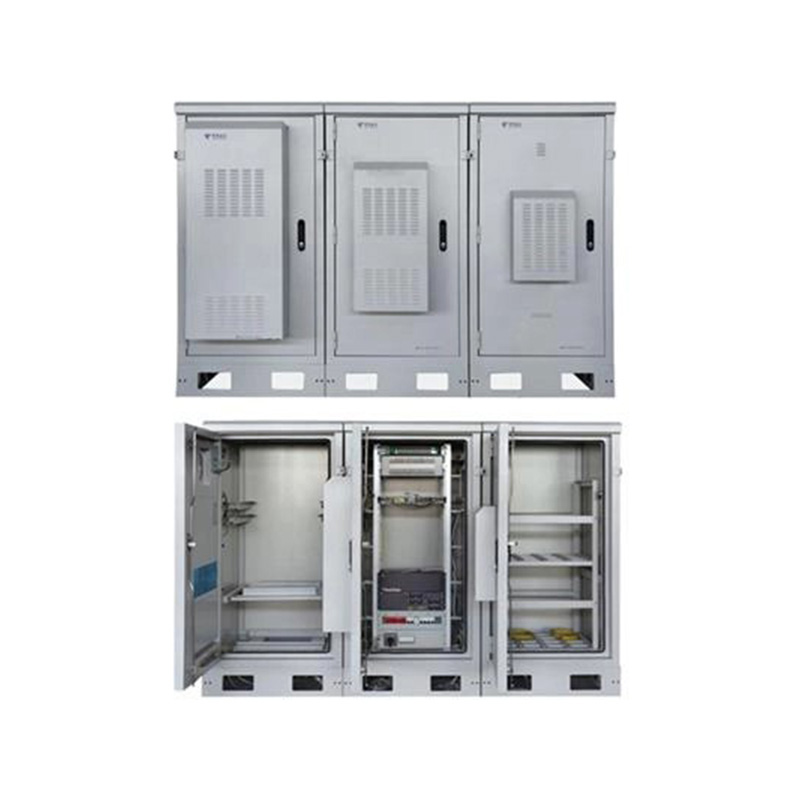
Application ScopeThis product is used in wireless network coverage systems, providing a safe and stable physical working environment and comprehensive security protection for workstations at wireless ...
See Details -
Application: The enclosure for outdoor wiring is designed for locating of telecommunication equipment, distributing frame, power supply system with accumulator battery, equipment for maintaining tempe...
See Details -
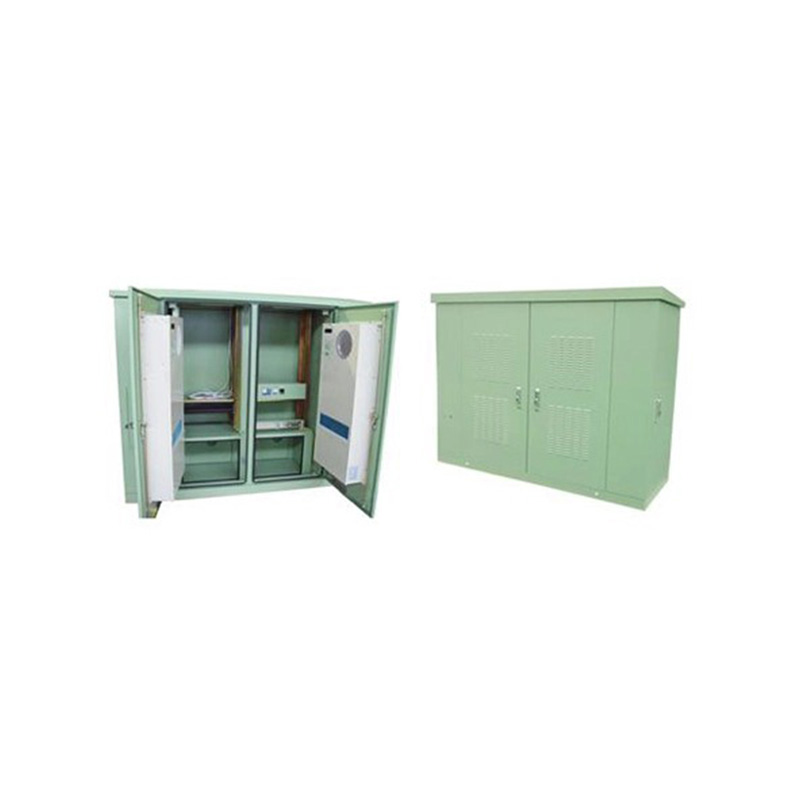
Application:The enclosure for outdoor wiring is designed for locating of telecommunication equipment, distributing frame, power supply system with accumulator battery, equipment for maintaining temper...
See Details
Ready to Get started ? Contact Us Now !

Product.
Contact Details.
-
 +86 13958188250
-
 +86 13958188250
-
 [email protected]
-
 AUDIT Email:[email protected]
- Wanma Industrial Park Taihu Yuan Town Lin'an District Hangzhou City China.
QR Code

Copyright © Wanma Technology Co., Ltd. All Rights Reserved.
Privacy
Custom Ethernet Optical Network Railway Transit Equipments Suppliers
