

 English
 Français
 Español
 Português
 عربى




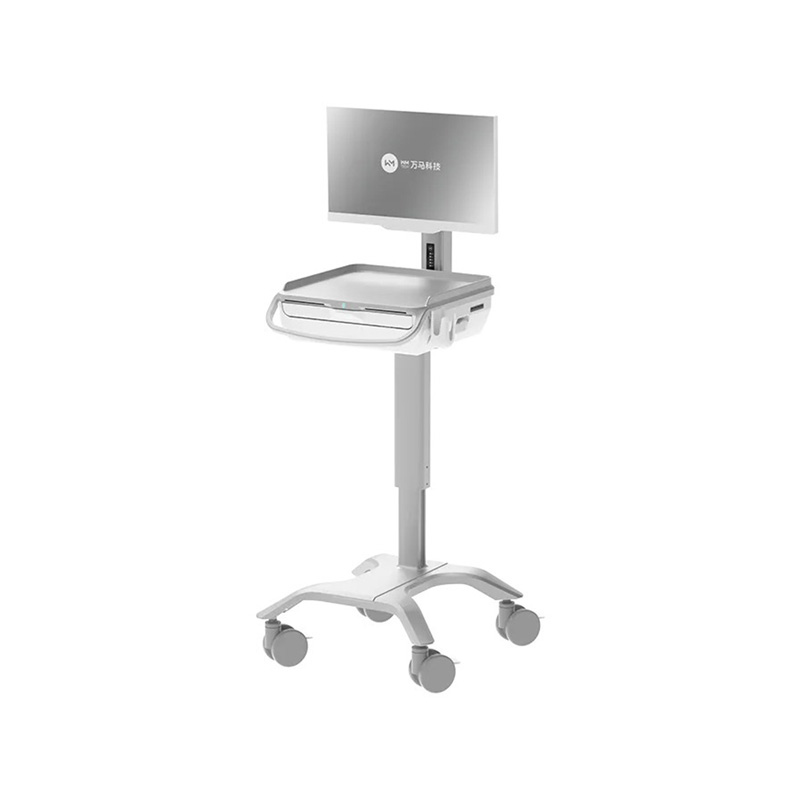

Product DefinitionThe WMYC-J2-24 Medical Cart (with Drawer) is an intelligent mobile workstation designed for modern clinical environments. Featuring a lightweight aluminum structure, it integrates a ...
See DetailsHow Intelligent Medical Carts with Electric Lifting Tables Improve Bedside Clinical Workflows
Content
- 1 1. The Role of Medical Carts in Smart Healthcare
- 2 2. Product Definition and Core Configuration
- 3 3. Intelligent Order Assistance at the Point of Care
- 4 4. Electric Height Adjustment and Clinical Ergonomics
- 5 5. Efficient Information Integration
- 6 6. Advantages Compared with Conventional Medical Carts
- 7 7. Applications in Different Clinical Environments
- 8 8. Manufacturing Strength Behind the Product
- 9 9. OEM and ODM Customization Capabilities
- 10 10. Reliability, Maintenance, and Long-Term Use
- 11 11. Integration with HIS, EMR, and Smart Ward Systems
- 12 12. Why Manufacturing Background Matters in Medical Equipment
- 13 13. Deployment Recommendations for Hospitals
- 14 14. Future Development of Intelligent Medical Carts
- 15 15. Frequently Asked Questions
- 15.1 15.1 What is the main purpose of the WMYC-D2-30 Medical Cart?
- 15.2 15.2 How does the electric lifting table improve clinical work?
- 15.3 15.3 Can the cart be used in intensive care units?
- 15.4 15.4 Can the product connect to an HIS or EMR system?
- 15.5 15.5 What optional accessories are available?
- 15.6 15.6 How is this product different from a conventional medical trolley?
- 15.7 15.7 Does the electric lifting function reduce structural stability?
- 15.8 15.8 Can the manufacturer provide OEM or ODM services?
- 15.9 15.9 What should hospitals consider before purchasing?
- 15.10 15.10 Is the product suitable for international projects?
- 16 16. Conclusion
- 17 References
- 18 Product: WMYC-D2-30 Medical Carts
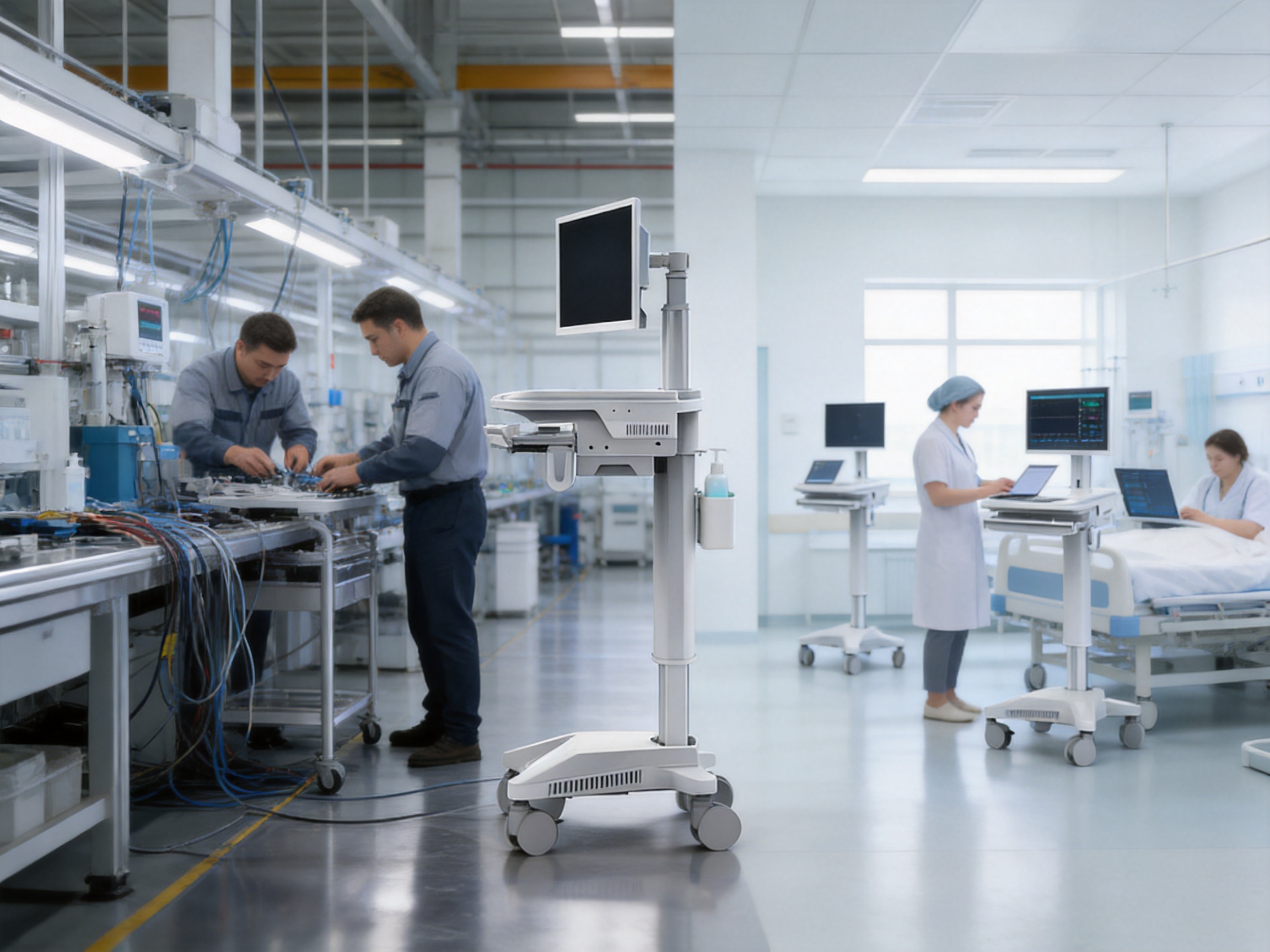
Modern healthcare depends on accurate information, fast communication, and safe execution. Hospitals are therefore moving beyond conventional treatment equipment and adopting mobile digital workstations that can support clinicians wherever care is delivered. A medical cart with an electric lifting table is one of the most practical results of this transformation. It combines mobility, clinical information access, ergonomic adjustment, power management, and bedside documentation in one integrated platform.
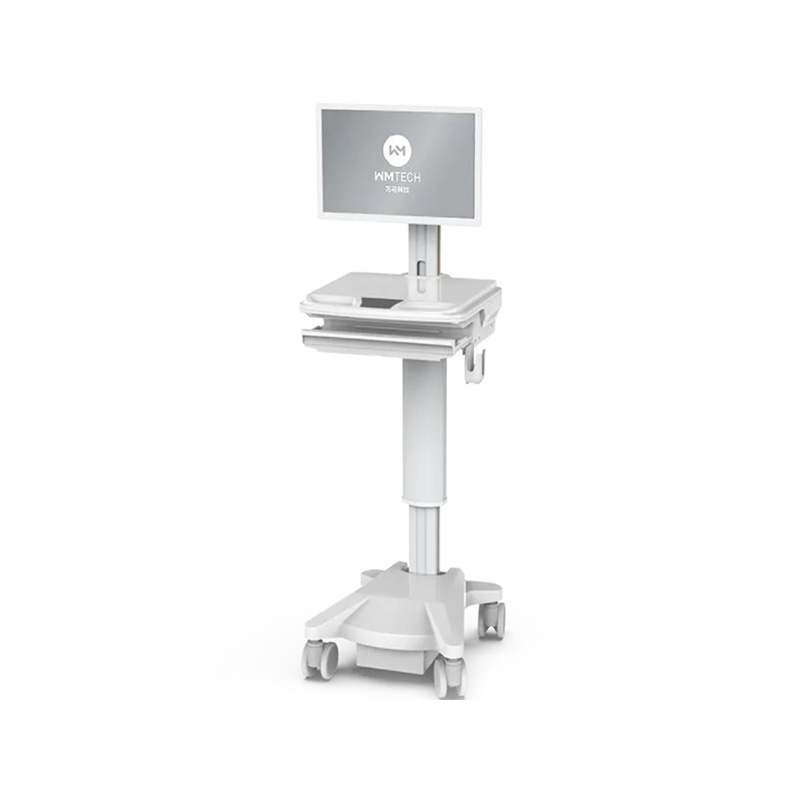
The WMYC-D2-30 Medical Cart is designed for hospitals that need more than a simple trolley for transporting supplies. It is an intelligent mobile medical workstation that supports medical order management, patient information inquiry, electronic medical record entry, and clinical assistance. By bringing digital tools directly to the bedside, it helps reduce unnecessary movement, shorten information-transfer time, and improve the continuity of care.
Unlike a fixed workstation, the WMYC-D2-30 can move between wards, treatment areas, emergency departments, intensive care units, outpatient rooms, and medication service points. Unlike a basic mobile cart, it provides an integrated working platform with an electric lifting table, power system, and professional computer configuration. This combination makes it suitable for hospitals seeking a flexible and scalable foundation for smart ward construction.
The product also benefits from the manufacturing experience of Wanma Technology Co., Ltd. The company has operated since 1997 and has developed capabilities in communication cabinets, communication electronic equipment, passive optical components, and integrated technical solutions. Experience in precision manufacturing, equipment reliability, data transmission, and complex system integration provides an important foundation for producing dependable medical workstations.
WMYC-D2-30 Medical Carts
1. The Role of Medical Carts in Smart Healthcare
Healthcare delivery is increasingly information-driven. Clinicians must review patient histories, verify orders, record treatments, confirm medication execution, and update electronic medical records while maintaining direct contact with patients. If these activities require repeated travel between a nurse station and a patient room, staff time is consumed by movement rather than care.
Traditional workflows may involve handwritten notes, printed order sheets, fixed desktop terminals, and later data entry. These methods can create delays between the moment an action occurs and the moment it is recorded in the hospital information system. They may also increase the risk of transcription errors, incomplete documentation, or missed updates.
A mobile medical workstation changes this operating model. It allows healthcare professionals to access relevant information, execute digital orders, and record results at the point of care. The medical cart becomes a mobile node connected to the hospital’s digital infrastructure rather than an isolated piece of furniture.
The WMYC-D2-30 is developed around this concept. Its purpose is not limited to holding a computer. It integrates a mobile structure, electric height adjustment, electrical power management, and clinical software access into a coordinated work platform. This allows nurses, physicians, pharmacists, and other clinical staff to work in a more direct and organized manner.
In smart ward environments, the cart can support bedside rounds, nursing documentation, order review, patient data inquiry, and clinical communication. In emergency settings, it can be moved rapidly to the area where it is needed. In outpatient departments, it can provide a flexible workstation for diagnosis and order execution. In pharmaceutical services, it can support information checking and mobile operational tasks.
2. Product Definition and Core Configuration
The WMYC-D2-30 Medical Cart is an intelligent mobile medical workstation designed for clinical environments that require mobility and digital access. Its main functions include medical order management, patient information inquiry, electronic medical record entry, and clinical assistance.
The standard configuration includes an electric lifting table, a power system, and a professional all-in-one or split computer. This configuration enables healthcare workers to adjust the working surface to a suitable height while operating a hospital information system or electronic medical record application.
The product can also support optional accessories according to the needs of different departments and clinical workflows. Possible options include laptops, personalized drawers, medical record frames, and hand sanitizer mounts. These options allow hospitals to adapt the cart to specific use cases instead of purchasing a one-size-fits-all platform.
The following table summarizes the main functional elements of the product.
| Product Element | Primary Function | Clinical Value |
|---|---|---|
| Mobile workstation structure | Allows the cart to move between clinical areas | Places digital tools at the point of care and reduces unnecessary travel |
| Electric lifting table | Adjusts the working height through powered movement | Supports both seated and standing operation and improves ergonomics |
| Medical-grade power system | Provides managed power for the computer and related equipment | Supports stable operation and organized energy management |
| Professional computer configuration | Runs clinical applications and displays patient information | Enables order review, record entry, and information inquiry |
| Optional laptop support | Allows hospitals to select an alternative computing format | Improves configuration flexibility for different departments |
| Personalized drawers | Provides organized storage for clinical materials | Helps users keep frequently needed items close at hand |
| Medical record frame | Supports physical document organization when required | Combines digital and paper-based workflow needs |
| Hand sanitizer mount | Provides a convenient location for hand hygiene products | Supports infection-control routines during bedside work |
This modular approach is important because hospital departments do not all operate in the same way. An intensive care unit may prioritize real-time documentation and rapid access to patient data. A general ward may require medication-related storage and medical record support. An outpatient department may value compact mobility and fast order execution. A scalable cart can accommodate these differences more effectively than a rigid design.
3. Intelligent Order Assistance at the Point of Care
One of the product’s principal advantages is its focus on order assistance. Clinical order management is a process that involves receiving, reviewing, executing, documenting, and confirming medical instructions. Each stage must be completed accurately. A delay or omission at one stage can affect subsequent treatment activities.
The WMYC-D2-30 supports a guided interface and smart order entry process. When integrated with suitable hospital information systems or electronic medical record platforms, it can help staff access current orders and complete related documentation at the bedside.
This workflow provides several operational benefits. First, it reduces dependence on memory and handwritten notes. Second, it makes relevant information available during the clinical interaction instead of after the staff member returns to a fixed workstation. Third, it creates a clearer connection between an order and its execution record.
For example, during a ward round, a nurse can review the patient’s information on the cart terminal, confirm the required task, complete the procedure, and record the result without leaving the patient’s area. If an order needs clarification, the information is available immediately for communication with the responsible clinical team.
Order assistance does not replace professional judgment. Instead, it supports clinicians by organizing information and reducing avoidable administrative effort. The final decision and clinical responsibility remain with authorized healthcare professionals and the hospital’s established procedures.
Compared with a conventional cart that only transports equipment, the WMYC-D2-30 provides direct digital support. Compared with a fixed computer terminal, it provides mobility. This combination is especially valuable in hospitals where patient rooms, treatment spaces, and staff work areas are separated.
Accurate documentation also supports quality management. When actions are recorded closer to the time and place of execution, supervisors can obtain a more reliable view of workflow completion. Hospitals can use this information to identify bottlenecks, improve staff allocation, and strengthen process control.
4. Electric Height Adjustment and Clinical Ergonomics
Healthcare workers may spend many hours alternating between walking, standing, sitting, reaching, and operating computer equipment. A fixed-height surface cannot accommodate every user or every activity. Over time, an unsuitable working height may contribute to discomfort, fatigue, and reduced operational efficiency.
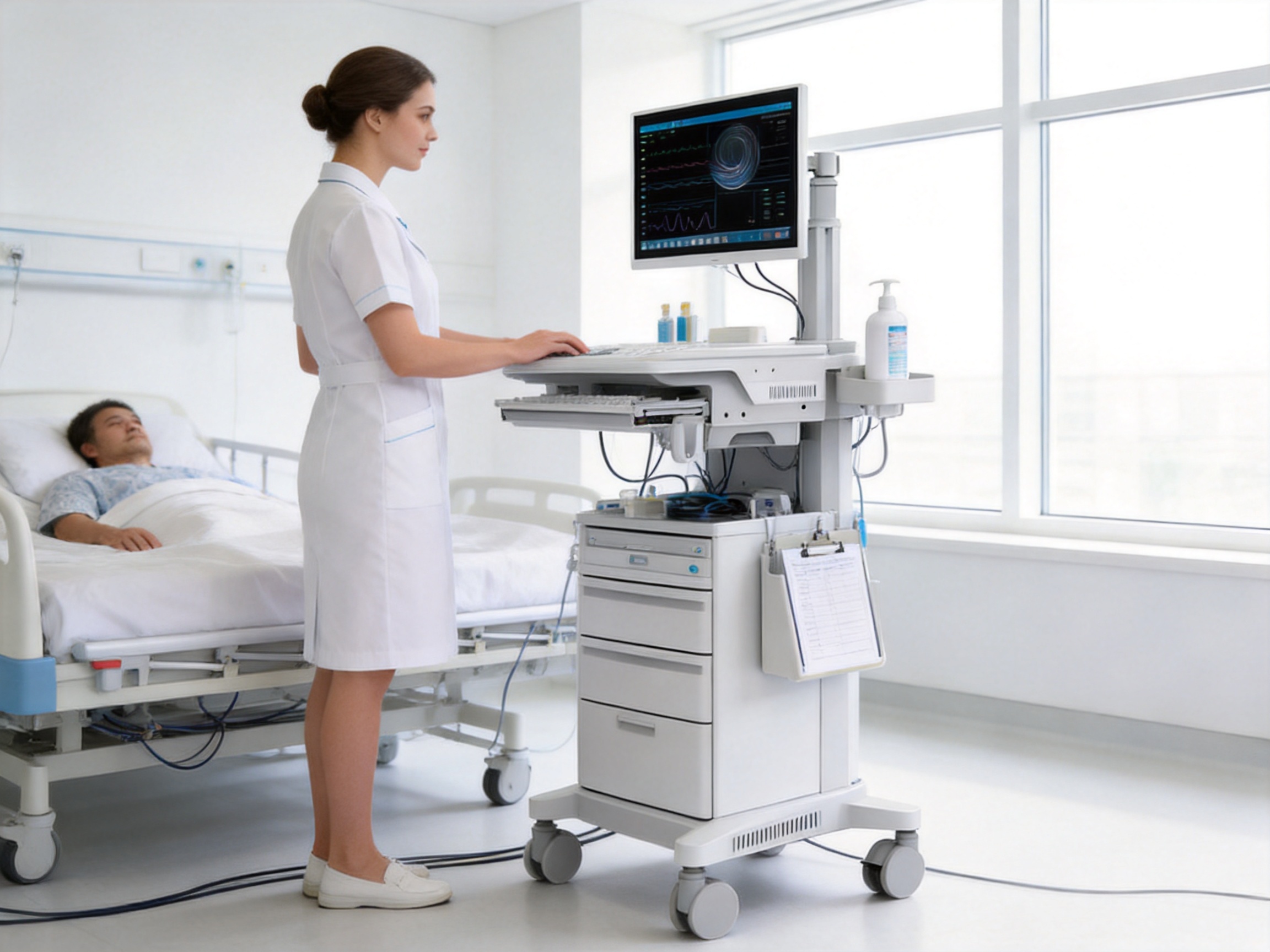
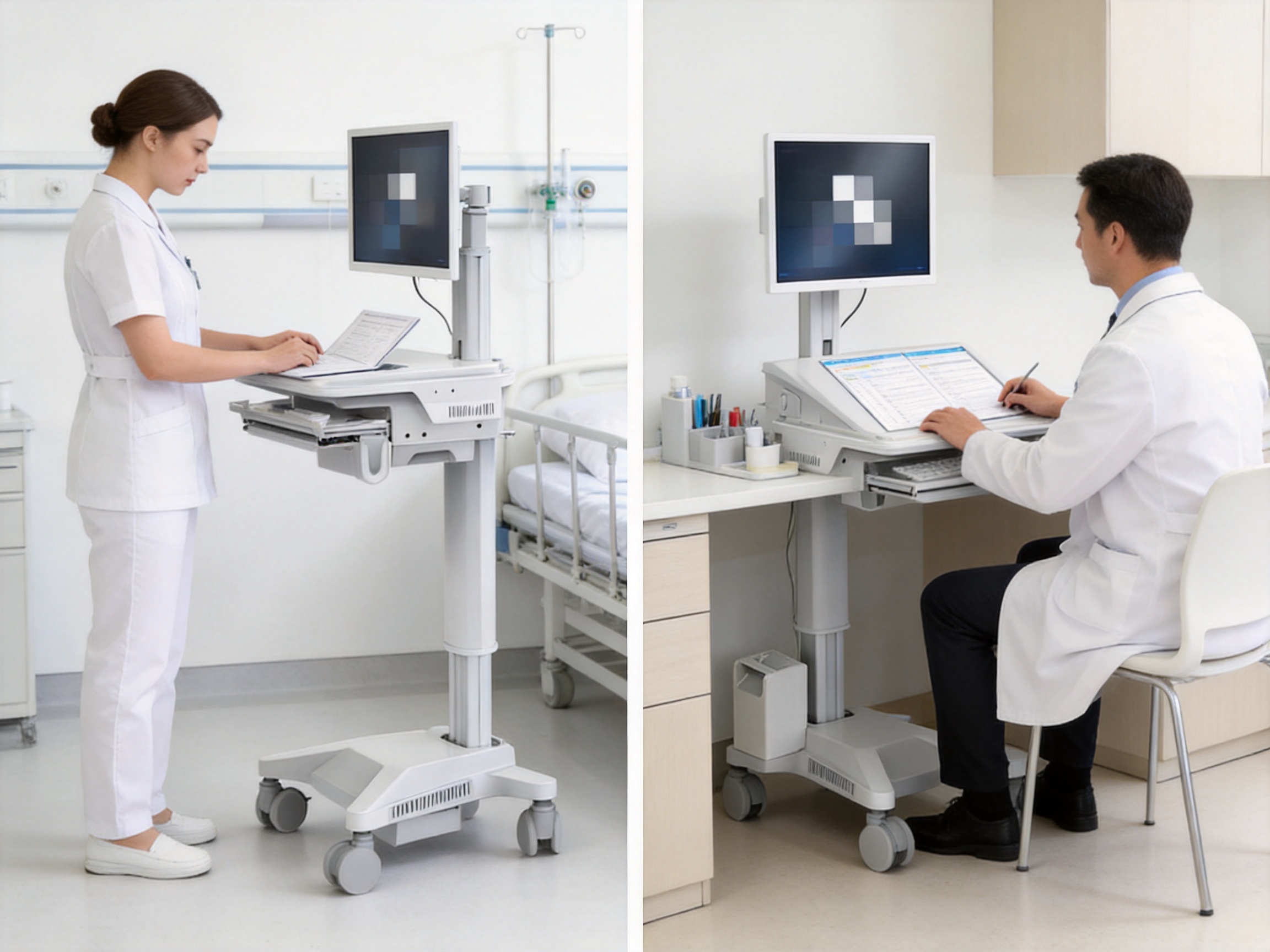
The electric lifting table of the WMYC-D2-30 addresses this challenge by allowing the working surface to be adjusted to different heights. A healthcare professional can operate the cart while standing during rounds or lower the work surface for seated documentation. This flexibility is particularly valuable when a cart is shared by staff members with different heights and working preferences.
Height adjustment can also help the same user move between tasks. A nurse may begin by standing beside a patient, raise or lower the table for a computer-based operation, and then move the cart to another bedside. The ability to adapt the workstation to the activity supports a more natural working posture.
In urgent situations, quick adjustment can help users position the terminal at a suitable height without manually lifting or rearranging the workstation. This may be useful in emergency departments, intensive care units, and other areas where operating conditions change quickly.
The electric design also differentiates the product from basic manually adjustable carts. Manual adjustment may require additional effort, may interrupt workflow, and may be less convenient when the cart is already loaded with equipment. Powered adjustment provides a smoother operating experience and makes ergonomic positioning easier to repeat.
Ergonomics is not only a comfort consideration. A workstation that is easier to use can help staff maintain attention, reduce awkward movements, and complete documentation more consistently. In demanding clinical environments, even small improvements in physical usability can support better workflow continuity.
5. Efficient Information Integration
Clinical work requires access to multiple types of information. A healthcare professional may need to review patient identification, treatment orders, laboratory data, nursing records, medication instructions, and previous observations. When information is fragmented across paper records, fixed terminals, and verbal communication, the possibility of delay increases.
The WMYC-D2-30 supports graphical information display and real-time synchronization of patient data and medical orders when connected to compatible hospital systems. This creates a more direct relationship between digital information and bedside activity.
Graphical presentation can make information easier to review than a long series of disconnected paper documents. Staff can use the computer interface to locate relevant records, verify information, and enter new observations. The value of this function depends on the hospital’s software environment and network configuration, but the cart provides the physical and operational platform required for mobile access.
Real-time synchronization is particularly important when patient conditions or treatment orders change frequently. A mobile workstation can help staff receive updated information without waiting for a paper document to be printed, delivered, or manually copied.
Information integration also supports communication among different departments. A cart used in a ward, emergency department, or outpatient area can serve as a consistent access point for authorized systems. This helps reduce the number of disconnected devices used in daily work.
For hospital managers, connected mobile workstations may contribute to more consistent data trails. When staff actions are entered through a structured system, the hospital can analyze workflow performance, documentation completeness, and operational timing more efficiently than with informal records alone.
6. Advantages Compared with Conventional Medical Carts
Conventional medical carts remain useful for transporting supplies, but they may not meet the information requirements of a digitally connected hospital. Their primary function is physical storage and movement. They generally do not provide an integrated computing platform, electric height adjustment, or order-management support.
The WMYC-D2-30 offers several advantages over this traditional model.
6.1 Mobility Combined with Digital Access
A fixed workstation provides computing capability but cannot follow the patient. A basic trolley provides mobility but may not provide digital access. The WMYC-D2-30 combines both characteristics, allowing clinical staff to bring the workstation to the location of care.
6.2 Better Ergonomic Adaptability
Manually fixed carts often force users to work at one height. The electric lifting table supports a wider range of users and tasks. This can improve convenience during long rounds, documentation sessions, and rapid clinical response.
6.3 More Complete Workflow Support
A transport cart supports movement of materials. The WMYC-D2-30 supports information inquiry, order execution, documentation, and clinical assistance in addition to physical mobility. This makes it a workflow tool rather than simply a storage platform.
6.4 Scalable Configuration
Hospitals can select optional accessories such as laptops, drawers, medical record frames, and hand sanitizer mounts. This provides greater flexibility than a fixed product configuration and allows the cart to be adapted to department-specific needs.
6.5 Stronger Support for Closed-Loop Management
When connected with HIS or EMR systems, the cart can support a process extending from order reception to execution and confirmation. This helps reduce the gap between what is ordered, what is performed, and what is documented.
6.6 Integration with Smart Ward Development
The product can serve as a mobile endpoint within a broader hospital information environment. It is therefore more suitable for digital transformation projects than a standalone cart with no connection to clinical software.
These advantages do not mean that every conventional cart should be replaced immediately. Hospitals may use different equipment for different purposes. However, where bedside documentation and order management are priorities, an intelligent cart with electric height adjustment can provide significantly greater operational value.
7. Applications in Different Clinical Environments
7.1 Ward Rounds and Bedside Nursing
General wards require repeated interaction between patients, nurses, physicians, and digital records. The WMYC-D2-30 can accompany staff during rounds, provide access to patient information, and support bedside record entry. This reduces the need to remember observations until returning to the nursing station.
The cart can also help organize the sequence of activities during a round. Staff may review a patient’s information, confirm the current plan, complete required nursing actions, and record the outcome before moving to the next bed.
7.2 Emergency Departments
Emergency care is characterized by variable patient flow and rapidly changing priorities. A mobile workstation can be moved to the most active treatment area and adjusted to a suitable height for standing operation.
The cart can support patient information inquiry, order review, and documentation during the treatment process. Its mobility helps departments respond to changing spatial requirements without installing a new fixed workstation for every location.
7.3 Intensive Care Units
Intensive care environments require continuous monitoring and detailed documentation. Staff may need to record information close to the patient while maintaining access to medical orders and electronic records. A compact mobile workstation can help keep digital tools within the clinical zone.
The use of a cart in an intensive care unit must follow the hospital’s infection-control procedures, equipment clearance requirements, and electrical safety policies. Optional accessories such as hand sanitizer mounts can support established hygiene practices, but they do not replace formal cleaning and disinfection protocols.
7.4 Outpatient Diagnosis and Order Execution
In outpatient settings, physicians and nurses often need to move between consultation, examination, and treatment areas. The WMYC-D2-30 can provide a flexible terminal for patient information review and order execution without requiring every room to contain a permanent computer.
7.5 Mobile Nursing Services
Mobile nursing teams can use the cart to support information access while moving between patient areas. The workstation can help staff complete records close to the point of service and reduce the number of separate trips required for documentation.
7.6 Pharmaceutical Services
Pharmaceutical workflows involve careful verification, organization, and recording. Depending on the hospital’s software and operating procedures, the cart can support medication-related information review, order checking, and documentation. Drawers and other accessories may be selected to support specific storage requirements.
8. Manufacturing Strength Behind the Product
The performance of a medical workstation depends on more than its visible design. Reliability is influenced by material selection, structural fabrication, electrical integration, component compatibility, inspection procedures, and long-term service support. Wanma Technology Co., Ltd. brings experience from communication infrastructure manufacturing to the development of integrated equipment solutions.
Established in 1997, the company specializes in communication cabinets, communication electronic equipment, and passive optical components. Its products are used in Ethernet networks, optical communication networks, central equipment rooms, high-speed railway systems, and urban rail transit systems. These application environments require stable operation, accurate assembly, dependable electrical organization, and consistent product quality.
Although a medical cart has a different end use, many manufacturing principles are transferable. A cart must provide a stable structure, organized cable and power routing, reliable connections, and a suitable level of protection for the intended environment. Experience in communication equipment helps build a disciplined approach to layout, integration, and quality control.
8.1 Structural Manufacturing
The supporting structure of a mobile workstation must withstand repeated movement, loading, height adjustment, and daily use. Manufacturing must consider frame strength, joint quality, surface finishing, wheel installation, and the balance of the complete assembly.
A well-designed structure supports smooth movement without compromising stability during operation. It should also accommodate the computer, power system, accessories, and any permitted additional load. Consistent fabrication and inspection are important because even small dimensional variations can affect alignment or usability.
8.2 Electrical and Power Integration
The power system is a key element of the product. It must be integrated in an orderly manner so that computer equipment and related devices can operate as intended. Medical environments require careful attention to power management, cable routing, accessibility, and maintenance.
The company’s background in communication electronic equipment supports a systematic approach to electrical integration. Components must be positioned logically, wiring should be organized, and assemblies should be checked before shipment. These practices contribute to stable operation and easier maintenance.
8.3 Computer and Accessory Compatibility
The cart is designed to support a professional all-in-one or split computer configuration, with optional support for laptops and other accessories. This requires attention to mounting dimensions, weight distribution, cable access, and user ergonomics.
A scalable design allows the company to provide customized configurations for different customers. OEM and ODM capability can be valuable when a hospital, system integrator, or healthcare equipment distributor requires specific accessory arrangements, branding, software compatibility, or packaging requirements.
8.4 Process Consistency
Manufacturing consistency is especially important for products supplied to multiple countries and regions. Wanma Technology serves customers across more than 20 countries and regions, including the United States, Australia, the United Kingdom, Italy, South Africa, and Ghana. International supply experience requires attention to documentation, delivery coordination, product configuration, and communication with customers.
Consistent process management helps reduce variation between production batches. It also supports predictable lead times and more reliable after-sales coordination.
8.5 Testing and Quality Assurance
Before delivery, an integrated medical cart should undergo checks appropriate to its design and intended application. These may include inspection of mechanical movement, electric lifting performance, wheel operation, computer mounting, power function, accessory installation, and overall assembly.
Customer-specific requirements may add further checks. For example, a customized cart may require verification of a particular computer model, drawer arrangement, medical record frame, or cable-routing method. A structured inspection process helps ensure that the finished product corresponds to the confirmed configuration.
9. OEM and ODM Customization Capabilities
Healthcare institutions often have established operating procedures, software platforms, room layouts, and equipment standards. A medical cart must therefore fit into an existing environment rather than operate as an isolated product.
Wanma Technology provides OEM and ODM customization support. This can help customers develop configurations around their clinical workflows. Potential customization areas include the type of computer, accessory layout, drawer design, record frame arrangement, external identification, packaging, and integration requirements.
Customization may be useful for hospitals that want a unified appearance across departments. It can also support distributors and system integrators that need a product adapted to a specific market or project. The objective is to preserve the core strengths of the platform while adjusting the configuration to practical requirements.
A responsible customization process should begin with a clear review of the intended application. The customer and manufacturer should confirm the number of users, typical working posture, computer model, expected load, power requirements, movement environment, cleaning procedures, and accessory needs.
It is also important to define the boundary between the cart and hospital software. The physical workstation can support computer access and mobility, while the HIS, EMR, network, cybersecurity, and application functions may be supplied or managed by other parties. Clear technical coordination helps avoid misunderstandings during installation and deployment.
10. Reliability, Maintenance, and Long-Term Use
Medical equipment is expected to operate repeatedly in demanding environments. A cart may be moved many times each day, used by different staff members, and exposed to frequent cleaning. Long-term reliability therefore depends on both product design and user maintenance.
The electric lifting mechanism should be operated according to the product instructions. Users should avoid exceeding the specified load or applying side force during height adjustment. The cart should be moved carefully, especially around door thresholds, ramps, cables, and other obstacles.
Power cords and connectors should be inspected regularly for visible damage. Accessories should remain securely fastened, and drawers or frames should not be loaded beyond their intended capacity. Wheels and brakes should be checked as part of routine equipment inspection.
Cleaning and disinfection should follow the hospital’s approved procedures and the compatibility requirements of the materials and electronic components. Excessive liquid exposure should be avoided, and cleaning staff should be trained to protect the computer, power system, and moving mechanisms.
Because the WMYC-D2-30 is a configurable platform, maintenance records should identify the exact configuration of each unit. This can simplify troubleshooting and help service personnel determine whether a problem relates to the cart structure, computer, power system, accessory, or hospital network.
The manufacturer’s experience in communication equipment and international supply can support long-term customer relationships. Reliable delivery, technical communication, replacement coordination, and customization support are important considerations when hospitals deploy mobile workstations at scale.
11. Integration with HIS, EMR, and Smart Ward Systems
The future of the medical cart is closely related to the development of hospital information systems. A cart becomes more valuable when it can serve as an accessible terminal for authorized clinical applications.
Integration with a Hospital Information System can support access to medical orders, patient information, scheduling data, and execution status. Integration with an Electronic Medical Record platform can help clinicians review and update records at the bedside.
The product itself does not determine the complete integration outcome. Hospitals must evaluate network coverage, authentication, software compatibility, cybersecurity, data protection, device management, and technical support. The cart provides a mobile hardware platform, while the hospital’s information technology environment determines how applications are deployed.
Future smart wards may connect mobile carts with wireless networks, Internet of Things sensors, intelligent medication cabinets, vital-sign monitors, and telemedicine systems. In such an environment, the cart could become a central interface for information exchange at the bedside.
For example, vital-sign information could be transmitted to a clinical application, while staff use the cart to review trends and document care. Medication cabinets could provide status information, and order systems could present tasks in a structured sequence. These scenarios require careful validation, but the mobile workstation is a practical foundation for such development.
Scalability is therefore a major product advantage. A hospital can begin with basic patient information inquiry and record entry, then expand toward more advanced clinical workflows as its software and network infrastructure mature.
12. Why Manufacturing Background Matters in Medical Equipment
Medical equipment manufacturers must understand the importance of reliability, but a company’s broader manufacturing background can also influence product quality. Communication infrastructure products often operate continuously in central equipment rooms, transportation systems, and network environments. These applications require attention to stable construction, organized assemblies, environmental conditions, and long service life.
Wanma Technology’s experience in communication cabinets and electronic equipment contributes to its ability to manufacture products that combine structure, power, electronics, and accessories. This is relevant to medical carts because the product is not simply a cabinet or a trolley. It is an integrated equipment platform.
Communication industry experience may also support better understanding of data flow and system connection. A medical cart that operates within a hospital network must coexist with computers, wireless infrastructure, software applications, and other digital devices. Manufacturing discipline and system thinking are valuable when developing such products.
The company’s own-brand development and integrated-solution capabilities allow it to serve both standard-product buyers and customers with project-specific requirements. This combination can be advantageous for hospitals and distributors that need a dependable base platform but also require configuration flexibility.
13. Deployment Recommendations for Hospitals
Before purchasing medical carts with electric lifting tables, hospitals should analyze current workflows and identify where mobile information access can produce the greatest benefit.
13.1 Review the Existing Workflow
Hospitals should identify how often staff travel between patient rooms and fixed workstations, where documentation delays occur, and which activities require bedside information access. The product is most valuable when it addresses a clearly defined operational need.
13.2 Select the Appropriate Computer Configuration
The choice between an all-in-one computer, split computer, or laptop should be based on application requirements, screen size, processing needs, mounting preferences, and service policy. The selected equipment should be compatible with the cart’s structure and power system.
13.3 Define Accessories by Department
Not every department needs the same accessories. Personalized drawers may be useful for nursing workflows, while medical record frames may benefit areas that still use paper documents. Hand sanitizer mounts may support specific infection-control arrangements.
13.4 Confirm Network and Software Readiness
The hospital should confirm wireless coverage, user authentication, system compatibility, cybersecurity policies, and technical support before deployment. A mobile cart can only deliver its full value when the digital environment is reliable.
13.5 Train Users and Maintenance Staff
Training should cover height adjustment, movement, braking, power use, cleaning, accessory handling, and reporting of faults. Clear operating practices help protect the equipment and improve user confidence.
13.6 Begin with a Controlled Pilot
A pilot deployment in one ward or department can help the hospital evaluate workflow improvements, user acceptance, equipment durability, and software performance. Feedback from the pilot can guide larger-scale procurement and customization.
14. Future Development of Intelligent Medical Carts
Medical carts are moving from simple transport equipment toward platform-based clinical tools. Future models may combine telemedicine, artificial intelligence-assisted decision support, intelligent medication dispensing, voice interaction, and more advanced sensor integration.
Telemedicine functions could allow specialists to participate in bedside consultations from another location. AI-assisted tools may help organize patient information or identify relevant records, subject to clinical validation and regulatory requirements. Intelligent medication functions could connect order information with dispensing and verification processes.
These developments will increase the importance of hardware stability, computing compatibility, data security, and system scalability. A cart that cannot accommodate future components may become obsolete quickly. A configurable platform, by contrast, can evolve with hospital requirements.
The WMYC-D2-30 provides a practical foundation for this direction. Its electric lifting table supports ergonomic use, its mobile structure supports bedside operation, and its computer and power configuration supports connection with clinical applications. Optional accessories create additional flexibility for future projects.
The manufacturer’s background in communication technology is also relevant to future development. As healthcare equipment becomes more connected, reliable data transmission, equipment integration, and structured manufacturing will become increasingly important.
15. Frequently Asked Questions
15.1 What is the main purpose of the WMYC-D2-30 Medical Cart?
The WMYC-D2-30 is an intelligent mobile medical workstation. It is designed to support medical order management, patient information inquiry, electronic medical record entry, bedside nursing, and other clinical assistance functions.
15.2 How does the electric lifting table improve clinical work?
The electric lifting table allows users to adjust the working height for seated or standing operation. This improves ergonomic flexibility, supports different users, and helps staff adapt the workstation to changing clinical tasks.
15.3 Can the cart be used in intensive care units?
Yes. It can support information access and documentation in intensive care environments, provided that the selected configuration complies with the hospital’s infection-control, electrical-safety, cleaning, and space-management requirements.
15.4 Can the product connect to an HIS or EMR system?
The cart is designed to support a professional computer configuration that can run compatible hospital applications. Actual HIS or EMR integration depends on the hospital’s software, network, security, and deployment conditions.
15.5 What optional accessories are available?
Potential options include laptop support, personalized drawers, medical record frames, and hand sanitizer mounts. The final accessory configuration should be selected according to the department’s workflow and operating requirements.
15.6 How is this product different from a conventional medical trolley?
A conventional trolley generally focuses on transporting supplies. The WMYC-D2-30 combines mobility with a computer platform, electric height adjustment, power management, and clinical information access, making it a more comprehensive bedside workstation.
15.7 Does the electric lifting function reduce structural stability?
A properly designed and correctly operated electric lifting system is intended to provide height flexibility without compromising normal operating stability. Users should follow the manufacturer’s instructions and remain within the specified load limits.
15.8 Can the manufacturer provide OEM or ODM services?
Yes. Wanma Technology Co., Ltd. provides OEM and ODM customization support. Customers can discuss computer configurations, accessory arrangements, branding, packaging, and project-specific requirements with the manufacturer.
15.9 What should hospitals consider before purchasing?
Hospitals should evaluate clinical workflows, computer requirements, network coverage, HIS or EMR compatibility, accessory needs, cleaning procedures, power requirements, user training, maintenance arrangements, and future expansion plans.
15.10 Is the product suitable for international projects?
The manufacturer has sales experience in more than 20 countries and regions. International projects should still confirm local electrical requirements, hospital standards, import documentation, software compatibility, and any applicable regulatory obligations.
16. Conclusion
The WMYC-D2-30 Medical Cart represents the development of the medical cart from a simple transportation tool into an intelligent mobile clinical workstation. Its combination of medical order assistance, patient information access, electronic record entry, electric height adjustment, power management, and scalable accessories addresses several major challenges in modern hospital operations.
Its greatest value lies in bringing digital information closer to the patient. By supporting bedside order execution and documentation, it can reduce unnecessary movement, improve information continuity, and strengthen the connection between clinical action and electronic records.
The electric lifting table adds a significant ergonomic advantage. It allows different users to work in seated or standing positions and helps the cart adapt to ward rounds, emergency response, outpatient diagnosis, intensive care, and mobile nursing activities.
The product is also supported by Wanma Technology Co., Ltd.’s manufacturing experience in communication cabinets, electronic equipment, passive optical components, and integrated solutions. Established in 1997, the company applies experience in structural manufacturing, electronic integration, data-related equipment, OEM/ODM customization, and international supply to the development of flexible medical equipment.
As hospitals continue building smart wards, mobile workstations will become increasingly important. The WMYC-D2-30 offers a practical platform for current bedside information management while providing a foundation for future connections with wireless networks, intelligent medication systems, telemedicine tools, and other healthcare technologies.
References
1. World Health Organization. Global Strategy on Digital Health and the Use of Digital Technologies in Healthcare.
2. International Organization for Standardization. Quality Management Principles for Medical Device and Healthcare-Related Manufacturing.
3. International Electrotechnical Commission. General Safety and Essential Performance Principles for Medical Electrical Equipment.
4. Agency for Healthcare Research and Quality. Research on Health Information Technology, Clinical Documentation, and Patient Safety.
5. Healthcare Information and Management Systems Society. Resources on Electronic Medical Records and Smart Hospital Development.
6. Wanma Technology Co., Ltd. Product and Manufacturing Information for Intelligent Medical Workstations.
7. Occupational ergonomics guidance for computer workstations and healthcare environments.
Product: WMYC-D2-30 Medical Carts
PREV:Data Center Server Racks for Scalable, Secure, and Efficient Infrastructure
NEXT:Intelligent Shelves for Transparent, Precise, and Efficient Medical Consumables Management
NEXT:Intelligent Shelves for Transparent, Precise, and Efficient Medical Consumables Management
Interested in cooperation or have questions?
Related products
-
-
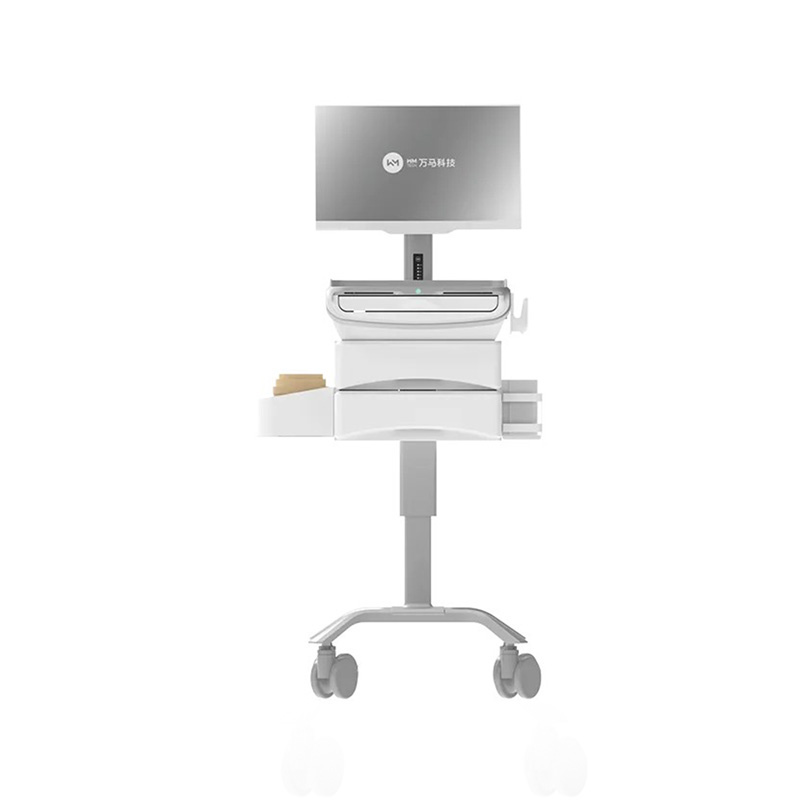
Product DefinitionThe WMYC-D2-30 Medical Cart is an intelligent mobile medical workstation integrating informatization and clinical assistance functions. It supports medical order management, patient ...
See Details -
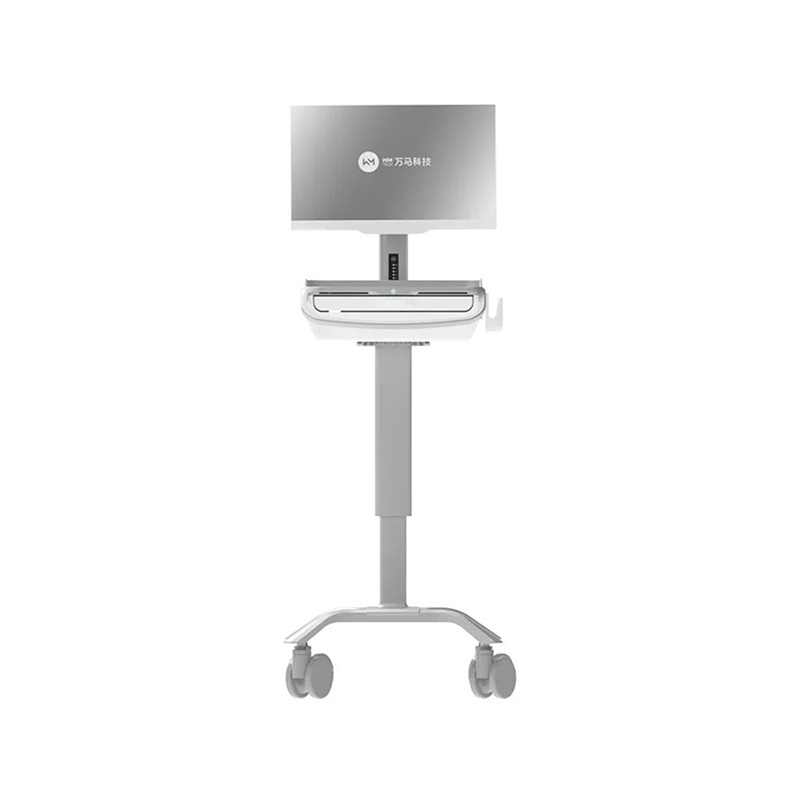
Product Definition:The WMYC-J2-24 Medical Cart is an intelligent mobile workstation integrating information display, order entry, clinical management, and device storage, designed to enhance hospital ...
See Details -
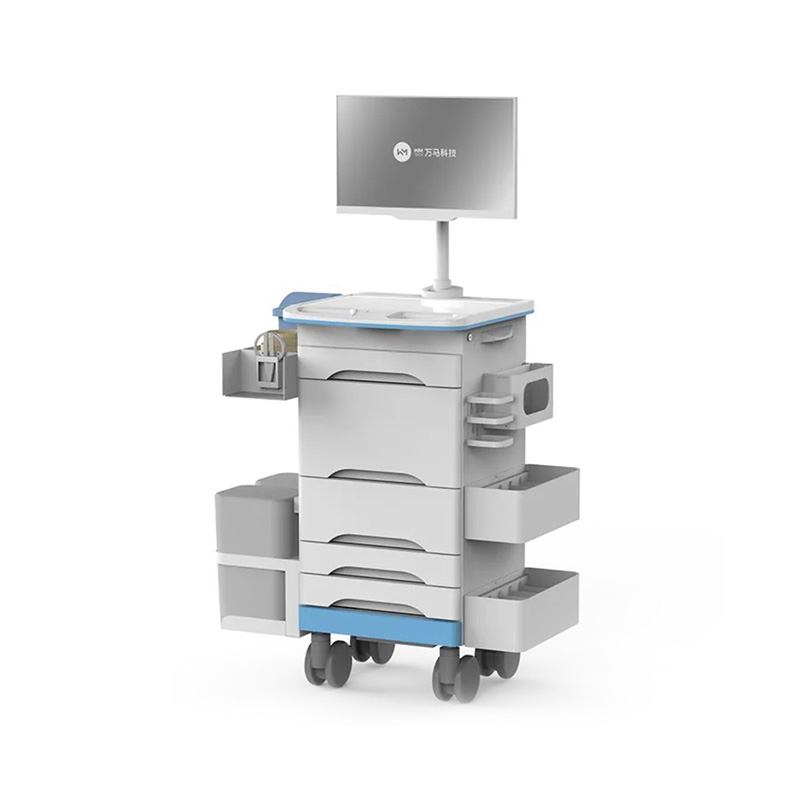
Product Definition:The WMYH-W2-21 Medical Cart is an intelligent mobile nursing workstation integrating information management, clinical care, medication administration, and bedside vital signs collec...
See Details
Ready to Get started ? Contact Us Now !

Product.
Contact Details.
-
 +86 13958188250
-
 +86 13958188250
-
 [email protected]
-
 AUDIT Email:[email protected]
- Wanma Industrial Park Taihu Yuan Town Lin'an District Hangzhou City China.
QR Code

Copyright © Wanma Technology Co., Ltd. All Rights Reserved.
Privacy
Custom Ethernet Optical Network Railway Transit Equipments Suppliers
