

 English
 Français
 Español
 Português
 عربى





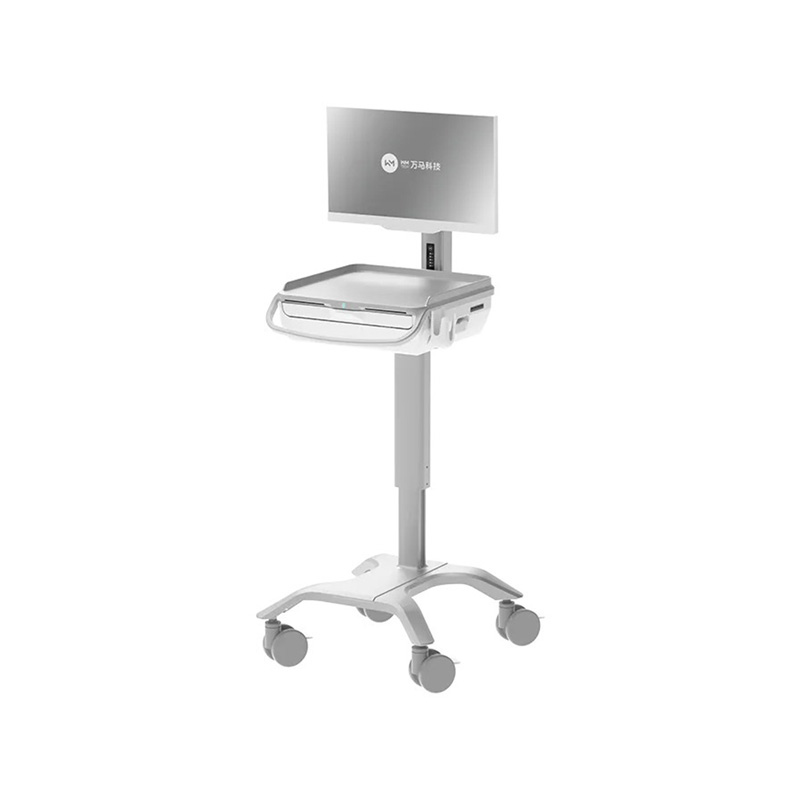
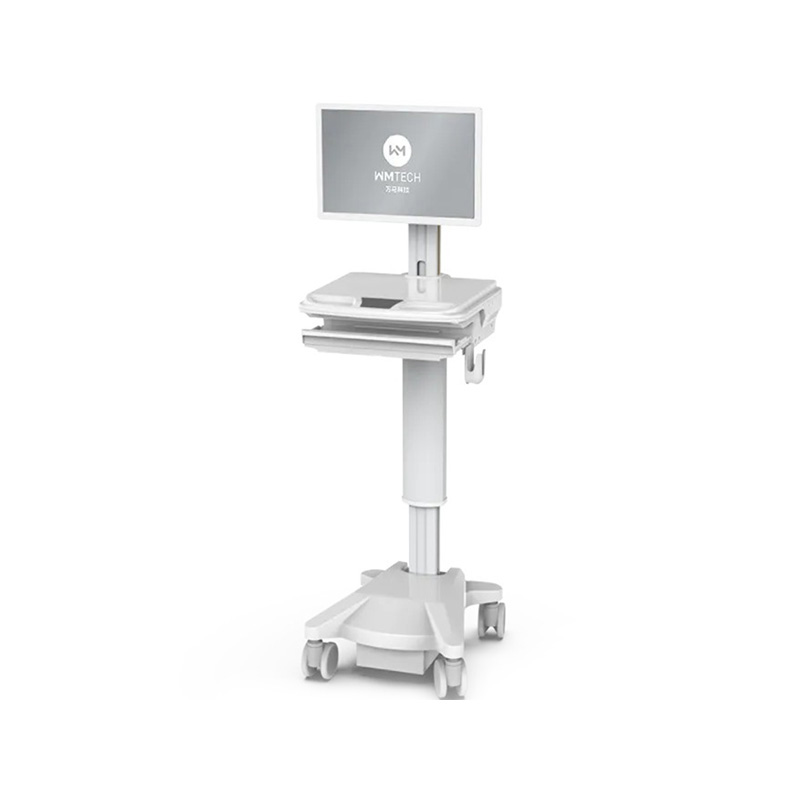

Product DefinitionThe WMYC-D2-30 Medical Cart is an intelligent mobile medical workstation integrating informatization and clinical assistance functions. It supports medical order management, patient ...
See DetailsIntelligent Medical Carts for Safer Bedside Nursing and Digital Hospital Workflows
Content
- 1 Product Definition and Core Value
- 2 Designed for Bedside Digital Nursing
- 3 Key Features of the WMYH-W2-21 Medical Cart
- 4 Advantages Compared with Conventional Medical Carts
- 5 Comparison Table
- 6 Supporting Paperless, Filmless, and Networked Hospitals
- 7 Manufacturing Strengths Behind the Product
- 8 Engineering Reliability for Clinical Environments
- 9 Application in Hospital Wards
- 10 Application in Operating Rooms
- 11 Application in Outpatient Clinics
- 12 Application in Mobile Nursing
- 13 Medication Safety and Clinical Accuracy
- 14 Improving Vital Signs Collection
- 15 Ergonomics and Staff Experience
- 16 Customization for Department-Specific Needs
- 17 Company Strengths Supporting Global Healthcare Needs
- 18 Why Manufacturing Background Matters in Smart Medical Carts
- 19 Procurement Considerations for Hospitals
- 20 Long-Term Value and Return on Investment
- 21 Quality, Safety, and Practical Reliability
- 22 Q&A Section
- 22.1 What is the WMYH-W2-21 Medical Cart?
- 22.2 Where can this medical cart be used?
- 22.3 How does the 24-inch LED screen help nurses?
- 22.4 What is the advantage of the lithium iron phosphate battery?
- 22.5 How does the cart improve medication safety?
- 22.6 Why is ergonomic design important?
- 22.7 Can the cart be customized?
- 22.8 What makes this product different from basic medical carts?
- 22.9 What company strengths support the product?
- 22.10 How does the product support digital hospital transformation?
- 23 Conclusion
- 24 References
- 25 Product: WMYH-W2-21 Medical Carts
Modern hospitals are moving rapidly toward bedside digital care, mobile clinical documentation, safer medication administration, and networked nursing operations. In this environment, an intelligent medical cart is no longer a simple trolley with a computer placed on top; it is a mobile nursing workstation that connects people, information, medicine, devices, and workflows at the point of care. The WMYH-W2-21 Medical Cart is designed for this exact purpose. It brings information management, clinical care, medication support, and bedside vital signs collection directly to the patient’s bedside, helping nurses work with greater accuracy, efficiency, and confidence.
As a smart medical cart, the WMYH-W2-21 is especially suitable for hospital wards, operating rooms, outpatient clinics, and mobile nursing scenarios. It supports paperless, filmless, and networked hospital operations by enabling clinical staff to access patient information, manage medication processes, record vital signs, and perform nursing tasks without repeatedly returning to a fixed nursing station. This saves time, reduces avoidable errors, and improves the continuity of care.
Wanma Technology Co., Ltd. brings a strong manufacturing and engineering background to this product. Established in 1997, the company has long specialized in communication cabinets, communication electronic equipment, and passive optical components. Its experience in Ethernet networks, optical communication networks, central equipment rooms, high-speed railway communication systems, and urban rail transit systems provides a strong technical foundation for building reliable, network-ready medical equipment. This combination of medical workflow understanding and communication-infrastructure expertise gives the WMYH-W2-21 a competitive position in intelligent healthcare environments.
Product Definition and Core Value
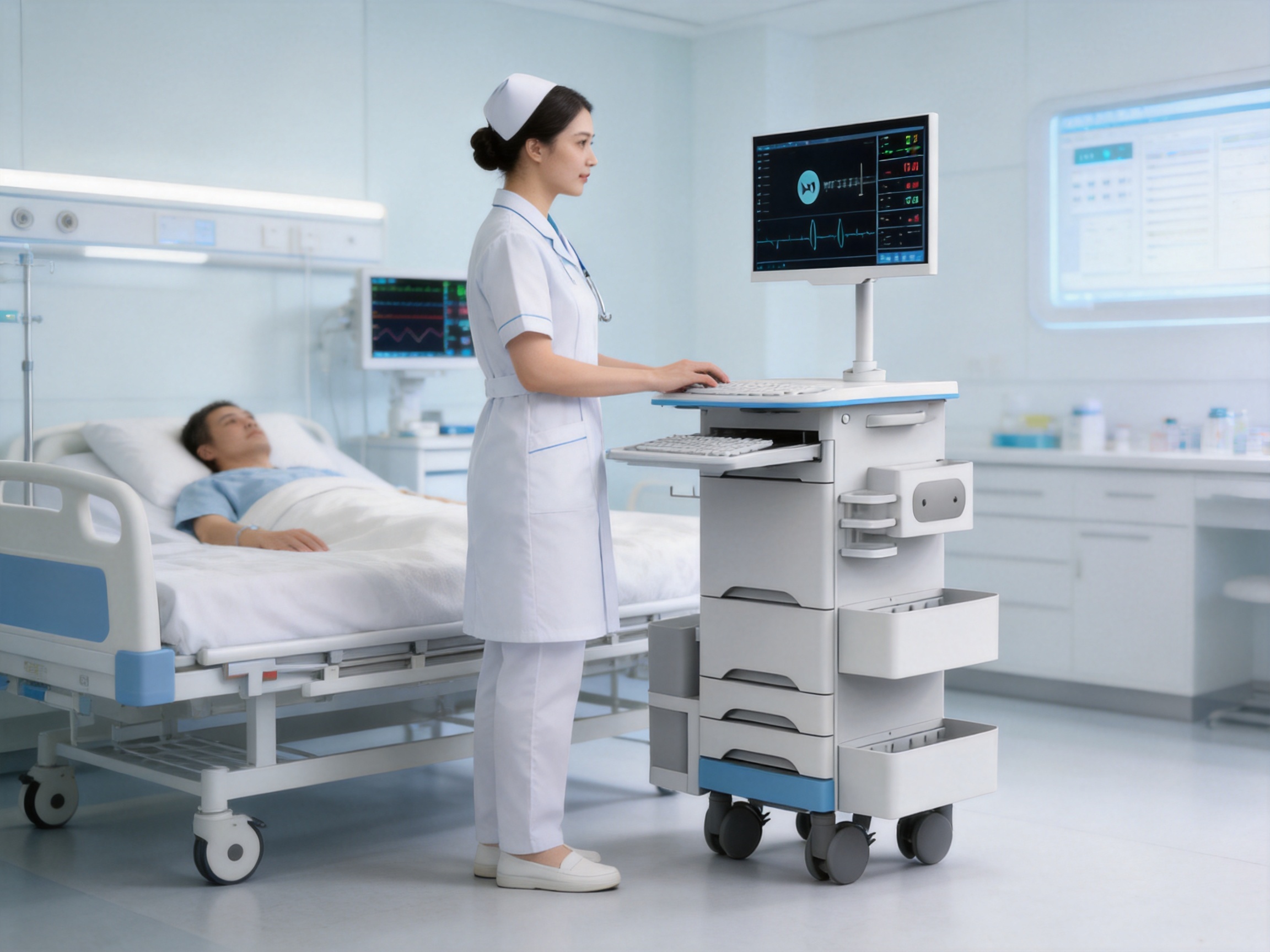
The WMYH-W2-21 Medical Cart is an intelligent mobile nursing workstation. Its core purpose is to extend the nurse workstation from the nursing desk to the patient’s bedside. Instead of separating clinical information from bedside care, the cart integrates essential digital functions and practical nursing tools into a movable platform. This allows nurses to review patient data, manage medication-related tasks, record vital signs, and complete documentation during the care process itself.
In many hospitals, traditional workflows require nurses to move between patient rooms, medicine rooms, fixed workstations, and paper-based records. These repeated movements can create delays, increase fatigue, and introduce opportunities for missed information. A smart medical cart addresses these problems by bringing the digital workstation to the point of care. The WMYH-W2-21 is designed around this idea, supporting more efficient bedside rounds and more accurate clinical execution.
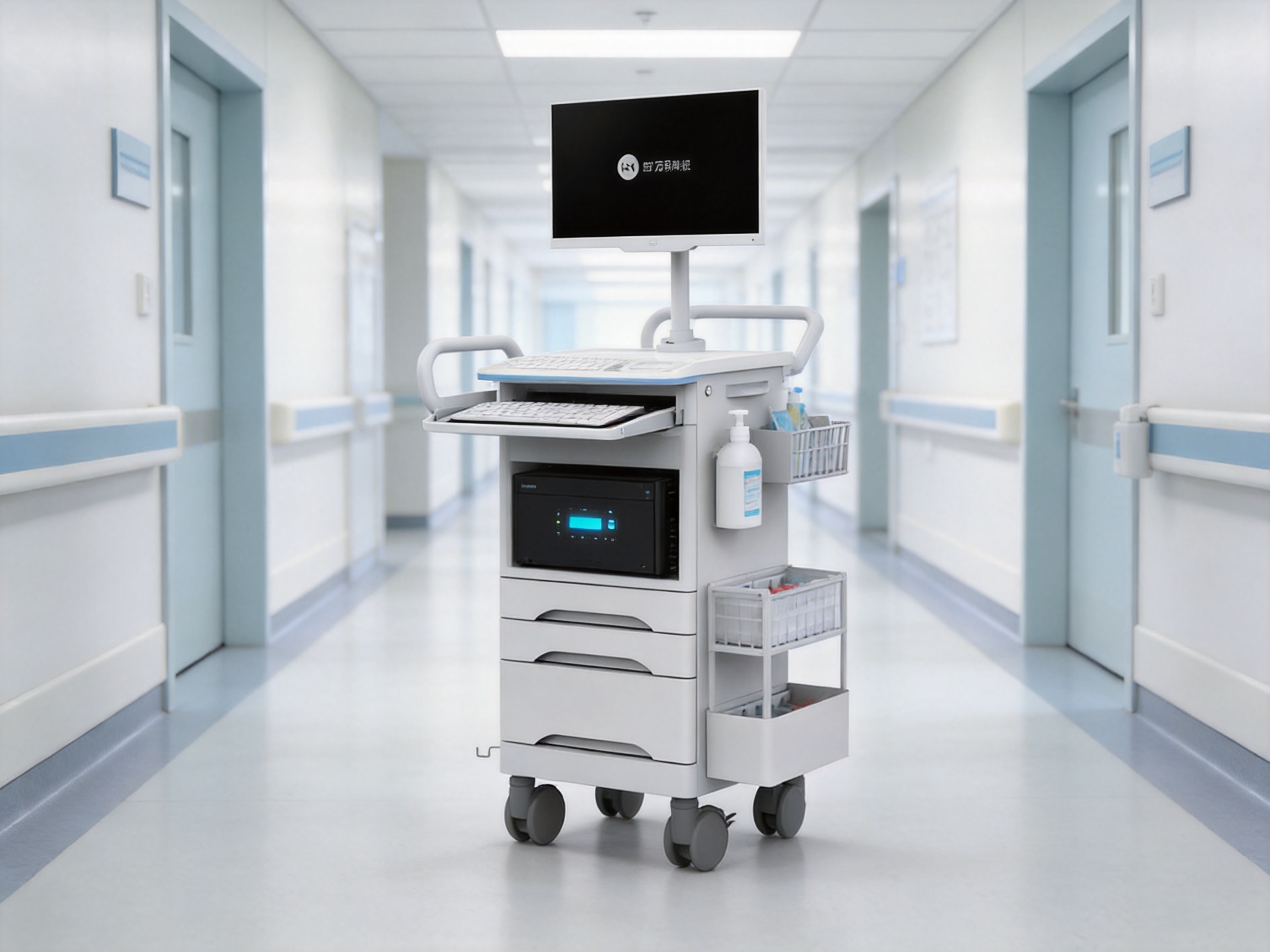
The cart is equipped with a 24-inch LED screen, a sliding keyboard tray with a lock, a manual lift mechanism, a lithium iron phosphate battery system, an ABS handle, and four casters, including two locking casters. It can also be customized with accessories such as drawers, a sanitizer holder, a sundries basket, and a sharps box frame. These features make the product adaptable to different departments and different clinical habits.
The value of the WMYH-W2-21 can be summarized in four major areas: digital nursing management, ergonomic operation, reliable power support, and safe mobility. Together, these advantages help hospitals improve care quality while supporting the broader trend toward smart, connected healthcare facilities.
Designed for Bedside Digital Nursing
Bedside care is where patient safety and workflow efficiency meet. Nurses must confirm patient identity, review medication instructions, monitor vital signs, document changes, and coordinate with other healthcare professionals. When these tasks are performed with disconnected tools, the risk of inefficiency increases. The WMYH-W2-21 helps unify these tasks through a mobile workstation structure.
The 24-inch LED screen provides a clear digital interface for patient information access, medication management, and vital sign collection. A larger screen can improve visibility compared with compact tablet-based or small-monitor carts. In clinical settings, screen readability is not a luxury; it directly affects speed and accuracy. Nurses often work under time pressure and in varied lighting conditions, so a clear display can help reduce eye strain and improve operational confidence.
Medication management is one of the most important use cases for a smart medical cart. Medication errors can occur when information is incomplete, documentation is delayed, or the care provider must rely on memory between the workstation and the bedside. By supporting medication-related information at the patient’s side, the cart helps nurses verify instructions and complete workflow steps closer to the actual moment of administration.
Vital signs collection is another essential function. In a networked hospital environment, vital sign data should be captured efficiently and associated with the correct patient record. A mobile cart supports this process by providing a digital platform that can travel with the nurse. When bedside data collection and clinical documentation occur together, the hospital can reduce repeated manual entry and improve data timeliness.
Key Features of the WMYH-W2-21 Medical Cart
The WMYH-W2-21 includes several features that are particularly important for daily hospital use. Each feature contributes to a practical clinical advantage rather than simply adding technical complexity.
24-Inch LED Screen for Clear Information Access
The 24-inch LED screen supports medication management, vital sign collection, and patient information access. Its size is suitable for viewing structured clinical data, electronic medical record interfaces, medication lists, nursing notes, or monitoring-related information. Compared with smaller screens, a 24-inch display can provide a more comfortable interface for complex healthcare software.
In practice, screen size affects workflow quality. A nurse may need to confirm patient information, check orders, view warnings, and enter documentation. When the screen is too small, more scrolling and switching are required. The WMYH-W2-21’s display area can help streamline such tasks and improve the user experience.
Sliding Keyboard Tray with Lock
The cart includes a sliding keyboard tray with a lock. This design supports convenient operation while helping protect the keyboard when it is not in use. A sliding tray saves space and allows the workstation surface to remain organized. The locking feature is useful in busy wards where equipment may be moved frequently and where stability matters.
Compared with carts that place keyboards on open surfaces, the sliding tray can contribute to a cleaner, more controlled workstation. It also supports better ergonomics because users can position the keyboard for comfortable typing and then store it away during transport.
Manual Lift Mechanism for Ergonomic Flexibility
The manual lift mechanism allows flexible height adjustment. Nurses and clinical staff vary in height, and they may use the cart while standing, walking, or pausing beside a patient bed. Ergonomic adjustability helps reduce strain during long shifts. In environments where a cart is used by multiple staff members, height flexibility is especially important.
A manual lift mechanism also offers simplicity and dependability. It does not depend heavily on complex powered adjustment systems, which can reduce maintenance concerns and improve long-term reliability. For hospitals looking for practical, durable equipment, this balance of flexibility and simplicity is valuable.
Lithium Iron Phosphate Battery with Eight-Hour Runtime
The WMYH-W2-21 uses a lithium iron phosphate battery with an eight-hour runtime. This is a major advantage for mobile nursing operations because the cart must remain functional throughout typical clinical work periods. Frequent charging interruptions can reduce productivity and limit adoption. An eight-hour runtime supports continuous use across a shift or a large part of a shift, depending on usage intensity.
Lithium iron phosphate battery technology is widely valued for safety, thermal stability, and long cycle life. In medical environments, battery safety is extremely important. The smart battery management system further supports dependable operation by helping manage power status and battery performance.
ABS Handle and Four Casters for Safe Mobility
The ABS handle is designed for easy movement, while the four casters provide mobility across hospital floors. Two locking casters allow the cart to be stabilized during operation. This combination is essential because a medical cart must be easy to move but stable when used for documentation or patient care.
Competitor carts sometimes focus heavily on digital functions but overlook practical mobility. A cart that is difficult to steer, unstable when stopped, or inconvenient to position can become a burden rather than a workflow improvement. The WMYH-W2-21 addresses these practical needs with a straightforward mobility system suitable for daily clinical use.
Customizable Accessories for Clinical Diversity
Optional drawers, a sanitizer holder, a sundries basket, and a sharps box frame allow the cart to be adapted to different departments. A general ward may prioritize medication drawers and basic storage. An outpatient clinic may need quick access to sanitation supplies. A procedure-focused area may require a sharps disposal frame. Customization improves usability because no single accessory arrangement fits every clinical department.
Customization also improves investment value. Hospitals can configure carts based on actual use cases instead of purchasing generic workstations that require later modification. This helps align equipment planning with infection control, medication safety, and nursing workflow requirements.
Advantages Compared with Conventional Medical Carts
Traditional medical carts often provide only storage and mobility. Some may carry supplies, files, medication trays, or small devices, but they do not truly integrate digital nursing workflows. The WMYH-W2-21 is positioned differently. It serves as an intelligent nursing workstation that brings information systems and bedside care tools together.
The first advantage is workflow integration. Instead of requiring nurses to record information after completing rounds, the cart supports documentation and information review during the care process. This improves the timeliness and accuracy of records. When documentation is delayed, details can be forgotten or entered incorrectly. Bedside digital workflow helps reduce this risk.
The second advantage is clinical visibility. The 24-inch LED screen provides a better working interface than smaller mobile devices or limited display carts. In busy care environments, clear access to information can reduce the time needed to search, verify, and input data.
The third advantage is power reliability. A medical cart that cannot maintain power throughout use becomes unreliable in clinical practice. The lithium iron phosphate battery and smart battery management system help the WMYH-W2-21 support continuous use. This is particularly important in hospitals with many rooms, long corridors, and demanding nursing schedules.
The fourth advantage is ergonomic and operational convenience. The sliding keyboard tray, lock, manual lift mechanism, and mobile base are designed for repeated daily use. These features may seem simple, but they strongly influence user satisfaction. If a cart is uncomfortable or inconvenient, staff may avoid using it, which reduces the value of digital healthcare investments.
The fifth advantage is customization. Optional accessories allow the cart to serve multiple clinical scenarios. This flexibility can reduce the need for multiple specialized cart types and make deployment easier across departments.
Comparison Table
| Evaluation Area | WMYH-W2-21 Medical Cart | Conventional or Basic Medical Cart |
| Primary Function | Intelligent mobile nursing workstation for bedside information access, medication management, vital sign collection, and documentation | Basic movement of supplies, files, or equipment with limited digital integration |
| Display Capability | 24-inch LED screen for clear viewing of patient information and clinical systems | No screen, small screen, or separate device required |
| Power System | Lithium iron phosphate battery with eight-hour runtime and smart battery management | May rely on short-life battery, external power, or no integrated power support |
| Ergonomics | Manual lift mechanism and sliding keyboard tray with lock | Fixed height or limited adjustment, less optimized typing position |
| Mobility and Stability | ABS handle, four casters, and two locking casters for controlled movement and secure positioning | Mobility may be basic, with less attention to secure bedside positioning |
| Customization | Optional drawers, sanitizer holder, sundries basket, and sharps box frame | Often limited to standard storage structure |
| Best-Fit Environment | Digital wards, operating rooms, outpatient clinics, mobile nursing, and networked hospitals | Supply transport or non-digital support tasks |
Supporting Paperless, Filmless, and Networked Hospitals
Hospitals are increasingly adopting paperless and filmless workflows. Electronic medical records, digital imaging systems, networked monitoring devices, and medication management platforms all require reliable access points throughout the care environment. A fixed workstation alone cannot fully support this model because patient care happens across many rooms and clinical spaces.
The WMYH-W2-21 supports this transition by acting as a mobile access point for digital nursing work. It helps connect bedside activity with hospital information systems. When properly integrated into hospital operations, it can reduce dependence on handwritten notes, printed records, and delayed data entry. This contributes to cleaner information flow and better clinical traceability.
Networked hospital operations also depend on equipment that can operate reliably in real clinical environments. The cart must move smoothly, remain powered, support user-friendly data entry, and withstand frequent handling. The WMYH-W2-21 is built with these requirements in mind. Its combination of display, power, ergonomics, and mobility supports practical use rather than theoretical digitalization.
This is where Wanma Technology’s background in communication infrastructure becomes especially relevant. The company’s history in communication cabinets, electronic equipment, passive optical components, Ethernet networks, optical communication networks, central equipment rooms, railway systems, and transit systems reflects a manufacturing culture focused on reliability, connectivity, and structured deployment. These strengths are valuable in healthcare, where digital systems must be dependable and secure.
Manufacturing Strengths Behind the Product
A smart medical cart is only as reliable as the manufacturing discipline behind it. Because it must operate in hospitals, it must combine mechanical stability, electrical reliability, safety, and user-centered design. Wanma Technology Co., Ltd. has accumulated manufacturing experience since 1997, and this long-term industrial background supports the development of products such as the WMYH-W2-21.
The company’s experience in communication cabinets and electronic equipment is relevant because medical carts share several engineering requirements with communication infrastructure. Both require stable structures, organized internal layouts, dependable power management, cable routing, component protection, and long-term reliability. Equipment used in central equipment rooms and communication networks must be manufactured with consistency and precision. Applying similar principles to medical carts helps create products that can withstand demanding daily use.
Advanced manufacturing is not only about machines; it is also about process control. For a product like the WMYH-W2-21, manufacturing quality depends on material selection, metal and plastic component processing, assembly accuracy, electrical integration, power system testing, mobility testing, and final inspection. Each stage affects the final user experience.
For example, the cart’s manual lift mechanism must move smoothly and remain stable. The keyboard tray must slide reliably and lock properly. The casters must support repeated movement over hospital floors. The battery system must provide dependable runtime. The screen support structure must remain secure during transport. These details require disciplined manufacturing and quality control.
Wanma Technology also provides integrated solutions for customized products. This capability is important because hospitals often have different layout requirements, information system environments, infection control policies, and department workflows. A manufacturer with customization experience can better respond to these varied requirements than a supplier offering only rigid standard models.
Engineering Reliability for Clinical Environments
Clinical environments are demanding. Equipment is moved frequently, cleaned often, touched by many users, and expected to work without complicated maintenance. The WMYH-W2-21 is designed to meet these realities through practical engineering choices.
The ABS handle supports frequent movement and gives users a clear grip point. ABS is commonly valued for its balance of strength, impact resistance, and clean appearance. In hospital use, handles must feel stable and must help users control the cart without awkward posture.
The caster system is equally important. Four casters provide mobility, while two locking casters help secure the cart during operation. This design supports a balance between movement and stability. In bedside care, even small movements can interfere with typing or device use, so locking capability is essential.
The manual lift mechanism supports multiple users and different working positions. In contrast, fixed-height carts may force users into uncomfortable postures. Over time, poor ergonomics can contribute to fatigue. By enabling height adjustment, the WMYH-W2-21 supports healthier work practices.
The lithium iron phosphate battery system offers another layer of reliability. In a hospital, power interruptions can disrupt documentation, medication workflows, and access to patient information. An eight-hour runtime helps reduce dependence on fixed power outlets. The smart battery management system further improves operational confidence by supporting battery monitoring and safer use.
Application in Hospital Wards
Hospital wards are one of the most important use scenarios for the WMYH-W2-21. Ward nurses manage repeated rounds, medication administration, patient observations, documentation, communication with doctors, and patient education. A mobile nursing workstation can significantly improve this daily rhythm.
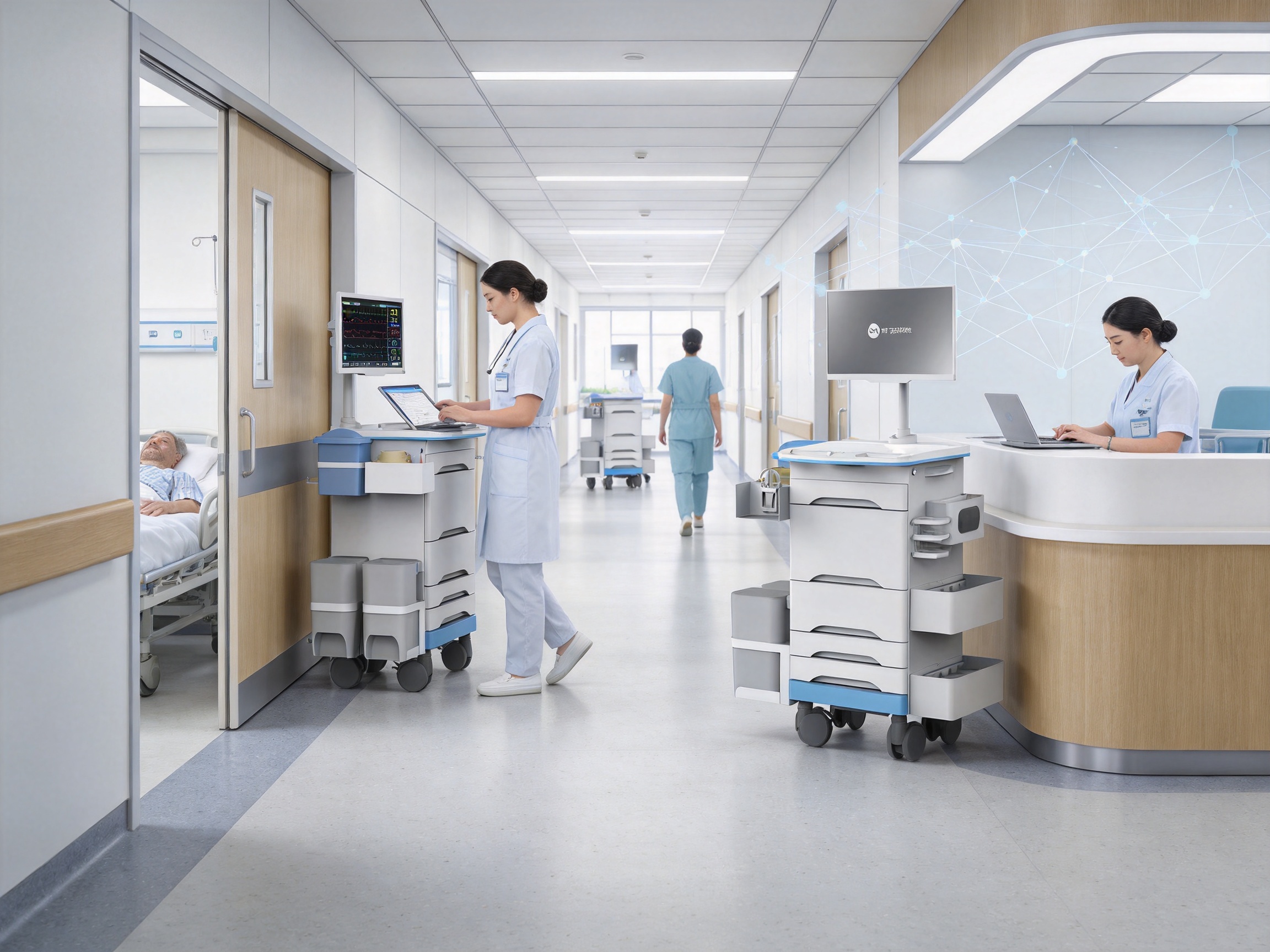
During ward rounds, nurses can move the cart from room to room, review patient information at the bedside, record observations immediately, and access medication-related data. This reduces the need to return to the nursing station after each task. It also helps nurses maintain continuity because they can complete the full information loop at the point of care.
For patients, bedside digital care can create a more professional and responsive experience. When nurses can access information quickly, answer questions accurately, and document care immediately, patients may feel more confident in the care process. The cart also supports more transparent communication because relevant information can be viewed and discussed at the bedside when appropriate.
In wards with high patient volumes, time savings matter. Even small reductions in walking distance, repeated documentation, or information searching can accumulate across an entire shift. The WMYH-W2-21 helps optimize these workflows by placing essential digital tools on a mobile platform.
Application in Operating Rooms
Operating rooms require precision, organization, and controlled information flow. While not every medical cart is suitable for every operating room function, a smart mobile workstation can support documentation, information access, and coordination tasks in surgical environments. The WMYH-W2-21 provides a flexible platform that can be positioned where digital access is needed.
In operating room settings, equipment must be stable and easy to move when required. The locking caster system helps secure the cart in place, while the ABS handle supports repositioning. The large screen can support visibility of clinical information, schedules, procedural notes, or related system interfaces, depending on hospital integration.
The optional accessories are also useful. A sanitizer holder can support hygiene practices, while drawers or baskets can help organize necessary supplies. A sharps box frame may be relevant in procedure-adjacent areas where safe disposal is required. These options allow hospitals to configure the cart according to operating room policies and workflows.
Application in Outpatient Clinics
Outpatient clinics require fast patient turnover, efficient documentation, and easy access to records. Clinicians and nurses often move between consultation areas, treatment rooms, and diagnostic spaces. The WMYH-W2-21 can support these workflows by functioning as a mobile documentation and information access station.
In outpatient care, time is often limited. A clear 24-inch screen can help staff review patient information quickly, while the sliding keyboard tray supports comfortable data entry. The battery runtime allows the cart to be used continuously without frequent charging interruptions. The mobility system makes it suitable for clinics where room usage changes throughout the day.
For outpatient departments pursuing digital transformation, mobile carts can reduce bottlenecks around fixed computers. Instead of requiring staff to wait for available workstations, a cart can be assigned to a team or treatment area, improving flexibility.
Application in Mobile Nursing
Mobile nursing is one of the strongest use cases for the WMYH-W2-21. Mobile nursing requires technology that moves with the caregiver. The cart supports this by combining a digital workstation, practical storage options, ergonomic control, and long-lasting power.
During mobile nursing rounds, staff can use the cart to access patient information, support medication workflows, collect vital signs, and complete documentation. This helps transform nursing from a fragmented process into a more connected workflow. Instead of performing tasks in separate places, nurses can complete care-related information processes near the patient.
The eight-hour battery runtime is especially valuable in mobile nursing because nurses may not have time to locate power outlets or return carts to charging stations frequently. A smart battery management system supports dependable use and helps staff plan charging cycles more effectively.
Medication Safety and Clinical Accuracy
Medication safety is one of the most important goals of intelligent medical cart design. Medication administration involves multiple verification steps, including patient identity, medication name, dosage, timing, route, and clinical instructions. When information access is separated from bedside administration, errors become more likely.
The WMYH-W2-21 helps reduce this separation by allowing medication-related information to be accessed at the bedside. Nurses can review instructions and complete documentation closer to the actual point of care. This supports a safer workflow and improves traceability.
Optional drawers can also help organize medication or nursing supplies according to hospital policy. When physical organization and digital information access are combined, the medication process becomes more controlled. The cart does not replace hospital medication management systems, but it provides a mobile platform that helps those systems function effectively at the bedside.
Improving Vital Signs Collection
Vital signs are essential indicators of patient condition. Timely and accurate recording of temperature, blood pressure, pulse, respiration, oxygen saturation, and related observations can support early detection of deterioration. The WMYH-W2-21 provides a mobile digital platform for bedside vital signs collection and documentation.
When vital signs are recorded manually on paper and entered later, there is a risk of delay or transcription error. A mobile workstation can support more direct data entry. In networked environments, it may also support integration with digital measurement devices or hospital systems, depending on configuration. This helps improve data timeliness and reduces repetitive work.
For nurses, the ability to complete vital sign documentation during rounds improves workflow. For doctors and care teams, faster availability of updated data supports better decision-making. For hospitals, more accurate and timely records improve quality management and clinical traceability.
Ergonomics and Staff Experience
Healthcare technology must be designed for the people who use it every day. Nurses often work long shifts, move constantly, and perform many tasks under pressure. If equipment is awkward, heavy, unstable, or difficult to adjust, it can create resistance to adoption. The WMYH-W2-21 addresses staff experience through ergonomic design features.
The manual lift mechanism helps different users find a comfortable working height. This is important because the cart may be shared by staff across shifts. A good working height reduces bending, shoulder strain, and wrist discomfort. The sliding keyboard tray supports a more natural typing position and can be stored when not needed.
The ABS handle and caster system support movement with less effort. Two locking casters help stabilize the workstation during data entry. These practical details make the cart easier to use throughout a shift.
Compared with competitor products that emphasize appearance but neglect daily usability, the WMYH-W2-21 focuses on functional ergonomics. Its value comes from making routine tasks easier, safer, and more consistent.
Customization for Department-Specific Needs
Different hospital departments have different priorities. A general ward may require storage drawers for routine supplies. A surgical department may prioritize sanitation and sharps disposal. An outpatient clinic may need a compact, flexible workstation for changing patient flows. The WMYH-W2-21 supports these variations through optional accessories.
Drawers can improve organization and help separate items. A sanitizer holder supports infection control by keeping hand hygiene supplies close to the workstation. A sundries basket can hold frequently used items, reducing the need for separate carrying trays. A sharps box frame supports safe disposal processes where needed.
This accessory flexibility gives the product an advantage over standardized carts with limited modification options. Hospitals can configure the WMYH-W2-21 according to actual clinical workflows, which increases user acceptance and practical value.
Company Strengths Supporting Global Healthcare Needs
Wanma Technology Co., Ltd. has built a sales network covering more than 20 countries and regions, including the United States, Australia, the United Kingdom, Italy, South Africa, and Ghana. This international experience reflects the company’s ability to support diverse market needs and maintain supply capabilities across different regions.
The company emphasizes reliable product quality, timely delivery, and long-term strategic partnerships. These strengths are important for medical institutions and healthcare equipment distributors. Hospitals cannot afford unreliable supply chains or inconsistent product quality. A manufacturer with long-term industrial experience can provide greater confidence in procurement and deployment.
Wanma Technology’s mission is to create satisfaction for customers, fulfillment for employees, and value for society. In the context of smart medical carts, this mission aligns with the goal of improving nursing efficiency, patient safety, and digital healthcare transformation.
Why Manufacturing Background Matters in Smart Medical Carts
Some competitors may enter the smart medical cart market with only assembly capabilities or limited experience in infrastructure-grade products. However, a medical cart with digital functions requires more than basic assembly. It requires understanding of structure, power, electronics, mobility, user safety, and operational reliability.
Wanma Technology’s background in communication and network infrastructure is a meaningful advantage. Communication cabinets and optical network products require organized engineering, stable production, and long-term reliability. These same values support the development of medical carts that must operate consistently in networked hospital environments.
The WMYH-W2-21 benefits from a manufacturing culture that values precision and dependable performance. Its design reflects practical clinical use, while its production is supported by broader industrial capability. For hospitals and distributors comparing suppliers, this combination can be a decisive advantage.
Procurement Considerations for Hospitals
When evaluating an intelligent medical cart, hospitals should consider more than the initial purchase price. The real value of a smart cart depends on workflow improvement, reliability, user acceptance, maintenance needs, and compatibility with hospital operations. The WMYH-W2-21 addresses these factors through its balanced design.
First, hospitals should evaluate the screen size and usability. The 24-inch LED screen supports clearer information access than many smaller alternatives. Second, they should assess battery runtime. An eight-hour lithium iron phosphate battery system supports mobile use throughout demanding shifts. Third, they should consider ergonomics. The manual lift mechanism and sliding keyboard tray can improve staff comfort. Fourth, they should examine mobility and stability. The ABS handle and locking casters help ensure controlled movement and secure operation. Fifth, they should evaluate customization. Optional accessories allow the product to fit multiple departments.
Hospitals should also consider supplier reliability. Wanma Technology’s history since 1997, international sales network, and experience in communication equipment manufacturing provide a strong supplier profile. For large deployments, supplier stability and delivery capability are especially important.
Long-Term Value and Return on Investment
The return on investment of a smart medical cart is not measured only by hardware features. It is measured by time saved, errors reduced, workflows improved, and staff satisfaction increased. The WMYH-W2-21 contributes to these areas by supporting bedside digital workflows.
Time savings come from reducing repeated trips between patient rooms and fixed workstations. Accuracy improves when documentation and information review happen closer to the point of care. Medication safety improves when nurses can access medication information at the bedside. Staff satisfaction improves when equipment is ergonomic, mobile, and reliable.
In the long term, smart medical carts can support hospital digital transformation. As hospitals expand electronic medical records, networked devices, and mobile nursing systems, carts like the WMYH-W2-21 provide the physical platform needed to bring those systems into daily bedside practice.
Quality, Safety, and Practical Reliability
Quality in a medical cart includes many details: structural stability, electrical safety, battery performance, caster durability, surface finish, accessory fit, display support, and operational smoothness. The WMYH-W2-21 is designed as a practical tool for clinical environments, where small failures can disrupt workflow.
The lithium iron phosphate battery and smart battery management system support safe and reliable power. The locking casters support stable positioning. The manual lift mechanism supports ergonomic operation without unnecessary complexity. The sliding keyboard tray improves workstation organization. Optional accessories support safer and more efficient clinical routines.
These details show that the product is designed for real hospital use. Its advantage is not a single feature, but the integration of multiple practical features into one mobile workstation.
Q&A Section
What is the WMYH-W2-21 Medical Cart?
The WMYH-W2-21 Medical Cart is an intelligent mobile nursing workstation designed to bring information management, medication support, clinical documentation, and bedside vital signs collection directly to the patient’s bedside.
Where can this medical cart be used?
It is suitable for hospital wards, operating rooms, outpatient clinics, and mobile nursing workflows. It is especially useful in paperless, filmless, and networked hospital environments.
How does the 24-inch LED screen help nurses?
The 24-inch LED screen provides clear access to patient information, medication management interfaces, and vital sign documentation. Its larger display area improves readability and supports more efficient clinical work.
What is the advantage of the lithium iron phosphate battery?
The lithium iron phosphate battery offers stable performance, strong safety characteristics, and an eight-hour runtime. Combined with a smart battery management system, it supports continuous mobile operation during clinical shifts.
How does the cart improve medication safety?
By bringing medication-related information to the bedside, the cart helps nurses verify instructions and document care closer to the actual point of administration. This can reduce workflow gaps and support safer medication processes.
Why is ergonomic design important?
Nurses use medical carts repeatedly during long shifts. The manual lift mechanism and sliding keyboard tray help users work at a more comfortable height and typing position, reducing strain and improving acceptance.
Can the cart be customized?
Yes. Optional accessories include drawers, a sanitizer holder, a sundries basket, and a sharps box frame. These options allow hospitals to configure the cart for different departments and clinical workflows.
What makes this product different from basic medical carts?
Basic medical carts usually focus on storage and transport. The WMYH-W2-21 functions as a smart nursing workstation with digital information access, power support, ergonomic operation, and bedside workflow integration.
What company strengths support the product?
Wanma Technology Co., Ltd. has manufacturing experience dating back to 1997 and specializes in communication cabinets, electronic equipment, and passive optical components. Its background in network infrastructure, product quality, timely delivery, and international markets supports reliable smart medical cart production.
How does the product support digital hospital transformation?
It provides a mobile platform for bedside access to digital systems, reducing reliance on paper records and fixed workstations. This supports paperless, filmless, and networked hospital operations.
Conclusion
The WMYH-W2-21 Medical Cart is a practical and intelligent solution for modern healthcare facilities seeking safer, faster, and more connected bedside nursing. By integrating a 24-inch LED screen, sliding keyboard tray, manual lift mechanism, lithium iron phosphate battery, smart battery management, ABS handle, locking casters, and customizable accessories, it provides a balanced combination of digital capability and clinical usability.
Its advantages over conventional carts are clear. It supports bedside information access, improves medication workflow, enables vital sign documentation, reduces unnecessary movement, enhances ergonomic comfort, and adapts to multiple hospital departments. These benefits are especially valuable in wards, operating rooms, outpatient clinics, and mobile nursing scenarios.
Behind the product is the manufacturing strength of Wanma Technology Co., Ltd., a company with decades of experience in communication infrastructure, electronic equipment, and customized solutions. This background supports the reliability, production discipline, and network-ready thinking required for smart hospital equipment. As hospitals continue to adopt paperless, filmless, and networked operations, intelligent medical carts such as the WMYH-W2-21 will become increasingly important tools for improving care quality and workflow efficiency.
References
Healthcare Information and Management Systems Society. Digital Health and Nursing Informatics Practice Guidelines.
World Health Organization. Medication Safety in High-Risk Situations.
International Electrotechnical Commission. Medical Electrical Equipment Safety and Performance Standards.
Association for the Advancement of Medical Instrumentation. Human Factors Engineering for Medical Devices.
Journal of Nursing Management. Studies on Mobile Nursing Workstations and Bedside Documentation Efficiency.
Journal of Patient Safety. Research on Medication Administration Accuracy and Electronic Documentation.
Clinical Engineering Handbook. Principles of Medical Equipment Design, Maintenance, and Workflow Integration.
Product: WMYH-W2-21 Medical Carts
PREV:Outdoor Railway Signal Control Cabinets: EMC Protection, Manufacturing Quality, and Trackside Reliability
NEXT:20-Foot Containerized Data Center for Rapid, Reliable, and Scalable Digital Infrastructure
NEXT:20-Foot Containerized Data Center for Rapid, Reliable, and Scalable Digital Infrastructure
Interested in cooperation or have questions?
Related products
-
-
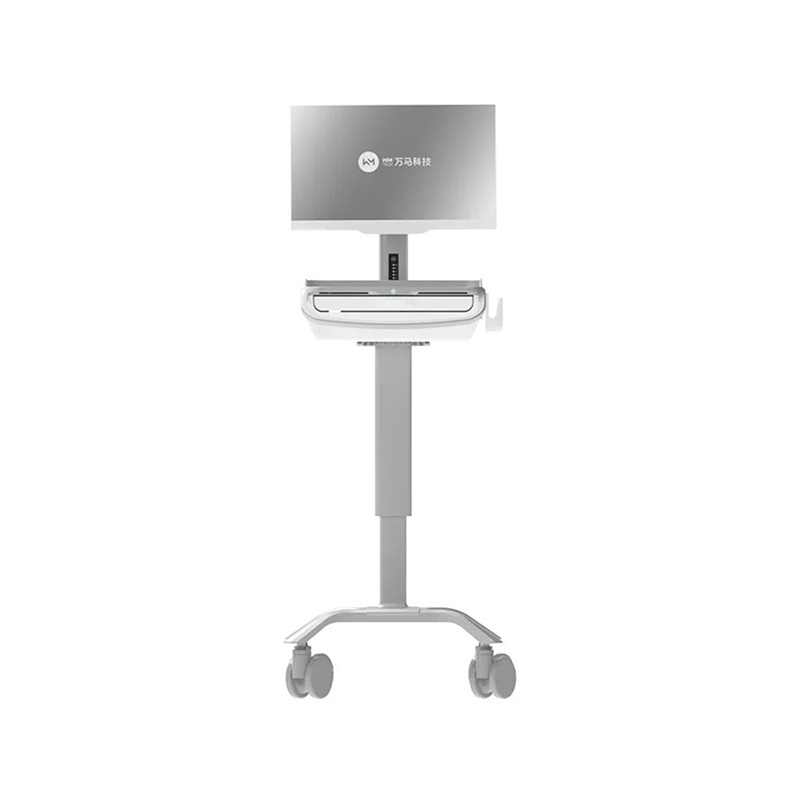
Product Definition:The WMYC-J2-24 Medical Cart is an intelligent mobile workstation integrating information display, order entry, clinical management, and device storage, designed to enhance hospital ...
See Details -
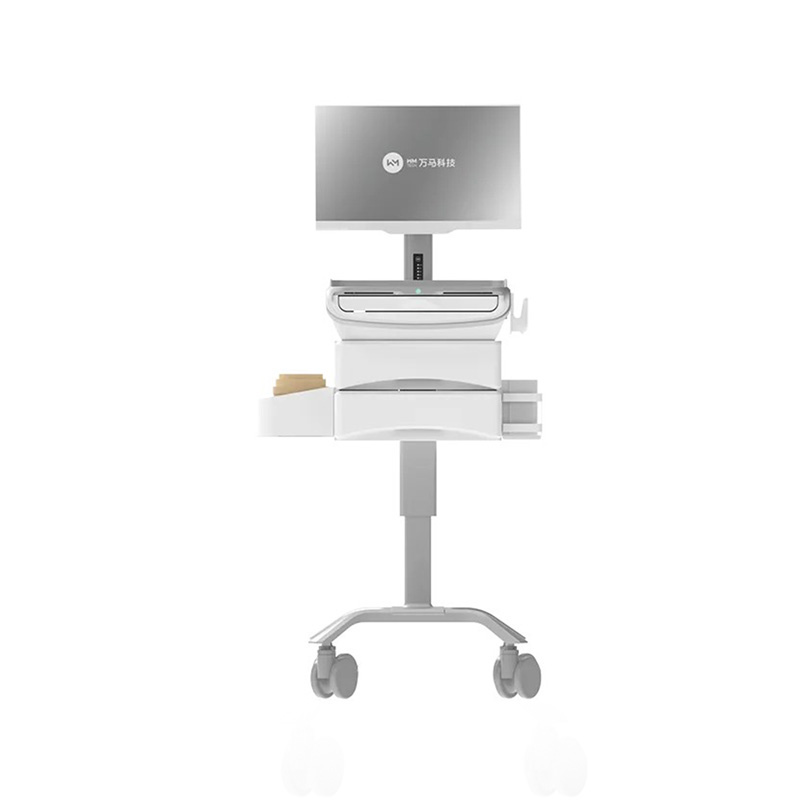
Product DefinitionThe WMYC-J2-24 Medical Cart (with Drawer) is an intelligent mobile workstation designed for modern clinical environments. Featuring a lightweight aluminum structure, it integrates a ...
See Details -
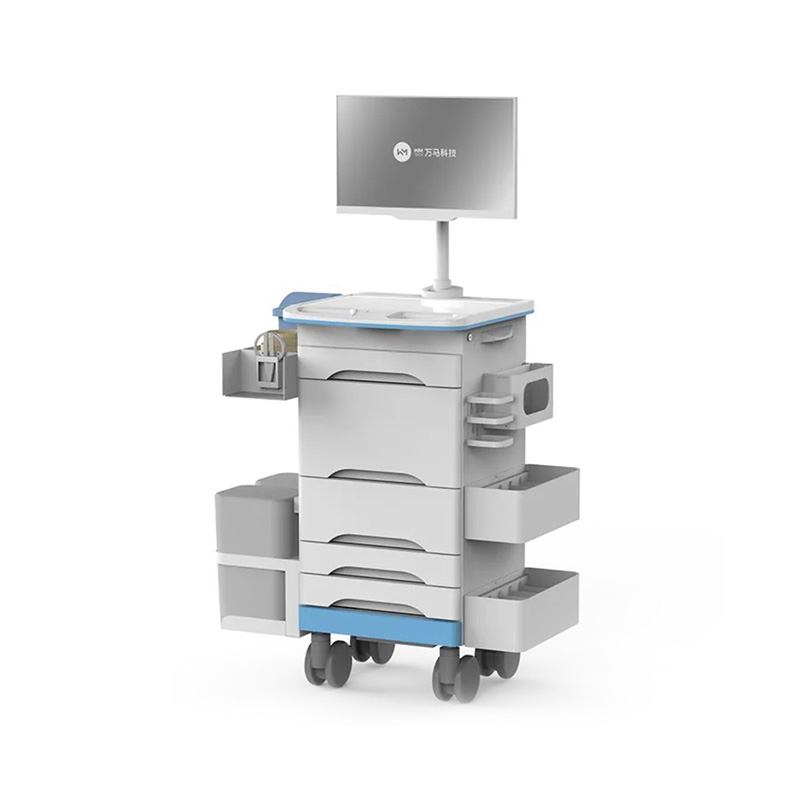
Product Definition:The WMYH-W2-21 Medical Cart is an intelligent mobile nursing workstation integrating information management, clinical care, medication administration, and bedside vital signs collec...
See Details
Ready to Get started ? Contact Us Now !

Product.
Contact Details.
-
 +86 13958188250
-
 +86 13958188250
-
 [email protected]
-
 AUDIT Email:[email protected]
- Wanma Industrial Park Taihu Yuan Town Lin'an District Hangzhou City China.
QR Code

Copyright © Wanma Technology Co., Ltd. All Rights Reserved.
Privacy
Custom Ethernet Optical Network Railway Transit Equipments Suppliers
