

 English
 Français
 Español
 Português
 عربى






Application:It is used for the fixed network and broadband access, providing physical working environment and security system for the workstation in wired network. Features:•The cabinet is composed of...
See Details288-Core SMC Fiber Optic Cross-Connection Cabinet for Outdoor Network Infrastructure
Content
- 1 Product Overview
- 2 Core Product Specifications
- 3 SMC Enclosure Construction and Outdoor Protection
- 4 Two Structural Options for Different Network Designs
- 5 Capacity and Fiber Management Advantages
- 6 Installation Flexibility
- 7 Door Configurations and Lock Selection
- 8 Advantages Compared with Conventional Outdoor Cabinets
- 9 Applications in Telecommunications and Transport Networks
- 10 Manufacturing Strengths and Quality-Oriented Production
- 11 Recommended Selection Process
- 12 Installation and Maintenance Recommendations
- 13 Value for Network Operators and Contractors
- 14 Frequently Asked Questions
- 14.1 What is the primary function of the 288-Core SMC Fiber Optic Cable Distribution Box?
- 14.2 How many optical fiber cores can the cabinet support?
- 14.3 What is the difference between the ODC-288B and ODC-288C?
- 14.4 Is the cabinet suitable for outdoor installation?
- 14.5 Can the cabinet be installed on a wall?
- 14.6 Does the cabinet support rear access?
- 14.7 Which lock types are available?
- 14.8 Why is SMC suitable for outdoor communication cabinets?
- 14.9 Can the cabinet be used in mobile network projects?
- 14.10 Is the cabinet suitable for railway or urban rail transit networks?
- 14.11 What should be confirmed before ordering?
- 15 Conclusion
- 16 References
- 17 Product: 288-Core (1450×750×360) SMC Fiber Optic Cable Distribution Box
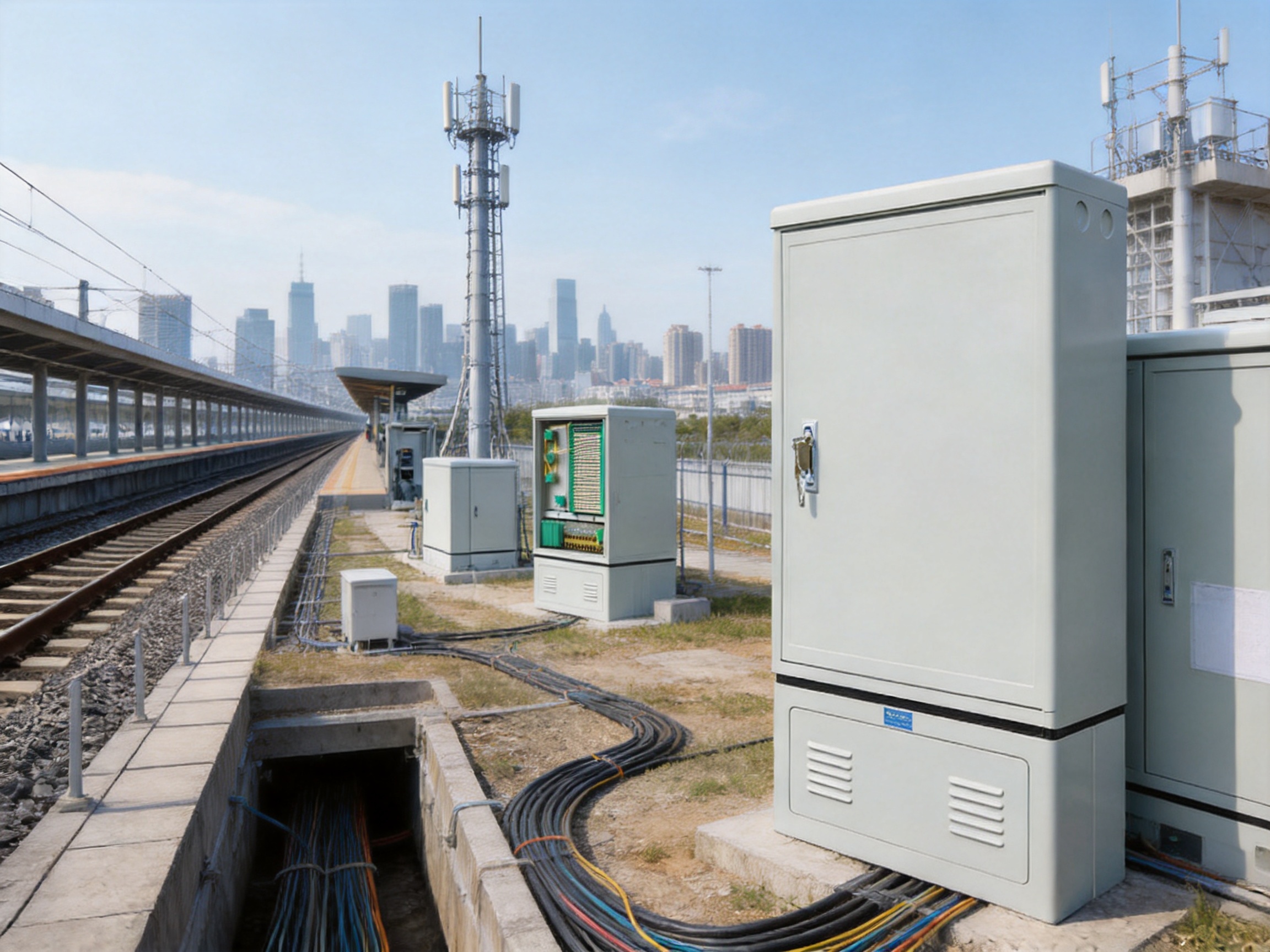
Modern telecommunications networks require more than high-capacity fiber cables and active transmission equipment. They also depend on secure, organized, and weather-resistant infrastructure that can protect optical connections throughout the entire service life of a network. The 288-Core SMC Fiber Optic Cable Distribution Box is designed for this purpose. With support for up to 288 optical fiber cores, an outdoor-rated IP65 enclosure, flexible installation options, and two structural configurations, the product provides a practical solution for fiber cross-connection, cable distribution, and network management.
The product family includes the ODC-288B and ODC-288C SMC Optical Fiber Cross Connection Cabinets. Both models are intended for outdoor optical communication networks, including telecom operator access networks, mobile communication infrastructure, metro networks, railway communication systems, and other large-scale fiber deployment projects. While the two models share the same core capacity and protection level, they are adapted to different internal design requirements. The ODC-288B uses a deepened enclosure intended for no-jumper internal arrangements, while the ODC-288C uses a traditional enclosure structure suitable for regular telecom and mobile network designs.
This combination of high fiber capacity, weather protection, configurable access, and installation flexibility enables network planners to select a cabinet according to the specific conditions of a project rather than forcing every deployment into one standard configuration. The result is a more adaptable approach to outdoor fiber management, especially where space, environmental exposure, maintenance access, and future network expansion must all be considered at the same time.
Product Overview
The 288-Core SMC Fiber Optic Cable Distribution Box is an outdoor fiber management cabinet used to terminate, cross-connect, distribute, and organize optical cables. It provides a structured location for managing fiber connections between feeder cables, distribution cables, optical splitters, and access network equipment. By consolidating these functions in a protected enclosure, the cabinet helps network operators reduce cable disorder and improve the efficiency of installation, testing, fault isolation, and maintenance.
Both ODC-288B and ODC-288C models support a nominal capacity of 288 cores. This capacity makes them suitable for medium- and high-density fiber access points where a smaller cabinet would create congestion or limit future expansion. The cabinet dimensions are based on a nominal height of approximately 1,450 millimeters, a width of 750 millimeters, and a depth of either 360 millimeters for the ODC-288B configuration or 320 millimeters for the ODC-288C configuration. The detailed structure includes an enclosure section and a base section, allowing the cabinet to be adapted for ground-mounted or suspended installation.
The enclosure is manufactured from SMC, or sheet molding compound. SMC is a composite material commonly used in outdoor electrical and communication enclosures because it offers a useful balance of mechanical strength, dimensional stability, insulation performance, corrosion resistance, and resistance to demanding environmental conditions. In comparison with conventional metal housings, an SMC enclosure can reduce concerns related to rust and conductive surfaces while providing a robust protective shell for passive optical components.
The IP65 protection level is another important feature. An IP65 enclosure is designed to resist dust ingress and protect internal components against water jets from different directions. This makes the cabinet suitable for outdoor deployment where it may be exposed to rain, airborne dust, roadside pollution, and changing weather conditions. The cabinet is not simply an indoor distribution frame placed outdoors; it is configured as an outdoor network enclosure with a dedicated protective structure.
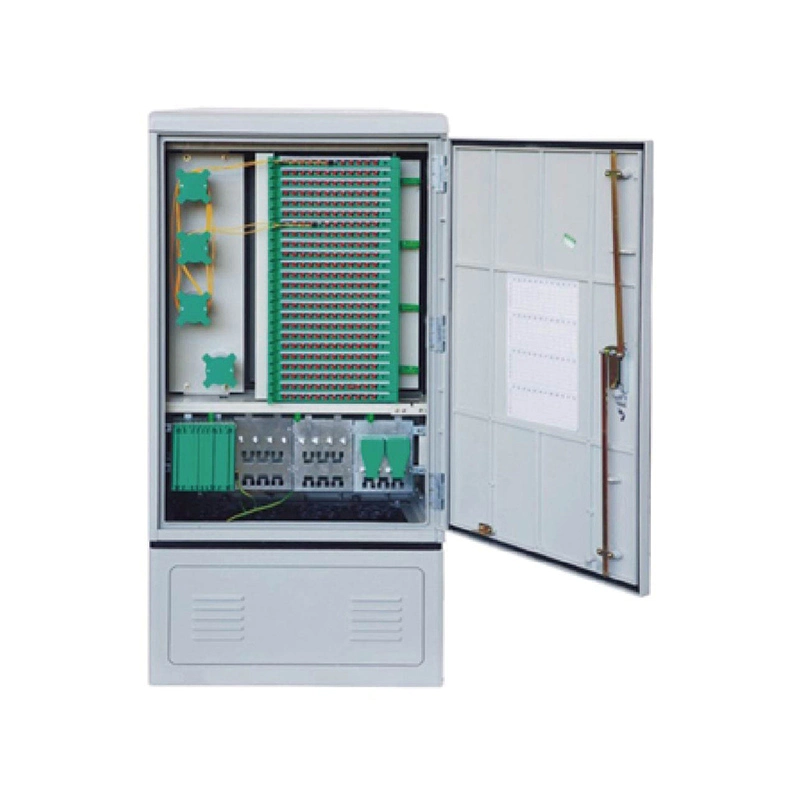
288-Core (1450×750×360) SMC Fiber Optic Cable Distribution Box
Core Product Specifications
The following table summarizes the main characteristics of the two cabinet variants. Dimensions should be confirmed against the final project drawing and selected configuration before installation, particularly when the project requires a specific door arrangement, panel thickness, lock type, or mounting method.
| Item | ODC-288B | ODC-288C |
|---|---|---|
| Product type | SMC optical fiber cross-connection cabinet | SMC optical fiber cross-connection cabinet |
| Nominal capacity | 288 cores | 288 cores |
| Body material | SMC | SMC |
| Protection level | IP65 | IP65 |
| Structural design | Deepened housing for no-jumper internal design | Traditional housing for regular telecom and mobile internal designs |
| Nominal overall dimensions | Approximately 1,450 × 750 × 360 mm | Approximately 1,450 × 750 × 320 mm |
| Enclosure and base arrangement | Enclosure: approximately 1,100 × 750 × 360 mm; base: approximately 350 × 750 × 360 mm | Enclosure: approximately 1,100 × 750 × 320 mm; base: approximately 350 × 750 × 320 mm |
| Shape dimensions | Approximately 1,020 × 720 × 320 mm | Approximately 1,020 × 720 × 300 mm |
| Installation reference size | Approximately 615 × 220 mm | Approximately 615 × 160 mm |
| Door access | Single front door or single front and back door opening | Single front door or single front and back door opening |
| Installation methods | Ground installation or wall-mounted installation | Ground installation or wall-mounted installation |
| Lock options | MS864-4 imitation Cologne lock, life-long padlock, or MS712 lock | MS864-4 imitation Cologne lock, life-long padlock, or MS712 lock |
SMC Enclosure Construction and Outdoor Protection
Why SMC Material Matters
The enclosure material is central to the performance of any outdoor fiber distribution cabinet. The housing must protect delicate optical routing and connection components while remaining stable through repeated exposure to moisture, dust, temperature variation, and mechanical handling. SMC is well suited to this role because it is a molded composite material with a strong, nonmetallic structure.
Unlike ordinary steel cabinets that may require extensive surface treatment to prevent corrosion, an SMC cabinet does not depend on a painted metal surface as its primary protection against rust. This is especially valuable in humid, coastal, industrial, or polluted environments. Reduced corrosion risk can help preserve the appearance and mechanical integrity of the cabinet and can simplify long-term maintenance planning.
The nonmetallic nature of SMC also supports electrical insulation. Although an optical cabinet is primarily a passive fiber management product, the enclosure may be installed near power infrastructure, grounding systems, railway equipment, and other electrical installations. A nonconductive enclosure can provide an additional layer of separation between the cabinet body and the surrounding environment. Site-specific grounding and bonding requirements should still be assessed by qualified installers, but the material itself is advantageous for outdoor communication infrastructure.
IP65 Protection for Field Deployment
Outdoor cabinets are exposed to conditions that are difficult to reproduce in an indoor equipment room. Dust can enter through small openings, rain can strike from multiple directions, and water can collect around doors, bases, and cable entry points. An IP65 design addresses these risks by combining an enclosed housing with appropriate door and sealing arrangements.
The first digit in the IP65 rating indicates protection against dust ingress. This is important for optical fiber cabinets because dust contamination can affect connector cleanliness and increase the risk of maintenance-related connection problems. The second digit indicates protection against water jets. This does not mean that the cabinet should be submerged or installed without regard to drainage, but it does make the enclosure suitable for normal outdoor exposure when correctly installed.
For best results, the installation foundation, cable routing, door closure, and cable entry treatment should be completed according to the project design. The cabinet should be positioned to avoid unnecessary standing water, direct collision risks, and uncontrolled cable bending. The IP65 rating is most effective when the entire installation follows sound field practices.
Two Structural Options for Different Network Designs
ODC-288B Deepened Housing
The ODC-288B uses a deepened enclosure structure designed for no-jumper internal arrangements. This configuration is useful where the network architecture requires a cleaner internal path and where the installer wants to reduce unnecessary intermediate jumper routing. The additional depth provides more internal working space for organized cable management and may be beneficial when the design includes larger bend-management requirements or a dense arrangement of optical connections.
A no-jumper internal design can help simplify the visual layout of the cabinet. When connections are routed directly according to the planned fiber architecture, technicians can more easily identify incoming and outgoing routes. A clear internal arrangement can reduce the time required for tracing circuits, carrying out tests, or responding to service changes. It can also reduce the chance of accidental interference with neighboring fibers during maintenance.
The ODC-288B is therefore appropriate for projects that prioritize internal routing discipline, higher working space, or a specialized cross-connection arrangement. It can be considered for new network construction, major capacity upgrades, and centralized fiber distribution points where the internal layout is designed from the beginning around a no-jumper concept.
ODC-288C Traditional Housing
The ODC-288C uses a traditional box structure suitable for telecommunications, mobile networks, and other regular internal designs. This makes it a practical choice for operators that already use established cabinet layouts, standard connection procedures, or conventional jumper management practices. Familiarity can be an important operational advantage because technicians can work with a design that matches existing network habits and maintenance methods.
The ODC-288C is available with standard or thickened side and door panels, including an 8-millimeter thickened option. This allows the cabinet configuration to be matched to the mechanical requirements of the site and the operator’s preferred construction standard. The 320-millimeter depth provides a relatively compact option when the available installation space is limited but the project still requires 288-core capacity.
By offering both the deepened ODC-288B and the traditional ODC-288C, the product family addresses two different design philosophies. One model supports a specialized no-jumper arrangement, while the other is aligned with conventional telecom and mobile deployments. This choice is more useful than a single universal cabinet because network operators can select the structure that best corresponds to their connection method and available site space.
Capacity and Fiber Management Advantages
A 288-core capacity allows a single cabinet to serve a substantial concentration of fiber connections. Consolidating a large number of cores in one organized enclosure can reduce the number of separate cabinets required at a cross-connection point. This may help simplify the site layout, reduce the footprint occupied by passive infrastructure, and make network expansion easier to plan.
High capacity does not only mean placing more fibers in the same cabinet. It also requires sufficient internal organization. Optical cables must be routed with respect for minimum bend radius, connection points must remain accessible, and spare fibers must be managed in a way that prevents confusion. A properly selected cabinet should provide a structured environment in which fibers can be identified and maintained over time.
The ODC-288B and ODC-288C are designed for optical cable connection, distribution, and management. In practical terms, the cabinet can serve as a central transition point between feeder and distribution sections of a network. It can also support the organization of cross-connections associated with access networks, mobile backhaul, metro fiber routes, and other outdoor optical systems.
For network planners, the 288-core format offers a useful balance between density and physical manageability. Smaller boxes may be easier to install but can require multiple units at high-capacity sites. Larger cabinets may provide additional capacity but can consume more space and increase installation complexity. The 288-core design is appropriate for many centralized distribution points where high density is needed without moving to an oversized cabinet format.
Supporting Orderly Maintenance
Fiber networks often remain in service for many years, during which time connections may be added, removed, rerouted, or upgraded. An outdoor cabinet must therefore support not only the original installation but also repeated maintenance activities. A well-organized cabinet helps technicians identify fibers, separate functional areas, and perform changes without disturbing unrelated connections.
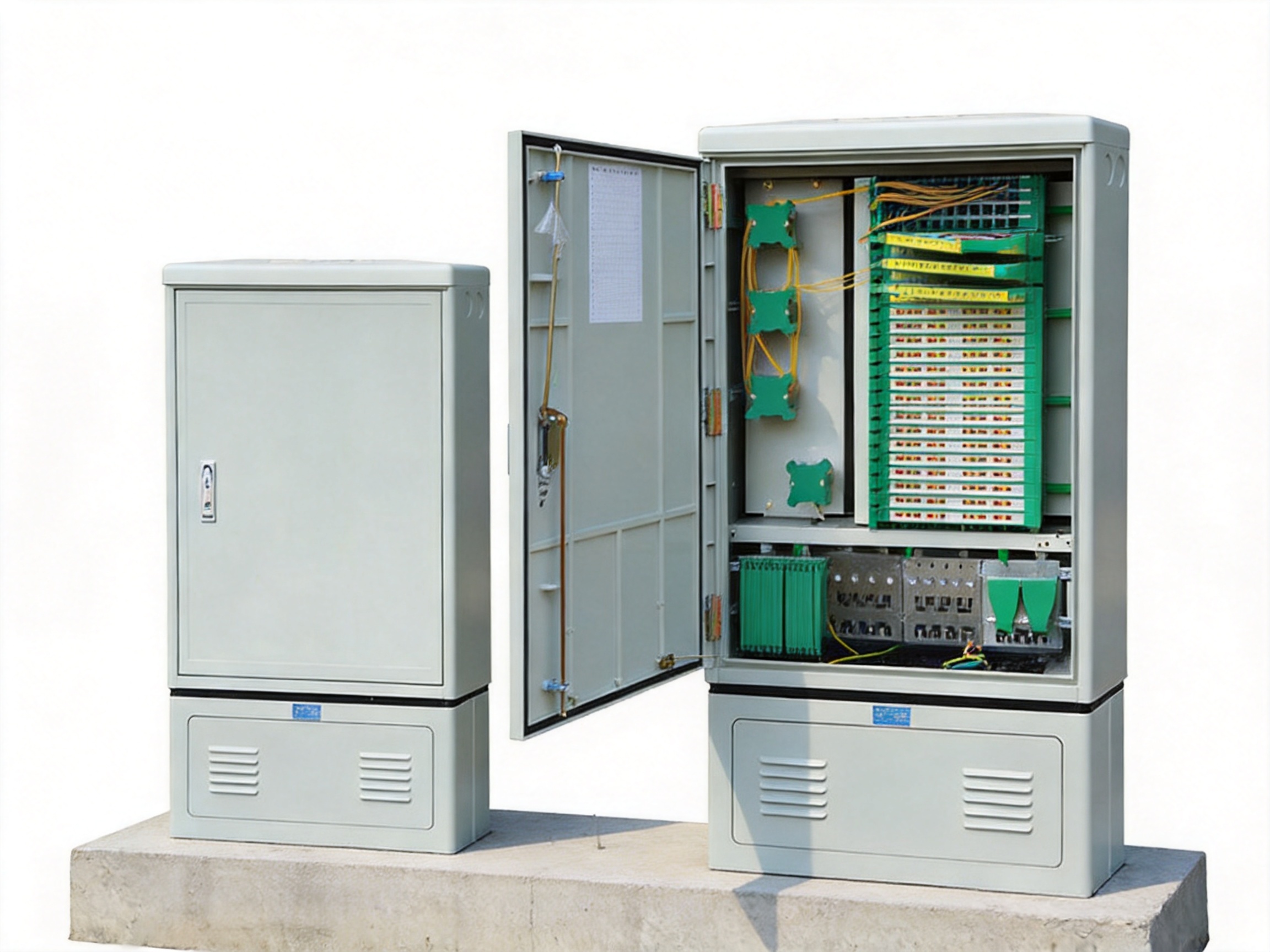
The two-door option can be especially useful at sites where front and rear access is available. Front-and-back opening allows technicians to approach the cabinet from both sides and may improve access during installation or troubleshooting. Where the cabinet is installed against a wall or where rear access is not practical, the single front door option provides a more compact operational arrangement.
The choice between single-front and front-and-back access should be made during the site planning stage. It depends on the cabinet location, clearance around the unit, cable direction, maintenance procedures, and safety requirements. Offering both options gives the project team greater freedom to adapt the product to the physical environment.
Installation Flexibility
Ground Installation
Ground installation is suitable for outdoor fiber cross-connection sites where the cabinet is placed on a prepared foundation or integrated with a base structure. The enclosure and base dimensions are designed as part of a vertical cabinet arrangement, providing a dedicated installation format for network locations that require a freestanding unit.
A ground-mounted cabinet can be used at roadside communication points, operator access sites, railway communication facilities, campus networks, industrial areas, and other locations where a fixed outdoor enclosure is required. The installation foundation should be level, stable, and capable of supporting the cabinet under local environmental conditions. Cable conduits and entry routes should be planned before the cabinet is positioned.
The base section also helps establish a practical interface between underground or surface cable routes and the cabinet’s internal management area. Correct planning of the base and cable entry zone can improve bend control, protect cables from mechanical stress, and reduce the possibility of water accumulation around the lower part of the enclosure.
Wall-Mounted Installation
Wall-mounted installation is useful where ground space is limited or where the cabinet must be installed on an existing building, equipment room exterior, tunnel structure, or other suitable vertical surface. The wall-mounted option can help preserve floor space and may simplify deployment at locations where a freestanding foundation would be difficult to construct.
The wall or support structure must be assessed for load-bearing capacity, fixing position, working clearance, and cable routing. Sufficient front clearance is required for door opening and maintenance. If a front-and-back door configuration is selected, rear access must also be preserved. Proper mounting hardware and sealing treatment should be selected according to the site environment and the applicable installation standard.
Ground and wall-mounted options provide an important advantage over cabinets designed for only one installation method. Network deployment conditions vary considerably between urban streets, railway corridors, industrial compounds, apartment developments, and rural access sites. A flexible cabinet can reduce the need for a completely different enclosure when the mounting condition changes from one project to another.
Door Configurations and Lock Selection
Security and access control are essential for outdoor passive optical infrastructure. The cabinet may contain a large number of active customer circuits or important transport connections, so unauthorized access, accidental opening, or poor maintenance control can create operational risk. The product supports several lock options to meet different operator preferences.
The available choices include the MS864-4 imitation Cologne lock, a life-long padlock arrangement, and the MS712 lock. Each option can be considered according to the operator’s existing key management system, security policy, maintenance process, and local procurement requirements. Selecting a familiar lock type can make field operations more efficient because authorized personnel may already have the appropriate access tools.
A lock is only one part of cabinet security. The installation location, access permissions, maintenance records, door closure, and physical protection around the cabinet should also be considered. Nevertheless, the availability of multiple lock configurations gives the project team more control over how the cabinet is integrated into the wider network security process.
The choice of door opening is similarly important. A single front door is appropriate for many compact installations and can reduce the clearance required behind the cabinet. A front-and-back opening option can support two-sided access, which may be valuable during high-density fiber installation and future expansion. The ability to select between these options enables the cabinet to fit both confined sites and more spacious technical compounds.
Advantages Compared with Conventional Outdoor Cabinets
Corrosion Resistance and Reduced Surface Maintenance
One of the principal advantages of an SMC enclosure over a conventional unprotected metal housing is resistance to corrosion. Metal cabinets can be affected by moisture, salt, industrial pollutants, and damaged paint surfaces. Once corrosion begins, it may affect hinges, locks, panels, fasteners, and structural areas. An SMC enclosure avoids the conventional rust mechanism associated with steel and can be particularly attractive for humid or coastal deployments.
This does not eliminate the need for inspection. Hinges, locks, mounting hardware, cable entries, and internal components still require appropriate maintenance. However, the enclosure material can reduce the likelihood that the cabinet body itself will become a major source of long-term deterioration. This may help operators manage maintenance resources more effectively across a large outdoor network.
Nonmetallic Electrical Characteristics
SMC is also advantageous where nonmetallic enclosure characteristics are preferred. Communication cabinets may be installed near railway systems, power equipment, industrial machinery, and other sources of electrical interference or grounding complexity. A nonmetallic body can provide electrical insulation between the enclosure surface and the surrounding environment.
Optical fiber itself is not affected by electromagnetic interference in the same way as copper communication cable, but the total installation may include metallic strength members, grounding components, or adjacent electrical systems. The enclosure material should therefore be considered as part of the overall environmental and electrical design rather than only as an external shell.
High Density in a Manageable Cabinet Format
The 288-core capacity is another competitive advantage. A cabinet that combines high density with a controlled physical size can reduce the need for multiple low-capacity boxes. Fewer cabinets may mean fewer foundations, fewer access points, and a more orderly cross-connection site. It can also simplify labeling and network documentation by concentrating related fiber routes in one location.
At the same time, the availability of the 320-millimeter and 360-millimeter depth configurations gives planners a choice between a more compact traditional structure and a deeper structure for specialized internal routing. This is a practical advantage over products that offer only one fixed depth and one internal arrangement.
Adaptability to Multiple Operator Practices
Different telecom operators and infrastructure contractors often use different standards for fiber routing, cabinet access, lock control, and installation. The ODC-288B and ODC-288C family supports this variation through multiple door, lock, and mounting options. The product can therefore be incorporated into a wider range of construction specifications without requiring a completely new cabinet design for each project.
Outdoor Readiness
A cabinet designed specifically for outdoor deployment has advantages over improvised solutions that attempt to adapt indoor distribution frames to external conditions. The IP65 enclosure, SMC housing, outdoor installation formats, and lock options all contribute to a more complete field solution. These features reduce the number of separate protective measures that contractors may need to add around an indoor product.
Applications in Telecommunications and Transport Networks
Telecom Operator Access Networks
In fixed broadband access networks, a centralized outdoor fiber cabinet may serve a neighborhood, development area, industrial park, or rural service zone. The cabinet can organize feeder fibers and distribution fibers while providing a point for network expansion and maintenance. The 288-core capacity is suitable for locations where subscriber growth or multiple service zones require more than a small distribution box can support.
The cabinet may also be used at the boundary between a central office fiber route and local access infrastructure. By placing the cross-connection point in a protected outdoor enclosure, operators can reduce the distance between the network distribution point and the service area. This can support more efficient construction and make future subscriber connections easier to manage.
Mobile Communication Networks
Mobile networks depend on extensive fiber infrastructure for backhaul, fronthaul, transport, and site interconnection. The ODC-288C traditional structure is particularly suited to regular mobile and telecom internal designs, while the ODC-288B can be selected where a no-jumper routing approach is preferred. Both models can provide a protected passive connection point near aggregation locations, transport nodes, or clusters of radio sites.
Outdoor mobile infrastructure often occupies constrained sites where equipment must be arranged efficiently. The choice between a 320-millimeter and 360-millimeter depth can help align the cabinet with the available space and internal routing plan. The IP65 rating also supports installation in locations where exposure to rain and dust is unavoidable.
Metro and Access Network Cross-Connection Points
Metro networks often include numerous fiber junctions between aggregation nodes, access rings, data centers, enterprise connections, and local distribution systems. A high-capacity outdoor cross-connection cabinet can provide a structured location for managing these routes. The cabinet’s access options allow it to be installed in roadside compounds, utility areas, or other locations where both network density and environmental protection are required.
Railway and Urban Rail Transit Systems
Railway and urban rail transit communication systems require reliable fiber infrastructure along corridors, stations, depots, control centers, and equipment sites. Cabinets in these environments may be exposed to dust, vibration, temperature changes, and restricted maintenance windows. The SMC enclosure and IP65 protection level provide a suitable foundation for outdoor passive fiber management, subject to the project’s specific environmental and railway standards.
The product can support communication routes associated with signaling support systems, surveillance, passenger information, operational communications, and station connectivity. The exact application depends on the network design and required certifications, but the cabinet format is well suited to the need for organized, protected fiber cross-connection in transport infrastructure.
Network Construction and Upgrade Projects
During network modernization, existing fiber routes may need to be reorganized, expanded, or connected to new distribution segments. A 288-core cabinet can act as a consolidation point for the upgrade, allowing multiple routes to be managed in a single enclosure. The choice of a traditional or no-jumper internal design can be made according to whether the project is extending an existing architecture or introducing a new routing concept.
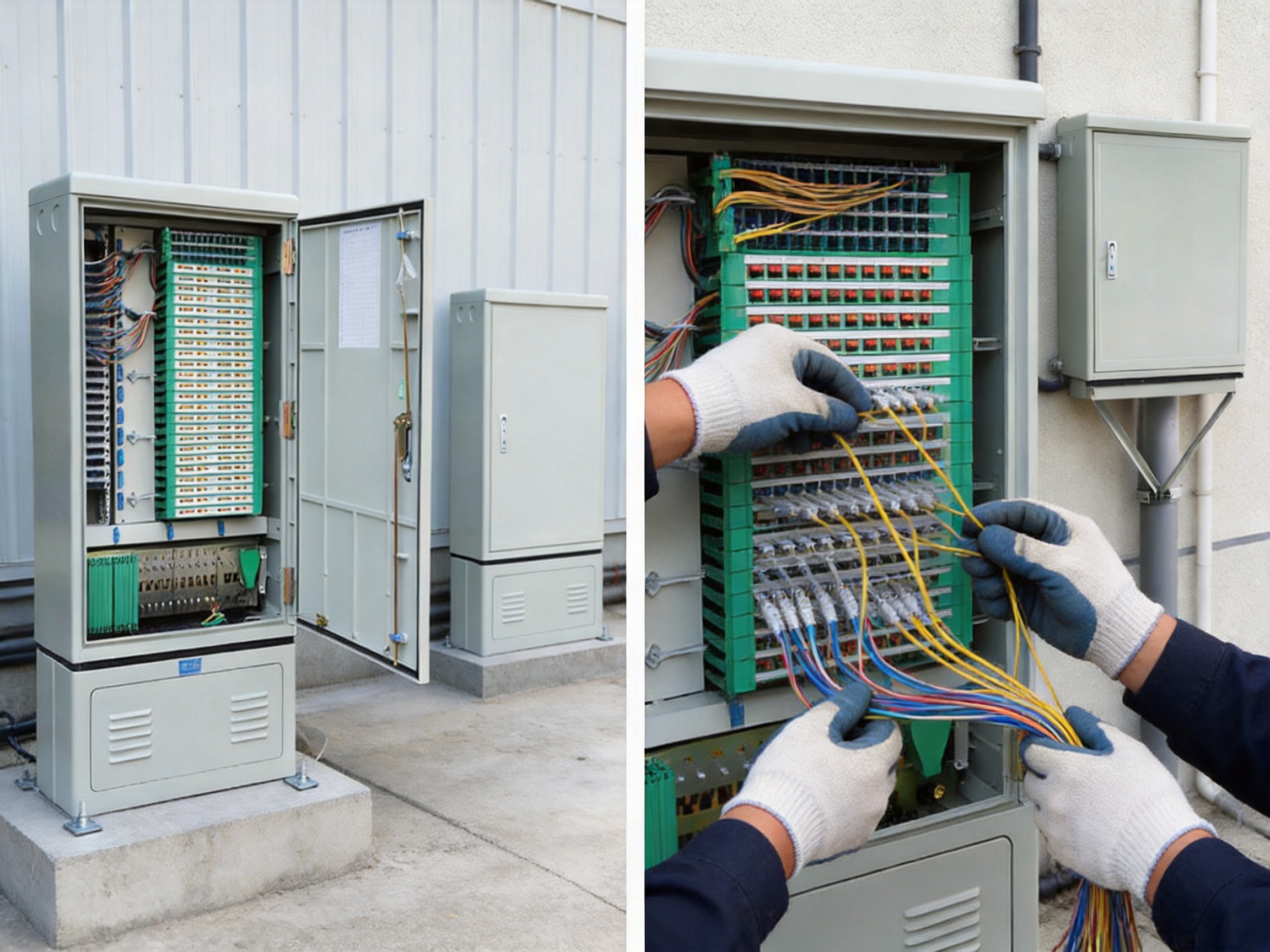
Manufacturing Strengths and Quality-Oriented Production
Wanma Technology Co., Ltd. has specialized in communication cabinets, communication electronic equipment, and passive optical components since its establishment in 1997. This background is relevant to the 288-Core SMC Fiber Optic Cable Distribution Box because the product is part of a broader communication infrastructure portfolio rather than an isolated enclosure offering.
The company develops, manufactures, and markets its own branded products while also providing integrated solutions for customized products. This combination can support customers that require standard catalog products as well as customers with project-specific requirements. For an outdoor fiber cabinet, customization may involve cabinet dimensions, internal layout, door configuration, lock selection, mounting method, labeling, or integration with a wider passive optical system.
Material and Process Control
The use of SMC requires consistent control of material preparation, molding, enclosure forming, trimming, finishing, dimensional inspection, and final assembly. A reliable manufacturing process must ensure that panels fit correctly, doors close securely, mounting interfaces remain accurate, and the finished housing maintains its intended protection characteristics.
For a product with an IP65 objective, production quality must extend beyond the visible enclosure surface. Door alignment, sealing interfaces, fastener positions, cable entry areas, and joints all influence the practical protection of the cabinet. A quality-oriented production process therefore treats the cabinet as a complete environmental protection system rather than merely a molded shell.
Consistent dimensions are also important for network contractors. Cabinets are installed using foundations, wall brackets, cable conduits, and other site components that depend on predictable interfaces. Manufacturing discipline helps reduce installation problems caused by dimensional variation and supports more efficient project planning.
Experience in Communication Infrastructure
Communication cabinets and passive optical components require a different design focus from general-purpose storage enclosures. Internal fiber routing, access for technicians, cable bend management, labeling, connection density, and long service life must all be considered. Experience in communication infrastructure allows the manufacturer to address these requirements when developing cabinet structures and configuration options.
Wanma Technology’s products are used in Ethernet networks, optical communication networks, central equipment rooms, national high-speed railways, and urban rail transit systems. Exposure to these application areas provides an important understanding of the different environmental and operational requirements encountered by network infrastructure customers.
Integrated Product and Solution Capability
Network operators and contractors often prefer to reduce the number of separate suppliers involved in a project. A manufacturer that supplies communication cabinets, electronic equipment, and passive optical components can help customers coordinate related product categories. This may simplify technical communication, procurement, delivery planning, and after-sales support.
Integrated capability is especially useful for large network construction projects. The cabinet may need to work alongside optical distribution frames, splice closures, fiber management components, patching systems, and other passive products. Although each project must confirm technical compatibility, a broad product portfolio can make it easier to develop a coherent infrastructure solution.
Delivery and Partnership Focus
Outdoor network deployment is often governed by construction schedules, access permissions, civil engineering milestones, and service activation dates. Delays in passive infrastructure can affect the entire project sequence. Wanma Technology emphasizes reliable product quality, timely delivery, and long-term strategic partnerships with industry leaders. These priorities are significant for customers purchasing cabinets for multi-site deployments or phased network expansion.
A long-term supplier relationship can also improve consistency across repeated projects. Operators may benefit from standardized cabinet configurations, familiar maintenance procedures, stable documentation, and an established channel for handling future requirements. This is particularly valuable for large-scale access, railway, and urban infrastructure programs.
Recommended Selection Process
Choosing between the ODC-288B and ODC-288C should begin with the internal fiber routing method. If the project requires a deepened housing for a no-jumper internal design, the ODC-288B is the more suitable starting point. If the project follows a regular telecom or mobile cabinet layout, the ODC-288C may provide the more familiar and space-efficient structure.
The available depth should then be compared with the site conditions. The ODC-288B has an approximately 360-millimeter depth, while the ODC-288C has an approximately 320-millimeter depth. The difference may influence the required wall clearance, foundation dimensions, cable bend space, and access path. Measurements should include not only the cabinet body but also the open-door working area and the route taken by incoming and outgoing cables.
Next, the project team should determine whether front access is sufficient or whether rear access is desirable. A front-and-back door configuration can improve accessibility in a dedicated equipment compound, while a single front door may be more practical for a wall-adjacent or confined installation.
Lock selection should be coordinated with the operator’s security policy. The MS864-4 imitation Cologne lock, life-long padlock, and MS712 lock options offer different approaches to access management. The selected option should be consistent with the keys, tools, inspection procedures, and maintenance responsibilities used at the site.
Finally, the mounting method should be confirmed. Ground installation requires suitable civil works and foundation planning. Wall-mounted installation requires a structurally adequate support surface and sufficient space for safe maintenance. Confirming these conditions before procurement helps avoid costly site modifications.
Installation and Maintenance Recommendations
The cabinet should be installed on a stable and level support. For ground-mounted applications, the foundation should be designed to prevent settlement, tilting, and water accumulation. For wall-mounted applications, the wall or frame should be checked for structural strength and the fixing points should be accurately positioned.
Cable routes should be planned to protect fibers from excessive tension, sharp bends, crushing, and repeated movement. The incoming cable path should be separated from areas used for technician access whenever possible. Cable identification should be applied consistently so that each fiber route can be traced during commissioning and future maintenance.
During installation, technicians should keep connectors and exposed fiber ends clean and protected. Dust control is particularly important because contamination can create optical loss and intermittent service problems. The cabinet’s protective rating reduces environmental exposure, but it does not replace careful handling practices during an open-door maintenance operation.
After installation, the door, lock, seals, cable entry areas, and mounting hardware should be inspected periodically. The inspection interval should be based on the environment and operator maintenance standard. Sites near coastlines, industrial facilities, roads with heavy traffic, or construction zones may require more frequent checks than protected urban locations.
Any modification to the cabinet should be reviewed carefully. Unplanned drilling, poorly sealed cable openings, or incorrect replacement hardware may reduce the enclosure’s environmental protection. Maintenance teams should use approved methods and document changes made to the cabinet structure or internal arrangement.
Value for Network Operators and Contractors
For network operators, the product offers a way to combine high-capacity fiber management with outdoor protection and flexible access. The 288-core format supports network density, while the two model options allow the operator to align the cabinet with existing architecture or a new internal routing standard.
For contractors, the product provides a clear set of installation choices. Ground or wall mounting, front or front-and-back access, and multiple lock configurations can be selected according to the site. This reduces the need to redesign the entire installation when project conditions vary.
For maintenance organizations, the cabinet can support more orderly service operations. A suitable internal structure, accessible door arrangement, and clear fiber documentation can reduce the time required for troubleshooting and network changes. The SMC enclosure also helps address corrosion concerns that may otherwise complicate outdoor cabinet maintenance.
For infrastructure owners, the product is suitable for long-term network development. A high-capacity cross-connection point can support current connections while leaving a structured foundation for future expansion, provided that the internal configuration and spare capacity are planned appropriately.
Frequently Asked Questions
What is the primary function of the 288-Core SMC Fiber Optic Cable Distribution Box?
The cabinet is used to connect, cross-connect, distribute, and manage optical fiber cables in outdoor communication networks. It provides a protected and organized location for high-density fiber connections.
How many optical fiber cores can the cabinet support?
Both the ODC-288B and ODC-288C models support a capacity of up to 288 cores.
What is the difference between the ODC-288B and ODC-288C?
The ODC-288B uses a deepened housing designed for a no-jumper internal design. The ODC-288C uses a traditional housing suitable for regular telecommunications, mobile, and other conventional internal designs. The ODC-288B is approximately 360 millimeters deep, while the ODC-288C is approximately 320 millimeters deep.
Is the cabinet suitable for outdoor installation?
Yes. Both models use an SMC enclosure and have an IP65 protection level, making them suitable for outdoor fiber network applications when installed correctly.
Can the cabinet be installed on a wall?
Yes. Both ground installation and wall-mounted installation are supported. The selected method should be matched to the site structure, available clearance, cable routing, and maintenance requirements.
Does the cabinet support rear access?
Yes. The product configuration can support either single front door opening or single front and back door opening. The preferred arrangement should be selected according to site access and maintenance conditions.
Which lock types are available?
The available lock choices include the MS864-4 imitation Cologne lock, a life-long padlock, and the MS712 lock.
Why is SMC suitable for outdoor communication cabinets?
SMC provides a strong nonmetallic enclosure structure with useful insulation, dimensional stability, and resistance to corrosion. These characteristics are valuable in outdoor environments where cabinets may be exposed to moisture, dust, salt, and industrial pollutants.
Can the cabinet be used in mobile network projects?
Yes. The ODC-288C is specifically described as suitable for telecommunications, mobile, and regular internal designs. The ODC-288B may also be considered when the mobile network project requires a deepened enclosure and no-jumper internal arrangement.
Is the cabinet suitable for railway or urban rail transit networks?
The cabinet is suitable for outdoor optical communication applications associated with railway and urban rail transit infrastructure, subject to the project’s environmental, mechanical, fire, electromagnetic, and railway-specific requirements.
What should be confirmed before ordering?
Customers should confirm the preferred model, cabinet depth, door opening arrangement, mounting method, lock type, panel thickness where applicable, internal configuration, and site dimensions. Any project-specific standards or certifications should also be reviewed before final approval.
Conclusion
The 288-Core SMC Fiber Optic Cable Distribution Box provides a high-capacity and adaptable solution for outdoor optical cable connection, distribution, and management. Its IP65 SMC enclosure is designed for demanding external environments, while the 288-core capacity supports dense access, mobile, metro, railway, and infrastructure network deployments.
The two-model structure is one of the product family’s most useful advantages. The ODC-288B offers a deepened enclosure for no-jumper internal design, while the ODC-288C provides a traditional and more compact structure for regular telecom and mobile arrangements. Multiple door opening options, ground or wall installation, and several lock types further improve deployment flexibility.
Compared with conventional outdoor cabinets, the product combines corrosion-resistant nonmetallic construction, high fiber density, flexible installation, and practical maintenance access. These features can help operators reduce site complexity, improve fiber organization, and prepare their networks for future growth.
Wanma Technology Co., Ltd. contributes manufacturing experience developed through long-term work in communication cabinets, communication electronic equipment, and passive optical components. Its experience across Ethernet networks, optical communication systems, central equipment rooms, high-speed railway networks, and urban rail transit applications supports a product approach based on real infrastructure requirements. With standard products, customized solutions, integrated capabilities, and a focus on quality and delivery, the company is positioned to support customers seeking dependable outdoor fiber management equipment for current and future network projects.
References
1. International Electrotechnical Commission, Degrees of Protection Provided by Enclosures, IP Code classification principles.
2. International Organization for Standardization, Environmental considerations for outdoor equipment and composite material applications.
3. Telecommunications industry guidance on optical fiber cable routing, bend-radius control, connector cleanliness, and passive network maintenance.
4. General engineering practices for outdoor telecommunications cabinet installation, foundation preparation, wall mounting, access clearance, and cable entry protection.
5. Product specification information for ODC-288B and ODC-288C SMC Optical Fiber Cross Connection Cabinets.
Product: 288-Core (1450×750×360) SMC Fiber Optic Cable Distribution Box
PREV:WM-2001-H11 Fiber Optic Splice Closure: High-Capacity Protection for Modern Optical Networks
NEXT:Clean Fabric Temporary Storage Cabinets for Traceable Medical Textile Management
NEXT:Clean Fabric Temporary Storage Cabinets for Traceable Medical Textile Management
Interested in cooperation or have questions?
Related products
-
-
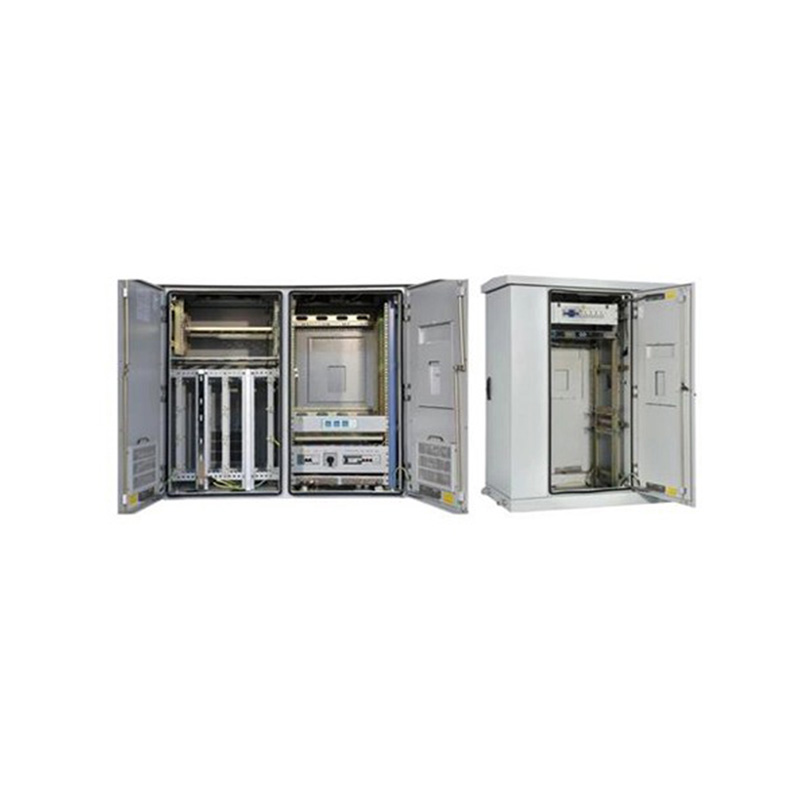
Product Overview The ODC-288B and ODC-288C SMC Optical Fiber Cross Connection Cabinets are used for optical cable connection, distribution and management in outdoor fiber networks. The cabinets adopt ...
See Details -
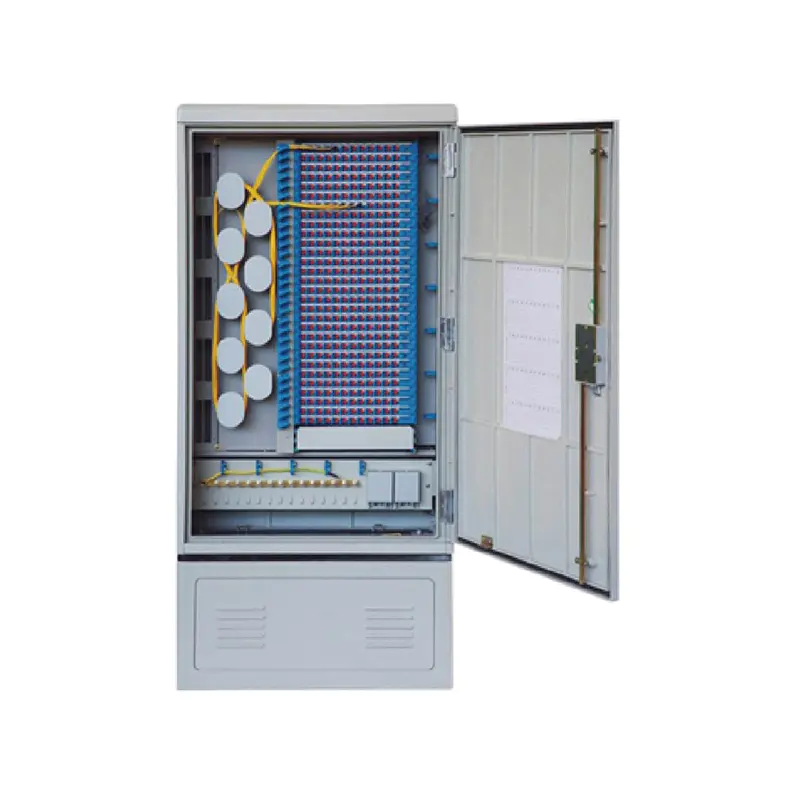
Product Overview The ODC series SMC Optical Fiber Cross Connection Cabinet is used for optical cable connection, distribution and management in outdoor fiber networks. The cabinet adopts an SMC enclos...
See Details -
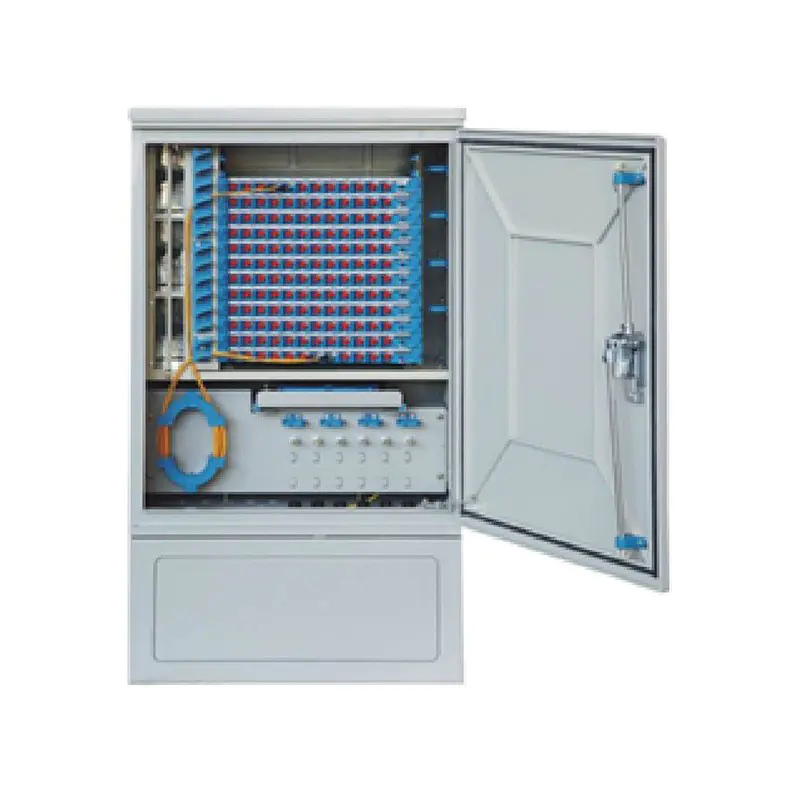
Product Overview The ODC series SMC fiber optic distribution box is an outdoor fiber optic distribution equipment designed for access and aggregation networks. It is primarily used for the interconne...
See Details
Ready to Get started ? Contact Us Now !

Product.
Contact Details.
-
 +86 13958188250
-
 +86 13958188250
-
 [email protected]
-
 AUDIT Email:[email protected]
- Wanma Industrial Park Taihu Yuan Town Lin'an District Hangzhou City China.
QR Code

Copyright © Wanma Technology Co., Ltd. All Rights Reserved.
Privacy
Custom Ethernet Optical Network Railway Transit Equipments Suppliers
