

 English
 Français
 Español
 Português
 عربى





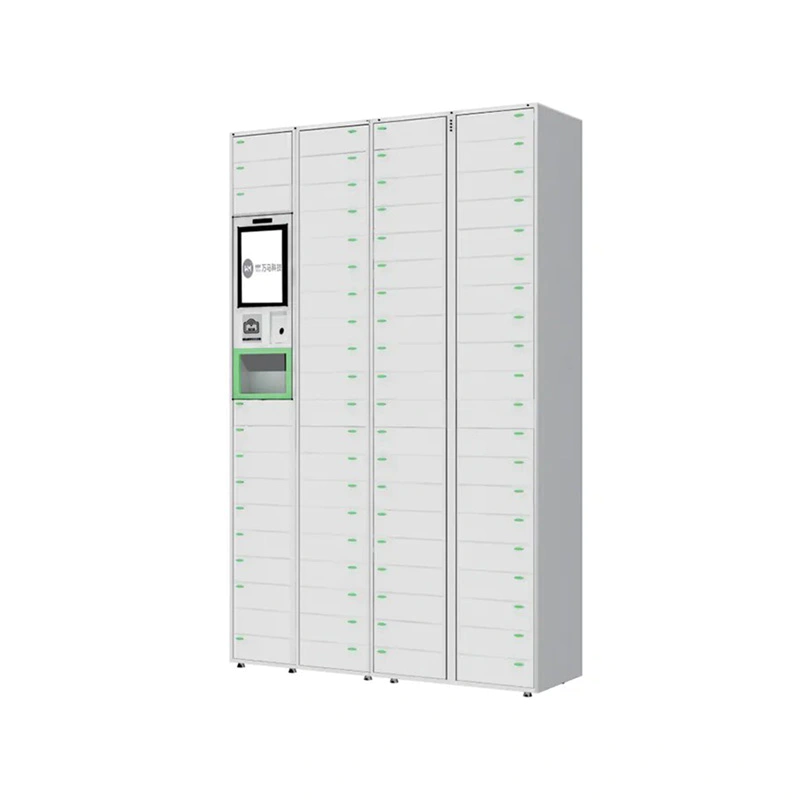
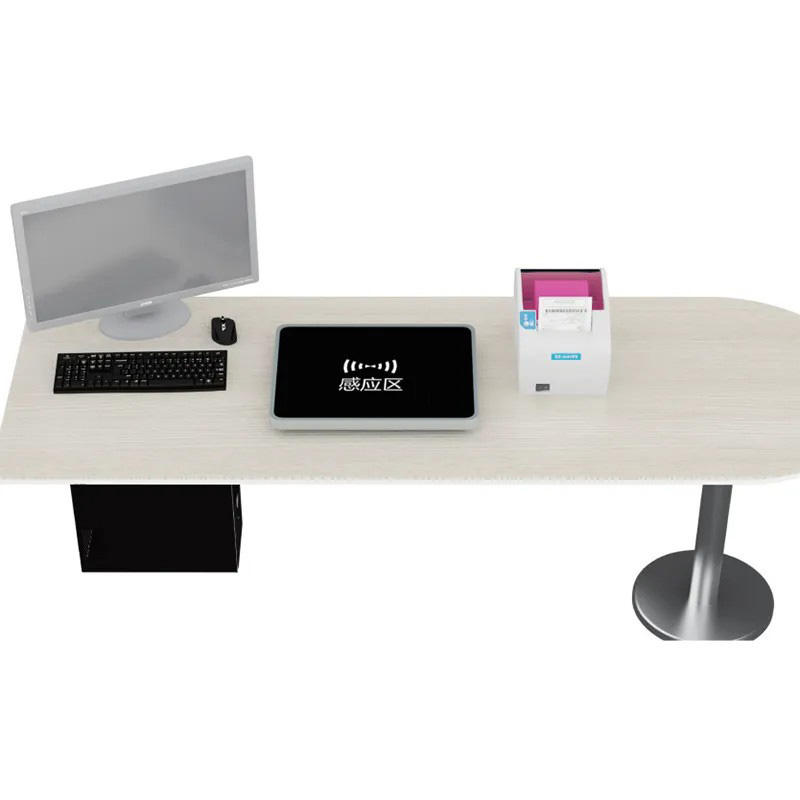
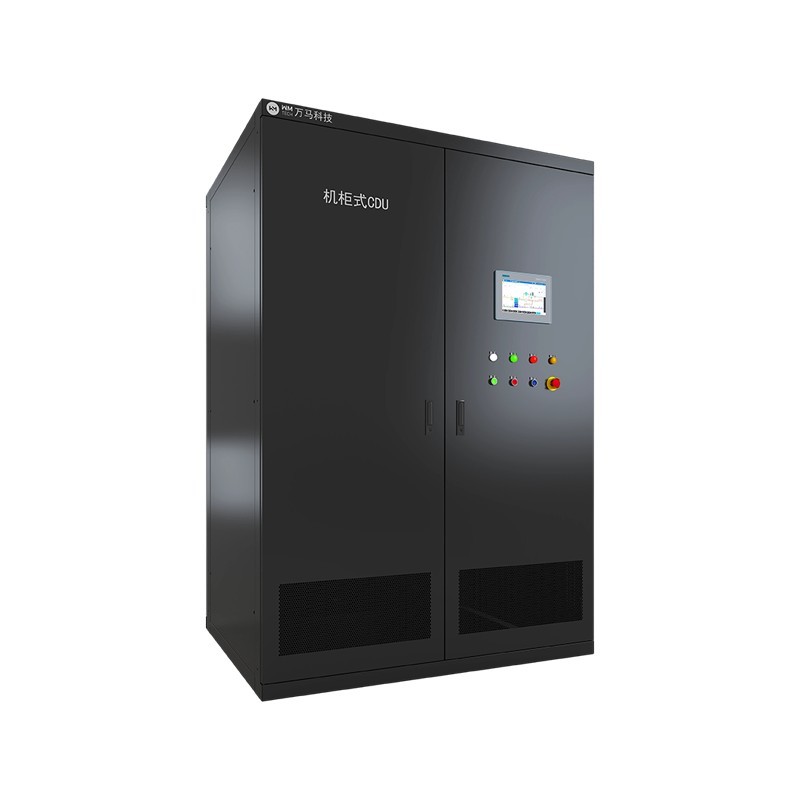
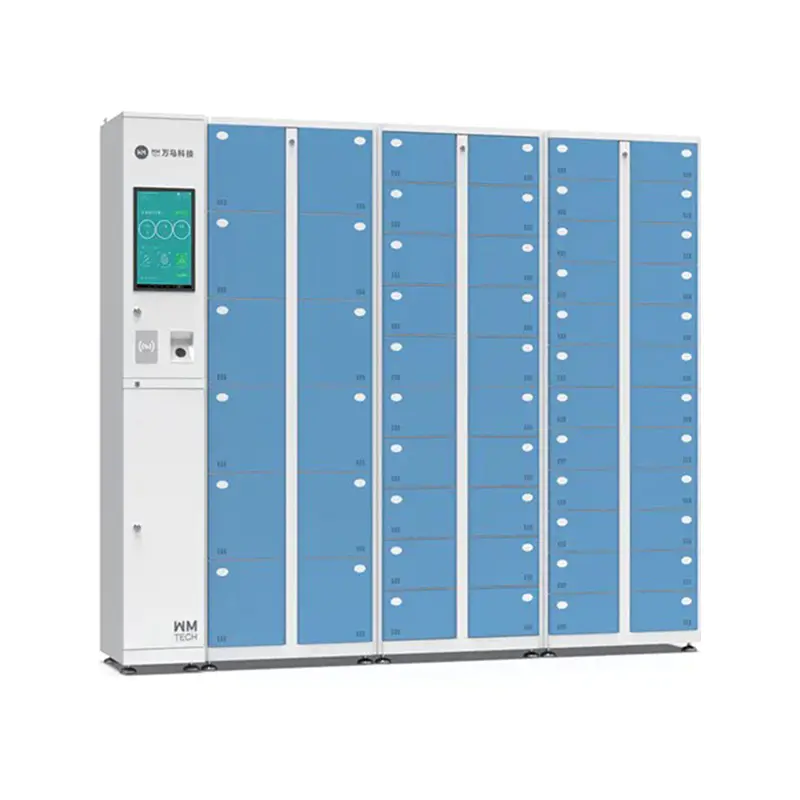

Product DefinitionThe Wanma Clean Fabric Temporary Storage Cabinet is an intelligent terminal device integrated with RFID, IoT, and facial recognition technologies, designed for managing medical fabri...
See DetailsClean Fabric Temporary Storage Cabinets for Traceable Medical Textile Management
Content
- 1 The Role of Intelligent Temporary Storage in Healthcare
- 2 Product Definition and Operating Concept
- 3 Core Advantages Compared with Conventional Storage Methods
- 4 Designed for High-Hygiene Environments
- 5 Applications in Hospital Wards
- 6 Applications in Operating Rooms
- 7 Applications in Laundries and Textile Service Centers
- 8 Product Advantages for Resource Conservation
- 9 Manufacturing and Engineering Strengths
- 10 Implementation Considerations
- 11 Measuring Operational Performance
- 12 Why the Product Is Competitive
- 13 Service and Long-Term Partnership
- 14 Deployment Roadmap
- 15 Frequently Asked Questions
- 15.1 What is a clean fabric temporary storage cabinet?
- 15.2 Which medical fabrics can be managed?
- 15.3 How accurate is the inventory management function?
- 15.4 Can users access the cabinet while wearing masks?
- 15.5 Does the cabinet require a wired network?
- 15.6 Can it connect with a hospital information system?
- 15.7 How does RFID improve medical fabric management?
- 15.8 Does the system eliminate all manual work?
- 15.9 Where can the cabinet be used?
- 15.10 What support is available?
- 15.11 What should a buyer confirm before ordering?
- 16 Conclusion
- 17 References
- 18 Product: Clean Fabric Temporary Storage Cabinet
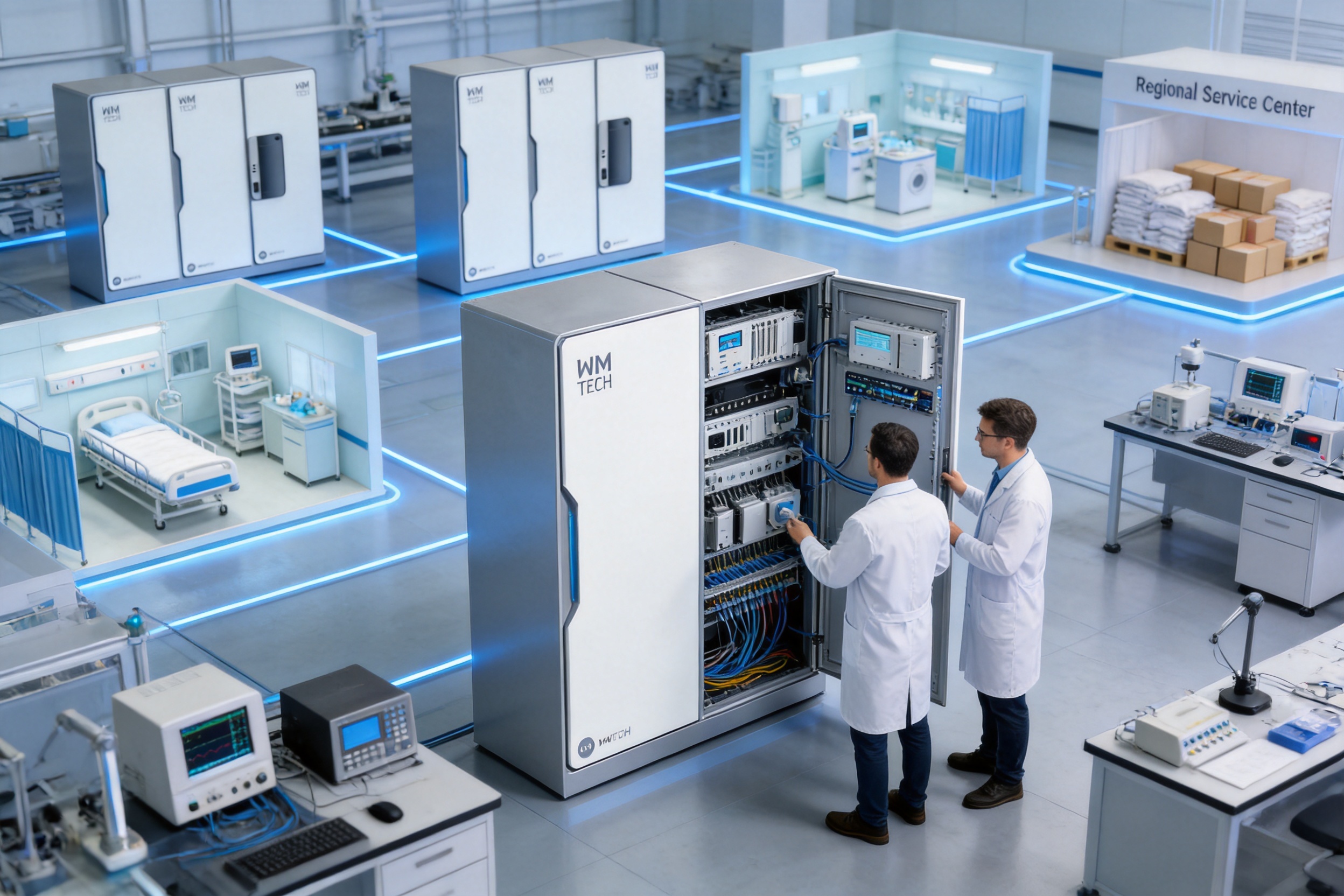
Medical fabrics are essential to the daily operation of hospitals, surgical departments, laundries, and regional textile service centers. Clean gowns, bed linens, surgical clothing, towels, drapes, and other reusable fabrics must be available when needed, protected from contamination, and accounted for throughout their service life. Yet many healthcare organizations still depend on manual registration, paper records, visual counting, and informal handover procedures. These methods can be slow, difficult to audit, and vulnerable to shortages, misplaced items, inaccurate records, and avoidable contact between staff and storage surfaces.
The Clean Fabric Temporary Storage Cabinet provides a digital alternative for organizations seeking safer, more efficient, and more transparent fabric management. Designed as an intelligent terminal for medical textile workflows, the cabinet combines radio-frequency identification, Internet of Things connectivity, facial recognition, inventory algorithms, and platform integration. It is intended for environments where hygiene, accountability, and operational continuity are particularly important, including hospital wards, operating rooms, laundries, and regional medical textile cleaning centers.
Rather than functioning as a conventional cupboard, the cabinet serves as a controlled storage and information terminal. It helps authorized personnel access clean fabrics without unnecessary physical contact, records inventory in real time, and supports the traceability of fabrics from procurement through storage, distribution, use, collection, laundering, and disposal. This combination of physical storage and digital supervision creates a closed-loop management process that can reduce administrative workloads while improving the visibility of medical textile flows.
The Role of Intelligent Temporary Storage in Healthcare
Temporary storage is a critical point in the movement of clean fabrics. After laundering and quality inspection, fabrics may need to remain available for a limited period before being issued to a ward, operating room, or other user department. During this period, the organization must protect the cleanliness of the fabrics, maintain a clear inventory, and ensure that access is limited to approved personnel. If storage information is incomplete, staff may not know which items are available, when a shortage began, or which department received a particular batch.
Traditional storage practices often rely on handwritten logs, spreadsheets, barcode scanning, or visual checks. Each approach can provide useful information, but each also depends heavily on employee discipline and time. Manual counting is especially difficult when fabrics are distributed across shelves, containers, rooms, and departments. It can also become inaccurate during shift changes, emergency demand, high-volume laundering cycles, and peak operating periods.
An intelligent cabinet addresses these issues by connecting the physical storage environment with a digital management system. RFID tags associated with fabrics can be recognized without requiring staff to scan every individual item. The cabinet can update stock information, identify authorized users, and communicate with a central platform through wired, 4G, or WiFi networks. When properly integrated into a hospital or laundry workflow, this makes storage activity easier to monitor and provides a more reliable basis for replenishment, dispatch, and accountability.
The result is not merely faster access. It is a more organized operating model in which clean fabrics become measurable, traceable assets rather than anonymous items that are counted only when a problem occurs.
Product Definition and Operating Concept
The Clean Fabric Temporary Storage Cabinet is an intelligent terminal device developed for the temporary storage and controlled distribution of clean medical fabrics. It integrates RFID identification, Internet of Things communication, facial recognition, inventory management software, and data synchronization capabilities in one operational unit.
In a typical process, clean fabrics are placed into the designated cabinet after laundering, inspection, or internal transfer. RFID information enables the system to recognize tagged items and associate them with relevant records. Authorized personnel approach the cabinet and complete contactless identity verification through a dual-camera facial recognition system. The system is designed to identify individuals wearing masks, which is important in healthcare environments where protective face coverings may be required.
After authorization, staff can access the storage area and retrieve or place fabrics according to established procedures. The system records the transaction and updates the inventory. If stock falls below a defined threshold, the management platform can issue a low-stock notification. If certain items remain unused for an extended period, an idle-item notification can help managers review allocation and reduce inefficient accumulation.
Because the cabinet is connected to a broader digital platform, storage data can be used alongside information from hospital information systems, laundry management platforms, and other operational tools. The open application programming interface supports integration and allows the cabinet to participate in a customized management environment rather than operating as an isolated device.
Core Advantages Compared with Conventional Storage Methods
Real-Time Inventory Visibility
One of the strongest advantages of the cabinet is its ability to provide current inventory information without relying entirely on manual counting. The independently developed RFID inventory algorithms are designed to recognize and organize fabric information efficiently. The stated inventory error rate is no more than 1 percent, representing an accuracy level of more than 99 percent under appropriate operating conditions.
For healthcare managers, this level of visibility can improve daily decision-making. Staff can determine whether sufficient clean fabrics are available before a shift, identify shortages earlier, and reduce the need for repeated physical inspections. Laundry teams can use the information to plan washing and delivery schedules, while ward managers can monitor consumption patterns and communicate replenishment needs more accurately.
Conventional cabinets can hold fabrics, but they cannot independently explain how many items are present, who accessed them, or whether the recorded quantity is reliable. The intelligent cabinet adds an information layer that turns storage into a measurable process.
Reduced Manual Counting and Administrative Burden
Manual inventory checks consume employee time and may interrupt higher-value work. Counting also becomes less dependable when different workers use different recording habits or when multiple departments access the same storage area. The cabinet reduces the frequency and scale of manual counting by automating item recognition and stock updates.
This does not eliminate the need for human supervision. Instead, it allows employees to focus on exceptions, quality control, fabric condition, and workflow improvement. Managers can spend less time reconciling handwritten records and more time analyzing actual usage, demand fluctuations, and service performance.
Contactless Authorized Access
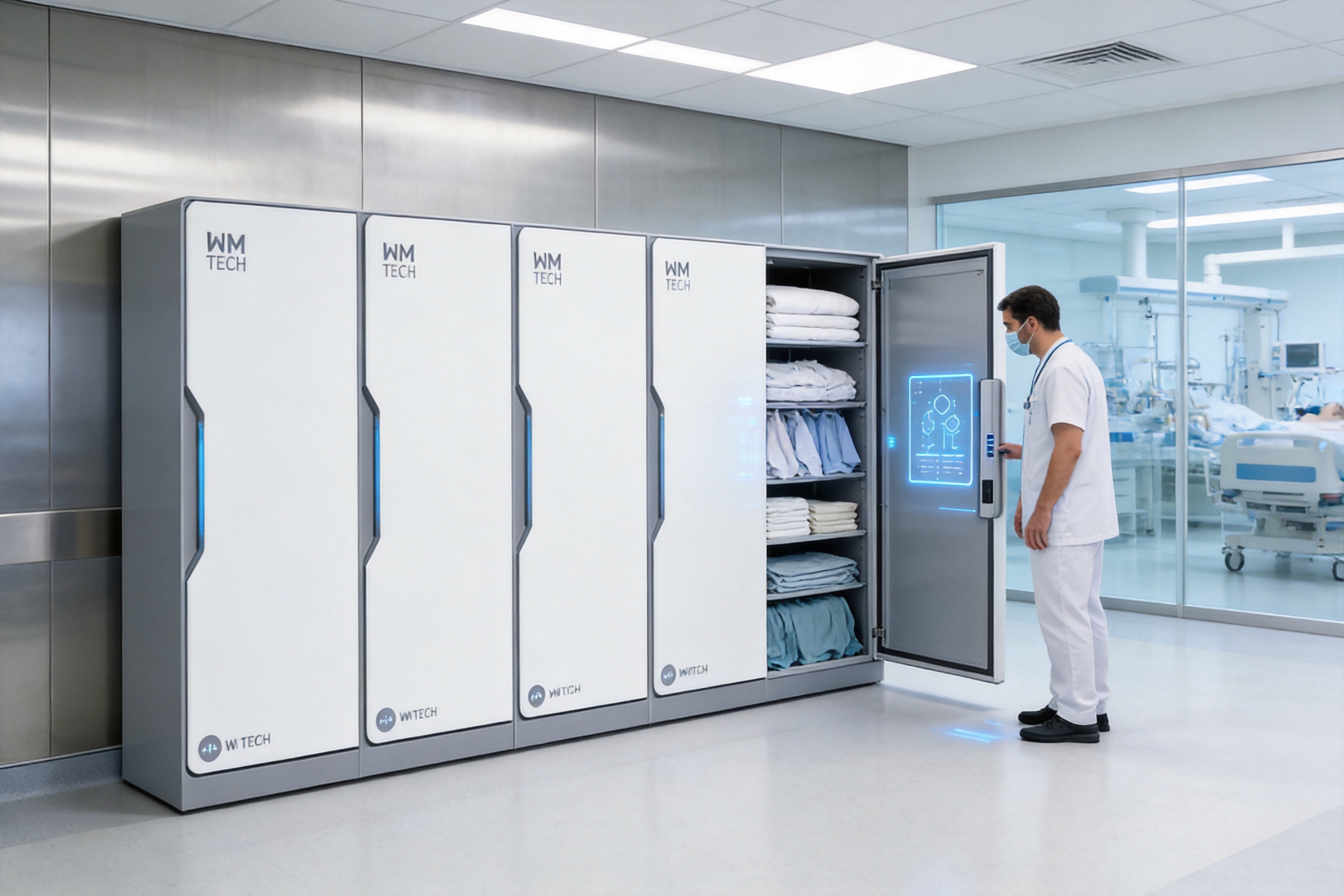
In a hospital environment, every unnecessary contact point can create an additional hygiene concern. The cabinet uses dual-camera facial recognition to support touch-free access authentication. The ability to recognize mask-wearing individuals is particularly relevant in operating rooms, wards, and other areas where personal protective equipment may be used.
Contactless access can also improve convenience. Staff do not need to search for a physical key, share a password, or handle a common control surface merely to retrieve clean fabrics. At the same time, facial recognition provides a basis for recording who accessed the cabinet, supporting greater accountability than an unlocked cupboard or shared key system.
Full-Lifecycle Traceability
Medical fabrics move through several stages during their useful life. They may be purchased or produced, received, stored, issued, used, collected, transported, washed, inspected, redistributed, and eventually removed from service. If records are created only at the storage stage, managers cannot obtain a complete view of fabric utilization or loss.
The cabinet’s RFID capabilities support end-to-end traceability across these stages. Each recorded movement can contribute to a broader fabric history, allowing organizations to understand where an item has been, when it was used, and which process it entered next. This is valuable for investigating missing items, reviewing unusual consumption, evaluating turnaround times, and supporting infection-control procedures.
Traceability also strengthens operational responsibility. When department handovers are recorded digitally, the organization has a clearer basis for identifying process gaps. This can reduce disputes between wards, laundries, transport teams, and textile service centers. It also supports a more consistent approach to fabric retirement and replacement.
Flexible Connectivity
The cabinet supports wired communication, 4G communication, and WiFi. This flexibility is important because healthcare sites vary significantly in network architecture. A large hospital may prefer a wired connection in a fixed equipment room, while a temporary or remote installation may require wireless communication. A 4G option can be useful where local network conditions are limited or where rapid deployment is needed.
Offline automatic synchronization and data recovery functions help maintain operational continuity when network conditions are temporarily unstable. A network interruption should not force staff to return to paper records or cause all activity data to be lost. Once communication is restored, the system can synchronize stored information and recover the relevant records.
Compared with a storage device that depends on one fixed communication method, this multi-mode design offers greater deployment flexibility and a better basis for expansion across different hospital areas or service facilities.
Integration through Microservices and Open Interfaces
The product is built with a microservices architecture and an open application programming interface. These characteristics are significant for organizations that already operate hospital information systems, laundry management systems, logistics platforms, or other digital tools.
A closed, isolated cabinet may provide local information but create additional work for employees who must enter the same data into another system. Open integration can reduce duplicate entry and support data exchange between fabric storage, laundry processing, purchasing, ward logistics, and management reporting. The microservices approach also provides a practical foundation for adapting individual functions without redesigning the entire application.
Each organization has different fabric categories, authorization rules, storage locations, notification thresholds, and reporting requirements. An open and modular software structure makes it easier to accommodate these differences. It also supports future upgrades as hospitals develop more advanced digital management strategies.
| Management Requirement | Conventional Storage Approach | Intelligent Cabinet Approach | Operational Benefit |
|---|---|---|---|
| Inventory counting | Manual visual counting or spreadsheet updates | RFID-supported automatic inventory recognition | Improved accuracy and reduced administrative workload |
| Access control | Open access, shared keys, or passwords | Contactless facial recognition for authorized users | Better accountability and reduced shared-contact points |
| Stock alerts | Staff discover shortages during routine checks | Low-stock notifications and inventory visibility | Earlier replenishment and fewer service interruptions |
| Fabric history | Fragmented or paper-based records | RFID-supported lifecycle traceability | Improved investigation, accountability, and utilization analysis |
| Network deployment | Limited to local or manual processes | Wired, 4G, WiFi, and offline synchronization | Greater installation flexibility and continuity |
| System integration | Separate records and duplicate data entry | Microservices architecture and open interface support | Better connection with hospital and laundry platforms |
Designed for High-Hygiene Environments
Medical textile storage is different from ordinary commercial storage. Clean fabrics may be used in patient care, surgery, recovery, cleaning, transport, and other sensitive applications. The storage process must therefore support orderly access, reduce unnecessary handling, and provide evidence that materials have been managed according to institutional procedures.
The contactless operating model is one element of this approach. By reducing the need to touch shared controls, the cabinet can help support a cleaner workflow. More importantly, RFID-based identification reduces the need to repeatedly handle and unfold fabrics for counting. Staff can obtain inventory information through the system rather than disturbing stored items during every inspection.
The cabinet also supports visual and paperless management. Digital records help personnel understand current stock status, access activity, and fabric movements through a centralized interface. This is especially useful for facilities attempting to standardize processes across several wards or departments.
It is important to recognize that an intelligent cabinet is part of a broader infection-control system rather than a replacement for cleaning, disinfection, packaging, environmental control, or established hospital procedures. Its value lies in helping organizations maintain cleaner, more controlled, and more traceable material flows.
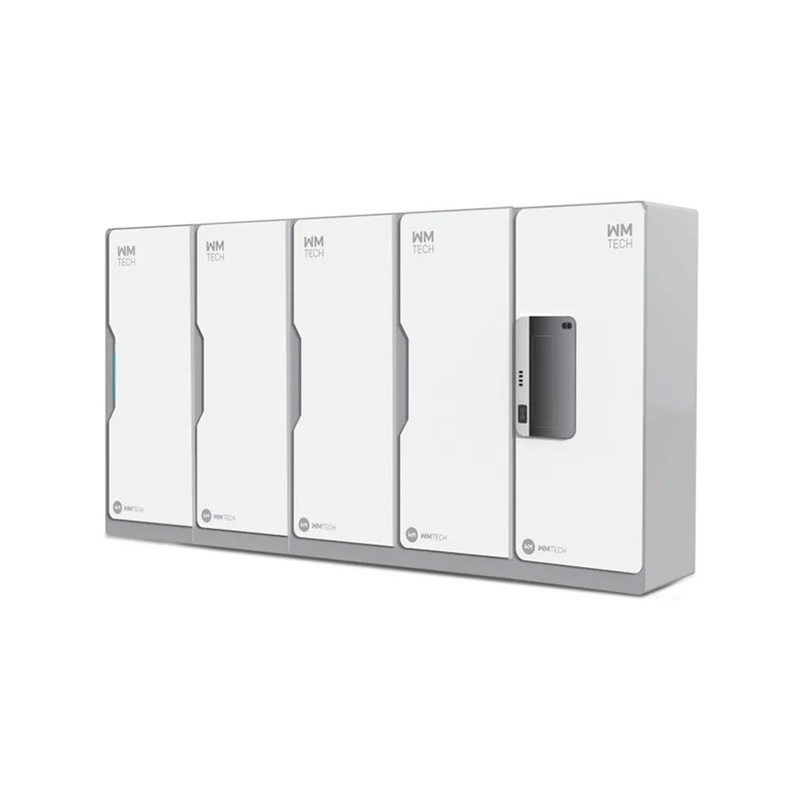
Clean Fabric Temporary Storage Cabinet
Applications in Hospital Wards
Hospital wards often require a dependable supply of clean bed linens, patient garments, towels, protective fabrics, and other textile products. Demand can change rapidly because of admissions, discharges, transfers, emergency treatment, and changes in patient acuity. A temporary storage cabinet gives the ward a visible and controlled location for clean fabrics while reducing the need for staff to communicate through informal requests.
With real-time inventory information, ward personnel can check availability before opening a storage area or starting a shift. Low-stock notifications can help the responsible team replenish supplies before the ward reaches a critical level. Access records can also help managers understand consumption by time period, shift, or authorized user group.
The cabinet can be placed in a location selected according to the ward’s layout, workflow, and infection-control requirements. Its role may be especially valuable in large wards where several teams use the same clean-fabric supply or where supply rooms are located far from patient-care areas.
Applications in Operating Rooms
Operating rooms have strict requirements for cleanliness, preparation, timing, and material coordination. Surgical clothing, linens, drapes, and related fabrics must be ready before procedures begin, and delays can affect the entire operating schedule. At the same time, access should be controlled, and unnecessary movement in sensitive areas should be minimized.
The cabinet can support surgical textile management by providing a designated temporary storage point for clean items. Facial recognition allows authorized staff to access the cabinet without handling a shared keypad or key. Mask recognition supports practical use in operating-room environments where personnel commonly wear masks.
RFID traceability can help connect fabric movements with operating-room supply processes. Managers may review how many items were issued, whether certain categories experience unusually high consumption, and how quickly used fabrics return to the collection and laundering process. Such information can support better scheduling, replenishment, and resource planning.
Applications in Laundries and Textile Service Centers
Laundries and medical textile cleaning centers manage high volumes of fabrics through receiving, sorting, washing, drying, inspection, folding, storage, dispatch, and return. Temporary storage is often required between these stages. If clean items are stored without reliable identification, delays and losses can occur even when washing capacity is adequate.
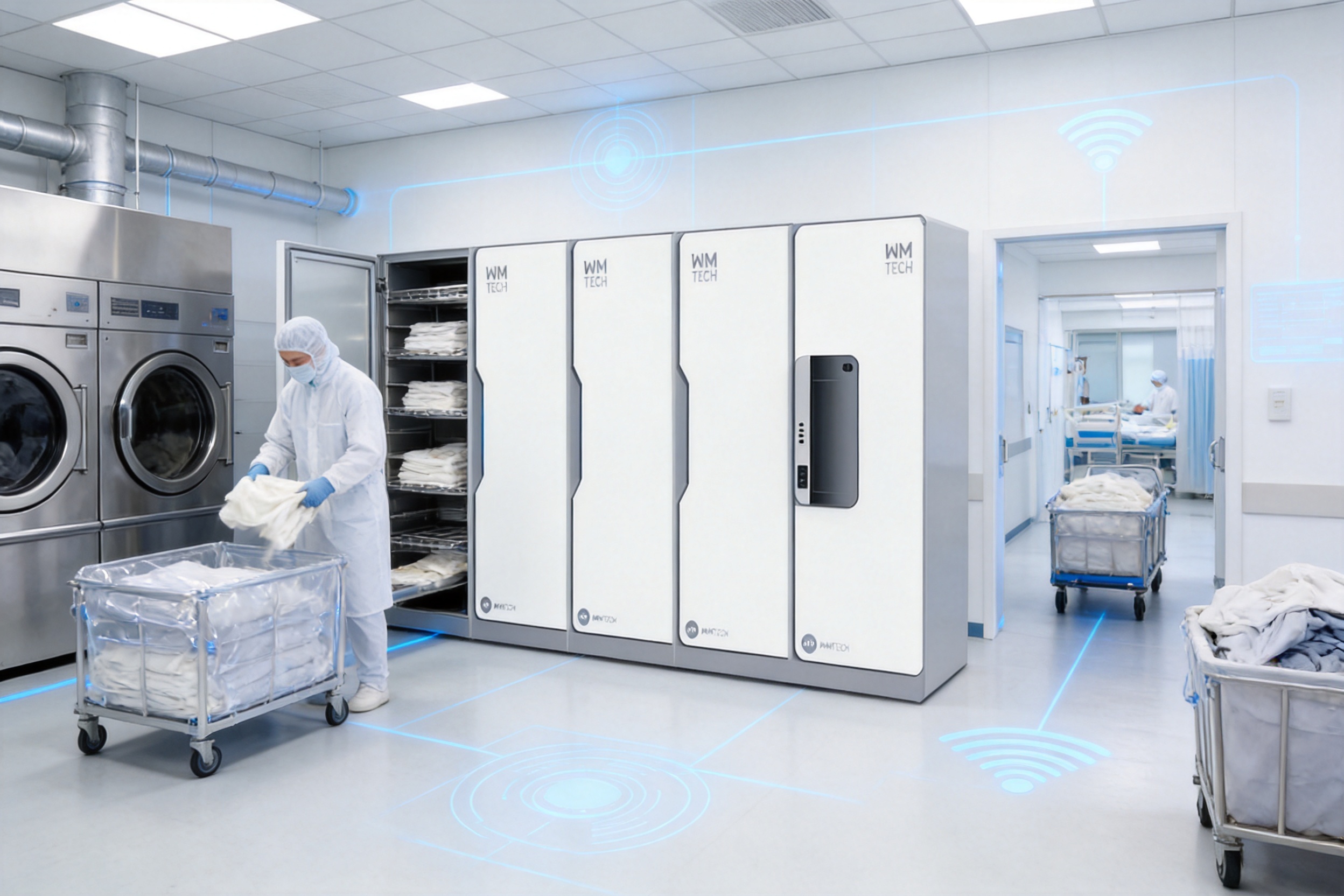
The cabinet can serve as a controlled handover point between laundry operations and healthcare departments. After fabrics pass inspection, they can be placed into the clean-fabric storage process and assigned to the relevant location or category. When a ward or operating room retrieves items, the transaction becomes part of the digital record.
Regional cleaning centers may also benefit from lifecycle data across multiple customer sites. Traceability can assist with identifying recurring loss patterns, comparing demand, reviewing turnaround times, and planning fleet or inventory levels. The information can contribute to a more professional service relationship between the laundry provider and the healthcare organization.
In a large network, several cabinets can be connected to a common platform. This makes it possible to build a distributed storage system in which local access is combined with centralized oversight.
Product Advantages for Resource Conservation
Medical textiles are reusable resources. Efficient management can reduce unnecessary purchasing, prevent premature replacement, and improve the utilization of existing inventory. When fabrics disappear from the management system, the organization may respond by buying more items even though the real issue is poor distribution or incomplete returns.
Full-lifecycle traceability helps managers distinguish between genuine demand and avoidable loss. Idle-item notifications can identify fabrics that remain unused in one location while another location experiences a shortage. This creates an opportunity to rebalance inventory rather than order additional stock.
Accurate records can also support more rational retirement decisions. A fabric should not necessarily be discarded simply because its location or usage history is unclear. Conversely, an item that has reached the end of its service life should not remain in circulation merely because it is still physically present. Better information supports both conservation and quality control.
The environmental value of these improvements is connected to operational discipline. More effective use of reusable fabrics can reduce waste, unnecessary transportation, excess purchasing, and avoidable processing. Although the cabinet does not replace sustainable laundry practices, it supplies information that can help organizations make better resource decisions.
Manufacturing and Engineering Strengths
Experience in Communication and Electronic Equipment
The manufacturer, Wanma Technology Co., Ltd., was established in 1997 and has experience in communication cabinets, communication electronic equipment, and passive optical components. Its products serve Ethernet networks, optical communication networks, central equipment rooms, high-speed railway systems, and urban rail transit environments.
This background is relevant to an intelligent medical storage terminal because the product depends on more than a cabinet shell. It must combine electronic hardware, communication functions, data processing, access control, and reliable operation. Experience with communication infrastructure provides a foundation for designing equipment that can operate as part of a wider network rather than as a disconnected appliance.
Integrated Development and Manufacturing
The company develops, manufactures, and markets products under its own brand while also providing integrated solutions for customized products. This integrated capability can shorten the distance between product design, manufacturing, deployment, and service feedback. It can also make it easier to adapt hardware or software functions to the needs of a hospital, laundry, or regional service network.
For buyers, a unified development and manufacturing partner can simplify communication during project planning. Questions about installation, networking, system interfaces, physical configuration, and after-sales support can be coordinated through one supplier rather than divided among unrelated vendors.
Application of Modular Software Architecture
The use of a microservices architecture demonstrates an engineering emphasis on modularity and extensibility. A medical fabric management system may begin with inventory and access control, but future requirements could include additional reports, workflow rules, location management, user groups, or connections to other platforms. A modular architecture provides a more practical path for adding or adjusting functions.
The open interface strategy also reflects an understanding that hospitals rarely want to replace every existing digital system. Instead, they generally need new equipment to cooperate with established platforms. This interoperability-focused approach can reduce deployment friction and make the product more suitable for customized projects.
Attention to Reliability and Data Continuity
Storage equipment in a hospital or laundry may be used throughout the day and night. The product is therefore designed for continuous service, with 7-day, 24-hour technical support available. The stated service commitment includes on-site support within 24 hours locally and within 48 hours in surrounding regions.
Offline synchronization and data recovery are also important engineering features. Healthcare operations cannot always assume uninterrupted network connectivity. By retaining operational data during a temporary communication problem and synchronizing after reconnection, the system can help protect the continuity of records.
Reliability is not limited to electronic operation. It also includes clear user interaction, practical access procedures, appropriate physical design, stable communication, maintainability, and the ability to support different installation scenarios. The product is described as following strict ergonomic principles, which can help make routine use more efficient and comfortable for staff.
Quality-Oriented Production Approach
A reliable intelligent cabinet requires coordination among mechanical design, electronic integration, RFID performance, software development, network communication, facial recognition, and user-interface design. Manufacturing quality depends on controlling these elements as a complete system rather than evaluating them separately.
The company’s experience in producing communication cabinets and electronic equipment supports an approach in which enclosure construction, equipment integration, and network performance are considered together. While specific production certifications or factory test procedures should be confirmed directly during procurement, the product concept clearly places emphasis on dependable operation, delivery capability, and long-term customer relationships.
For healthcare customers, this manufacturing strength can be valuable when projects involve multiple units, several departments, or a phased regional rollout. Consistent production and a unified technical platform help reduce variation between installations.
Implementation Considerations
Workflow Assessment Before Installation
Before deployment, the healthcare organization should map the complete fabric workflow. This includes the clean-fabric arrival point, inspection area, storage location, authorized users, issue process, used-fabric collection point, laundry route, and final retirement process. The cabinet should be positioned where it supports the actual movement of people and fabrics rather than forcing staff to create an entirely separate routine.
Managers should also define categories and identification rules. Different hospitals may classify fabrics by department, size, type, cleanliness status, use case, or ownership. Clear rules improve the usefulness of inventory data and reduce confusion during implementation.
RFID Preparation
RFID performance depends on appropriate tagging, item classification, placement, and testing. Fabric tags should be selected and applied according to the laundering process and the expected service life of the textile. The organization should verify that tags remain readable after repeated handling and cleaning cycles.
Inventory algorithms can provide accurate results only when the identification process is correctly established. Initial testing should therefore include representative fabric types, different quantities, common folding methods, and actual cabinet loading conditions.
User Authorization and Privacy
Facial recognition requires responsible administration. Hospitals should establish clear rules for enrollment, authorization, data retention, access permissions, and account termination. Staff who change departments or leave the organization should have their access rights updated promptly.
The system should be implemented in accordance with applicable privacy, cybersecurity, and institutional governance requirements. Personnel should receive clear information about how identity data is used and protected. Access-control convenience should always be balanced with lawful and ethical data management.
Network and System Integration
The IT department should evaluate whether wired, 4G, or WiFi communication is most suitable for each installation. Network coverage, security controls, bandwidth, firewall rules, and data exchange requirements should be reviewed before commissioning.
Integration planning should identify the systems that need to exchange information with the cabinet. These may include a hospital information system, laundry management platform, inventory system, logistics software, or reporting dashboard. Data fields, synchronization frequency, user roles, and exception procedures should be agreed upon in advance.
Training and Change Management
Even highly automated equipment requires effective user training. Staff should understand how to access the cabinet, retrieve fabrics, return or place items, respond to alerts, and report abnormal conditions. Supervisors should know how to review records, correct authorized exceptions, and contact technical support.
Training should explain the reason for the new process. When employees understand that the system is intended to reduce counting work, improve fabric availability, and support infection control, adoption is more likely to be successful. A short pilot period can help identify practical issues before full-scale deployment.
Measuring Operational Performance
The value of an intelligent storage cabinet should be evaluated through measurable outcomes. Useful indicators may include inventory accuracy, shortage frequency, fabric loss rate, time required for stock checks, average retrieval time, number of manual records, turnaround time between laundry and ward delivery, and the percentage of authorized transactions.
Hospitals may also examine whether the system reduces emergency purchasing, improves the use of idle stock, or lowers the number of disputes related to fabric handovers. These indicators should be compared before and after deployment, taking into account changes in patient volume, department size, staffing, and laundering capacity.
Digital records can support continuous improvement meetings. For example, if one department consistently consumes more surgical fabrics than expected, managers can investigate whether this reflects genuine clinical demand, inefficient returns, incorrect categorization, or an opportunity to adjust inventory levels. Data should guide inquiry rather than replace professional judgment.
Why the Product Is Competitive
The competitive value of the Clean Fabric Temporary Storage Cabinet comes from the combination of several functions in one coordinated solution. A basic storage cabinet offers physical capacity. A standalone RFID reader offers identification. A facial recognition terminal offers access control. A software platform offers reporting. This product brings these capabilities together around a specific medical textile workflow.
Its claimed inventory accuracy of more than 99 percent gives it a clear advantage over manual counting when the system is correctly implemented. Contactless access and mask-capable facial recognition address practical conditions in healthcare facilities. Multi-mode communication supports different deployment environments, while offline synchronization improves resilience. The microservices architecture and open interface support integration and customization.
Another competitive advantage is the manufacturer’s broader experience in communication and electronic equipment. The cabinet is not treated simply as furniture with an attached reader. It is positioned as a networked intelligent terminal, making communication reliability, data continuity, and system integration central parts of the design.
The product is also suited to organizations pursuing paperless, visual, and traceable management. This direction is increasingly important as hospitals seek to coordinate physical logistics with digital systems and make better use of labor and resources.
Service and Long-Term Partnership
Equipment performance over time depends on more than initial installation. Healthcare customers need software support, troubleshooting, spare-part coordination, network assistance, and guidance when workflows change. The manufacturer offers 7-day, 24-hour technical support, with stated local on-site service within 24 hours and surrounding-region service within 48 hours.
The company’s sales network covers more than 20 countries and regions, including the United States, Australia, the United Kingdom, Italy, South Africa, and Ghana. International coverage can be useful for organizations seeking a supplier capable of supporting projects across different markets, although local service scope, installation arrangements, compliance requirements, and response conditions should be confirmed during contract discussions.
The company emphasizes reliable product quality, timely delivery, and long-term strategic partnerships. These priorities are relevant to medical textile management because a hospital may begin with one ward or laundry area and later expand to multiple locations. A supplier that can support staged growth may provide greater value than a provider focused only on a single equipment sale.
Deployment Roadmap
Stage One: Current-State Review
Document the existing movement of clean and used fabrics, identify manual records, locate frequent shortages, and determine where loss or delayed handover occurs.
Stage Two: Pilot Installation
Select one representative ward, operating room area, or laundry handover point. Test the cabinet with actual users, fabric categories, network conditions, and access policies.
Stage Three: Data and Workflow Validation
Compare system inventory with a controlled physical count. Review the accuracy of RFID identification, the completeness of access records, the performance of alerts, and the behavior of offline synchronization.
Stage Four: Integration and Expansion
Connect the cabinet with relevant hospital or laundry platforms, refine data permissions, and gradually expand to additional departments or facilities.
Stage Five: Continuous Optimization
Review operational indicators regularly. Adjust stock thresholds, user permissions, storage categories, replenishment schedules, and reporting formats according to actual demand.
Frequently Asked Questions
What is a clean fabric temporary storage cabinet?
It is an intelligent storage terminal designed to manage clean medical fabrics. It combines physical storage with RFID identification, facial recognition, network communication, inventory management, and lifecycle traceability.
Which medical fabrics can be managed?
The system is intended for clean fabrics such as linens, surgical attire, gowns, towels, drapes, and other reusable medical textile products. The exact fabric categories and tagging method should be confirmed during project design.
How accurate is the inventory management function?
The product is designed to achieve an inventory error rate of no more than 1 percent, or more than 99 percent inventory accuracy, when the RFID tagging, configuration, and operating conditions are appropriate.
Can users access the cabinet while wearing masks?
Yes. The cabinet uses dual-camera facial recognition designed to identify mask-wearing individuals, supporting contactless access in healthcare environments where masks are commonly required.
Does the cabinet require a wired network?
No. It supports wired communication, 4G, and WiFi. It also provides offline automatic synchronization and data recovery to help maintain records during temporary network interruptions.
Can it connect with a hospital information system?
Yes. The microservices architecture and open application programming interface are designed to support integration with hospital information systems, laundry management platforms, and other operational software.
How does RFID improve medical fabric management?
RFID allows tagged fabrics to be identified and recorded with less manual scanning. This supports faster inventory updates, more reliable handovers, loss investigation, usage analysis, and full-lifecycle traceability.
Does the system eliminate all manual work?
No. It reduces repetitive counting and recording, but staff still need to load fabrics correctly, inspect textile quality, manage exceptions, maintain hygiene procedures, and supervise the overall workflow.
Where can the cabinet be used?
Typical applications include hospital wards, operating rooms, laundries, medical textile cleaning centers, fabric handover areas, and other sites requiring controlled temporary storage of clean fabrics.
What support is available?
The manufacturer offers 7-day, 24-hour technical support. The stated on-site service response is within 24 hours locally and within 48 hours in surrounding regions, subject to project conditions and service arrangements.
What should a buyer confirm before ordering?
A buyer should confirm cabinet capacity, fabric categories, RFID tag compatibility, facial-recognition requirements, network availability, software interfaces, privacy controls, installation conditions, maintenance arrangements, and local service coverage.
Conclusion
The Clean Fabric Temporary Storage Cabinet represents a practical step toward digital medical textile management. By combining RFID inventory control, facial recognition, multi-mode networking, offline synchronization, open integration, and lifecycle traceability, it addresses several weaknesses of conventional storage practices at the same time.
Its advantages are particularly relevant to hospitals and laundries that need to improve inventory accuracy, reduce manual counting, strengthen access accountability, support infection-control workflows, and make better use of reusable resources. The cabinet can help transform fabric storage from a passive holding area into a connected operational node.
The product is further supported by the manufacturer’s experience in communication cabinets, electronic equipment, passive optical components, and network infrastructure. Its integrated development and manufacturing model, modular software approach, international sales network, and stated technical support capabilities provide a foundation for customized and scalable deployments.
Successful implementation will depend on correct RFID preparation, practical workflow design, responsible facial-recognition governance, reliable system integration, and ongoing staff training. When these elements are addressed, the cabinet can support a safer, more efficient, paperless, visual, and traceable approach to medical fabric management.
References
1. Wanma Technology Co., Ltd. Product information for the Clean Fabric Temporary Storage Cabinet.
2. Wanma Technology Co., Ltd. Corporate information concerning communication cabinets, communication electronic equipment, passive optical components, and integrated solutions.
3. International Organization for Standardization. General principles for quality management systems and process-based operational control.
4. World Health Organization. Guidance materials concerning infection prevention, healthcare logistics, and the handling of reusable medical textiles.
5. Industry literature on radio-frequency identification applications in healthcare inventory and asset management.
6. Industry literature on Internet of Things connectivity, offline synchronization, and distributed service architectures.
Product: Clean Fabric Temporary Storage Cabinet
PREV:288-Core SMC Fiber Optic Cross-Connection Cabinet for Outdoor Network Infrastructure
NEXT:Intelligent Medical Carts for Safer, Faster, and More Connected Bedside Care
NEXT:Intelligent Medical Carts for Safer, Faster, and More Connected Bedside Care
Interested in cooperation or have questions?
Related products
-
-
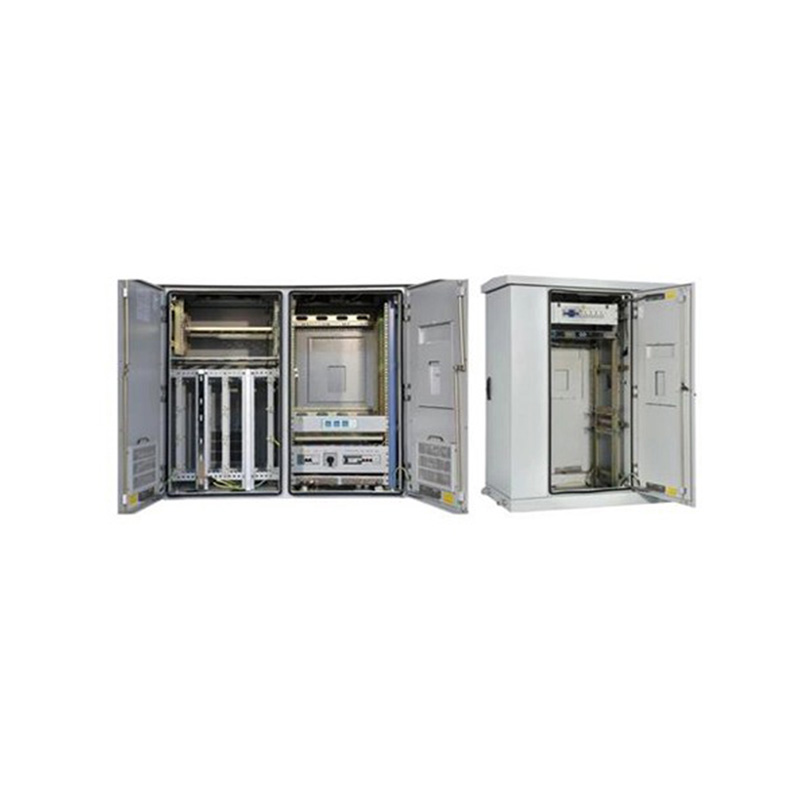
Application:It is used for the fixed network and broadband access, providing physical working environment and security system for the workstation in wired network. Features:•The cabinet is composed of...
See Details -
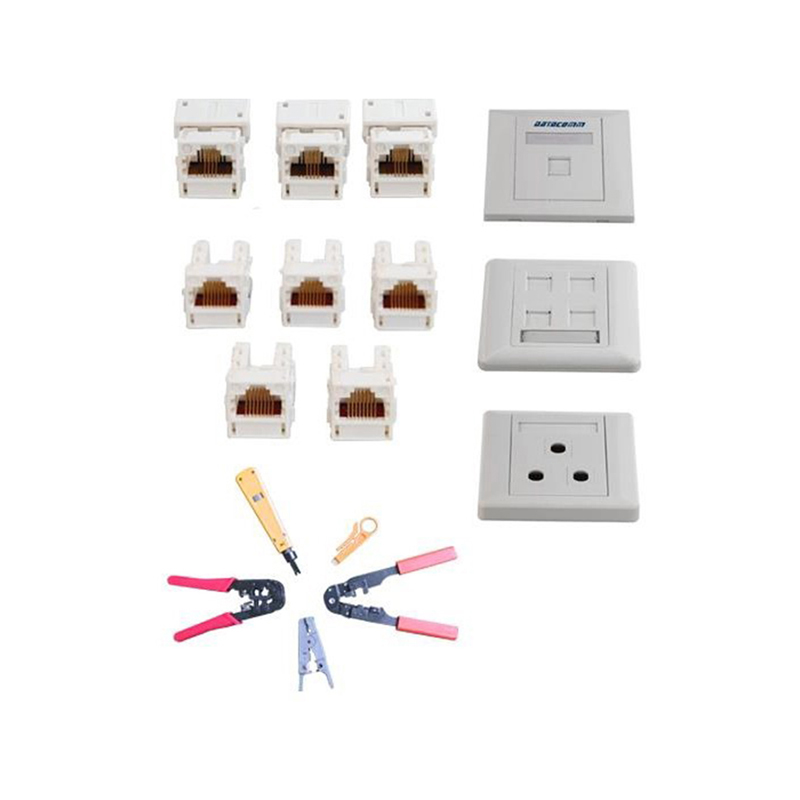
Widely used by China Telecom, China Unicom, China Netcom, China Mobile, Radio and Television, State Grid and Intelligent Residential District, our products is popular in America, Italy, Germany, Egypt...
See Details -
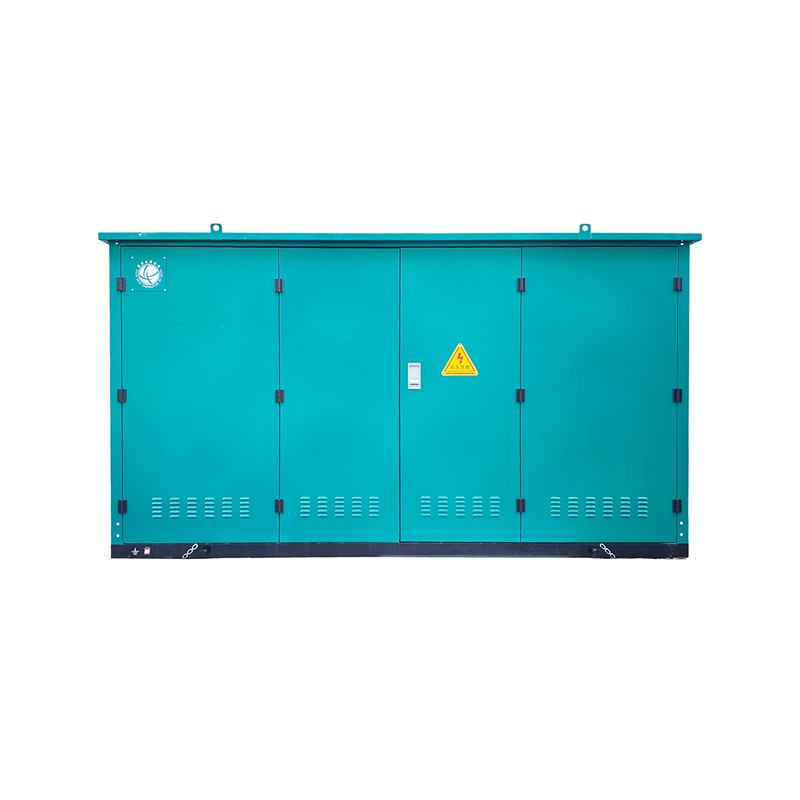
Product Overview:The WMXGW-12 outdoor pre-fabricated enclosed ring main unit is an intelligent integrated equipment launched by Wanma Technology Co., Ltd. in response to the latest standards of the St...
See Details
Ready to Get started ? Contact Us Now !

Product.
Contact Details.
-
 +86 13958188250
-
 +86 13958188250
-
 [email protected]
-
 AUDIT Email:[email protected]
- Wanma Industrial Park Taihu Yuan Town Lin'an District Hangzhou City China.
QR Code

Copyright © Wanma Technology Co., Ltd. All Rights Reserved.
Privacy
Custom Ethernet Optical Network Railway Transit Equipments Suppliers
