

 English
 Français
 Español
 Português
 عربى





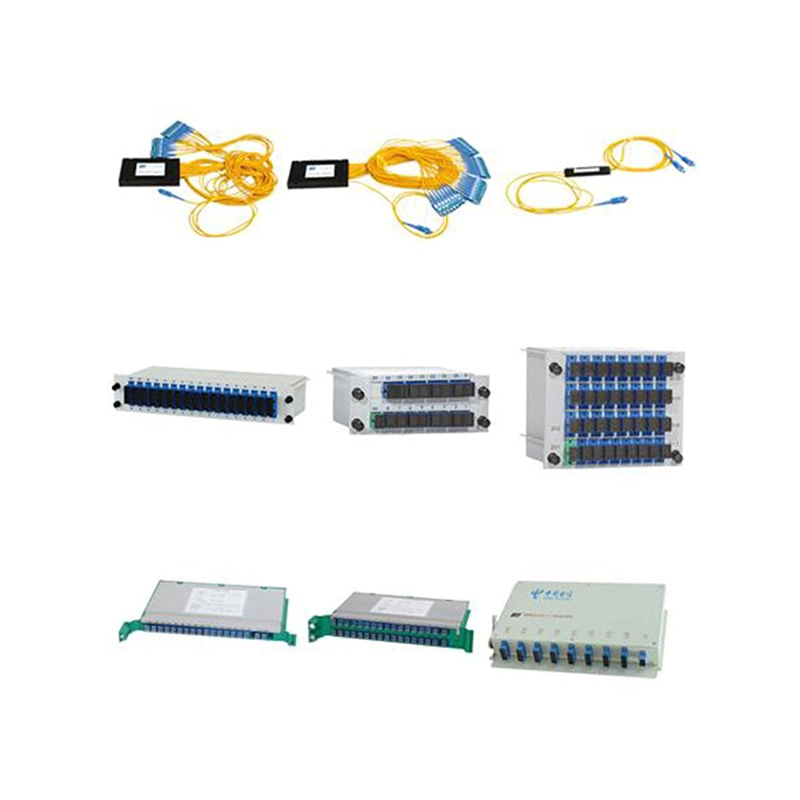



Application ScopeThe GPX129BKC fiber optic distribution frame is used to connect and distribute optical cables to optical communication equipment, and is suitable for large-capacity fiber optic commun...
See DetailsPrecision Fiber Connectivity for High-Performance Optical Distribution Networks
Content
- 1 1. The Role of Patch Cords, Pigtails, and Adapters
- 2 2. Application in Optical Distribution Equipment
- 3 3. High-Precision Ceramic Ferrules
- 4 4. End-Face Precision and Grinding Technology
- 5 5. Optical Performance Advantages
- 6 6. Environmental and Mechanical Reliability
- 7 7. Manufacturing Strengths and Process Control
- 8 8. Advantages Compared with Lower-Quality Alternatives
- 9 9. Suitability for Railway and Urban Transit Networks
- 10 10. Role in Ethernet and 5G Network Modernization
- 11 11. Customization and Integrated Solutions
- 12 12. Installation and Maintenance Best Practices
- 13 13. Quality, Delivery, and Long-Term Partnership
- 14 14. Selecting the Appropriate Product for a Project
- 15 15. Frequently Asked Questions
- 15.1 Q1. What are patch cords, pigtails, and adapters used for?
- 15.2 Q2. Why is the ceramic ferrule important?
- 15.3 Q3. What does a small ferrule bore error mean for network performance?
- 15.4 Q4. How does polishing affect connector performance?
- 15.5 Q5. What is insertion loss?
- 15.6 Q6. What is return loss?
- 15.7 Q7. Can these products be used in railway communication systems?
- 15.8 Q8. Are customized products available?
- 15.9 Q9. How should unused optical connectors be protected?
- 15.10 Q10. Why is interchangeability important?
- 15.11 Q11. What should technicians do before connecting a patch cord?
- 15.12 Q12. How can customers request technical support?
- 16 Conclusion
- 17 References
- 18 Product: Fiber Solution-Patch Cords, Pigtail, Adaptor

Modern communication networks depend on stable, accurately manufactured passive optical components. Although patch cords, pigtails, and adapters are small compared with cabinets, racks, switches, and transmission platforms, they have a direct influence on network continuity, optical loss, maintenance efficiency, and long-term operating cost. A connector that is poorly aligned, inadequately polished, or mechanically unstable can compromise the performance of an otherwise advanced optical system.
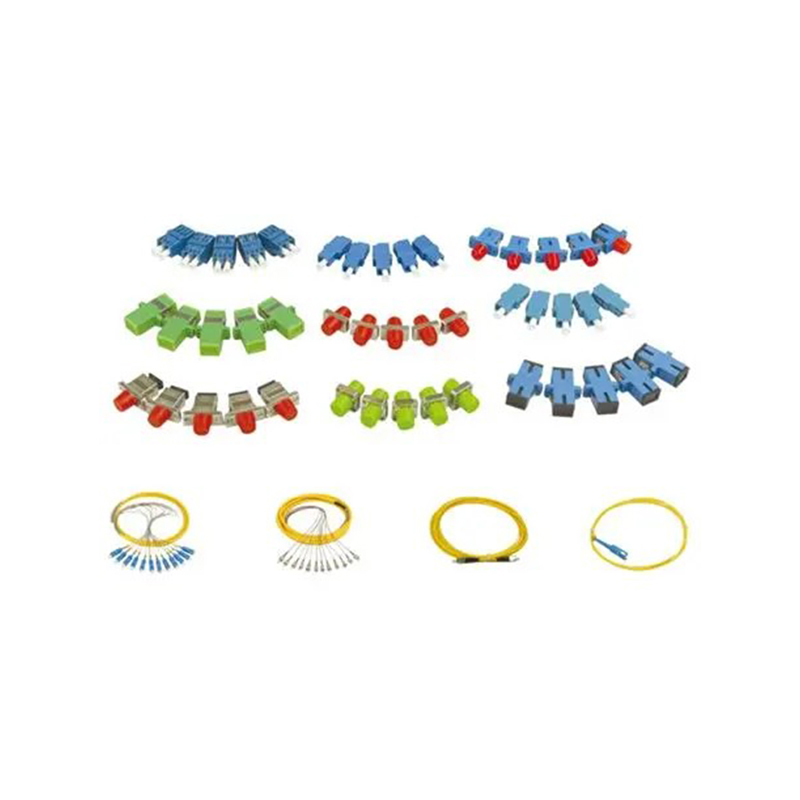
Fiber Solution-Patch Cords, Pigtail, Adaptor products are designed for optical distribution environments where reliable fiber connection, controlled insertion loss, and repeatable installation are essential. These optical devices are mainly used in Optical Main Distribution Frames (OMDF), Optical Distribution Frames (ODF), Optical Cross-Connect (OCC) equipment, and related optical distribution systems. They support the organized interconnection of feeder fibers, distribution fibers, transmission equipment, and customer-side or service-side links.
The product family combines high-precision ceramic ferrules, advanced end-face grinding technology, controlled dimensional parameters, and dependable environmental and mechanical performance. Together, these features help create a practical connection solution for telecommunications networks, data communication infrastructure, railway communication systems, urban rail transit projects, and other demanding fiber applications.
Wanma Technology Co., Ltd. has operated in the communications equipment sector since 1997. The company specializes in communication cabinets, communication electronic equipment, and passive optical components. Its product portfolio is used in Ethernet networks, optical communication networks, central equipment rooms, national high-speed railway systems, and urban rail transit applications. Its experience in developing and manufacturing communication infrastructure provides an important foundation for producing fiber connection products that must work reliably inside larger, integrated network systems.
Fiber Solution-Patch Cords, Pigtail, Adaptor
1. The Role of Patch Cords, Pigtails, and Adapters
Optical distribution systems require more than fiber cable alone. A complete installation must provide a controlled method for terminating, routing, joining, testing, rearranging, and protecting individual fibers. Patch cords, pigtails, and adapters perform different but complementary functions within this structure.
Patch Cords
A fiber patch cord is a length of optical fiber terminated with connectors at one or both ends. It is commonly used to connect distribution panels with active equipment, splice trays with adapters, or one optical interface with another. Because patch cords may be disconnected and reconnected during maintenance, they must provide accurate alignment and consistent mating performance.
In an ODF or OMDF, patch cords can be routed from adapter panels to optical transmission equipment, monitoring units, multiplexers, or other network devices. In a data or telecommunications room, they may connect fiber panels, switches, optical line terminals, and transport equipment. A high-quality patch cord helps reduce unnecessary optical loss while also supporting orderly cable management.
Pigtails
A fiber pigtail is generally a short length of optical fiber with a connector installed at one end and an unconnectorized fiber end at the other. The unconnectorized end is typically spliced to an incoming or outgoing fiber cable inside a splice tray or fiber distribution enclosure. The connectorized end is then inserted into an adapter to create a serviceable optical interface.
Pigtails are especially important in applications where permanent fusion splicing is preferred for the cable termination while a detachable connector is required for equipment access. This arrangement combines the low-loss stability of a splice with the maintenance flexibility of a connectorized interface.
Adapters
An optical adapter, also called a coupling sleeve, provides mechanical alignment between two connector ferrules. It is mounted in an adapter panel, faceplate, splice enclosure, or distribution module. The adapter must hold the connectors in the correct position while maintaining stable contact during normal operation, handling, vibration, and temperature changes.
The adapter is a small component, but its geometry is critical. A slight shift in ferrule alignment can increase insertion loss, reduce return loss, or create unstable measurements. A precision adapter therefore contributes directly to the performance of the entire connection assembly.
2. Application in Optical Distribution Equipment
Fiber Solution-Patch Cords, Pigtail, Adaptor products are mainly intended for OMDF, ODF, OCC, and similar optical distribution equipment. These systems are used to organize and manage fiber connections in central offices, equipment rooms, railway communication facilities, enterprise networks, data centers, and access network hubs.
Optical Main Distribution Frames
OMDF systems are often installed where large volumes of optical fibers enter a central facility. They provide a structured point for fiber termination, splicing, cross-connection, testing, and route management. Patch cords and pigtails enable technicians to rearrange services without disturbing the incoming cable infrastructure.
In a high-capacity central facility, even a small increase in connector loss can become significant when it is multiplied across many interfaces. Reliable ferrule alignment and consistent polishing help maintain predictable optical budgets throughout the distribution frame.
Optical Distribution Frames
ODFs provide a flexible platform for optical fiber management. They may contain splice trays, adapter panels, slack storage, labeling systems, and patching areas. Patch cords can connect ODF ports to transmission equipment, while pigtails provide the transition from loose or ribbon fibers to connectorized ports.
A well-designed connection solution should support clear routing and easy access. Patch cords with appropriate mechanical performance are less likely to become damaged during routine changes. Adapters with stable coupling behavior also help technicians achieve repeatable connections during installation and maintenance.
Optical Cross-Connect Systems
OCC equipment supports the interconnection of different optical routes, network segments, or service platforms. These systems may be used in carrier networks, railway communication rooms, metropolitan transport networks, and other infrastructure environments where circuits must be reconfigured or maintained over many years.
In an OCC application, the connector interface must combine low optical loss with reliable mechanical repeatability. The product should also be compatible with the selected connector configuration and installation environment. By providing dependable patch cords, pigtails, and adapters, an optical cross-connect can be managed more efficiently throughout its service life.
3. High-Precision Ceramic Ferrules
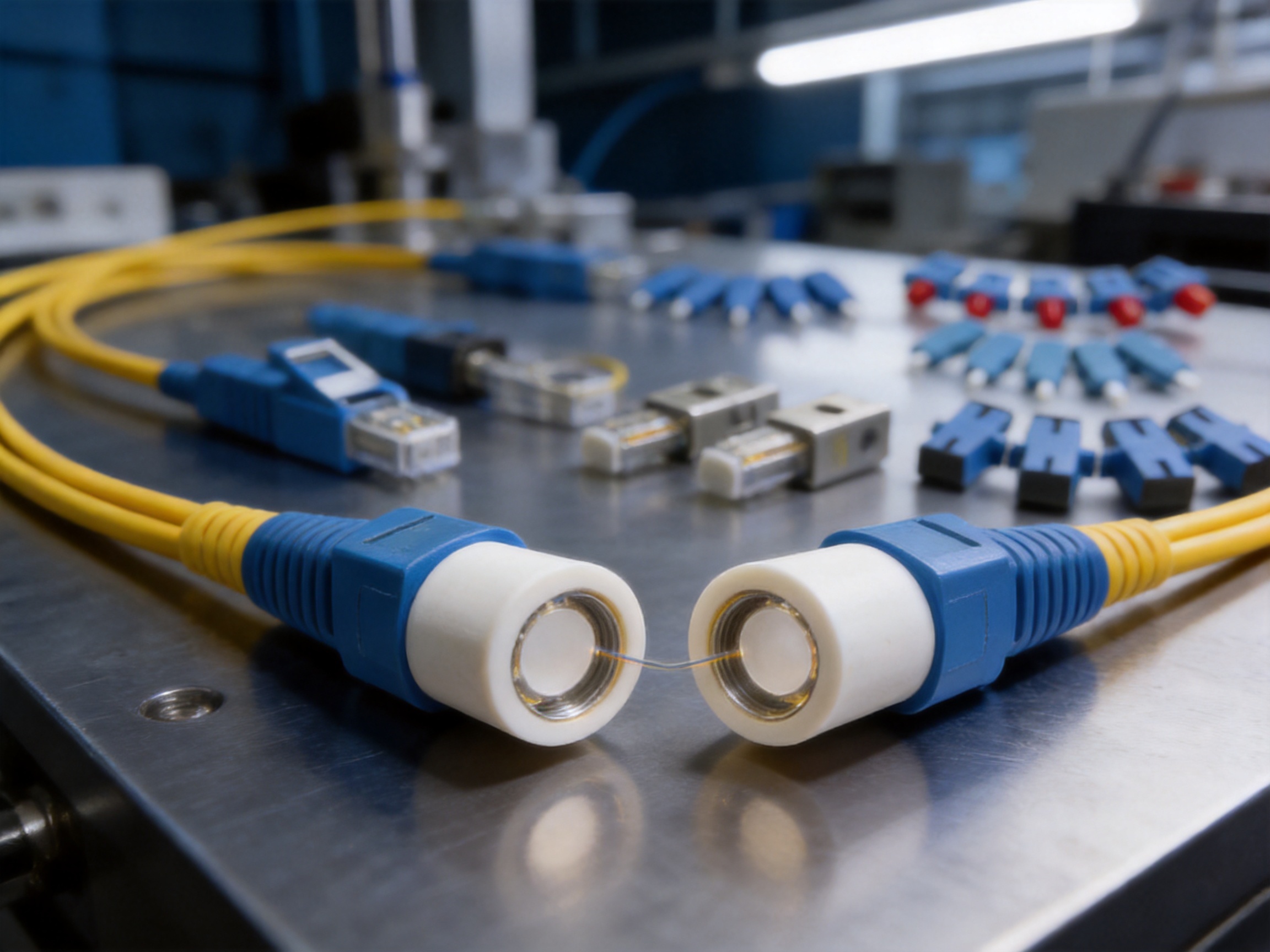
The ceramic ferrule is one of the most important precision parts in an optical connector. It holds the fiber at the connector end and positions it relative to the mating ferrule. The quality of the ferrule influences concentricity, core alignment, contact behavior, insertion loss, return loss, and repeatability.
The product uses high-precision ceramic ferrules with a small concentricity error and a carefully controlled bore diameter. These characteristics are important because the optical fiber must be held as close as possible to the intended central axis. Excessive eccentricity or an unsuitable bore can produce lateral displacement between two mating fibers, reducing the amount of light transferred from one core to the other.
Why Concentricity Matters
Optical fiber cores are extremely small, so even a minor alignment error can influence coupling efficiency. When two connectorized fibers are mated, their cores must be positioned with high accuracy. A ferrule with controlled concentricity helps reduce the offset between the two fiber cores.
Reducing concentricity error helps prevent avoidable optical degradation. It can also improve the consistency of test results from one connector to another. For network installers and maintenance teams, repeatability is important because inconsistent connections make troubleshooting more difficult and can create uncertainty in the link budget.
Controlled Bore Diameter
The inner bore of the ferrule must securely hold the fiber while allowing the fiber to be positioned accurately. If the bore is excessively large, the fiber may move more than intended. If the bore is too small or poorly controlled, the fiber may be stressed during assembly. A controlled bore diameter supports both mechanical stability and optical alignment.
The combination of small concentricity error and controlled bore geometry helps protect transmission performance. It also supports connector interchangeability, which is essential when components from different production batches or approved supply lots are used in the same network project.
4. End-Face Precision and Grinding Technology
After the fiber is installed in the ferrule, the connector end face must be polished to a precise profile. The end face is the physical surface where two connectorized fibers meet. Its geometry affects the contact between the ferrules and the fiber end faces, making polishing quality a central factor in connector performance.
Advanced grinding technology and grinding equipment are used to control key technical parameters, including apex offset, end-face geometry, and curvature radius. These parameters must be managed together rather than considered separately. A connector can have an attractive appearance but still perform poorly if the end face is not correctly shaped or if the fiber protrusion is inconsistent.
Apex Offset
Apex offset describes the distance between the highest point of the polished end-face curve and the centerline of the fiber. If the offset is too large, the mating fibers may not contact in the most favorable position. This can increase insertion loss or reduce the stability of the connection.
Controlling apex offset requires consistent ferrule preparation, accurate polishing fixtures, suitable abrasive processes, and repeatable inspection. The use of controlled grinding procedures helps reduce variation across production lots and improves the uniformity of finished assemblies.
End-Face Geometry
The end face must meet defined requirements for surface condition, geometry, and cleanliness. Scratches, pits, contamination, or irregular polishing can interfere with optical transmission and physical contact. A controlled manufacturing process therefore includes attention to material preparation, grinding stages, cleaning, inspection, and handling.
Advanced grinding machines help make the process more repeatable than manual or loosely controlled polishing methods. Consistent equipment settings and process controls allow manufacturers to manage the end-face characteristics required for low-loss, high-return-loss connections.
Curvature Radius
The curvature radius affects how the two connector end faces contact one another. An appropriate radius supports physical contact while avoiding excessive stress on the fiber end. If the surface is too flat, too convex, or otherwise outside the intended geometry, the connector may not achieve stable contact.
Controlling the curvature radius is therefore essential for both optical and mechanical performance. It also contributes to connector longevity by helping distribute contact forces in a predictable way during repeated mating cycles.
5. Optical Performance Advantages
The product is designed to provide low insertion loss, high return loss, interchangeability, and ease of use. These characteristics are directly relevant to the performance and maintainability of contemporary optical networks.
Low Insertion Loss
Insertion loss is the reduction in optical power caused by inserting a component into the transmission path. Every connector, adapter, splice, and passive module consumes part of the available optical budget. Lower insertion loss leaves more margin for cable length, splitters, closures, additional connectors, and future network changes.
The product supports low insertion loss through several coordinated design and manufacturing factors. These include accurate ceramic ferrules, controlled bore geometry, precise fiber positioning, advanced end-face grinding, and stable mating between connector components. No single feature produces the result by itself; performance depends on the complete manufacturing chain.
Low insertion loss is valuable in long-distance communication links, access networks with multiple passive elements, high-density distribution frames, and transport systems where optical margins must be carefully managed. It can also reduce the likelihood that a network will require early component replacement because of insufficient power margin.
High Return Loss
Return loss measures the amount of optical power reflected toward the source. Higher return loss generally indicates lower reflected power, which can benefit transmission stability and system quality. Reflections may be influenced by end-face geometry, air gaps, contamination, alignment, and differences between mating surfaces.
High return loss is particularly relevant in systems using sensitive optical transmitters, wavelength-based technologies, high-speed data transmission, and dense passive architectures. A carefully polished connector end face and accurate ferrule alignment help reduce conditions that could create unnecessary reflections.
Interchangeability
Interchangeability allows a connectorized component to be used with compatible interfaces without requiring special adjustment. This is important for network projects that involve multiple installation teams, maintenance cycles, equipment suppliers, and replacement schedules.
Consistent dimensions and controlled manufacturing tolerances support more predictable mating performance. Interchangeability also makes spare-parts management easier. Operators can maintain an inventory of approved patch cords, pigtails, and adapters and deploy them when needed without redesigning the distribution arrangement.
Ease of Use
Optical components are often installed in crowded equipment rooms where technicians must work around racks, trays, power systems, and other cables. Components that are easy to install and connect can reduce labor time and lower the risk of handling errors.
Patch cords and pigtails provide a practical connection method for both initial installation and future network changes. Adapters provide a clear interface for plugging, unplugging, testing, and reconnection. Together, these products support organized deployment and more efficient field maintenance.

6. Environmental and Mechanical Reliability
Optical distribution equipment may operate in a wide range of environments. Depending on the application, components can be exposed to temperature variation, humidity, vibration, dust, repeated handling, installation stress, and long-term mechanical loading. The product is designed so that its environmental stability and mechanical properties meet industrial requirements.
Temperature Stability
Temperature changes can affect the dimensions of connector components and the relative position of the ferrules. If materials expand or contract differently, optical alignment may shift. A robust product must therefore use suitable materials and construction methods to help maintain stable performance across normal operating conditions.
Temperature stability is especially important in railway facilities, outdoor-connected equipment rooms, industrial communication systems, and locations where heating and cooling conditions vary significantly. Stable components help reduce the risk of intermittent optical performance caused by environmental cycling.
Humidity and Contamination Control
Humidity and contamination can influence connector surfaces and optical performance. Dust or residue on a fiber end face may increase insertion loss, reduce return loss, or create physical damage during mating. Proper manufacturing cleanliness, protective packaging, and correct field handling are all important.
Although a precision connector is manufactured to a high standard, it must still be cleaned and protected during installation. The product’s design supports professional maintenance practices by providing a stable, repeatable interface that can be inspected and serviced when necessary.
Mechanical Strength
Mechanical properties include resistance to pulling, bending, vibration, repeated mating, and other stresses associated with installation and operation. A patch cord may be routed through a cabinet several times during network changes. A pigtail may be bent within a splice tray. An adapter may experience repeated insertion and removal.
Reliable mechanical construction helps preserve the position of the fiber inside the connector and reduces the risk of damage to the cable or termination. This is important because a connection can have excellent optical performance at installation but fail later if its mechanical structure cannot withstand normal handling.
7. Manufacturing Strengths and Process Control
The performance of a fiber connector product depends on the consistency of its manufacturing process. Wanma Technology’s background in communication cabinets, electronic equipment, and passive optical components provides experience across multiple layers of communication infrastructure. This broader perspective is useful when developing products that must fit into distribution frames, cross-connect systems, equipment rooms, railway facilities, and integrated network projects.
Material Selection
Manufacturing begins with materials selected for dimensional stability, mechanical reliability, and compatibility with optical connection requirements. Ceramic ferrules must maintain accurate geometry during assembly and operation. Connector bodies, boots, sleeves, cable jackets, and other parts must work together as a complete assembly.
Material selection also affects environmental performance. Components must be able to function within the intended application conditions without excessive deformation, cracking, corrosion, or loss of alignment. A systematic approach to materials helps support stable performance over the product life cycle.
Precision Assembly
Assembly requires accurate insertion of the fiber into the ferrule, secure fixation, suitable curing or bonding procedures where applicable, and careful preparation of the connector end. Each stage can influence the final result. If the fiber is not centered correctly, later polishing cannot completely correct the underlying alignment issue.
Precision assembly therefore requires appropriate fixtures, trained personnel, process instructions, and inspection methods. Consistency is more valuable than relying on individual operator skill alone. A controlled process helps ensure that products manufactured at different times deliver comparable performance.
Grinding and Polishing
The grinding process is a major manufacturing strength for this product family. Advanced grinding technology and dedicated grinding machines allow technical parameters to be controlled with greater precision. Multi-stage preparation and polishing can help achieve the required surface condition and geometry.
Process control may include monitoring abrasive conditions, fixture alignment, polishing duration, pressure, cleaning, and inspection frequency. These factors contribute to the control of apex offset, end-face profile, curvature radius, and surface quality. The result is a connector interface designed for stable optical contact and repeatable performance.
Inspection and Testing
Inspection is essential for confirming that finished products meet design requirements. Optical testing may include insertion loss and return loss measurements. Dimensional and geometric inspection can evaluate ferrule alignment, end-face condition, and other relevant parameters. Mechanical and environmental evaluations help confirm suitability for industrial use.
Testing also supports process improvement. When measurement data is reviewed systematically, manufacturers can identify trends, reduce variation, and improve production efficiency. This is particularly important for large network projects requiring substantial quantities of matched and interchangeable components.
8. Advantages Compared with Lower-Quality Alternatives
Many optical connection products may appear similar from the outside, but differences in materials, process control, inspection, and consistency can produce substantial differences in field performance. The advantages of this product family are most apparent when compared with components manufactured with less precise ferrules or less controlled polishing processes.
| Performance Area | Precision Fiber Connection Product | Potential Risk with Lower-Quality Alternatives |
|---|---|---|
| Ferrule concentricity | Controlled to reduce fiber-core misalignment | Greater alignment variation and inconsistent optical loss |
| Ferrule bore | Controlled inner diameter supports stable fiber positioning | Excessive movement or assembly stress may affect performance |
| End-face polishing | Advanced grinding technology controls key geometric parameters | Irregular surfaces may increase loss or reflection |
| Insertion loss | Designed for low and repeatable loss | Higher or unstable loss can reduce link margin |
| Return loss | Accurate mating and end-face geometry support high return loss | Reflections may increase because of gaps, contamination, or poor geometry |
| Interchangeability | Consistent dimensions support compatible replacement | Different batches may produce unpredictable mating results |
| Mechanical performance | Designed for industrial application requirements | Handling, vibration, or repeated mating may cause damage |
| Application support | Suitable for OMDF, ODF, OCC, and related systems | Limited compatibility may increase installation complexity |
These differences matter because optical distribution networks are rarely static. Services are added, removed, migrated, upgraded, and repaired. A component that performs well only under initial installation conditions may create maintenance problems later. A component designed for repeatable connection and stable long-term behavior provides greater operational value.
9. Suitability for Railway and Urban Transit Networks
Railway and urban transit communication systems require dependable transmission infrastructure. Communication links may support signaling-related data, passenger information, surveillance, operational voice, video, control systems, and administrative services. These systems often operate across long routes and multiple equipment locations.
Optical distribution components used in railway facilities must support organized cabling, serviceability, and stable performance. Equipment rooms may contain dense racks and large numbers of connections. Patch cords and pigtails help create structured transitions between incoming fibers and active equipment, while adapters support flexible cross-connection.
Wanma Technology’s products are used in national high-speed railway and urban rail transit systems as part of the company’s broader communication equipment portfolio. This application background reinforces the importance of mechanical stability, maintainability, and compatibility with professional infrastructure environments.
In railway applications, cable routing and strain management are particularly important. Technicians must avoid excessive bending, accidental pulling, and congestion around connection points. Correctly selected patch cords and pigtails, installed with appropriate slack and labeling, can make the distribution system easier to inspect and maintain.
10. Role in Ethernet and 5G Network Modernization
Ethernet networks continue to expand from enterprise buildings into industrial, transportation, access, and metropolitan infrastructure. At the same time, 5G deployments require extensive fiber backhaul, fronthaul, aggregation, and distribution capacity. These systems depend on efficient optical infrastructure at central offices, edge facilities, equipment rooms, and access nodes.
Fiber patch cords, pigtails, and adapters provide the physical connection layer that supports these network upgrades. They allow operators to organize fiber routes, connect transmission equipment, and modify network configurations as capacity requirements change.
In a modernization project, the passive connection layer should not become the weakest point. High-precision ferrules and carefully polished end faces help preserve the optical budget needed by high-speed equipment. Consistent components also make it easier to standardize installation practices across multiple sites.
As networks evolve, operators may replace active equipment while retaining parts of the passive distribution structure. Durable and interchangeable optical connection products can therefore contribute to a longer useful life for cabinets, frames, trays, and cross-connect systems.
11. Customization and Integrated Solutions
Different network projects require different lengths, connector configurations, fiber types, jacket materials, labeling methods, packaging formats, and installation arrangements. A standardized product is valuable, but project-specific adaptation may be necessary for efficient deployment.
Wanma Technology develops and markets its own branded products while also providing integrated solutions for customized products. This capability is relevant to customers that need more than a catalog item. For example, a project may require patch cords prepared to specific lengths, pigtails arranged for a particular splice tray, or adapter configurations matched to an existing distribution frame.
Customization should preserve the core performance requirements of the product. Changes in cable length, connector configuration, or packaging must be managed without compromising ferrule alignment, end-face quality, mechanical strength, or identification. A manufacturer with experience in complete communication systems is better positioned to understand how individual components fit into the larger installation.
Integrated support can also simplify procurement. Instead of coordinating multiple suppliers for cabinets, passive optical components, and related connection equipment, a customer may obtain more elements from a single experienced communication equipment manufacturer. This can improve communication between engineering, production, quality, and delivery teams.
12. Installation and Maintenance Best Practices
Even a precision-manufactured optical connector requires correct installation and maintenance. The following practices help preserve its performance.
Inspect Before Mating
Connector end faces should be inspected before connection. Dust and residue can cause loss, reflection, scratches, and permanent damage. Inspection should be performed using suitable fiber inspection equipment, particularly in high-density or high-speed installations.
Clean Correctly
Cleaning should use appropriate tools and procedures for optical connectors. A connector should not be repeatedly mated in an attempt to remove contamination. Such behavior can spread contamination between surfaces or create scratches.
Manage Bend Radius
Patch cords and pigtails should be routed according to their specified bend limitations. Excessive bending can increase attenuation or place stress on the connector termination. Slack should be stored neatly in trays or management channels rather than compressed into sharp bends.
Protect Unused Ports
Unused adapters and connector ends should be protected with suitable dust caps. Open ports can collect contamination, especially in equipment rooms where construction, maintenance, or ventilation may introduce particles.
Label Connections Clearly
Clear labeling supports efficient troubleshooting and reduces the risk of accidental disconnection. Labels should identify both ends of a patch cord or pigtail and correspond with the network documentation. In large ODF and OMDF installations, good labeling can save significant maintenance time.
Record Test Results
Insertion loss and return loss measurements should be recorded during commissioning and after significant changes. Baseline records help maintenance teams distinguish between an original condition and a later fault. They also provide useful information when evaluating network upgrades or investigating intermittent performance.
13. Quality, Delivery, and Long-Term Partnership
For network operators, component quality is only one part of supplier value. Delivery reliability, technical communication, product consistency, customization capability, and after-sales cooperation also influence project success.
Wanma Technology emphasizes reliable product quality, timely delivery, and long-term strategic partnerships with industry leaders. These priorities are relevant to telecommunications and transportation projects, where delays in small passive components can affect the installation schedule for an entire site.
The company’s sales network covers more than 20 countries and regions, including the United States, Australia, the United Kingdom, Italy, South Africa, and Ghana. International project experience can help a manufacturer understand differing procurement requirements, documentation expectations, packaging practices, and installation conditions.
A long-term partnership also supports product continuity. Network operators may need additional patch cords, pigtails, and adapters years after the original deployment. Stable product families, documented specifications, and responsive communication make it easier to expand or repair an installed system.
14. Selecting the Appropriate Product for a Project
Customers should evaluate more than connector appearance when selecting optical connection products. Important considerations include the application environment, connector type, fiber mode, cable construction, required length, optical performance, mechanical requirements, and compatibility with existing distribution equipment.
The first step is to identify the installation location. A central office, railway equipment room, data center, enterprise building, and outdoor cabinet may have different environmental and routing requirements. The second step is to define whether the connection will be permanent, semi-permanent, or frequently reconfigured. This influences the choice between pigtails, patch cords, and other termination arrangements.
Customers should also examine the manufacturer’s approach to ferrule precision, polishing, inspection, environmental performance, and customized production. A supplier that can explain how these factors are controlled is generally better prepared to support demanding applications.
Finally, project teams should consider lifecycle cost rather than purchase price alone. A lower-cost component that causes additional loss, premature replacement, troubleshooting, or installation rework can become more expensive over time. Stable, interchangeable, and maintainable products may provide better total value.
15. Frequently Asked Questions
Q1. What are patch cords, pigtails, and adapters used for?
Patch cords connect optical equipment or distribution points through connectorized fiber. Pigtails provide a connectorized termination for a fiber that is spliced at the opposite end. Adapters align and couple two compatible optical connectors. They are commonly used in OMDF, ODF, OCC, and related optical distribution equipment.
Q2. Why is the ceramic ferrule important?
The ceramic ferrule holds and aligns the fiber at the connector end. High precision helps reduce concentricity error and maintains accurate alignment between mating fibers. This supports lower insertion loss, higher return loss, and more consistent connection performance.
Q3. What does a small ferrule bore error mean for network performance?
A controlled bore helps keep the fiber in the intended position. If the bore is poorly controlled, the fiber may move excessively or experience assembly stress. Either condition can contribute to alignment variation and unstable optical performance.
Q4. How does polishing affect connector performance?
Polishing determines the geometry and surface condition of the connector end face. Apex offset, curvature radius, fiber position, scratches, and contamination can all influence insertion loss, return loss, and physical contact. Advanced grinding and polishing processes help control these factors.
Q5. What is insertion loss?
Insertion loss is the reduction in optical power caused by adding a component to the transmission path. Lower insertion loss preserves more of the available link budget for cable distance, splitters, additional connectors, and other passive elements.
Q6. What is return loss?
Return loss indicates the amount of optical power reflected toward the source. Higher return loss generally means less reflected power. Accurate alignment and properly finished connector end faces help support high return loss.
Q7. Can these products be used in railway communication systems?
Yes. The products are suitable for optical distribution applications in railway and urban rail transit environments when the selected configuration meets the project requirements. Wanma Technology’s broader communication equipment portfolio is used in national high-speed railway and urban rail transit systems.
Q8. Are customized products available?
The company provides integrated solutions for customized products. Project teams can discuss requirements such as length, connector configuration, adapter arrangement, labeling, packaging, and compatibility with existing optical distribution equipment.
Q9. How should unused optical connectors be protected?
Unused connector ends and adapter ports should be covered with suitable dust caps. This reduces the possibility of contamination and helps preserve optical performance until the connection is required.
Q10. Why is interchangeability important?
Interchangeability allows compatible components to be replaced or rearranged without special adjustment. It simplifies inventory management, supports maintenance, and makes network expansion easier when products are needed at different times or installation sites.
Q11. What should technicians do before connecting a patch cord?
Technicians should verify the connector type, inspect the end face, clean it with an appropriate tool if necessary, confirm the correct port, and route the cable without exceeding its bend limitations. The connection should then be documented according to the site’s maintenance procedures.
Q12. How can customers request technical support?
Customers may contact Wanma Technology Co., Ltd. for product information, application guidance, customization discussions, and project coordination. The company can be reached by telephone at +86 13958188250 or by email at [email protected].
Conclusion
Patch cords, pigtails, and adapters are fundamental building blocks of optical distribution systems. Their size does not reflect their importance. Precise ferrules, controlled bore dimensions, accurate polishing, stable end-face geometry, and dependable mechanical construction all contribute to the quality of the optical link.
Fiber Solution-Patch Cords, Pigtail, Adaptor products are designed for OMDF, ODF, OCC, and related optical distribution equipment. Their principal advantages include low insertion loss, high return loss, interchangeability, ease of use, and stable environmental and mechanical performance. These characteristics make them suitable for telecommunications networks, Ethernet infrastructure, 5G modernization projects, railway communication systems, urban rail transit facilities, and central equipment rooms.
Wanma Technology Co., Ltd. adds value through long-term experience in communication cabinets, electronic equipment, and passive optical components. Its use of high-precision ceramic ferrules, advanced grinding technology, controlled production processes, and integrated customization capabilities supports the requirements of professional network builders and operators.
For customers evaluating optical connection suppliers, the most important question is not simply whether a product can connect two fibers. The more important question is whether it can provide predictable optical performance, withstand practical installation conditions, support future maintenance, and remain compatible with the larger communication system. A precision-focused manufacturing approach addresses these requirements and helps create a stronger foundation for reliable global networks.
References
1. International Electrotechnical Commission. Fibre Optic Interconnecting Devices and Passive Components: General Performance and Testing Principles.
2. International Electrotechnical Commission. Fibre Optic Connector Interfaces and Connector Performance Requirements.
3. International Organization for Standardization and International Electrotechnical Commission. Generic Cabling for Customer Premises and Optical Fiber Cabling Practices.
4. Telecommunications Industry Association. Fiber Optic Connector Inspection, Cleaning, and Maintenance Practices.
5. Telecommunications Industry Association. Optical Fiber Cabling Component Performance Guidelines.
6. International Telecommunication Union. Optical Fibre Cables, Connectors, and Passive Optical Network Infrastructure Recommendations.
7. Railway telecommunications engineering literature covering optical communication systems for high-speed railways and urban transit networks.
8. Manufacturer product information concerning fiber patch cords, pigtails, adapters, ceramic ferrules, optical end-face grinding, and optical distribution equipment.
Product: Fiber Solution-Patch Cords, Pigtail, Adaptor
PREV:Mechanical Fiber Splice Solutions for Reliable Optical Network Deployment
NEXT:Rack-Mounted Coolant Distribution Units for High-Density Liquid-Cooled Infrastructure
NEXT:Rack-Mounted Coolant Distribution Units for High-Density Liquid-Cooled Infrastructure
Interested in cooperation or have questions?
Related products
-
-
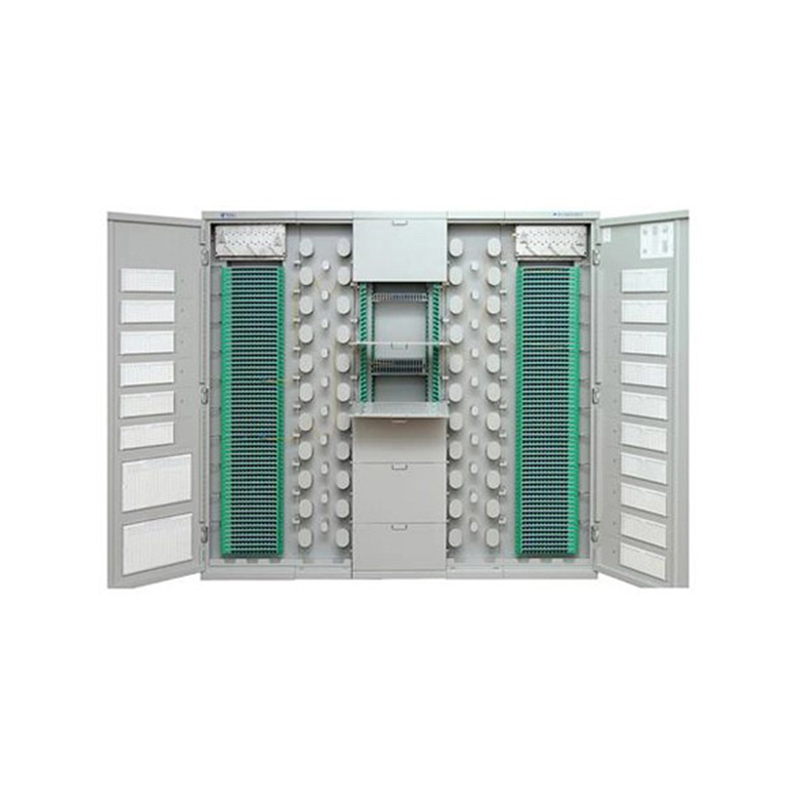
Application Used in FTTH network access-layer equipment rooms where splitting, splicing, distribution and other operations need to be carried out within a frame. Used in FTTH networks where optical sp...
See Details -
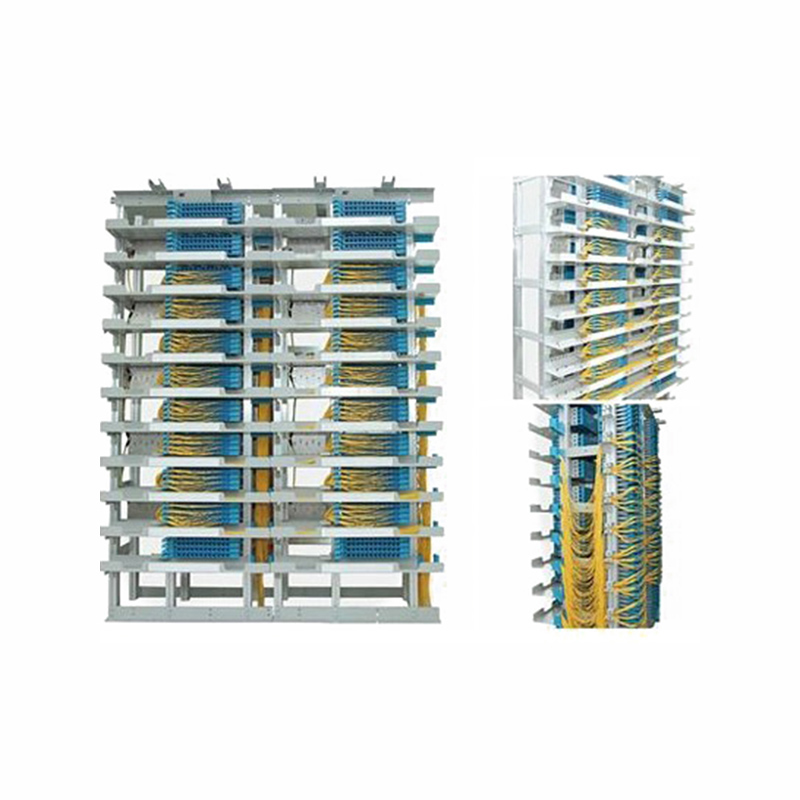
Application Used in independent fiber patching areas of newly built communication equipment rooms and central equipment rooms. After cable removal, the original main distribution frame is dismantled, ...
See Details -
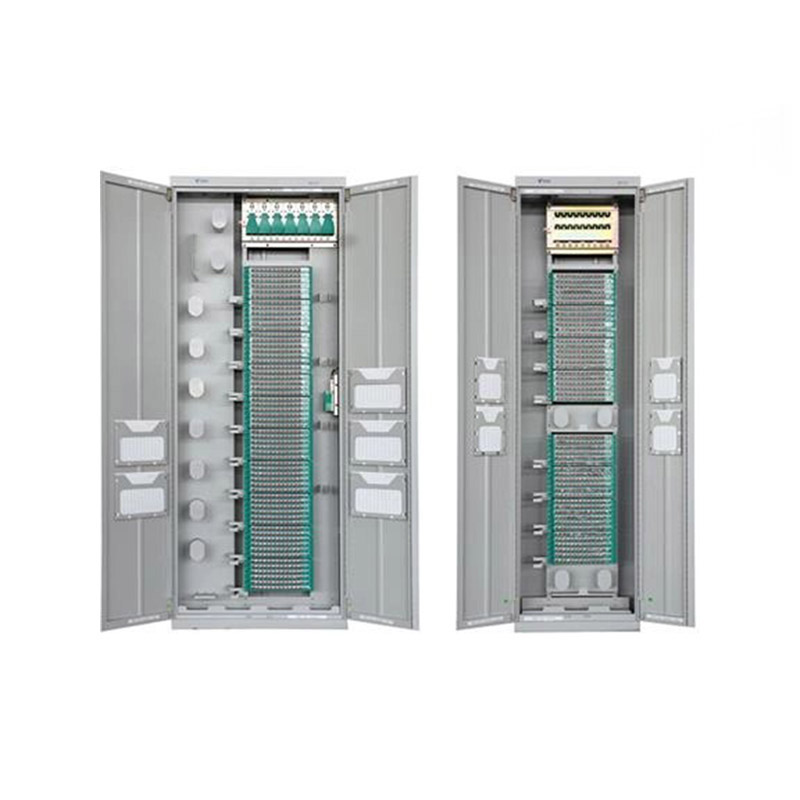
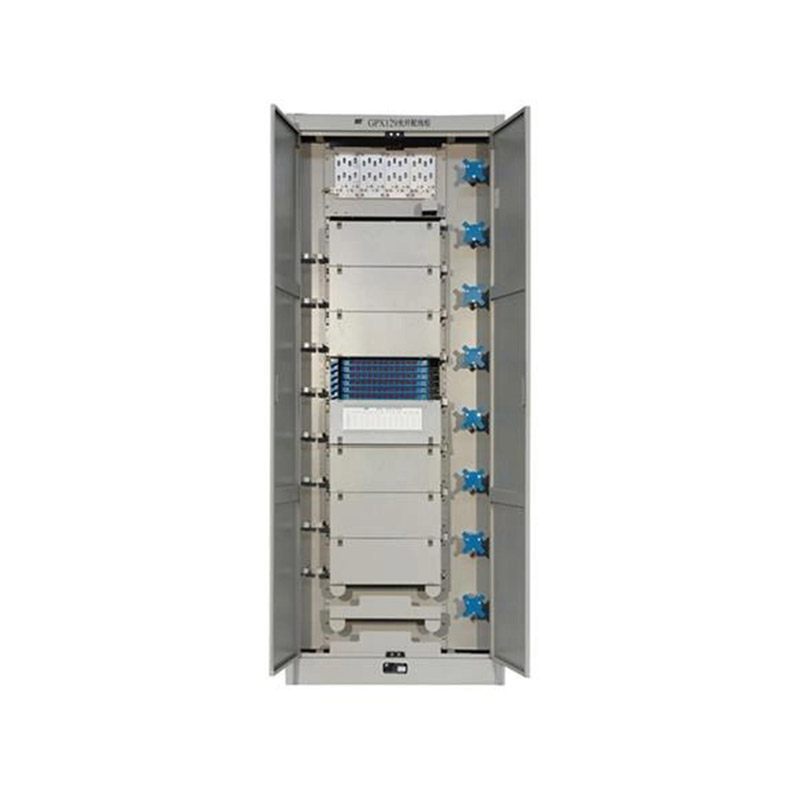
Application ScopeThe GPX129-09T fiber optic distribution frame is used to connect, distribute, and manage fiber optic cables and optical communication equipment. It is suitable for large-capacity fibe...
See Details
Ready to Get started ? Contact Us Now !

Product.
Contact Details.
-
 +86 13958188250
-
 +86 13958188250
-
 [email protected]
-
 AUDIT Email:[email protected]
- Wanma Industrial Park Taihu Yuan Town Lin'an District Hangzhou City China.
QR Code

Copyright © Wanma Technology Co., Ltd. All Rights Reserved.
Privacy
Custom Ethernet Optical Network Railway Transit Equipments Suppliers
